SKU: 73358387274
philodendron green goddess

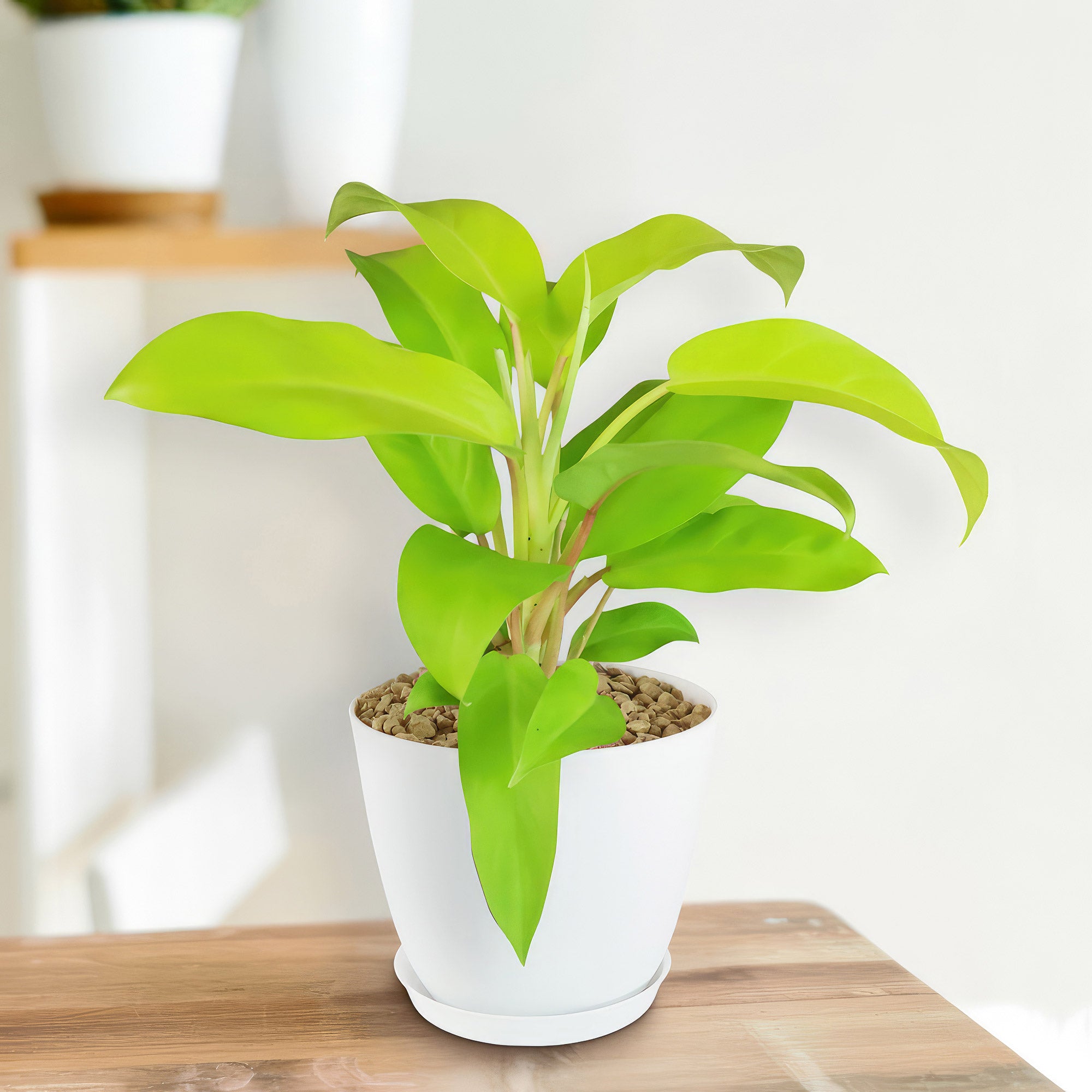
philodendron green goddess ‘Golden Goddess’ Philodendron 6" Pot / Teal / Without Pot

Sale price$24.75 Regular price$27.50
Save 10%

Pay in installments of $6.88 with ShopPay, AfterPay and Klarna

Shipping Estimate
USA
  • USA
  • CAN

Ships within 48 hours · Estimated delivery Aug 1 - Aug 6

Promo Codes Available:

For Your Every Summer RSVP, with Code: SUMMER15

Description

philodendron green goddess ‘Golden Goddess’ Philodendron 6" Pot / Teal / Without PotThe Golden Goddess Philodendron is a striking tropical houseplant known for its vibrant golden yellow foliage and easy to care nature. This fast growing climbing philodendron has gained immense popularity among houseplant enthusiasts due to its adaptability, bright color, and ability to thrive indoors with minimal maintenance. Unlike traditional green philodendrons, its chartreuse leaves add a lively pop of color to any indoor space, making it a

The ‘Golden Goddess’ Philodendron is a striking tropical houseplant known for its vibrant golden-yellow foliage and easy-to-care nature. This fast-growing climbing philodendron has gained immense popularity among houseplant enthusiasts due to its adaptability, bright color, and ability to thrive indoors with minimal maintenance. Unlike traditional green philodendrons, its chartreuse leaves add a lively pop of color to any indoor space, making it a favorite for plant collectors and interior decorators alike.

Native to the tropical rainforests of South America, the philodendrons are often found climbing trees, using aerial roots to anchor themselves.

The Philodendron ‘Golden Goddess’ has striking, bright golden-yellow leaves. 

One of its most unique features is its changing leaf color; new leaves start as bright yellow and slowly turn lime-green as they mature.

The amount of light also affects this color shift, with brighter light keeping the leaves golden and lower light making them greener.

This golden goddess plant has a climbing or trailing growth habit, making it an excellent choice for trellises, moss poles, or hanging baskets.

This fast-growing philodendron can quickly reach impressive heights when given the right support. 

When grown indoors as a houseplant, Philodendron ‘Golden Goddess’ typically grows up to 6 feet tall, depending on care and support. If allowed to climb, it can grow even taller, creating a lush vertical display. The leaves can reach up to 8 inches in length, developing a full and dense appearance over time. 

Philodendron ‘Golden Goddess’ is a climbing philodendron, and providing a moss pole, trellis, or other vertical support will help it develop larger leaves and a more upright growth habit. 

If placed next to a wall, it may lean toward it, but without a textured surface or additional support, it won't attach and climb effectively on its own. Aerial roots will try to grip onto a rough surface, but a moss pole or trellis will encourage stronger, healthier vertical growth.

The flowers of Philodendron ‘Golden Goddess’ are small, inconspicuous, consisting of a spathe and spadix. The spathe is a leaf-like part that wraps around the flower, while the spadix is a thick, upright spike where tiny flowers grow. These blooms are small and not very noticeable, and the plant rarely flowers indoors. If it does bloom, it usually happens in the warmer months, like late spring or summer.

When and How to Water Your Golden Goddess Philodendron 

It is a drought-tolerant tropical plant, making it an excellent choice for those who occasionally forget to water. This variety thrives in slightly dry conditions and does not tolerate overwatering. The best approach is to allow the top two inches of soil to dry out before watering again. Overwatering can lead to root rot, so it's crucial to ensure proper drainage in the pot or planting area.

In the spring and summer, during the active growing season, the Golden Goddess requires more frequent watering. Warmer temperatures and increased light exposure speed up soil evaporation, so checking moisture levels at least once a week is advisable. Deep watering is best, ensuring moisture reaches the roots. However, excess water should always drain out, preventing waterlogged conditions. Misting is not necessary but can be beneficial in dry indoor environments to maintain humidity. 

As fall and winter arrive, the plant enters a semi-dormant state, requiring significantly less water. Watering should be reduced to every 2 to 3 weeks, depending on indoor humidity levels. Since the plant is not actively growing during this time, it consumes less water. Always check the soil before watering to prevent overwatering, as the roots remain vulnerable to rot during dormancy. 

Light Requirements – Where to Place Your ‘Golden Goddess’ Plant

When grown indoors as a houseplant, your ‘Golden Goddess’ Philodendron thrives in bright, indirect light, making it an ideal houseplant for well-lit spaces.

It should be placed near an east- or west-facing window where it can receive gentle morning or late afternoon sunlight.

Avoid direct midday sun exposure, as its leaves can scorch. If natural light is insufficient, a grow light can supplement the plant’s needs, ensuring its vibrant golden foliage stays bright.

For outdoor cultivation, the plant does best in partial shade to filtered sunlight, as full sun exposure can cause leaf burn.

Ideally, it should receive around 4 to 6 hours of bright, indirect sunlight per day. A shaded patio, under a tree canopy, or on a covered porch are excellent locations for growing this philodendron outdoors. If grown in a particularly hot climate, ensure it is shielded from intense afternoon sun to prevent leaf damage. 

Optimal Soil & Fertilizer Needs 

The Philodendron plant thrives in well-drained, nutrient-rich soil.  Aroid potting mixes work exceptionally well for this variety, as they provide the right balance of drainage and nutrition. Avoid heavy, compact soils that retain too much moisture, as this can lead to root rot. Instead, make or buy a well-draining potting mix, or ideally, use our specialized potting mix, which contains 5 natural substrates and mycorrhizae to promote the development of a strong root system that helps your plant to thrive. 

To fertilize your Golden Goddess plant, use a liquid NPK fertilizer (5-10-5) once a year in the spring, during the growing season, to promote healthy foliage. Organic fertilizers like worm castings or compost can also be incorporated into the soil to enhance nutrient levels over time. 

During fall and winter, fertilization should be stopped entirely, as the plant's growth slows. Over-fertilizing during dormancy can lead to nutrient buildup and potential root damage. Instead, focus on maintaining proper watering habits and light conditions. 

This Philodendron works well with other climbing varieties such as Philodendron Brasil, Philodendron Mcdowell, making it a versatile and colorful addition to your home or office.

Hardiness Zones & More

For indoor growth as a houseplant, ‘Golden Goddess’ prefers temperatures between 65°F and 80°F with moderate to high humidity. It thrives in well-lit environments with indirect light. While it can tolerate lower humidity levels, maintaining at least 50% humidity ensures optimal growth. Placing it near a humidifier or pebble tray can help increase moisture levels in dry indoor climates. 

In the United States, this is mostly an indoor plant, but if you live in southern Florida or Hawaii, then you can cultivate it outdoors in USDA zones 9-11.

It should be planted in a shaded to partially shaded location, with humidity levels ideally above 50%.

If temperatures drop below 50°F, bringing the plant indoors is necessary to prevent cold stress.

In frost-prone areas, container planting allows easy relocation during winter months. 

Wildlife – Golden Goddess Flowers Attract the Following Friendly Pollinators

The small, inconspicuous flowers of the Golden Goddess plant attract a variety of pollinators, such as bees, butterflies, hummingbirds, beetles, and other pollinators in tropical and subtropical regions. 

Butterflies
Bees
Hummingbirds
Lady Bugs
Multi Pollinators
Other Birds

According to the ASPCA, Philodendron plants are mildly toxic to humans, cats, dogs, and other pets due to the presence of insoluble calcium oxalates. Ingestion can cause mouth irritation, excessive drooling, and gastrointestinal distress. However, it is safe to touch and handle, making it a popular choice for indoor houseplants.  

How to Propagate Your Philodendron Golden Goddess 

The Golden goddess philodendron propagation is best achieved through stem cuttings. Choose a healthy stem with at least two to three nodes and use clean, sharp shears to cut just below a node. Remove any lower leaves and place the cutting in water or moist soil. In water, roots should begin to form within two to three weeks. If propagating in soil, keep it consistently moist and in a warm, bright environment. Once roots are well-established, transplant the cutting into its permanent container. 

Key Takeaways

  1. The Philodendron Golden Goddess is a fast-growing climber, that has a vining growth habit and can be trained to climb using a moss pole or trellis.
  2. It can tolerate short periods of dryness but thrives with regular watering when the soil is dry.
  3. When small, it fits perfectly on desks or shelves, but as it matures, it can be grown in hanging baskets or as a climbing plant.
  4. It thrives in bright, indirect light and adapts well to typical home conditions.
  5. The new leaves start as bright yellow and gradually turn lime-green, depending on light exposure.

The Bottom Line 

Overall, the Philodendron ‘Golden Goddess’ is a must-have plant for anyone looking to add a vibrant, low-maintenance plant to their collection. Its striking yellow foliage, adaptability, and fast growth make it an excellent choice for homes, offices, and indoor gardens. Whether climbing up a trellis or trailing from a hanging pot, this plant adds a tropical touch and an instant burst of color to any space. With proper care—bright indirect light, occasional watering, and well-draining soil—it will thrive for years to come. This philodendron variety is perfect for plant lovers who want an easy-care, visually striking houseplant. 

Shipping Notes
  • Free Standard Shipping on $100+ Orders to the USA.
  • Except Preorder products are shipped in 48 hours.
  • Delivery to the USA:
  1. Standard Shipping : 3-10 business days
  • If time is of the essence, please consider selecting expedited delivery for faster service.
Exchange/Return Notes
  • We offer a 30-day return/exchange service after receiving.
  • Final sale items are not eligible for returns or exchanges.
  • To process your return/exchange, please contact us at [email protected]
  • Please click here for more details>>> Return & Exchange Policy
SKU: 73358387274

Discover Niche Categories That Outsell philodendron green goddess

Top-Converting Item to Boost Your Average Order

4.2 ★★★★★
Based on 24 reviews
Sort
Highest Rating
Newest First
Oldest First
Product Reviews
Z
Verified Purchase
Znapp
Houston, US
★★★★★ 5
An absolute must for everyone dabbling with Unity 6 Game Development
Format: Paperback
Half of this book is about C# (until Chapter 6), and the other half is about actually making games. The book is very well written, and it is everything I needed to get a few problems solved with Unity 6 projects. I love how clearly things are explained, and the only thing I wish for is that I was able to spend more time delving into this while maintaining my financial status...
WAS THIS REVIEW HELPFUL?YesReportShare
Reviewed in the United States on January 3, 2026
C
Christopher West
Charlottesville, US
★★★★★ 5
A Seasoned Developer's Fresh Perspective on Game Development
Format: Paperback
Finally, a game dev book that respects your existing programming knowledge As someone who's spent two decades architecting enterprise web applications in C# and ASP.NET, I approached game development with what I thought was a solid foundation. I was wrong—not about C#, but about how differently it's applied in game engines. After five frustrating years of trying to bridge that gap through scattered tutorials and documentation, Harrison Ferrone's eighth edition finally gave me the structured path I needed. What This Book Gets Right for Experienced Developers: The pacing is deceptive. Yes, it starts with programming fundamentals, but don't skip ahead. Ferrone's approach to OOP in the context of Unity's component architecture was revelatory. In web dev, I'd been writing services, repositories, and dependency injection for years. Here, the MonoBehaviour lifecycle and component-based thinking required a genuine mental shift that the book handles exceptionally well in chapters 5-6. Chapter 10's revisit of types and methods isn't redundant—it's strategic. By this point, you've written enough Unity scripts to appreciate why game code patterns differ from traditional enterprise patterns. The discussion of value types vs reference types hits differently when you're optimizing frame rates instead of HTTP response times. The Unity 6 Update Matters: Having struggled with outdated Unity tutorials for years, the Unity 6-specific content is invaluable. The screenshots are comprehensive (full-screen mode can make text small, but the GitHub repo and graphics bundle solve this). More importantly, the code samples reflect current Unity APIs and best practices, not deprecated approaches that still litter Stack Overflow. Where It Shines for Career Transitioners: Chapters 11-13 are worth the price alone. LINQ in Unity isn't just about querying collections—it's about performance considerations I never had to think about in web apps. The coverage of generics, delegates, and events finally connected how Unity's event system relates to patterns I already knew, but in a real-time context where every allocation matters. The serialization chapter (12) bridged my understanding of data persistence from databases and JSON APIs to Unity's PlayerPrefs and ScriptableObjects. This practical grounding is what most tutorials skip. Minor Quibbles: The FPS prototype is solid for learning, but I wish there was more discussion of common anti-patterns experienced developers bring from other domains. I still catch myself over-engineering solutions when Unity's component system offers simpler approaches. Also, while the book touches on performance, those coming from async/await-heavy web development will need supplementary resources on Unity's coroutines and the Job System for more complex scenarios. Bottom Line: If you're a professional developer trying to break into game development, stop collecting random Udemy courses. This book provides the structured progression and context-appropriate examples that respects your intelligence while teaching you to think like a game developer. The C# you know is necessary but not sufficient—Ferrone bridges that gap methodically. After years of false starts, I finally have a working game prototype and, more importantly, the mental models to keep building. That's worth significantly more than the cover price. Disclosure: I received an advance review copy from Packt Publishing. This honest review reflects my genuine experience as a career-changing developer.
WAS THIS REVIEW HELPFUL?YesReportShare
Reviewed in the United States on October 21, 2025
B
Blake Lynch
Fort Morgan, US
★★★★★ 5
A Worthy Touchstone for Anyone Who Wants to Master Unity
Format: Paperback
Harrison Ferrone’s Learning C# by Developing Games with Unity 6 is one of the strongest beginner-to-intermediate Unity guides I’ve read: carefully structured, patient in its explanations, and quietly packed with insight about how Unity 6 and C# truly work together. I read the physical edition while sitting in front of a blank Unity project, and the experience felt like having a seasoned sailor point out the currents of a river I’ve been navigating for years. You see the familiar terrain differently. The book’s early decision to spend real time on C# fundamentals is a welcome choice. Most Unity books skip past the language; Harrison slows down, defines concepts, and gives you enough clarity that when you finally enter Unity, you understand why things behave the way they do. Those chapters are dense in the best way: they prep beginners to stand on solid ground and give experienced users a clean, refreshed mental model of the language under the engine. Ferrone’s real strength is his voice. He strikes a balance I rarely see in technical writing: conversational introductions that explain what you’re about to learn and why it matters, followed by crisp, accessible technical walkthroughs. The pacing (explanation → example → implementation) is excellent. And the inclusion of ready-to-use assets removes one of the biggest barriers for new developers who want to understand systems without getting lost creating placeholder art. The book doesn’t talk down to anyone. It makes Unity feel more accessible without flattening its complexity. Beginners will come away with genuine competence; advanced users will appreciate the clear framing of new Unity 6 tools and the subtle recognition of how AI-assisted coding is shaping modern workflows. It’s a guide you can read once for understanding, then keep at your desk as a reference. If you’re a serious hobbyist, a technically inclined beginner, or someone who’s ready to work through your first real project, this is the Unity book I’d hand you first. It bridges concept and execution with clarity and confidence, and it does so with a tone that feels patient, practical, and quietly encouraging. In a space crowded with copy-paste tutorials, Harrison Ferrone has written a Unity 6 guide with real staying power.
WAS THIS REVIEW HELPFUL?YesReportShare
Reviewed in the United States on December 16, 2025
M
Mel
New York, US
★★★★★ 4
Pretty good beginner book, very user friendly covers Development and Design
Format: Paperback, Format: Paperback
I enjoy learning Game Dev, but I research books because many authors promise a lot and deliver half or not at all and I have to put the book down. This book was pretty good. I appreciate the author explaining things, and remember he's writing a book for beginners. There's also a good amount of pics in the book, and I dislike a book with no pics. Also, he breaks it down very simply and explains that you're not going to learn the entire Unity ecosystem, but rather a beginner-level understanding to get a person started. I enjoyed this book and will definitely go over particular info again. They have a Discord group and a newsletter with tips and it also goes over Game Design. I was surprised to see this, and maybe it's new to me, and I like the analogy of explaining complex terms. A con of the book is that as it progresses, it starts to come off as advanced in scripting, and I turned to AI for additional explanations. Still, the author did explain in advance that it's about to get more advanced, but that's me going deeper into the meaning and explanations. Other than that, it's a good read that you will go to more than once and has practical info to help you on your Unity journey.
WAS THIS REVIEW HELPFUL?YesReportShare
Reviewed in the United States on December 1, 2025
S
SkyGuardian
Chelsea, US
★★★★★ 5
This is a game changer in Unity!
Format: Paperback
The amazing part about this book is how it begins. It tells you which Unity, VS (Visual Studios), and which C# versions you should use for best results. This in my thoughts are the most important part when programming, know which ones to use to make your experience the best it can be. There are exclusives in this as well. This book has some major pics to show those who are visual learners and that is a great asset as most people need to see it and use it in order to understand what they are doing. Books sometimes leaves this important thing and some get lost in the reading and put those types of books down and never pick them up again. I read through this book and found things that intrigue me and make me want to literally just get into it until I'm done reading and using the pics to guide me through. This book also works with MacOS as well. I'm not much into that operating system but I know many who prefer that and that is awesome that this teaches this way as well. This even has pop quizzes for you to do to enhance the effects of learning and I am sure this would be a book that would be used in schools if it were offered as a preferred reading/teaching structuring the class for success. I have said it before in my reviews that this is again another great book to add to your collection. Each book of this type is something that should be purchased or gifted to someone to make their lives easier when it comes to programming and the way this book does it's teaching style it makes programming that much easier and more fun. So many things in this book I don't have enough room or a way of putting it into words. Best tog eab this book and enjoy every part of it and I promise it won't be a waste of money.
WAS THIS REVIEW HELPFUL?YesReportShare
Reviewed in the United States on November 15, 2025

recommand products