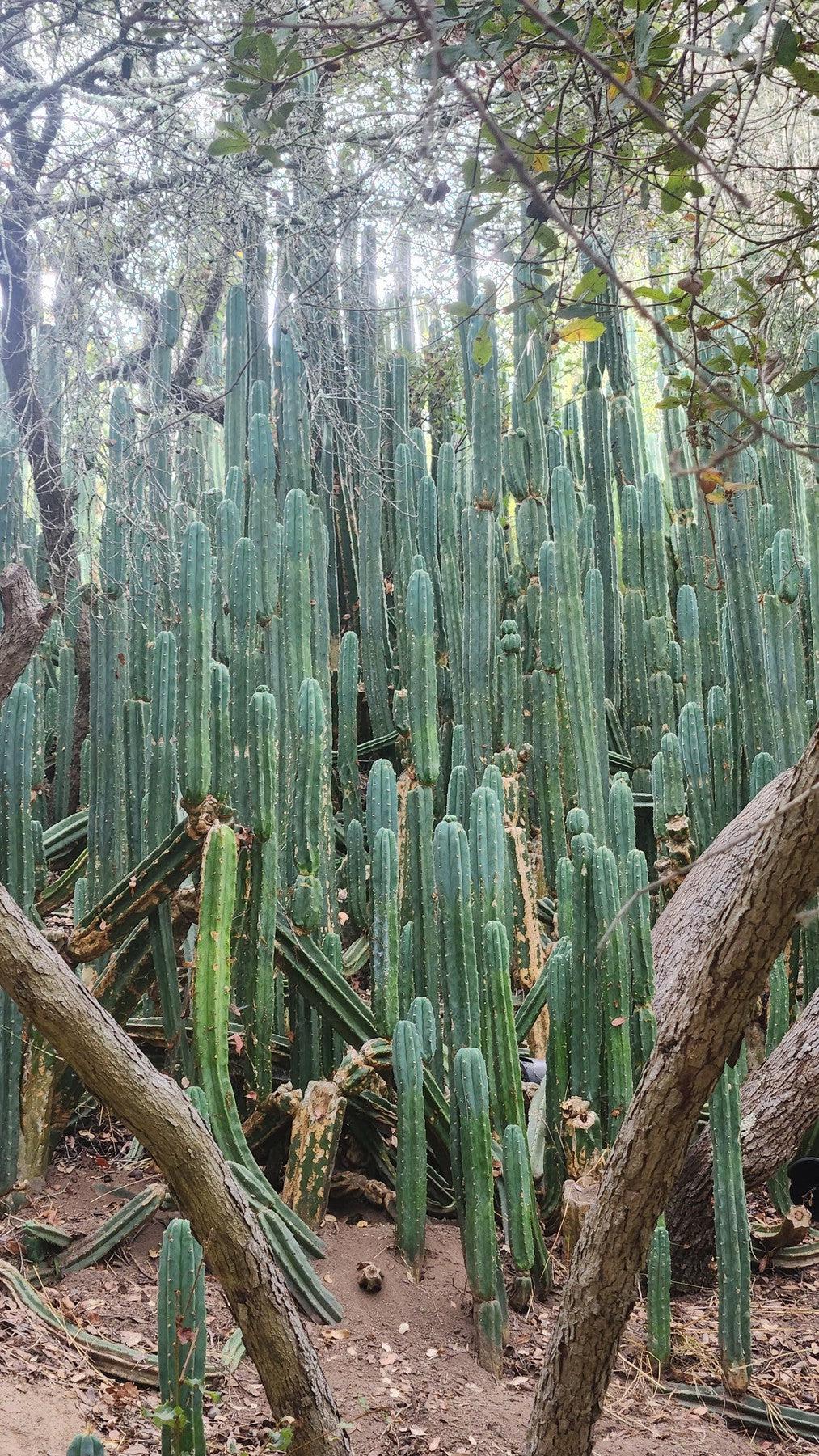
SKU: 74336717097
san pedro cactus healing

san pedro cactus healing San Pedro Cactus for Sale Trichocereus

Sale price$20.02 Regular price$22.24
Save 10%

Pay in installments of $5.56 with ShopPay, AfterPay and Klarna

Shipping Estimate
USA
  • USA
  • CAN

Ships within 48 hours · Estimated delivery Oct 13 - Oct 18

Promo Codes Available:

For Your Every Summer RSVP, with Code: SUMMER15

Description

san pedro cactus healing San Pedro Cactus for Sale Trichocereus**Please Read Everything and Educate Yourself** *On potted PC I usually include a blank aluminum ID tag, some customers buy these to graft on, and some buy to add to their collection, you can write whatever name youd like using a pen or pencil on the tags, leaving this up to you. * Winter rainy months expect snail nibbles on most tips, this time of year they are out and about, and we don't spray anything. Scars will simply move down w new growth, or

**Please Read Everything and Educate Yourself**
*On potted PC I usually include a blank aluminum ID tag, some customers buy these to graft on, and some buy to add to their collection, you can write whatever name you’d like using a pen or pencil on the tags, leaving this up to you.

* Winter rainy months expect snail nibbles on most tips, this time of year they are out and about, and we don't spray anything. Scars will simply move down w new growth, or if grafting sliced off!

*READ & LEARN, and what to expect with your order**

Trichocereus Pachanoi "PC" cactus are by far the most commonly grown, and sold Trichocereus in the United States.  What does PC mean? PC is short for Predominant Cultivar. This means they were and are the most widely commercially grown trichs within the nursery business here on the west coast of the states. Why?  They are prolific flower bloomers. AWESOME majestic flowers, great for all the critters that will be attracted to their fragrant scent from bees to bats and of course people! They are great as landscape specimens. If you are driving around the West Coast and encounter giant cactus growing in front of a library, restaurant or office building, it's a good chance it's Trichocereus PC. Same goes for the thousands and thousands of other homes and buildings that take advantage of their unique columns to add that special touch in creative landscaping.  They are popular within both the nursery and landscaping world for their ability to thrive in a variety of environmental conditions. They are one of the easiest, and therefore one of the most common columnar cactus propagated by nurseries in the United States, often used in commercial and residential landscaping, oops I already said that! Occasionally but not often, some of the big box stores across the country may offer them, often labeled as San Pedro, the common name for many Trichocereus cactus associated with South American origins. We're happy to say we sell and ship our cactus all over the states all year round!

 PC is also highly popular amongst cactus grafters, that's where an expensive, rare and or super slow growing cactus specimen is grown on top of another cactus. Super cool and interesting growing technique that has been popular all over the world by both hobbyists and commercial growers. Even my kids like to graft! 

PC is a great cheaper entry level Trichocereus into the collection hobby, but there are so many other super cool trichs like spiny Bridgesii, smoother Pachanoi, bluer Peruvianus, exotic hybrids and on and on.  Never hesitate to ask questions, we're here to support ya!

Below is more info and options we have, and we're always open to custom and wholesale pc orders too.

**Large and heavy middle cuts are sold approx. 15-20 lb lots. You may get 2-5 pieces based on stock. If pieces appear dehydrated, it means you’ll get more cutts and you’re not paying for water! If youd prefer more smaller, or less and bigger, please make a note during checkout. These will likely be discolored, scarred, sunburned, marked etc. Often one side will be heavily discolored if it's been laying on its side for too long, simply cosmetic,  and even sunburned cutts may appear bad, they will still push out new pups. *Best practice is to place the sunburned side away from sun, allowing other side to better photosynthesis. Just repeating, grafting stock doesnt need to be pretty, especially in the bulk weight listings  They are not show plants!  They are from hard grown areas and will greatly benefit from Fresh soil and shade and consistent watering. Colors will return to darker green over time if given some tlc as just mentioned.  The bigger and heavier the cutting, the more growth you can expect on your grafts. Lots of great videos out there on youtube etc. 

** PC tips potted in 4” containers will vary by heights and width, some may show stretched tips which is normal during winter slower growth here, they’re gonna get sliced off regardless, just an fyi per a customer was expecting all fat tips.

Generally, if you are new to grafting, tip cutts are preferred as they're soft and easy to work with. Some like mids because they will wait for new tips to form and graft on those.  Have fun, grafting is relaxing and rewarding!

Check other listings for Exact potted options, as well as Bulk Lots. 

These are Not Show Specimens, they likely have flaws, scars, dings, dents and spots, normal outdoor grown blemishes, they are mainly grafting stock, but that being said, PC are cool!

These ornamental Trichocereus cuttings are ready to be potted and rooted.  Give cacti propagation a start, you don't have to be a crazy smart botanist to grow beautiful cactus from cuttings! Why cuttings vs potted?   Time and cost!  Propagating via cutting cactus is the fastest and most economical way for commercial nursery growers to expand stock.  It eliminates months and years of waiting for seedlings to grow to appropriate selling size. This cost in growing can then be passed onto the seller.  You simply do the work on rooting and you learn a valuable lesson in growing and caring for cacti!

These specific cuttings will come from a variety of locations on our nursery, some in full sun, some partial, some in shade all day.  Sunlight, shade, soil, watering, fertilizer etc. are all factors  that determine the color of these cuttings, full sun tend to be lighter, full shade are darker.  They are not perfect, they will have blemishes, spots, splotches, scratches, mark's, scars, etc.  They are cactus!  Please check out our exact potted cactus if you are looking for collection specimens.

Generally will be cut fresh after sale is completed, but often we have cut and readied as our turnover can be very quick at times.  Please allow us a week or so to allow proper drying for safe shipping(sometimes during colder/wetter months this may take longer than warm/dry months).  Please see our Blog on propagating cactus cuttings to help get your investment rooted.

https://thesucculentsource.com/blogs/succulent-cactus-news/83530881-rooting-san-pedro-cactus-and-other-trichocereus-planting-instructions

*** The following is not the norm but it's always a possibility.  Times and success with rooting can vary based on multiple factors including time of year, temps, soil etc.  Sometimes ends may arrive discolored, not an issue if its DRY. If a little mushy, follow our blog and slice off small section and start drying process all over. If some mold on the end, read our Blog and wash and dry and slice if needed.  Your cactus cutting is not ruined because of any of these reasons, it's an opportunity to learn and become an experienced propagation expert.   If this is too overwhelming for you, we kindly and respectfully ask that you not order from us as we want all of our customers to be happy!

Handle with CARE  and please see our FAQ for basic care info.

More info.    https://thesucculentsource.com/pages/cactus-cuttings-faq

**Cactus are not perfect, they may have small flaws, we try and photograph all sides of a cactus including any flaws that catch our attention, but please do not expect every spine to be perfect, these are growing cactus and like people, they have character!

Shipping Notes
  • Free Standard Shipping on $100+ Orders to the USA.
  • Except Preorder products are shipped in 48 hours.
  • Delivery to the USA:
  1. Standard Shipping : 3-10 business days
  • If time is of the essence, please consider selecting expedited delivery for faster service.
Exchange/Return Notes
  • We offer a 30-day return/exchange service after receiving.
  • Final sale items are not eligible for returns or exchanges.
  • To process your return/exchange, please contact us at [email protected]
  • Please click here for more details>>> Return & Exchange Policy
SKU: 74336717097

Discover Niche Categories That Outsell san pedro cactus healing

Top-Converting Item to Boost Your Average Order

4.1 ★★★★★
Based on 21 reviews
Sort
Highest Rating
Newest First
Oldest First
Product Reviews
E
Verified Purchase
E. K. Byham
Dallas, US
★★★★★ 5
An essential work in putting American history in perspective
Format: Hardcover
This is a great book. It is not a book for everyone, however. If you don't know the difference between the Pilgrims and the Puritans, and I don't mean just when they arrived, try something simpler. It is a fascinating read if you already have some knowledge. For example, had I not been familiar with Hudson River geography and history, I'm not sure I would have been able to follow Bailyn's account of New Netherland. Naturally, as in any history, the most interesting stories are those you haven't heard before. For me, that was the information about New Sweden; I even read that section first. What makes Bailyn's book great, however, is his ability to make one see material one already knows a great deal about in new ways. Although he never addressed this question per se, he helped me answer a question that has been on my mind for at least fifteen years, and on which I've done considerable research - why did the Puritans, who arrived in 1630 as staunch Presbyterians, deriding their Separatist/Congregationalist Pilgrim neighbors, declare themselves Congregationalists in 1648 in the Cambridge Platform? (In part, the answer Bailyn helped me surmise is simply that when two or three Puritans gathered together, they had at least four different theological positions. It was hard enough to reconcile them in a single congregation; a presbytery would have been impossible.) The book also caused me to reassess my whole viewpoint on early Connecticut, and I certainly came to appreciate the importance of John Winthrop, Jr. beyond his role there. It is amazing too that Bailyn covers such a wide range of issues while devoting relatively few pages to each. The review in The New York Times Book Review, at least as I recall it, was wrong. While that reviewer praised the Virginia, Maryland and New Sweden/New Netherland portions, the New England portion (about 40% of the book) was dismissed as being only of interest to genealogists. While it is true that the earlier sections were more reflective of the book's subtitle, "The Conflict of Civilizations," the New England section would be of interest to a rather small portion of the genealogical community. (For example, I learned nothing new about my only ancestor discussed in the book, William Vassall.) I doubt if that reviewer has ever seen an on-line genealogy, which frequently contain claims such as that so and so was born in 1585 in the United States. As I have already said, the New England section, like the rest of the book, does a marvelous job of putting information in perspective; something that anyone interested in history needs to do.
WAS THIS REVIEW HELPFUL?YesReportShare
Reviewed in the United States on July 10, 2013
L
Verified Purchase
LPThomas
Belleville, US
★★★★★ 4
Interesting and important book
Format: Hardcover
This book looks at the motivations and demographics of the first wave of English immigrants to flee to what was to become the USA. Interestingly written, it explores the educations, positions of and the relationships of the earliest settlers to our east coast. I read it while researching our Family Tree and finding the people connected before coming, and for generations after. The endless Indian wars were a revelation, as was the tale of the oppressed becoming the oppressors as Quaker families fled Massachusetts for New Netherlands.
WAS THIS REVIEW HELPFUL?YesReportShare
Reviewed in the United States on March 9, 2013
R
Verified Purchase
RobCargill
Cuba, US
★★★★★ 5
The Barbarous Years: The Peopling of British North America: The Conflict of... Bernard Bailyn
Format: Hardcover
A remarkable book!!! I have never read such a comprehensive book on early United States history that contained so much information I had never read before. How the status of "indentured servant" existed alongside the origins of slavery in Virginia and Maryland (along the Chesapeake Bay) was both remarkable and horrible. That a white man (typically, landowner) could have a child with a (black) slave who would become a free person at adulthood (earliest laws) created problems (they needed the "help"), so this law of the 1650s-1660s was changed! And if a white (free) woman had a child with a (black) slave, the resulting child would remain a slave! Matrilineal or patrilineal human rights, that is the question. Indentured servant, but with no expiration date. I had never before read how people in this country were real "pioneers" in the creation of slavery - at least with slavery of humans captured from the continent of Africa! It seems that whatever voices of "Christian" decency there might have been at the time - church based values or ones simply based in the hearts of people living here - they were drowned out by commercial interests or those who simply couldn't be bothered by such concerns. I hope you read this book and recommend it to your friends! Sincerely, Bob Cargill, Minneapolis
WAS THIS REVIEW HELPFUL?YesReportShare
Reviewed in the United States on April 19, 2013
K
Verified Purchase
k
Cuba, US
★★★★★ 3
A decent primer -- no more.
Format: Hardcover
This is an odd book for one of America's premier historians. It isn't a bad book -- a person of Bailyn's erudition couldn't write a bad book -- but it doesn't hang together well. The author does not really have anything new to say and a historian of the Early Colonial Period will quickly recognize the usual sources. It is hard to see exactly what historiographical niche this book fills. Even the title is misleading. Sure, Jamestown was barbarous enough by our standards and New Amsterdam was plenty harsh. But, the Bay Colony was, by the rough-and-ready standards of 17th century Europe, pretty civilized. (Compare it with the contemporaneous English Civil War or the Thirty Years War.) As for "Conflict of Civilizations," there was certainly enough of that but the most interesting part of the book, the last third or so on the Bay Colony, is largely an account of Puritan theological quarrels. In fact, one senses that Bailyn felt like he was "home" when he wrote about the Bay Colony. He has, after all, written about New England since 1955 ("Merchants.") He gives the reader a clear account of the theological duels between Winthrop, Cotton, Hooker, Williams, Hutchinson and others. But, others have done this as well or better. Bailyn all but ties himself in a knot to be politically correct toward the Native Americans. For every Indian atrocity he finds a matching atrocity in European civilization. Still, if captured in war one was likely to be a lot better off among the English, French or Dutch than the Pequods. A LOT better off! This volume is part of a series that explores the settling of North America and hardly anyone is better equipped for this than the author. But, what begins as a good account of the horrors of Jamestown drifts into a twice-told tale of the niceties of Puritan disputation. It is almost as if Bailyn got bored half-way through and started channeling Perry Miller. A good book in its way and quite useful for an upper division course or first-year graduate seminar. But, not well-written enough to snare the casual reader and not original enough to snare the professional historian. An odd number.
WAS THIS REVIEW HELPFUL?YesReportShare
Reviewed in the United States on February 19, 2013
G
Verified Purchase
Goldry Bluzco
Houston, US
★★★★★ 5
Sheds Light On A Dimly Perceived Period
Format: Kindle
This book is clearly intended for those of us (non-historians) curious about what is a dimly perceived period of North American colonial history. Living as I do in Tidewater Virginia, I consider myself fairly well versed with the earliest years of English settlement or invasion, depending on your point of view. But, I was wrong. I had, of course, read about the wretched first two years of the Jamestown enterprise, but I had no idea just how ghastly the conditions of the first twenty years of the English colonial period were. Wave after wave of newcomers simply starved or died of disease in those years. The mortality rate was shocking. So many people were dying off that the local Indians did not even think it necessary to kill these newcomers (which proved a mistake, of course). And this was not just at Jamestown. For example, the author says that in any given year in one county 30 to 40% of the children under the age of eight were orphans. And the origins of many of these earliest colonists -- orphans dumped by local churches, beggars snatched off of urban streets, prisoners marched from gaol to waiting ships, many poor people literally kidnapped or tricked into emigrating -- was eye-opening. Talk about the refuse of British society. (As an aside, anyone whose humble immigrant ancestors came to Virginia in those years can forget about doing any genealogical research. You will never find the answers to your questions.) This does tend to be a bleak read. One of the things that jumped out at me was the sad, repetitive tale of European-Indian relations. It mattered not where one was. Virginia, Maryland, Delaware, New Amsterdam, New York, the pattern is always the same. Trade and early friendly relations were quickly undermined by misunderstandings, stupidity, devious tricks, alcohol, and land disputes that led to attack and counter attack and massacres on both sides. One of the things I did enjoy was the Indians' views of Christianity. Those mentioned by the author viewed it as little more than a strange dream. When the concept of a universal god was explained to them they laughed and called it a silly fable. I can only agree. My respect for their powers of reasoning and perspicacity rose immeasurably. Just who was the savage?
WAS THIS REVIEW HELPFUL?YesReportShare
Reviewed in the United States on July 30, 2013

recommand products