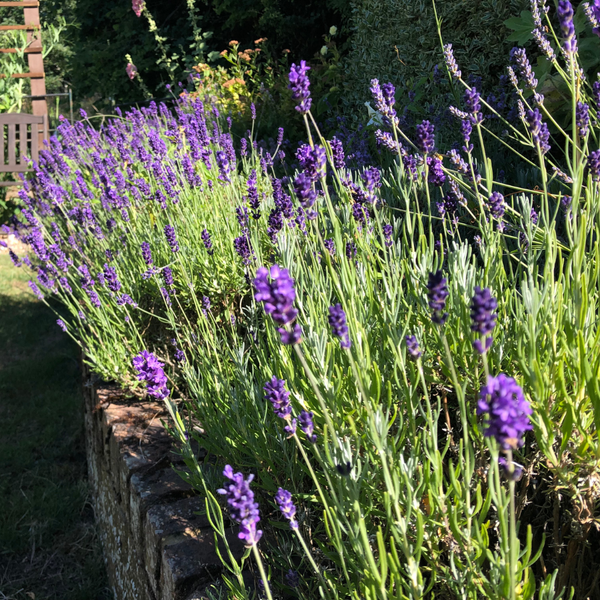
SKU: 74734978149
buy lavender plants near me

buy lavender plants near me Lavender 'Hidcote'

Sale price$18.85 Regular price$20.94
Save 10%

Pay in installments of $5.24 with ShopPay, AfterPay and Klarna

Shipping Estimate
USA
  • USA
  • CAN

Ships within 48 hours · Estimated delivery Sep 27 - Oct 2

Promo Codes Available:

For Your Every Summer RSVP, with Code: SUMMER15

Description

buy lavender plants near me Lavender 'Hidcote'Hidcote Lavender Plants For Sale Lavandula Angustifolia Herb Growing Tips Light: Hidcote Lavender plants prefer full sun Temperature: Hardiness Zones 5 9 Watering: As with most Lavenders, 'Hidcote' is drought resistant and does not need much water. In fact, over watering is one of the biggest mistakes made when growing Lavender, since this tends to promote disease and root rot. Soil: 'Hidcote', similarly to other varieties, will thrive in dry, loamy

Hidcote Lavender Plants For Sale

Lavandula Angustifolia

Herb Growing Tips

Light: Hidcote Lavender plants prefer full sun

Temperature:  Hardiness Zones 5-9

Watering: As with most Lavenders, 'Hidcote' is drought resistant and does not need much water. In fact, over watering is one of the biggest mistakes made when growing Lavender, since this tends to promote disease and root rot.

Soil: 'Hidcote', similarly to other varieties, will thrive in dry, loamy soil that drains well. Drainage is key with this herb, as Lavender hates "wet feet" and will not survive long if kept in moist soil.

Comments:  Good circulation is vital as lavenders cannot tolerate damp and humid conditions. They need a lot of room to grow and they need a lot of air moving around them to avoid excess moisture which will lead to rot. Lavender is a must have and easy to grow. We have created a wonderful blog on 'How To Grow Lavenders Successfully'.

Herb Description

A true English lavender noted for its long lasting-sweet scent, Hidcote Lavender is a highly aromatic, smaller variety of common lavender. Hidcote flowers are darker than most other varieties, which lends the common name "Hidcote Blue" as they seem navy blue at times. Contrasting with the more compact, silvery foliage, Hidcote makes a stunning addition to your garden, in arrangements, or as a culinary garnish.

Prized for its ability to retain its scent long after being dried or cut, it is a favorite ingredient for potpourris. The essential oils are extracted and used in soaps, perfumes and shampoos,and Aromatherapy products. As a culinary herb, its blooms can be used to flavor salads, desserts, drinks and stews.

English Lavender

Ancient Romans used it in their public baths to infuse the warm water with its scent, giving it the name "Lavender" meaning "to wash". Bunches of Lavender were often scattered in the streets to ward off the plague and other diseases during the Medieval days.

Medicinally 'Hidcote' has traditionally been used to cure headaches and depression, and its oils are often seen in modern day spas for its calming, stress relieving effect. It not only has a soothing effect on one's nerves, but the 'Munstead' and 'Hidcote Lavender' varieties actually help heal minor wounds and burns. Lavender's healing properties were discovered in 1928 by French chemist, Rene-Maurice Gattefosse when he accidentally applied Lavender oil to a burn he sustained while in his lab. He noted that the burn did not get infected and healed much quicker than usual. This was the first time that modern medicine had recognized Lavender's healing potential and documented its anti fungal, antibacterial and collagen rebuilding abilities.

Hidcote Lavender Plant Care Tips:

  • Well drained soil - lavenders will not tolerate poor drainage so add sand if you need to improve the quality of your soil. Most lavender 'deaths' occur because of wet roots. An alkaline soil is best.
  • They cannot tolerate humidity: damp, still air makes them susceptible to fungus ailments
  • Lavenders need full sun- 6 to 8 hours of sunshine for these Mediterranean natives
Shipping Notes
  • Free Standard Shipping on $100+ Orders to the USA.
  • Except Preorder products are shipped in 48 hours.
  • Delivery to the USA:
  1. Standard Shipping : 3-10 business days
  • If time is of the essence, please consider selecting expedited delivery for faster service.
Exchange/Return Notes
  • We offer a 30-day return/exchange service after receiving.
  • Final sale items are not eligible for returns or exchanges.
  • To process your return/exchange, please contact us at [email protected]
  • Please click here for more details>>> Return & Exchange Policy
SKU: 74734978149

Discover Niche Categories That Outsell buy lavender plants near me

Top-Converting Item to Boost Your Average Order

4.5 ★★★★★
Based on 10 reviews
Sort
Highest Rating
Newest First
Oldest First
Product Reviews
A
Verified Purchase
A. Menon
Carnegie, US
★★★★★ 5
A valuable review of the collapse of the USSR
Format: Kindle
Collapse is a modern review of the fall of the Soviet Union with a skepticism of its inevitability. This review is valuable on its own merits but given recent events of Russia's invasion of the Ukraine it is particularly timely and provides the reader a comprehensive history for which to to think about current events. The book is divided into two sections. The first covers the reform period under Gorbachev which were the seeds the end and the second part which detailed the political events around the collapse of the Soviet Union. It discusses the reform agenda, the power struggles the lack of correspondence between optimistic visions and practical realities involving reform and ultimately the failure of the West in providing any cushions for a viable economic transition at the end. The author starts with the main leader associated with the fall of the USSR, namely Gorbachev. The author starts by highlighting the consensus perspective that the fall of the Soviet Union was an inevitability of the inadequacy of the system to compete in modern times coupled to weakening energy prices that made the state unviable. One could argue with the modernization of the Chinese state, the fall of USSR perhaps was not inevitable had the party been more adaptive to changing conditions. Either way the author believes that such a view is ultimately wrong and the collapse of the union was a direct result of misguided reforms that were counterproductive and accelerated the fall of the regime. The author puts the policy errors squarely at the feet of Gorbachev who he frames as being too focused on theoretical debates rather than focusing on practical realities. The author discusses how Gorbachev's lack of willingness to use force as well as his optimism about the chances for a shared vision by the population led to a fracturing state where a variety of tribal interests started to diverge. The soviet states were not tied to each other tightly through shared ideology or history and so when reforms led to lower living standards and resources had the potential to be divided, the factionalism of the system came to the forefront. Furthermore the lack of willingness to suppress dissent let to a system that ultimately became immobile to competing voices for which none had a solution to the real problems of the system. The author moves on to the fall of the USSR which really started with the Berlin Wall. There were clearly splintering objectives and the population behind the USSR had divergent hopes on the future. Most states claimed desires for democracy but many really were moving to various forms of ethnically based populism. The concessions made by the USSR on Germany are argued to show the naivety of Gorbachev who was trading Soviet influence for the hope that his signals would be taken well in the West and reciprocated with good will and eventual aid. The sequential failing of the state stemmed from the conflicting power from the formation of democratic parties to compete with the Soviet legislature; the clear separation of powers became ambiguous and ultimately this incoherence of the system led to a partial lost confidence in Gorbachev and a temporary coup. The democratic advocates like Yeltsin then agreed to multiple side deals in which the USSR was carved up along vaguely tribal lines in a hasty fashion that left lingering problems for the following generation. The chaos of reform and decaying control led to a failing state that fractured chaotically and became impossible to salvage once the snowballing began. Collapse is a detailed historical overview of the last decade of the USSR with a focus on the failure of Gorbachev. It discusses the political and economic challenges of the state that led to its collapse but focuses on the failure of leadership that was the root cause from the author's perspective. It is hard to argue that exogenous events didnt put substantial pressure on the regime such that it might have been destined to fail but the authors arguments that the reforms were ineffective are hard to argue with. Furthermore for there to have been a realistic chance of a change in economic model substantial aid would have been required and the idea that the Washington consensus was a sufficient laundry list to lead the USSR into the modern economic world is completely ludicrous. One is reminded of the politics behind economic bodies like the IMF despite the claims to be independent and objective analysis on best practices. As a consequence of the unrealistic idealism of the time and the subsequence tragic failure of following that idealism to a disorganized state we now have substantial lingering frictions that are impossible to heal. Collapse is highly worthwhile read that is filled with details and certainly relevant today.
WAS THIS REVIEW HELPFUL?YesReportShare
Reviewed in the United States on April 20, 2022
H
Verified Purchase
Hab Madoyan
Natrona Heights, US
★★★★★ 5
very good book
Format: Paperback
I was 8 when the Union collapsed. I don’t remember much, but the years that followed were full of conspiracy theories and stories about who “razvalil Sovetskiy Soyuz.” This book tries to answer that question. You can sense from the book that the author is not happy with how everything ultimately evolved. The Soviet system was corrupt, inefficient, and ill, but probably there was a chance to cure it rather than kill it. However, I think the book is overall quite balanced and very informative and is a must read.
WAS THIS REVIEW HELPFUL?YesReportShare
Reviewed in the United States on March 7, 2026
B
Brandon Nelson
Massapequa, US
★★★★★ 4
So very long….
Format: Paperback
Every time Yeltsin takes a nap? Paragraph. Bush mumbles something indecisive to Scowcroft? Boom—chapter! I felt like I was experiencing the fall of the Soviet Union in real, agonizing time. Look, it’s a fine book. If you’re going for a career in the foreign service, this is a good place to start. Otherwise, you can get a fine rendering of these events in much more concise form elsewhere.
WAS THIS REVIEW HELPFUL?YesReportShare
Reviewed in the United States on April 6, 2023
B
Verified Purchase
Blu
Belleville, US
★★★★★ 5
P O W E R F U L .
Format: Paperback
The author summarized: "The ghost of the disappeared Soviet Union ... still haunts the imagination of contemporaries .... This amazing story teaches us not to trust in the seeming certainty of continuity and should help us prepare for sudden shocks in the future" (p. 439). An engrossing in-depth eloquent analyses concerning the events and individuals affecting the 1991 demise of the Soviet Union. Moreover, the unforeseen Chernobyl nuclear disaster on April 26, 1986, crystallized the horrors of a possible nuclear war. Thus, a new orientation to end the exorbitant arms race with the United States. Further, General Secretary Gorbachev promulgated new reforms, including, relaxing travel restrictions in 1989: "... [T]he shock that thousands of Soviet people experienced when they crossed Soviet borders and visited Western countries .... For first-time Soviet travelers to the West a visit to a supermarket produced the biggest effect. The contrast between half-empty, gloomy Soviet food stores and glittering Western palaces with an abundant selection of food was mind-boggling.... This experience changed Soviet travelers forever" (p. 82). At times, repetitive and somewhat confusing. For instance, U.S. President Bush needed Gorbachev's approval for his Iraq offense, which was initially described on Page 143, then inexplicably again, on Page 172. On another occasion, the author indicated that Yeltsin was influenced by Alexander Solzhenitsyn's brochure "How To Rebuild Russia," on Page 150, which is again repeated, on Page 173. Scrupulous editing needed. Notwithstanding such glitches, nonetheless, a fascinating detailed portrayal of the unexpected implosion of a superpower. Having read other books on the subject, if I had to select only ONE about the USSR collapse, I would choose this as the best.
WAS THIS REVIEW HELPFUL?YesReportShare
Reviewed in the United States on July 8, 2025
A
Verified Purchase
Andrew Platek
Natrona Heights, US
★★★★★ 5
Thought Provoking
Format: Kindle
I bought this book after I heard the author on a podcast. Growing up in the US we have been inundated with the story that the collapse of the Soviet Union was an inevitable triumph of liberal, Western values. I had my doubts. Even poorly run dictatorships can muddle along for years. What the author did was center Gorbachev in the story. He was the eye of the storm. It was the terrible combination of Gorbachev’s ambitious idealism and gross ineptitude that led to the dismantling of the Soviet Union. Unlike much of Marxist historical narratives which emphasize the forces of history; the author shows that it’s individuals who shape events and are shaped by them. A different person than Gorbachev could have turned the tide in a different direction and left us a different world than we have today. This is a history book that teaches lessons not just about the Soviet Union but about human history in general.
WAS THIS REVIEW HELPFUL?YesReportShare
Reviewed in the United States on August 1, 2025

recommand products