SKU: 7551754445
bael tree bonsai

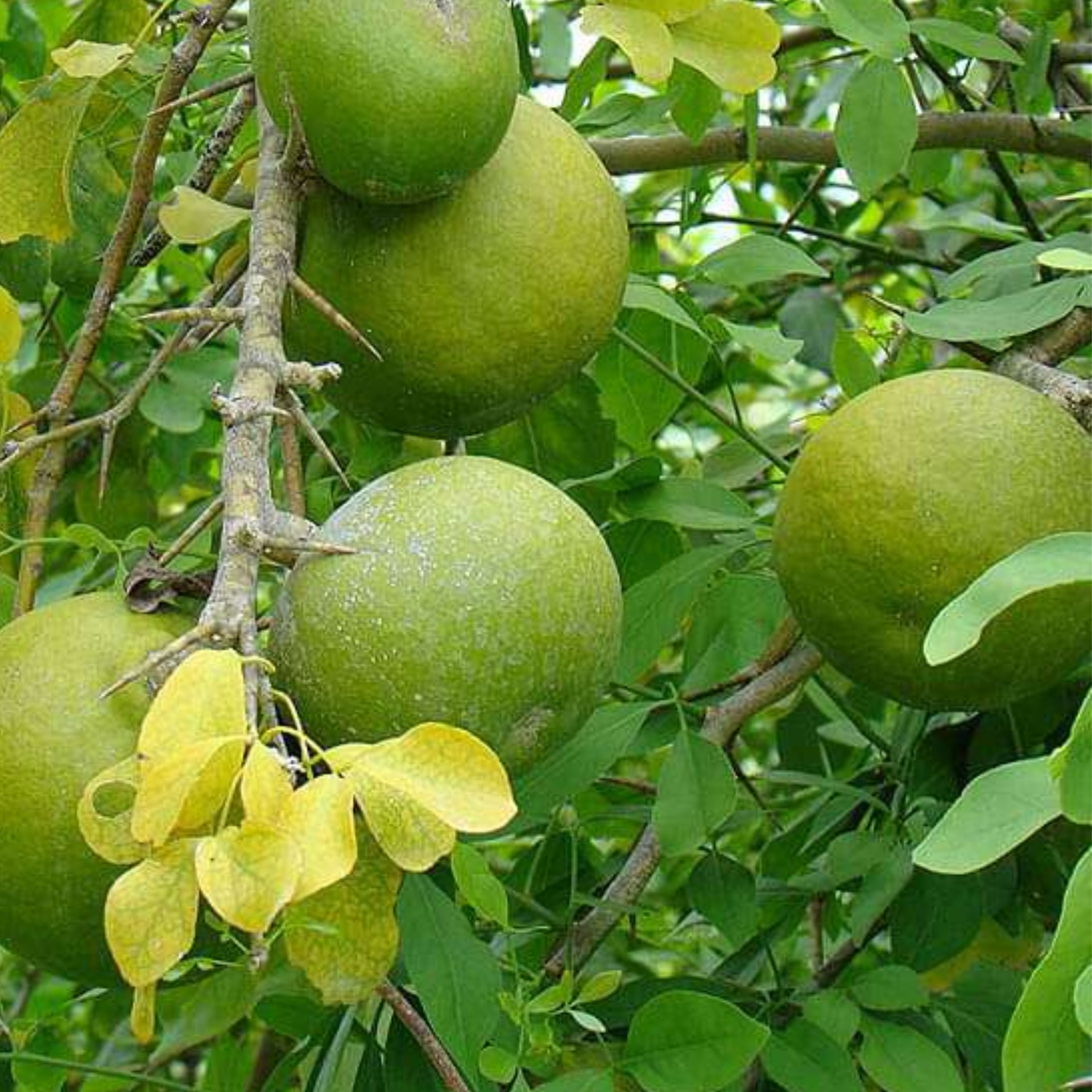
bael tree bonsai Bel Patra Aegle Marmelos Plant – GreenParadiseLive

Sale price$25.93 Regular price$28.81
Save 10%

Pay in installments of $7.20 with ShopPay, AfterPay and Klarna

Shipping Estimate
USA
  • USA
  • CAN

Ships within 48 hours · Estimated delivery Aug 25 - Aug 30

Promo Codes Available:

For Your Every Summer RSVP, with Code: SUMMER15

Description

bael tree bonsai Bel Patra Aegle Marmelos Plant – GreenParadiseLiveThe Divine Healing Power of Aegle Marmelos: Unveiling the Secrets of the Bael Plant In the realm of botanical treasures, the Aegle marmelos plant, commonly known as the Bael plant, stands as an embodiment of nature's profound healing prowess. This unassuming, deciduous tree, native to the Indian subcontinent and parts of Southeast Asia, has earned its place in traditional medicine and folklore for its remarkable health benefits. Let's embark on a

The Divine Healing Power of Aegle

Marmelos: Unveiling the Secrets of the

Bael Plant

In the realm of botanical treasures, the Aegle marmelos plant, commonly known as the Bael plant, stands as an embodiment of nature's profound healing prowess. This unassuming, deciduous tree, native to the Indian subcontinent and parts of Southeast Asia, has earned its place in traditional medicine and folklore for its remarkable health benefits. Let's embark on a journey to explore the secrets and significance of this remarkable botanical wonder.


The Botanical Marvel: Aegle Marmelos


Appearance and Habitat

  • Aegle marmelos is a medium-sized tree that can reach up to 40 feet in height.
  • Its distinctive features include aromatic leaves, thorny branches, and a grayish-brown bark.
  • The tree bears fragrant, bell-shaped flowers, and its fruit, which is the most renowned part, resembles a large, woody citrus fruit.
  • Inside the fruit are numerous seeds encased in a sweet, aromatic pulp.
  • This resilient tree thrives in a variety of climates, from arid to tropical, and can be found across a wide geographical range, including India, Bangladesh, Sri Lanka, Myanmar, and Thailand.


Cultural and Historical Significance

  • The Bael tree holds immense cultural and religious significance in India.
  • It is often associated with Lord Shiva, one of the principal deities in Hinduism.
  • According to Hindu mythology, Lord Shiva is believed to reside beneath the Bael tree, making it a sacred symbol of his divine presence.
  • Consequently, the leaves, fruits, and roots of the tree are used in various religious rituals and ceremonies.


Medicinal Marvels of Aegle Marmelos


1. Digestive Health

  • Aegle marmelos has earned its reputation as a digestive tonic.
  • The ripe fruit is frequently used to make a traditional beverage known as "Bael sharbat" or "Bael juice."
  • This natural remedy is known for its ability to soothe various gastrointestinal issues, such as indigestion, constipation, and diarrhea.
  • The high fiber content in the pulp aids in regulating bowel movements and promoting overall digestive health.


2. Immunity Booster

  • The Bael plant is packed with essential nutrients, including vitamins A, B, and C, as well as minerals like potassium and calcium.
  • These nutrients play a crucial role in strengthening the immune system and warding off infections.
  • Regular consumption of Bael juice is believed to boost immunity and help the body fight diseases.


3. Antioxidant Properties

  • The antioxidants present in Aegle marmelos combat oxidative stress in the body.
  • These compounds protect cells from damage caused by free radicals and may help in reducing the risk of chronic diseases, including cancer and heart disease.


4. Respiratory Health

  • In traditional medicine, Bael leaves and the oil extracted from them are used to alleviate respiratory ailments such as asthma and bronchitis.
  • The leaves are either chewed or brewed into a tea to provide relief from congestion and inflammation of the respiratory passages.


5. Diabetes Management

  • Recent research has explored the potential of Aegle marmelos in managing diabetes.
  • Some studies suggest that the plant may help regulate blood sugar levels, making it a promising natural remedy for individuals with diabetes.


Harvesting and Sustainability

  • While the Bael tree offers numerous benefits, it's essential to harvest its fruits and leaves sustainably.
  • Overharvesting can deplete these valuable resources.
  • Conservation efforts and responsible harvesting practices are crucial to ensure the continued availability of Aegle marmelos for future generations.
  • In conclusion, the Aegle marmelos plant, or Bael plant, is a botanical marvel with a rich history of healing and cultural significance.
  • From its use in traditional medicine to its sacred place in Hindu rituals, this tree embodies the deep connection between nature and human well-being.
  • As we continue to explore the secrets of this remarkable plant, we gain not only a deeper understanding of its potential but also a profound appreciation for the wonders of the natural world.


Unlocking the Secrets of Cultivating Aegle Marmelos:

A Guide to Growing the Sacred Bael Tree


The Aegle marmelos, commonly known as the Bael tree, is a revered and sacred plant in many cultures across Asia. Not only is it revered for its spiritual significance, but it also offers a plethora of practical benefits. From its nutritional fruits to its medicinal leaves, the Bael tree has been cherished for generations. If you're intrigued by the idea of nurturing this remarkable plant, this guide will walk you through the art of growing Aegle marmelos.


Understanding the Aegle Marmelos Plant


  • Before diving into the cultivation process, let's get to know the Aegle marmelos better.
  • This deciduous tree belongs to the family Rutaceae and is native to India.
  • It's known by various names such as Bael, Bengal Quince, and Wood Apple.


Here are some key characteristics:


Distinctive Appearance:

The Bael tree typically reaches a height of 8-10 meters, with long, spiny branches. The leaves are trifoliate, resembling citrus leaves, and the fruits are round with a woody shell.


Spiritual Significance:

In Hinduism, the Bael tree is considered sacred and is often found near temples. Lord Shiva is believed to reside in this tree, making it a symbol of divinity.


Medicinal Uses:

The Bael tree has a long history of medicinal use. Its leaves, roots, and fruits are used in Ayurvedic and traditional medicine for treating various ailments.

Now that we're acquainted with this extraordinary tree let's explore how to grow it successfully.


Selecting the Right Location


Choosing the right spot to plant your Bael tree is crucial for its healthy growth. Here's what you need to consider:


Climate:

Bael trees thrive in tropical and subtropical climates. They prefer full sun but may tolerate little shade.


Soil:

Well-drained, sandy loam soil is ideal. Ensure good drainage to prevent waterlogging, as Bael trees are sensitive to overly wet conditions.


Space:

These trees can become quite large, so make sure you have enough space for their growth. Plant them at a distance of at least 10-15 feet apart.


Planting Your Bael Tree


Once you've found the perfect spot, it's time to plant your Bael tree:


Choose Healthy Saplings:

Opt for young, healthy saplings from a reputable nursery. These are usually easier to establish in a new environment.


Dig a Proper Hole:

Dig a hole that is twice as wide as the root ball and just as deep. Add organic compost to the soil for better nutrient retention.


Plant Care:

Water the tree generously after planting. Mulch the base to conserve moisture and control weeds.


Caring for Your Bael Tree


Bael trees require consistent care to flourish:


Watering:

Young Bael trees need regular watering. Keep the soil consistently moist but not waterlogged. The tree grows increasingly drought-tolerant as it matures.


Pruning:

Prune your tree to maintain its shape and remove dead or diseased branches. This also encourages better fruit production.


Fertilization:

Fertilize your Bael tree with organic, well-balanced fertilizer during the growing season (spring and summer). Overfertilization may be detrimental to the tree.


Pest and Disease Control:

Bael trees are generally resistant to pests and diseases, but it's still important to monitor them for any issues. Neem oil or organic pest control methods can be used if necessary.


Harvesting Bael Fruits


The fruits of the Bael tree are the most prized part. They are ready for harvest when they turn yellowish-green and emit a sweet aroma. Simply twist or cut the fruit from the tree.

Shipping Notes
  • Free Standard Shipping on $100+ Orders to the USA.
  • Except Preorder products are shipped in 48 hours.
  • Delivery to the USA:
  1. Standard Shipping : 3-10 business days
  • If time is of the essence, please consider selecting expedited delivery for faster service.
Exchange/Return Notes
  • We offer a 30-day return/exchange service after receiving.
  • Final sale items are not eligible for returns or exchanges.
  • To process your return/exchange, please contact us at [email protected]
  • Please click here for more details>>> Return & Exchange Policy
SKU: 7551754445

Discover Niche Categories That Outsell bael tree bonsai

Top-Converting Item to Boost Your Average Order

4.1 ★★★★★
Based on 6 reviews
Sort
Highest Rating
Newest First
Oldest First
Product Reviews
S
Verified Purchase
Sophia Bezirganian
Battle Creek, US
★★★★★ 5
Most Illuminating Psych Book I've Read
Format: Hardcover
As a psychiatrist, I have yet to read a more illuminating book on how mental illnesses can develop, and how to help patients' to become free of them. Existential Psychotherapy presents a theory of the existential forces that drive all human beings--knowledge of death, of our aloneness in the world, and of "meaninglessness" (the utter inconsequence of our one life in the entirety of the universe). It shows how these forces are powerful influences in shaping human mental health and illness. Other reviewers here point out that the basic existential issues Yalom presents are well-known to academics and to many literate people who are exposed to them in that good, broad, liberal arts education we (still?) get in college. But what Yalom achieves in this book, has not to my knowledge been accomplished before (nor since): a presentation of these ideas to an audience of clinicians in a lucid, beautifully written, way that is salient to the daily practice of psychotherapy. Yalom is a rare psychiatrist who is not only a master of the art of teaching and practicing psychiatry, but for this book, ventured into philosophy, literature, history, and sociology, and then integrated the wisdom each brings to the study of human nature, into a clear and cohesive whole, a beautifully written theory of the existential dimension of men's fears, drives, and actions, and how this dimension creates mental illness or health, depending on how each person handles it. What is amazing is how such a book is now buried in the archives of (relative) obscurity, while others, recycling the same old tired ideas, reign on. So what do these lofty insights in Yalom's book contribute that is unique and powerful to us lowly practitioners toiling daily in our offices in the (seemingly more banal) task of helping patients with daily crises, complaints, resistance to change, and painful repetitions of self-destructive life choices? One very important tool: a true understanding of the power of existential concerns, not only in creating mental illness and self-destructive life paths, but, by shining a light on them-- capturing that elusive force of change: MOTIVATION. This force, and how to harness it to help patients overcome their suffering, has for me been one of my greatest challenges as a doctor. And one for which most books on psychotherapy have fallen short in helping me tackle. In the sections "death" and "will", (two of the four main sections in the book), Yalom forges a path that I could follow, to help my patients free themselves of the fears that block motivation for change. In short, Yalom shows how the anxiety about, (and thus avoidance of) awareness of our death and aloneness, can cripple us into denial, and resistance to changing those of our behaviors that shield us from these truths. But, these very fears, when faced and reframed--as the awareness of one's finite limits, and of the freedom that comes along with one's aloneness, become extremely potent engines for change. Other peoples' judgements, and fear of failure, lead us to believe that the human "judges" are the most important threat in our lives. But in Yalom's world, these feared judgements pale in comparison to the the consequences of inaction. When we live with acute awareness that we waste our only life when we are beholden to judges who are after all, mortal and alone just like us, this can shake us up to MOVE and LIVE, in this finite life, in a way other insights cannot. This example of how avoidance of existential fears leads to anxiety, low self-worth, and depression, is but one vignette in this book. Yalom applies his theory to the gamut of mental illness, and includes discussion of how narcissism, perversions, obssessions, masochism, sadism, ...the list goes on, are fueled by existential concerns. Yalom argues that they all boil down to one of two main strategies we humans employ to "forget" Death, Aloneness, and Meaninglessness: Either we escape too much into the protective cover of the GROUP, and become mindless group robots who drone through life until illness, or loss forces us to suddenly face our mortality, at which point many of us panic, or become depressed, OR, we get sucked into this defiant delusion : "I am SPECIAL"...smarter, more rebellious, unfettered by the social conventions of meek men, thus free of death's jaws". This reaction then can lead to reckless, impulsive, pseudo "powerful" behaviors that are often the fuel of many "acting out" mental problems: addiction, sociopathy, sadism, and narcissism. Enough of my words-read and feel the power of Yalom's words in this great book.
WAS THIS REVIEW HELPFUL?YesReportShare
Reviewed in the United States on April 4, 2006
S
Verified Purchase
Searching the Stars
Charlottesville, US
★★★★★ 5
A Great Work on the Dynamics of the Human Condition
Format: Hardcover
Irvin Yalom, Professor Emeritus at Standford in psychiatry, has written a masterful book on the human condition (published in 1980). "Existential Psychotherapy" is singularly one of the best books I have ever read. Why? Yalom has combined 1) his intellectual insights in psychology with 2) his practical observations in therapy with 3) existential thought. He seeks to show that much of the anxiety we face as human beings, and seek comfort for in psychotherapy (or religion), originates from the existential facts of being a mortal, free being. He focuses on four main areas: death (our inner structure will go to nothing), freedom (we are forced to make momentous decisions without full information), isolation (we are alone in many fundamental ways) and meaninglessness (we don't have a clear picture of what it really means). From literature, psychology, philosophy and some theology (Tillich), Yalom has created a definitive text on what it means to open our eyes fully to our existential situation. It is not a depressive text, as the goal is to come to terms with our condition. And ironically, facing the truth of death, for example, makes life richer. This is much more than a self-help book, it is a philosophical-psychological masterpiece. I have a Ph.D. in the philosophy of religion and have published several articles in leading journals and don't give out the kind of praise I am giving here easily. It is one of the best books I have ever read, and I think a wide range of people would profit from it. Yet it's a difficult book, not an easy self-help read. But Yalom is such a clear writer that most readers could follow it. When he uses technical psychological or philosophical terms, he usually explains them. Otherwise, the dictionary must be used. This text would be helpful for people in the helping professions in giving an existential aspect to their work. Religious thinkers and those interested in philosophy should pick it up at any cost. Any educated person could profit from it greatly. It's a long text, and I had to break it up by carefully reading some from each of the main four parts simultaneously to get a view of the whole. It's a bit dry at times, but thoughtful, perceptive, educational in many fields, --it's ....wisdom literature....I can't think of a higher compliment.
WAS THIS REVIEW HELPFUL?YesReportShare
Reviewed in the United States on March 19, 2013
D
Verified Purchase
David L. Pogge, Ph.D.
West Palm Beach, US
★★★★★ 5
The best of its kind.
As a clinical psychologist who has been practicing, doing research on, and teaching assessment and therapy for more than 25 years I have encountered many books and many more articles and research papers on psychotherapy. While some have real value, most do little more than take up space and help the people who wrote them advance their careers. All too rarely one comes across a book that changes one's way of looking at things and helps one to approach this field in a new and qualitatively better fashion. Yalom's book on Existential Psychotherapy is one such book. I first read this when I was in graduate school in the early 1980's and just learning about psychotherapy, and about life. This book opened my eyes and gave me an over-arching way of thinking about myself, my patients, and the things that I was doing. Unlike most texts on therapy, it was not limited to the parochial "theoretical orientations" and mechanistic models of therapy technique that I was learning then and have seen proliferate ever since. Since this time I have re-read this book many times, and each time I have gotten more from it. Yalom tries to go through the collected wisdom of mankind, not just in the narrow world of scientific psychology, but in philosophy, art, and religion, to explain how everyone must face certain existential realities such a mortality, temporality, resonsibility and isolation, and how the struggle to face these basic issues underlies many of the symptoms and complaints that lead people to seek the help of mental health professionals. Unfortunately, as Yalom points out, all too often we fail to see these as such, and offer help in the form of superficial, pseudoscientific psychologizing, technical trivialities and medications that often do more harm than good. While, used humbly and wisely, these things are not without value, their value is often fatally limited by their failure to see the larger context of life and its challenges. Once having read and really thought about Yalom's book, that becomes much harder to do; and thereby inevitably enriches one's practice and one's life. Regardless what kinds of therapies and what kinds of patients one works with - or even if one's practice is limited primarily to assessment or research - this book provides a philosophical and conceptual bedrock that can inform and enrich what one does. I am so happy to see that this book is still in print, and I would encourage anyone who plans to make a living trying to be seriously involved in other people's lives to avail themselves of this book. It is a treasure and a masterpiece. I intend to us it in my classes this year and for as long as it remains in print.
WAS THIS REVIEW HELPFUL?YesReportShare
Reviewed in the United States on October 5, 2013
C
Verified Purchase
Classical Fan
Port Orchard, US
★★★★★ 5
Very Interesting and Well-Written
Format: Kindle
This is a very interesting and well-written book that discusses philosophy as well as psychology, while also providing numerous vignettes from actual cases, that demonstrate the implementation of the author's ideas. Highly recommended.
WAS THIS REVIEW HELPFUL?YesReportShare
Reviewed in the United States on February 9, 2024
P
Verified Purchase
Pat
Cuba, US
★★★★★ 5
This is a really great book.
Format: Hardcover
I am a layperson so those who read this review should consider that. I have read this book slowly, very slowly and as a layperson have found it to be so very, very enlightening. This material has such depth and there were sections that I read that caused me to put the book down and consider what I had just encountered. Life is not a simple journey especially when we pick up so much detritus on the way. For years, I knocked on so many variously colored doors - entering and finding myself wanting...not them, mind you, but myself. Reading this - pointed me to a gate that swung open to a garden area, albeit, very overgrown, untended. It is here now that I work - some of what I thought were weeds are not. Some of what I thought were flowers are not. I just want to be free and am willing to accept that responsibility. Thank you, Dr. Yalom....you sage of my generation.
WAS THIS REVIEW HELPFUL?YesReportShare
Reviewed in the United States on April 7, 2014

recommand products