Pay in installments of $5.89 with
 ,
,
 and
and

Shipping Estimate
USA
- USA
- CAN
- USA
- CAN
Ships within 48 hours · Estimated delivery Sep 25 - Sep 30
 Promo Codes Available:
For Your Every Summer RSVP, with Code: SUMMER15
Description
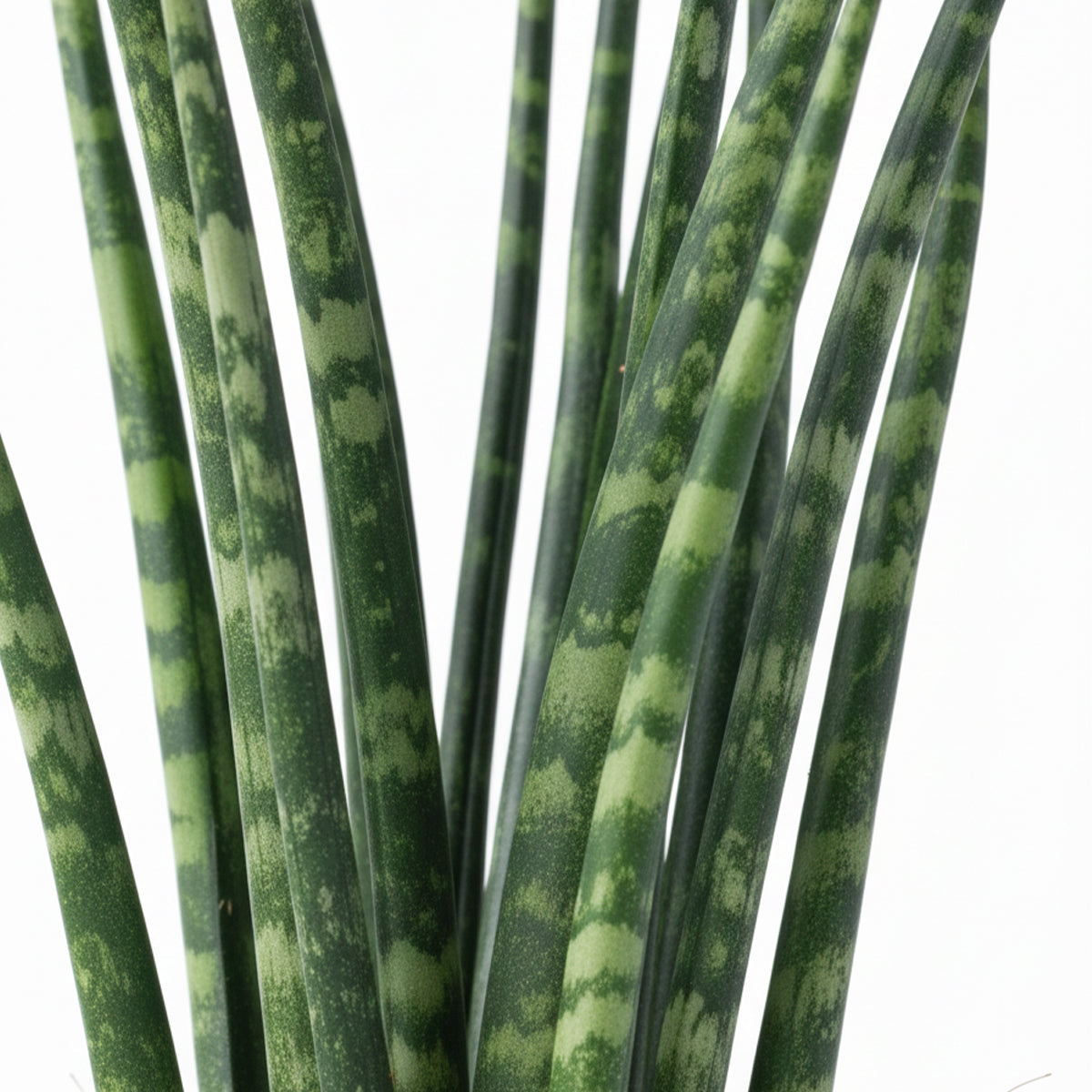
sansevieria fernwood mikado snake plant Fernwood MikadoDracaena (Sansevieria) bacularis 'Fernwood Mikado' Dracaena bacularis 'Fernwood Mikado' is a narrow, rod leaved snake plant with cylindrical foliage arranged in tight bundles. The leaves are slim, firm and almost spear like, with mid to dark green colouring and softer horizontal banding that becomes easier to see as the leaves mature. Young growth can emerge from darker, purplish basal sheaths before settling into the familiar green, stick like
Dracaena (Sansevieria) bacularis 'Fernwood Mikado'
Dracaena bacularis 'Fernwood Mikado' is a narrow, rod-leaved snake plant with cylindrical foliage arranged in tight bundles. The leaves are slim, firm and almost spear-like, with mid to dark green colouring and softer horizontal banding that becomes easier to see as the leaves mature. Young growth can emerge from darker, purplish basal sheaths before settling into the familiar green, stick-like outline.
This plant adds height, fine texture and a clear shape in a small pot. Its growth comes from a rhizome below the substrate, so new leaves appear from the base and slowly fill the container over time. In indoor culture, 'Fernwood Mikado' maintains a slim profile with vertical leaves that stay clear in simple pots and compact grouped pots.
Slender rod leaves in a tight bundle
- Leaf shape: Thin, cylindrical leaves give the plant its distinctive stick-like silhouette.
- Growth base: New shoots develop from the rhizome and gradually make the clump denser.
- Colour pattern: Green leaves carry subtle lighter banding across the surface.
- Container behaviour: It prefers a snug pot and usually needs repotting once the rhizomes have filled the space.
- Flowering: Mature, settled plants may produce pale, fragrant flowers, though flowering indoors is occasional.
Rhizome growth and dry-season storage
Dracaena bacularis belongs to the group of rhizomatous, succulent Dracaena species long grown under the name Sansevieria. It stores water in firm cylindrical leaves and spreads slowly from an underground rhizome, while the roots perform best when the substrate dries between waterings.
The species is native to DR Congo, where it grows in a seasonally dry tropical biome. Indoors, Dracaena bacularis 'Fernwood Mikado' handles dry intervals well and develops steadily when the potting mix dries properly between waterings. Keep the plant warm, bright and protected from cold, wet conditions.
The narrow leaves can reach impressive height on mature plants, but indoor growth is usually slow and steady. New shoots often appear close together, giving younger plants a bundled look. As the clump develops, older leaves remain firm for a long time, while new leaves add height and density from the base.
Care for cylindrical leaves
- Light: In bright indirect light, new growth stays firm and even. In lower light, the plant grows slowly and uses water at a gentler pace.
- Watering: Let the potting mix dry deeply before watering again. In cooler months, extend the dry interval so the rhizome stays warm and aerated.
- Substrate: Use a free-draining mix with mineral material such as pumice, lava rock, coarse sand or fine bark. The lower pot should drain quickly after watering.
- Pot choice: A pot with drainage holes is essential. Cachepots are fine when excess water is emptied after watering.
- Temperature: Keep it in normal indoor warmth, ideally around 15–24 °C. A warm root zone is especially important after watering.
- Humidity: Average indoor humidity is enough. Normal room air is adequate for its dry-tolerant foliage.
- Feeding: Feed lightly during active growth with a diluted cactus or balanced houseplant fertiliser. Slow succulent growth needs modest nutrition.
- Repotting: Repot when the rhizomes have filled the pot or the substrate has broken down. A slightly snug pot helps the mix dry predictably.
- Propagation: Divide established clumps when several shoots are present. Leaf cuttings can root slowly and take time to form a full plant.
Reading stress in a rod-leaved snake plant
- Soft bases: Check the lowest part of the leaves, the rhizome and the moisture level in the pot. Soft tissue usually points to a wet root zone, especially in cool conditions.
- Wrinkled leaves: Compare substrate dryness with root condition. Wrinkling can follow a long dry spell or root damage that limits water uptake.
- Brown tips: Look for irregular watering, old knocks, mineral buildup or exposure to cold air. Trim only the dry tissue if the tip damage bothers you.
- Slow growth: Check light first. Slow growth is normal, and a brighter position often improves new shoot production.
- Leaning leaves: Rotate the pot occasionally and keep the plant stable. Mature cylindrical leaves can crack if they are forced back into position.
Leaf safety and placement
Dracaena bacularis 'Fernwood Mikado' belongs out of reach of pets and small children who may chew the firm leaves. Snake plants contain saponins, which can cause nausea, vomiting or diarrhoea in cats and dogs if ingested. A stable position also helps protect the tall leaves from snapping if the pot is knocked.
Botanical name and meaning
The accepted botanical name is Dracaena bacularis, while Sansevieria bacularis remains a widely recognised synonym in horticulture. The genus name Dracaena comes from the Greek drakaina, meaning “female dragon”, a reference historically associated with red resin in some dragon tree relatives. The species epithet bacularis comes from Latin baculum, meaning stick, rod or staff, matching the plant’s narrow cylindrical leaves.
Dracaena bacularis 'Fernwood Mikado' has narrow rod-like foliage, slow basal growth and a slim upright profile.
Shipping Notes
- Free Standard Shipping on $100+ Orders to the USA.
- Except Preorder products are shipped in 48 hours.
- Delivery to the USA:
- Standard Shipping : 3-10 business days
- If time is of the essence, please consider selecting expedited delivery for faster service.
Exchange/Return Notes
- We offer a 30-day return/exchange service after receiving.
- Final sale items are not eligible for returns or exchanges.
- To process your return/exchange, please contact us at [email protected]
- Please click here for more details>>> Return & Exchange Policy