SKU: 76962195813
large monstera plant support

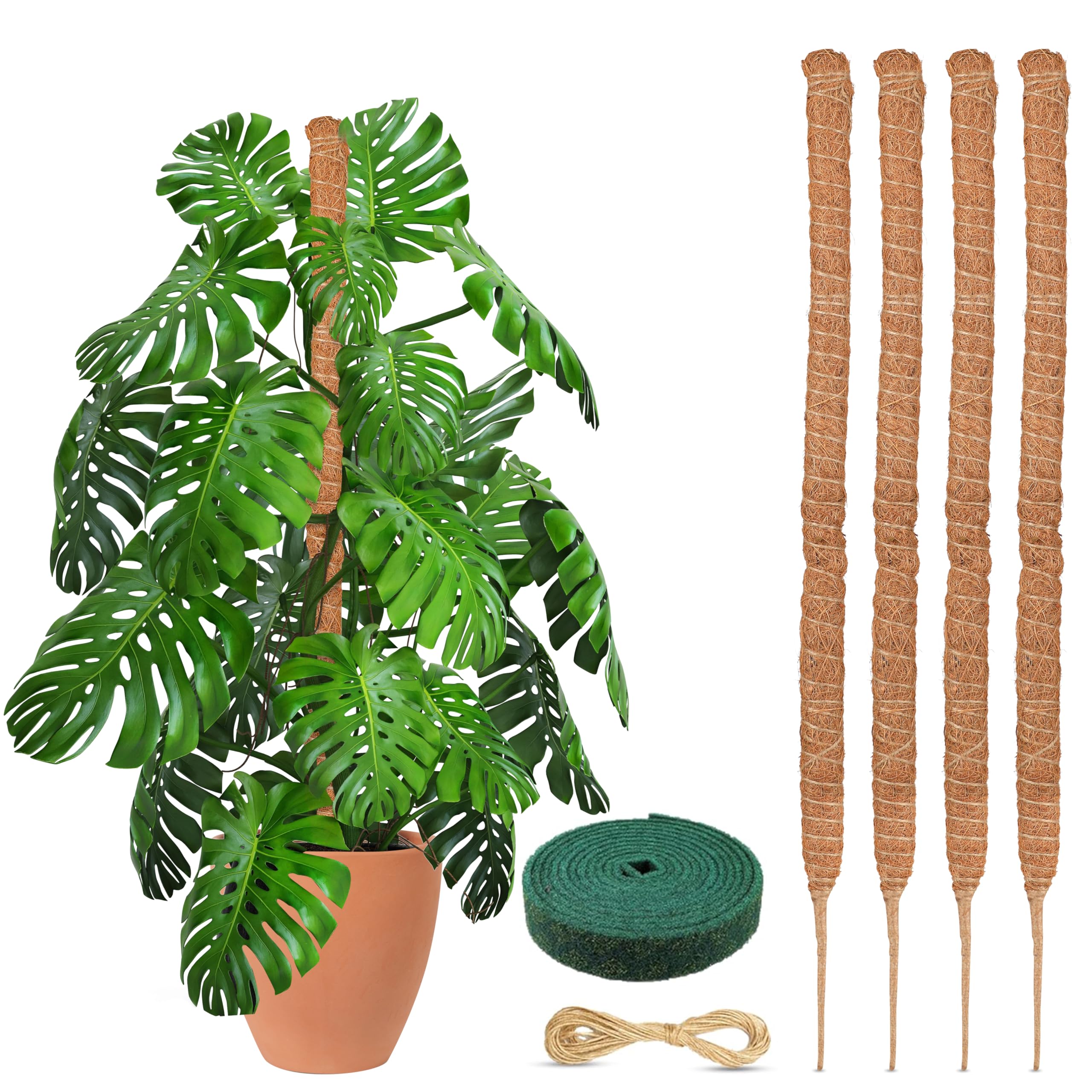
large monstera plant support Moss Poles for Plants 4-Pack 28 Inch | Coir Climbing Support for Monstera Indoor Houseplants

Sale price$24.34 Regular price$27.04
Save 10%

Pay in installments of $6.76 with ShopPay, AfterPay and Klarna

Shipping Estimate
USA
  • USA
  • CAN

Ships within 48 hours · Estimated delivery Aug 25 - Aug 30

Promo Codes Available:

For Your Every Summer RSVP, with Code: SUMMER15

Description

large monstera plant support Moss Poles for Plants 4-Pack 28 Inch | Coir Climbing Support for Monstera Indoor HouseplantsTechnical Details : Brand Name: EcoNour Manufacturer: EcoNour ASIN: B0CHYFZRCK Item Height: 3 inches Unit Count: 12. 0 Ounce Color: Brown Style Name: Tube Item Dimensions (L x W): 28" x 3" Number of Pieces: 4 Material Type: Coir EcoNour Moss Pole Monstera Plant Support 28" (4 Pack) Indoor Plants About This Item : EcoNour Moss Poles are designed to support your climbing indoor plants and promote healthy vertical growth. Made from natural coconut fiber,

Technical Details :

Brand Name: EcoNour

Manufacturer: EcoNour

ASIN: B0CHYFZRCK

Item Height: 3 inches

Unit Count: 12.0 Ounce

Color: Brown

Style Name: Tube

Item Dimensions (L x W): 28" x 3"

Number of Pieces: 4

Material Type: Coir


EcoNour Moss Pole Monstera Plant Support 28" (4 Pack) Indoor Plants


About This Item :


EcoNour Moss Poles are designed to support your climbing indoor plants and promote healthy vertical growth. Made from natural coconut fiber, these 28-inch moss poles provide an ideal surface for aerial root attachment, helping your monstera, pothos, philodendrons, and other climbing plants thrive. Whether you have limited gardening space or want to create a stunning vertical garden, these moss poles offer an efficient and reliable plant support solution.


Key Features :


  • EcoNour moss poles are made from natural coconut husk fiber, which retains moisture and provides a surface for plants to anchor their aerial roots.
  • The natural fiber material helps improve nutrient uptake and promotes healthier, stronger growth for climbing plants like monstera and philodendrons.
  • These moss poles support vertical growth, making them ideal for saving space in small indoor gardens, apartments, and offices.
  • The bendable design allows you to shape the poles into different forms such as hearts, spirals, or arches for a customized plant display.
  • Installation is simple—just insert the stake into the soil and tie the plant stem with jute or green rope to provide support.
  • This pack includes four 28-inch moss poles suitable for medium to large potted plants, helping train and support climbing plants effectively.
  • Suitable for various climbing indoor plants including monstera, pothos, and philodendrons, these moss poles offer versatile and reliable plant support.


Why Choose EcoNour?


EcoNour is committed to providing high-quality, eco-friendly plant support solutions designed to enhance the growth and health of your indoor plants. Our moss poles are crafted from natural coconut fiber, ensuring durability and effective moisture retention to support aerial root development. With a flexible and customizable design, EcoNour moss poles make plant training simple and stylish, perfect for any indoor gardening setup. Choose EcoNour for reliable, sustainable, and space-saving plant care that helps your climbing plants thrive beautifully.


Looking to elevate your indoor jungle? A moss pole for plants is the ultimate support system for your vining companions. Whether you're growing a Monstera deliciosa, Pothos, or a cheese plant, using a moss pole like the moss pole monstera or monstera moss pole helps mimic their natural climbing environment. Our moss pole for monstera provides reliable monstera support, acting as a sturdy monstera pole and encouraging healthy aerial root growth. The included moss stick for plants and moss stick options ensure compatibility with various pot sizes. For a more targeted solution, we offer a moss pole for monstera plant, monstera plant stake, and a monstera support pole tailored to support your plant’s vertical growth.


Boost your plant’s posture with a monstera stake or a durable monstera deliciosa moss pole—both ideal for indoor décor. Find your moss pole near me for easy access. These supports also serve as support for monstera plant or moss pole for cheese plant, delivering excellent performance as a monstera deliciosa support or moss pole for monstera deliciosa. Our climbing pole for monstera and moss pole plant support options ensure secure anchoring for lush growth. If you're searching for a moss pole for climbing plants, try our monstera plant support pole or monstera plant moss pole to guide your greens skyward.

Watch your monstera climbing pole bring transformation.


Whether it's moss pole for indoor plants, or your monstera on moss pole, the monstera pole support brings structure. Choose from sphagnum moss pole, large moss pole, or support for monstera, perfect for your evolving jungle. See your monstera with moss pole thrive using an indoor plant moss pole or monstera plant pole, all crafted for durability.


Our climbing plant moss pole and plant support for monstera are essential for upright growth. From a moss stick for monstera to a strong moss stake, every plant support monstera system helps train your plant. Prefer an indoor moss pole? Try the best moss pole for monstera or moss stake for plants for reliable outcomes. Reinforce with a monstera support stake, or pick a flexible pole for monstera and quality moss for moss pole to lock in moisture.


Looking for size options? Choose a large moss pole for monstera or precise monstera stick support. Our plant pole for monstera fits snugly in pots. DIY fans can make a moss pole or use a moss stick monstera. Go with the best moss pole or find a moss pole for plants nearby. If you're into alternatives, consider the coconut coir pole or a plant stake for monstera that complements aesthetics.


Even a pothos on a moss pole can benefit! Try stakes for monstera, explore monstera support ideas, or get the best support for monstera. Think of staking monstera as guiding nature indoors. For hands-on users, try a diy moss pole for monstera or stock up on sphagnum moss for moss pole. It’s easy to stake monstera with the best moss for moss pole. When staking a monstera, a bamboo stake for monstera works too!

Upgrade with the best monstera support using our monstera stake ideas. Try monstera support diy, or secure plants with plant ties for monstera. Our moss pole indoor plants collection ensures long-term success. For extra support, try a moss plant support or monstera plant with moss pole, combined with a monstera moss pole plant support or moss plant support pole.


We offer a moss pole for a monstera plant or simply a plant with moss pole setup. Opt for a moss pole support to encourage healthy roots. Our tools are great for plants for moss pole, whether you have plants on moss pole or plan to buy moss pole soon. Enhance with a cheese plant support or reliable moss support pole. All tools help support monstera, especially those monstera growing on moss pole.


Reinforce with a moss stick plant support or a natural moss pole. Use it to support monstera plant, or to help a monstera plant climbing pole. Go earthy with a coir moss pole, or see your monstera on a moss pole climb proudly. Our monstera and moss pole combos suit most décor themes. Try the coconut coir moss pole or eco-friendly coconut fiber pole for a sustainable touch.


Enjoy watching your monstera deliciosa on moss pole flourish. Our tools make training monstera deliciosa with moss pole seamless. For strong vines, choose a monstera deliciosa support pole. Want to DIY? Learn moss pole how to make guides. Boost root connection with monstera aerial roots moss pole, and master the art of support with our moss pole how to kits!

Shipping Notes
  • Free Standard Shipping on $100+ Orders to the USA.
  • Except Preorder products are shipped in 48 hours.
  • Delivery to the USA:
  1. Standard Shipping : 3-10 business days
  • If time is of the essence, please consider selecting expedited delivery for faster service.
Exchange/Return Notes
  • We offer a 30-day return/exchange service after receiving.
  • Final sale items are not eligible for returns or exchanges.
  • To process your return/exchange, please contact us at [email protected]
  • Please click here for more details>>> Return & Exchange Policy
SKU: 76962195813

Discover Niche Categories That Outsell large monstera plant support

Top-Converting Item to Boost Your Average Order

4.1 ★★★★★
Based on 8 reviews
Sort
Highest Rating
Newest First
Oldest First
Product Reviews
T
Verified Purchase
Thaumagnost
Fort Morgan, US
★★★★★ 5
An Informative Introduction Based on Current Academic Studies of Western Esotericism
Format: Hardcover
This introductory text is the fruit of a fairly new field of recognized academic studies which developed as a result of the pioneering literary efforts of scholars such as D. P. Walker (1914 - 1985) and Frances A. Yates (1899 - 1981) who took the subject of Western esotericism seriously rather than denigrate it as an area filled with superstition and irrationalism as many earlier scholars in different specialized fields had done. Other scholars of esotericism who have contributed to this growing field include but are not limited to Henry Corbin, Francois Secret, Antoine Faivre, Arthur Versluis, Joscelyn Godwin, and Wouter Hanegraaff, the last being the senior editor of the landmark Dictionary of Gnosis and Western Esotericism (2005), a collaborative effort by many scholars. Goodrick-Clarke is also a recognized scholar in this field and introduces it to the reader in his own introduction which also addresses the question of how esotericism is defined by those dedicated to studying it. As clarified in the introduction, Western esotericism is rooted in the Hellenistic philosophy of classical paganism as expressed in Alexandrian Hermeticism, Neoplatonism, and Gnosticism which have syncretized with the three Abrahamic religions of Judaism, Christianity and Islam, leaving vital traces within each. Through the Italian Renaissance, a Hermetic revival occurred as a result of the rediscovery of ancient texts which further resulted in the development of magic, astrology, alchemy, and Cabala through prominent individuals such as Marcilio Ficino, Pico della Mirandola, Johannes Reuchlin, Johann Trithemius, Henry Cornelius Agrippa, John Dee, and Paracelsus, each given significant attention. The development of German Naturphilosophie, Christian theosophy through Jacob Boehme and his followers (such as Gichtel, Pordage and Law), and Pietism are also covered before thoroughly introducing us to Rosicrucianism in the early 17th century, high-grade Freemasonry and Illuminism in the 18th century, and the ideas and practices of Emanuel Swedenborg and Franz Anton Mesmer which significantly impacted esotericism. Within the context of Rosicrucianism, the content of the manifestos are discussed along with Johann Valentin Andreae and the Tubingen Circle; in England, Michael Maier, Robert Fludd, and Comenius and the Origins of the Royal Society are covered. The impact of Rosicrucianism and theosophy on Freemasonry are explored as well as the following types of Freemasonry: "Scottish" and Chivalric, German Templar, and Egyptian. Within the context of Freemasonry and Illuminism, the following are also discussed: Martines de Pasqually and the Elect Coens, Louis Claude de Saint-Martin, Martinesism, Martinism, Willermozism, The Illumines of Avignon, and Count Cagliostro. Not only are the ideas of Swedenborg and Mesmer presented but also how they contributed to spiritualism and healing movements in the 19th century, including the United States which birthed Andrew Jackson Davis as the main theologian for spiritualism; Phineas Parkhurst Quimby, Warren Felt Evans and others who developed the New Thought Movement; and Mary Baker Eddy who founded Christian Science. A separate chapter is dedicated to ritual magic from 1850 to the present. Within this chapter, one is introduced to Eliphas Levi and the French Occult Revival, the Hermetic Order of the Golden Dawn and its members, and special attention is given to the contributions of A. E. Waite, Aleister Crowley and Thelemic magick, and Dion Fortune and the Inner Light. I was, however, disappointed to see the section on Crowley end with the following: "Gerald Gardner (1884 - 1964), the founder of modern witchcraft, introduced Crowleyan magick into the neopagan Wiccan movement." For a better understanding of the influential role of Crowley and ritual magic, including the grimoires, on Wiccan practices, I recommend Wicca: Magickal Beginnings (2008) by Sorita d'Este and David Rankine. Helena Blavatsky and her Theosophical Society are given a separate chapter which expounds on her influences, travels, developing doctrines, and legacy. The last chapter titled "Modern Esotericism and New Paradigms" discusses theosophical heirs such as Annie Besant, Charles W. Leadbeater, and Rudolph Steiner (who developed his own religious system called "Anthroposophy"). It also has a section on Fourth Way Groups, introducing Gurdjieff and Ouspensky. Additionally, it covers the scientization of esotericism, New Age science, and Carl Jung's influence on esotericism. One individual I would have liked to see introduced within the context of Steiner is Valentin Tomberg who anonymously wrote Meditations on the Tarot: A Journey into Christian Hermeticism which is recognized by some, including esoteric scholar Antoine Faivre, as a masterpiece of 20th century esoteric/mystical literature. Goodrick-Clarke's book not only includes valuable footnotes and recommendations for further reading for each chapter, but also includes a helpful index as well as over 30 illustrations comprised of portraits, diagrams, plates, charts and other relevant pictures to supplement the text. This historical introduction to Western esotericism deserves wide readership.
WAS THIS REVIEW HELPFUL?YesReportShare
Reviewed in the United States on February 26, 2009
K
Verified Purchase
Kevin Fuller
Draper, US
★★★★★ 5
The Tradition Lives
Format: Hardcover
Throughout the Christian experience, Christianity has been a religion of the heart, perhaps best represented by the exoteric outer symbol and ritual of the Tradition. However, the Spirit will not go lacking, and there have been those individualistic and Protestant minded folks who have injected the Christian experience with Pagan influence in order to better satisfy the mind. Sources have included the towering Plato and Plotinus, while the Egyptian influence has been the quiter yet rangier philosophy of Hermes Trismegistus. Whereever the Christian Revelation has intersected with this Greek and Egyptian Rationalism, the product has resulted in Western Esotericism. The Tradition has quietly lived through millenia of possible persecution, martyrdom and certainly marginalization, yet has survived all the same. This book puts a glass to this Tradition and puts it in perspective, and expertly in my view. Major players are highlighted and minor counterparts are covered as well. Each participant, whether it by Mirandola compiling the Christian Kabbalah, or Paracelsus pushing past Galen to bring medicine to the door step of empiricism, all have added their own unique vision to the bigger picture of Western Esotericism. Though the Tradition has it's roots in Egyptian and Greek Mystery Schools, it has been preserved, since the fall of the Roman Empire by Secret Societies such as Rosicrucianism, Freemasonry and even Theosophy and proves to be a viable option yet today for those who seek a deeper more inner sacred experience than what perhaps their outer religious profession provides. Wondering? This is a good place to start.
WAS THIS REVIEW HELPFUL?YesReportShare
Reviewed in the United States on January 2, 2009
F
Verified Purchase
Florida Man
Belleville, US
★★★★★ 4
Serious[ly]
Format: Hardcover
This book is exactly what the title claims - a historical introduction. While although the author doesn't go into a great deal of depth, he more than makes up for it in breadth. The author starts with an attempt at defining what exactly esotericism is. After that, the book is arranged chronologically, starting with Hellenistic esotericism and proceeding through the Renaissance, the Enlightenment and up to the present. Each chapter centers on an individual or group of individuals who were influential thinkers in their time and place. At the end of each chapter, there is a list of books for further study, much like a textbook. It is serious; it is scholarly. It is most definitely not silly. If you are at all interested in a "Third Way", which is neither mainstream religion nor strictly empirical "scientism", this may be a gooding jumping-off point for you, as it was for me.
WAS THIS REVIEW HELPFUL?YesReportShare
Reviewed in the United States on February 18, 2014
J
Verified Purchase
JA
Boise, US
★★★★★ 5
An amazing book that teaches a great history
Format: Kindle
This is a great book that takes the reader on an amazing journey through a part of Western history that is rarely taught. This book teaches the other side of the development of Western religion and after reading this book I now have a knew light on previous theological education. It is easy to understand but does not compromise on scholastic research and standards.
WAS THIS REVIEW HELPFUL?YesReportShare
Reviewed in the United States on March 12, 2014
G
Grant Hemingway
Lexington, US
★★★★★ 5
Probably The Best Introduction to Western Esotericism Available
Format: Hardcover
I recently completed my MA in Western Esotericism at the University of Exeter and studied under Nicholas Goodrick-Clarke. He is the Director of the Exeter Centre for the Study of Esotericism (EXESESO) at the University of Exeter. This book is structured in the same fashion as the MA program at Exeter and provides a comprehensive overview of the key topics in the field of Western esotericism. The book is chronological and begins in ancient Alexandria, through the Italian Renaissance, post-Reformation Germany and into the Age of Enlightenment. Goodrick-Clarke covers complex topics such as Hermeticism, Neo-Platonism, Alchemy, Freemasonry, Rosicrucianism and Theosophy but makes it understandable even to novice readers. The underlying theme behind the subject of Western esotericism is the continuity in the different schools of thought that can be traced though the two thousand period from ancient Alexandria to the present day. This is a subject that has been overlooked for many years due to its association with the occult and magic. Thanks to the work of Goodrick-Clarke and scholars such as Antoine Faivre and Wouter Hanegraaff it is now being given the respect it deserves. This is an excellent starting point for anyone interested in learning more.
WAS THIS REVIEW HELPFUL?YesReportShare
Reviewed in the United States on October 24, 2011

recommand products