Pay in installments of $6.28 with
 ,
,
 and
and

Shipping Estimate
USA
- USA
- CAN
- USA
- CAN
Ships within 48 hours · Estimated delivery Sep 28 - Oct 3
 Promo Codes Available:
For Your Every Summer RSVP, with Code: SUMMER15
Description
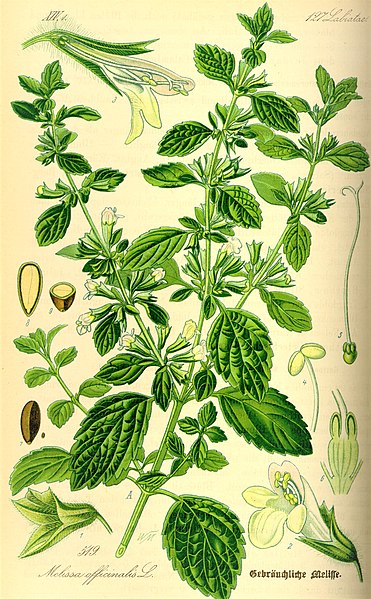
melissa plant seeds 500 Lemon Balm Seeds - Melissa officinalis Seeds - Medicinal HerbLemon balm is a perennial herbaceous plant in the mint family and native to south central Europe, the Mediterranean Basin, Iran, and Central Asia, but now naturalised elsewhere. It grows to a maximum height of 1 m. The leaves have a mild lemon scent. During summer, small white flowers full of nectar appear. Melissa officinalis is native to Europe, central Asia and Iran, but is now naturalized around the world. It grows easily from seed, preferring
Lemon balm is a perennial herbaceous plant in the mint family and native to south-central Europe, the Mediterranean Basin, Iran, and Central Asia, but now naturalised elsewhere. It grows to a maximum height of 1 m. The leaves have a mild lemon scent. During summer, small white flowers full of nectar appear.
Melissa officinalis is native to Europe, central Asia and Iran, but is now naturalized around the world. It grows easily from seed, preferring rich, moist soil.
Lemon balm seeds require light and a minimum temperature of 20 °C (68 °F) to germinate. The plant grows in clumps and spreads vegetatively (a new plant can grow from a fragment of the parent plant), as well as by seed. In mild temperate zones, the plant stems die off at the start of the winter, but shoot up again in spring. Lemon balm grows vigorously.
As of 1992, Hungary, Egypt, and Italy are the major producing countries of lemon balm. The leaves are harvested by hand in June and August in the northern hemisphere, on a day when the weather is dry, to prevent the crop from turning black if damp.
The leaves are used as an herb, in teas and also as a flavouring. The plant is used to attract bees for honey production. It is grown as an ornamental plant and for its oil (to use in perfumery). Lemon balm has been cultivated at least since the 16th century.
Historical use:
The use of lemon balm can be dated to over 2000 years ago through the Greeks and the Romans. It is mentioned by the Greek polymath Theophrastus in his Historia Plantarum, written in c.300 BC, as "honey-leaf" (μελισσόφυλλον). Lemon balm was formally introduced into Europe in the 7th century, from which its use and domestication spread. Its use in the Middle Ages is noted by herbalists, writers, philosophers, and scientists.
Lemon balm was a favourite plant of the Tudors, who scattered the leaves across their floors. It was in the herbal garden of the English botanist John Gerard in the 1590s,[page needed] who considered it especially good for feeding and attracting honeybees. Especially cultivated for honey production, according to the authors Janet Dampney and Elizabeth Pomeroy, "bees were thought never to leave a garden in which it was grown". It was introduced to North America by the first colonists from Europe; it was cultivated in the Gardens of Monticello, designed by the American statesman Thomas Jefferson.
The English botanist Nicholas Culpeper considered lemon balm to be ruled by the planet Jupiter in Cancer, and suggested it to be used for "weak stomachs", to cause the heart to become "merry", to help digestion, to open "obstructions of the brain", and to expel "melancholy vapors" from the heart and arteries.
In traditional Austrian medicine, M. officinalis leaves have been prescribed as a herbal tea, or as an external application in the form of an essential oil.
Shipping Notes
- Free Standard Shipping on $100+ Orders to the USA.
- Except Preorder products are shipped in 48 hours.
- Delivery to the USA:
- Standard Shipping : 3-10 business days
- If time is of the essence, please consider selecting expedited delivery for faster service.
Exchange/Return Notes
- We offer a 30-day return/exchange service after receiving.
- Final sale items are not eligible for returns or exchanges.
- To process your return/exchange, please contact us at [email protected]
- Please click here for more details>>> Return & Exchange Policy
4.5 ★★★★★
Based on 29 reviews
Sort
Product Reviews
★★★★★ 3
Very skinny.
Size: 31W x 32L, Color: Rinse
Very slim/skinny. Does not look good.
WAS THIS REVIEW HELPFUL?YesReportShare
Reviewed in the United States on April 28, 2026
★★★★★ 5
Good quality
Size: 36W x 34L, Color: Rinse
Good quality jeans it fit well
WAS THIS REVIEW HELPFUL?YesReportShare
Reviewed in the United States on May 19, 2026
★★★★★ 5
What you wearing?
Size: 36W x 34L, Color: Rinse
Great look. Comfy. Slender and yet still roomy.
WAS THIS REVIEW HELPFUL?YesReportShare
Reviewed in the United States on March 10, 2026
★★★★★ 4
Better jeans than I expected
Size: 29W x 34L, Color: Rinse, Size: 29W x 34L, Color: Rinse
I pretty much only wear Levi's 510s & as of lately Asos skinny jeans. Thought I'd give these a shot. I wear between 28w-30w so I ordered 29w. They fit good & seems to be really true to size. I could have probably ordered the 28w for a tighter fit. Only reason I didn't give them 5 stars is that the dye transfers from the denim. I'm sure eventually that will stop happening?? I like the dark denim so I don't wanna continue to wash them so they fade out so soon.
WAS THIS REVIEW HELPFUL?YesReportShare
Reviewed in the United States on February 19, 2025
★★★★★ 5
Get it!
Size: 29W x 29L, Color: Rinsed
As shown. Feels thick and expensive.
WAS THIS REVIEW HELPFUL?YesReportShare
Reviewed in the United States on May 24, 2026