SKU: 77058227502
aloe vera barbadensis miller plants for sale

aloe vera barbadensis miller plants for sale Aloe Vera

Sale price$22.95 Regular price$25.50
Save 10%

Pay in installments of $6.38 with ShopPay, AfterPay and Klarna

Shipping Estimate
USA
  • USA
  • CAN

Ships within 48 hours · Estimated delivery Aug 2 - Aug 7

Promo Codes Available:

For Your Every Summer RSVP, with Code: SUMMER15

Description

aloe vera barbadensis miller plants for sale Aloe VeraIntroducing the fabulous Aloe Vera plant also known as Aloe barbadensis 'miller,' it is also known as a medicinal aloe and burn plant. The Aloe vera plant is by far the most popular out of over 400 varieties of the Aloe genus. This incredible tropical succulent is not your average houseplant. It's a superstar known for its leaves, which hold a magical aloe vera gel for soothing sunburn and as a popular drink to help your stomach. This large Aloe vera

Introducing the fabulous Aloe Vera plant- also known as Aloe barbadensis 'miller,' it is also known as a medicinal aloe and burn plant. The Aloe vera plant is by far the most popular out of over 400 varieties of the Aloe genus.

This incredible tropical succulent is not your average houseplant. It's a superstar known for its leaves, which hold a magical aloe vera gel for soothing sunburn and as a popular drink to help your stomach.

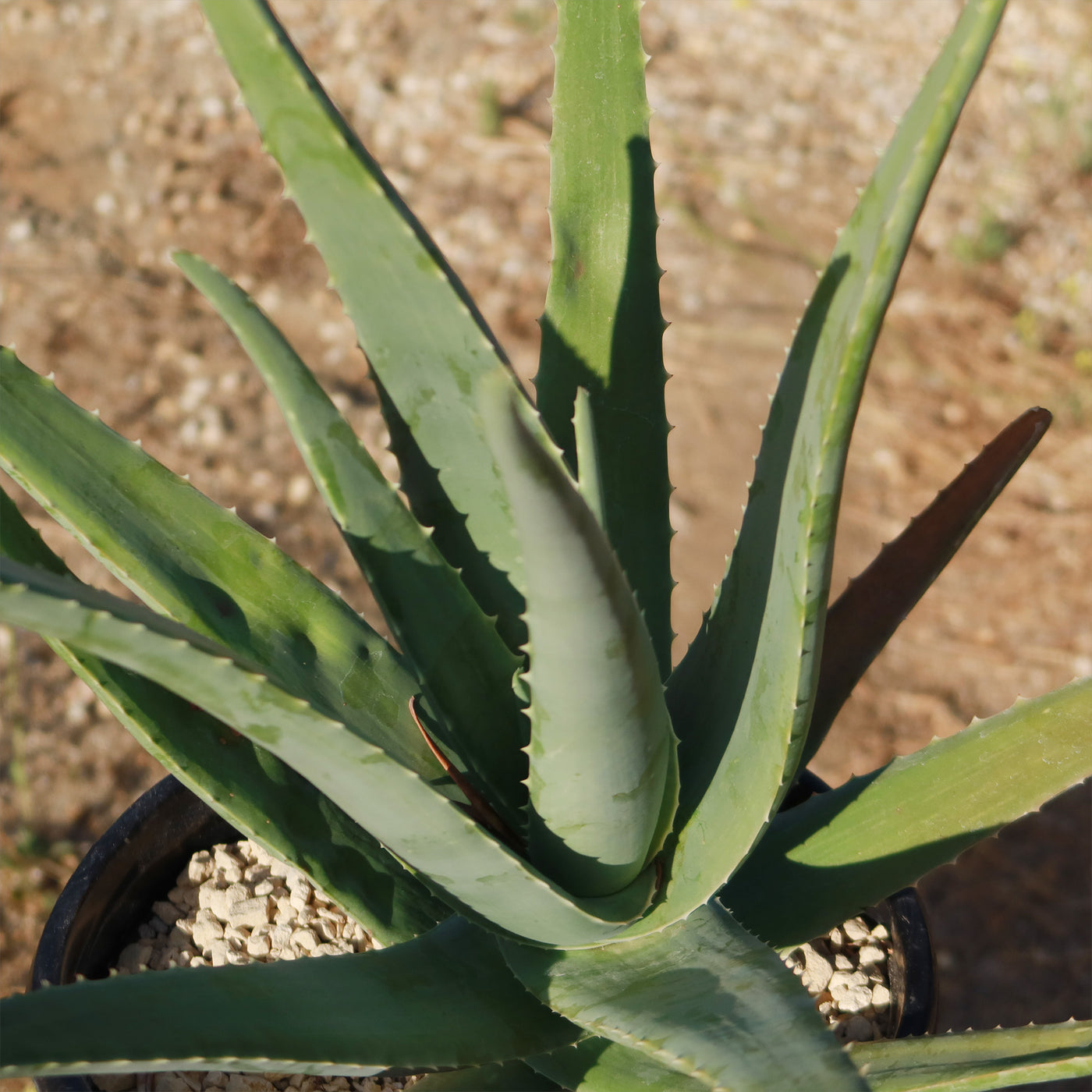
This large Aloe vera plant boasts fleshy lance-shaped grey-green leaves with small white teeth along the edges growing out from a starfish-like basal rosette. 

The edible aloe vera flowers burst into bloom in vibrant shades of yellow at the tips of their stalks when given favorable conditions. Only mature plants will yield flowers, so you'll have to wait at least four years to see an aloe vera bloom. However, in some growing conditions (especially hybrid plants), the flowers can sometimes appear with orange or reddish hues. 

This fast-growing succulent can grow into a large aloe vera plant up to 3 feet tall and 2 feet wide and even produce adorable pups that you can repot or share as delightful gifts with fellow plant enthusiasts.

How to Get Aloe Vera Gel from the plant to use on your skin

  1. Choose and Cut a Leaf: Select a large, healthy leaf from the bottom of the plant. Use a sharp knife to cut the entire leaf off at the base.
  2. Prepare the Leaf: Let the leaf sit upright in a container for 10–15 minutes to allow the yellow sap (aloin) to drain out. This sap can be irritating to the skin.
  3. Slice and Extract the Gel: For a small amount of gel, cut a section from the leaf rather than using the whole thing. Slice the leaf lengthwise to expose the gel. Use a spoon or knife to scoop out the clear gel.
  4. Apply or Store: Apply directly to your skin for soothing relief. Store extra gel in an airtight container in the fridge for a few days.

Aloe vera juice has many benefits for humans, this succulent rich in antibacterial, antioxidant, and anti-inflammatory properties, may enhance digestion, blood sugar levels, and oral health, although certain compounds, particularly aloin, may cause digestive discomfort and other side effects.

An aloe vera indoor plant is a great addition to any home, as it is easy to aloe vera care for and provides a variety of aloe vera benefits. 

According to the American Academy of Dermatology, Aloe vera has anti-inflammatory properties that can help in wound healing. It can also help to moisturize the skin and prevent peeling.

When and How to Water Your Aloe Vera 

As a desert dweller, watering the aloe vera succulent may be tricky, it may shrivel and die if given too little water, but it may also easily rot when given excessive water. So be careful not to overwater your aloe plantyou only want to give it enough to keep it from drying out completely, not drown it! 

A good rule of thumb is to water the Aloe plants deeply and then allow the soil to dry out completely before watering again. In the spring and summer, during the growing season, watering can be done once every 2-3 weeks.

During the winter months, when aloe vera is in a dormant period, it can be watered even less frequently. If you live in a rainy climate, consider planting aloe in gravel or stones. 

It is also important to note that aloe vera plants are sensitive to water quality. They prefer water that is low in minerals and salts, so it is best to use distilled or filtered water. Tap water can be used, but it should be left out for 24 hours before watering the plant to allow the chlorine to evaporate.

Light Requirements - Where to Place Your Aloe Vera Plant 

When growing indoors as a houseplant, place the aloe vera a few feet away from the south-facing window that receives plenty of sunlight, but it is important to avoid direct sunlight, as this can cause the leaves to burn. If the aloe plant is not receiving enough light, the leaves will start to droop and turn brown. In this case, it may be necessary to move the aloe vera plant to a brighter location. 

When planted outdoors, your Aloe plants need their daily dose of sunshine like a beach-loving teenager needs their favorite tunes!

They thrive on at least 6 to 8 hours of direct sunlight, soaking up those glorious rays with joy.

But wait, before you go dragging your aloe plant from its cozy shady spot into the blazing sun, be cautious. That sudden move can dry out your leafy buddy and leave it looking as yellow as a lemon.  

Now imagine you live in one of those cooler climates where clouds have permanent residency or if your home lacks these sunny windows altogether.

Fear not; you can use artificial lights – they're like little suns in bulb form! Hang them about one to two feet above your precious plant during daylight hours (that's roughly 16 hours per day) and watch it flourish happily amidst dim interiors.

Optimal Soil & Fertilizer Needs 

Aloe vera plants prefer well-draining soil that is a mixture of sand, perlite, and peat moss. It is critical to avoid soil that retains excessive moisture, as this can cause root rot. Instead, make or buy a well-draining potting mix, or ideally use our specialized succulent potting mix soil for aloe vera that contains 5 natural substrates and mycorrhizae to promote the development of a strong root system that helps your succulent to thrive.  

In terms of fertilizer, aloe succulents do not require a lot of nutrients. They can be fertilized once a year in the spring with a balanced fertilizer (NPK) of 5-10-5 in ratio. It is important not to over-fertilize the aloe plant, as this can lead to root burn. 

Hardiness Zones & More 

When grown indoors as a houseplant, aloe vera plants prefer a warm and dry environment. They thrive in temperatures between 60°F and 80°F. Aloe vera is a succulent, so it's adapted to arid conditions and doesn't do well in overly humid environments. Aim for a humidity level of around 30% to 40% for your indoor aloe vera plant.

In the United States, this is mostly an indoor plant, but if you live in southern Florida or Hawaii then you can cultivate it outdoors in USDA zones 9-11

Aloe vera can tolerate temperatures as low as 40°F for short periods, but prolonged exposure to freezing temperatures can damage or kill the plant. If you live in a colder climate, it's best to keep your aloe vera indoors or provide protection during winter months.

Aloe vera plants prefer dry air and do not require high levels of humidity. They can tolerate low humidity levels and do not need to be misted or placed in a humid environment. 

Wildlife - Aloe Vera Attracts the Following Friendly Pollinators

Aloe vera plants attract a variety of friendly pollinators, including bees, butterflies, and hummingbirds. These pollinators are essential for the reproduction of aloe vera plants, as they help transfer pollen between flowers, ultimately leading to the production of seeds. Additionally, these pollinators play a crucial role in maintaining biodiversity and ecosystem health.

Butterflies
Bees
Hummingbirds
Lady Bugs
Multi Pollinators
Other Birds

According to the ASPCA, the Aloe vera can be mildly toxic to pets and humans. It is rare but can occur if consumed in large quantities and can cause abdominal cramps, diarrhea, and electrolyte imbalances. It is important to consult a healthcare professional if you experience any adverse effects from consuming aloe vera.

How to Propagate Your Aloe Vera Plant

To propagate your aloe vera plant, you can separate the offsets or "pups" that grow at the base of the main plant. Gently remove these pups and plant them in their own pots with well-draining soil to encourage root growth. Water sparingly until they establish themselves, and place them in a sunny spot to promote healthy growth.

Aloe Vera: The Natural Sunburn Remedy


Aloe vera gel is known for its ability to moisturize the skin, it helps soothe burns and sunburns, as well as being known for its anti-inflammatory and antibacterial properties.

Aloe Vera is also rich in vitamins and minerals that are essential for healthy skin. It is best to use pure aloe gel extracted directly from an aloe vera plant.

To use aloe vera gel to soothe sunburns, cut off a piece of the large aloe vera leaf and open it to reveal the gel.

To maintain the aesthetic appeal of your aloe plant, it is advisable to cut off the entire leaf of the large aloe vera plant when cutting one. Just chop the leaf off as close to the main stem as you can. Cutting leaves from the base of the plant is always preferable. These leaves will be thicker since they are older. If you cut off the tip of a leaf, it will eventually turn brown at the tip because cut leaves keep their scars.

Key Takeaways

  1. Aloe vera is renowned for its medicinal properties, particularly its soothing gel, which is widely used for treating burns, wounds, and skin irritations. Its natural compounds, like aloin and acemannan, have anti-inflammatory and healing properties.
  2. When cut, aloe vera can seal its own wounds by producing protective latex, showcasing its remarkable survival mechanism in harsh environments.
  3. Aloe vera is not just a skincare savior; it also purifies indoor air by removing harmful pollutants like formaldehyde and benzene, making it a great addition to homes and offices.
  4. Native to arid regions, aloe vera thrives in minimal water conditions. It stores water in its thick, fleshy leaves, allowing it to endure prolonged droughts.
  5. The inner gel of aloe vera leaves is edible and used in drinks and food for its health benefits, such as aiding digestion, boosting immunity, and providing hydration. Always ensure proper preparation to remove any bitter or toxic compounds.
  6. The presence of yellow flower buds is a strong indicator of the edible variety.

The Bottom Line

Overall, Aloe vera is a popular plant known for its healing properties and versatility. It has gained popularity for its ability to help heal wounds, cuts, and burns, including sunburns. The gel inside the aloe vera leaves contains soothing and moisturizing properties that can provide relief and promote healing. In terms of care, aloe vera is relatively low-maintenance. It thrives in well-draining soil and requires moderate watering. It prefers bright, indirect sunlight but can tolerate some shade. 

A lot of people have a hard time finding large aloe vera plants, but here at Planet Desert, we regularly have large sizes in stock. Don't miss out on adding an Aloe vera plant for sale to your garden! Order now and enjoy its beauty for years to come. 

Shipping Notes
  • Free Standard Shipping on $100+ Orders to the USA.
  • Except Preorder products are shipped in 48 hours.
  • Delivery to the USA:
  1. Standard Shipping : 3-10 business days
  • If time is of the essence, please consider selecting expedited delivery for faster service.
Exchange/Return Notes
  • We offer a 30-day return/exchange service after receiving.
  • Final sale items are not eligible for returns or exchanges.
  • To process your return/exchange, please contact us at [email protected]
  • Please click here for more details>>> Return & Exchange Policy
SKU: 77058227502

Discover Niche Categories That Outsell aloe vera barbadensis miller plants for sale

Top-Converting Item to Boost Your Average Order

4.5 ★★★★★
Based on 27 reviews
Sort
Highest Rating
Newest First
Oldest First
Product Reviews
D
Verified Cardmember
DeeAnna Lee Bray
Los Angeles, US
★★★★★ 5
Easy to use cash back and reconcile charges to purchases.
Style: Prime Visa
The Prime Visa is a great way to get 5% cash back on your purchases. Chase makes it easy to have it sent to the bank of your choice or you can apply against future purchases with Amazon. Amazon and Chase also make it easy to reconcile your transactions with Amazon and charges to Chase card. If you have a question on your chase card you can look on line realtime, select the greater than symbol> and it will take you to the transaction in Amazons Orders and Returns so you can see the charges were for. High Five for both companies.
WAS THIS REVIEW HELPFUL?YesReportShare
Reviewed in the United States on May 27, 2026
N
Verified Cardmember
NEEKS
Waukegan, US
★★★★★ 4
Great Card With Strong Rewards — Minor Durability Issue
Style: Prime Visa
I’ve really enjoyed the Amazon Prime Visa Credit Card overall. The rewards structure is genuinely useful — getting 5% back on Amazon.com, Whole Foods Market, and Chase Travel purchases adds up fast, and the 2% back at gas stations, restaurants, and on local transit is a nice everyday boost. The fact that there’s no annual fee or foreign transaction fees makes it even better, especially for a card tied to a Prime membership. My only complaint, and the reason for four stars instead of five, is that the chip stopped working after about a year of regular use. The card still works with tap and swipe, but it’s inconvenient when a terminal requires chip-only transactions. Aside from that hiccup, it’s been a great rewards card and definitely worth having if you’re a frequent Amazon or Whole Foods shopper.
WAS THIS REVIEW HELPFUL?YesReportShare
Reviewed in the United States on April 15, 2026
S
Verified Cardmember
Shea M Curry
Dallas, US
★★★★★ 5
A useful card for Amazon Members, with No Annual Fee, and enticing Sign-Up Offers!
Style: Prime Visa
I signed up for my Chase Amazon Prime Visa card about a year ago, when they were running a $150 gift card offer upon approval promotion. For me, it was a no-brainer, since that covered a year of Prime at $139, and I was able to order some things I needed at the time. I haven't used it a ton since then, but there are solid perks for everyday users, like 5% cash back on all Amazon Purchases, Whole Foods, Chase Travel - 2% on all dining, gas, local transit/rideshare - 1% on all other purchases - and then some rotating promotional offers like 10% back on certain Prime Deals. I mostly use my Chase Sapphire Preferred Travel card for the slightly better perks, but this is a nice card to have as a supplement and wouldn't be a bad choice for someone who shops on Amazon frequently. And the No Annual Fee makes it kind of a "why not?" type decision, in my mind! Just make sure to check which Gift Card promo they are running before you sign up, because I saw it go as high as $250 after I signed up. - Shea
WAS THIS REVIEW HELPFUL?YesReportShare
Reviewed in the United States on May 27, 2026
C
Verified Cardmember
Celerity
Omaha, US
★★★★★ 5
Great card if you buy a lot on Amazon and don't carry a balance
Style: Prime Visa
**This is a review of the 2017 version** THE BASICS: This is a credit card. It gives you 5% back at Amazon (only 3% if you don't have Prime) and 2% back at gas stations, restaurants, and drug stores. So far it seems to be a fantastic card if you do a lot of shopping at Amazon and don't carry a balance, and maybe a not-so-fantastic card if you do not do those things. REWARDS: From what I've seen, cash back type cards seem to come in two flavors. One kind gives you 5%ish back on one category (often this rotates, but it will just be one at a time) and 1% back on everything else. The other kind gives you 1.5 or 2%ish back on everything. This card is technically of the former variety, but since you can buy almost anything on Amazon, if you're the sort of person who does buy almost everything on Amazon, it's kind of like 5% back on everything. And then it gives 2% back on gas and restaurants, which are two things you can't really use Amazon for. At the time I applied, it also offered a $70 Amazon gift card as a sign up bonus. I received this promptly, but I don't think on its own the gift card is a very good reason to get a new credit card. This card is also not a good reason to sign up for Prime if you don't already want it---you'd have to spend an awful lot to make back the Prime fee (and if you buy that much stuff on Amazon, why don't you have Prime already?). CHASE: This card is offered through Chase, and a lot of people don't like Chase. But I suspect a lot of people don't like whatever bank they have to deal with, and I've never had any problems with Chase (before this card, I also had a checking account, savings account, car loan, and another credit card---the Freedom---with them). My suspicion is that Chase might be slightly less willing to engage with people it considers risks than some banks are, so if you tend to max out your cards, etc., it might not be the bank for you (but this opinion is just based on reading other people's stories on the internet). I haven't interacted with them over this card (which I have had for a couple of months---long enough to have paid my first bill and know that they accepted that and didn't charge me unfair interest, but not long enough to have had tons of things come up), but when I've had to interact with them over other things it has always gone well (for example, when the number for my Freedom was stolen a while back they dealt with all the fraudulent charges and overnighted me a new card). I've seen some reviewers complaining about their website, but I don't think it's terribly confusing, and I can definitely pay my bills and view my statements easily from it. I suppose one thing to keep in mind is that it is the Chase website you'll be dealing with and not an Amazon one, so if you're expecting to be able to pay your bills on the Amazon website this might be a shock. APPLICATION PROCESS: I just filled out a form and received my approval message like 15 seconds later or something. I don't remember all the questions, so I guess there wasn't anything too surprising. The card immediately showed up in my Chase app and on Amazon, but the physical card took about a week to get here in the mail. One thing to note is that I filled out my application on the 18th of a month, and now all my statements end on the 17th or 18th and my bills are due on the 14th. I might be able to change this number (I haven't tried because I don't really care) but if you care about when in the month your bills are due and don't want to take any chances you should think about when you apply. CREDIT LIMIT/APR: Some people have complained about tiny limits for this card, and I did not have that experience (or maybe I just have a different idea of tiny---but I would say anything over my monthly takehome pay is not 'tiny'). When I got my Freedom from Chase, however, I did not have much credit history and they gave me a very tiny limit (so tiny I was paying off the card several times a month). After a year or so of perfect payments I requested an increase and they gave me a much bigger one than I'd asked for and have since raised my limit twice of their own accord. So my guess is that if you would like to use the card at some point and just have an issue with the limit, it's worth keeping it open, because Chase is definitely willing to raise limits in response to good behavior. The APR that I got when I applied is 19.74% (but it varies---both with your credit score and with the market rate), and I think it would be foolish to carry a balance at that rate. I tried to cover everything I could think of, but if you have questions feel free to leave them in the comments and I will do my best to answer. I will also try to update the review if I later have a bad experience with the card.
WAS THIS REVIEW HELPFUL?YesReportShare
Reviewed in the United States on April 29, 2017
E
Verified Cardmember
ederath
San Leandro, US
★★★★★ 1
New Online Access Security Features Actually Compromise Security
Style: Prime Visa
While I started out very satisfied with my Amazon Prime Visa, I have since become discouraged and frustrated. When I first started using my card, I was accumulating my reward points on a regular basis and they were representative of the purchases I made, both on Amazon and through other vendors. But over the last couple years, I noticed I wasn't earning as many points as I had before and especially for Amazon purchases. There were discrepancies in the points I expected to earn and what were actually awarded. The few times I called to inquire about this it was a hassle to get through to a live customer service representative. I seldom used the card anywhere but on Amazon and truth be told, I expected to earn more using the card on Amazon than I actually did. But the most important reason my opinion of this card has changed for the negative is because of recently implemented security procedures for accessing my account online. I have had my card for well over 10 years and never had an issue signing into my account. Like most online accounts, an extra security layer was added where after logging in, a security code was emailed or sent to my phone to let me complete the log in process. But starting last year, logging into my account became not only a hassle but ironically more of a security concern than what the process was designed to protect. I would use my password, enter the security code that was emailed or texted to me, but then see a screen telling me that "more information was needed" and to call an 800 number to speak with a customer representative. I would call the 800 number only to have a voice prompt ask me to then enter my card number, my zip code, my date of birth and MY SOCIAL SECURITY NUMBER! Only then was I connected to a live person who would then give me yet another security number to be entered online and then I could finally access my account. The first time it happened, I called customer service and asked what this was about. I was told it was just a "random" check that is done to verify my identity. I was assured it didn't happen regularly and that gone through the process once, it shouldn't happen again. But the next time I logged in it did. I called customer service again but this time I was told it was because I had selected there to be this secondary security check myself. I explained that I had done no such thing. The customer service rep claimed to check my account on their end and said yes, it appeared my account indeed had a secondary security check option selected. I asked if it could be removed explaining that I was very uncomfortable providing all that additional information through a voice prompt system. The customer service presentative told me that she was able to remove the secondary security check and that the next time I logged in there shouldn't be any issue. But the 3rd time I attempted to log in I had to yet again go through this secondary security check. Once again I called customer service. This time I was told that there must be some type of glitch in my online account and I was transferred to the technical support department. The support tech claimed that there was this "secondary security" layer enabled on my account but assured me he was able to remove it on his end. He also assured me that the issue was finally corrected and I should be able to log in going forward without this extra security hassle. Yet again the next time I logged in I was still being asked to call the 800 number and provide all that information through the voice prompt system, including my social security number. At that point I asked to be transferred to a technical support securitiy manager. After giving me all the same previously provided explanations and claiming to have fixed the issue (he didn't) and almost an hour of my time, he finally explained that the problem was on MY end. This extra security layer was NOT implemented by Amazon or Visa. Instead, it was implemented by their 3rd-party vendor that actually administers online accounts and processes online payments. It turns out that while it was intended to be a one-time verification, any deletion of cookies and cache from my computer would reset my account as needing this secondary verification. My response was that I regularly delete cookies and my cache as a security measure. The tech said that if I want to avoid this secondary verification, I should stop deleting cookies and cache, PLUS disable auto-deletion in my browser. I explained that while disabling auto-deletion on my browser could solve the issue, it would disable auto-deletion for all my browsing history and that's a security issue. Moreover, if I chose not to disable auto-deletion then every single time I wanted to access my online account I would be required to enter personally identifiable information (my social security number) which is also a security risk. The tech reluctantly agreed but said that their customer service had no control over this because it was added by that 3rd party account/payment processing vendor. All this being said, I stopped using my Amazon Visa card. I opened a new credit card through my bank that was offering a $300 cash-back bonus for spending $600 over the first 3 months. I'm able to log into that online account using my login, password and the verification number that was simply sent to me via email or text. I don't need to provide all the personal information for a secondary security verification through a voice-prompt system and I'm still able to clear my cookies and cache on a regular basis. This experience was frustrating for several reasons. First and foremost, I was never told about this secondary security layer that had been added for online access despite being a cardholder for over 10 years. Second, when I attempted to inquire why there was a secondary security layer, I spoke with 3 different customer reps who each gave me a different and erroneous explanation for why the secondary security layer was there in the first place. Third, each of those customer service reps assured me the issue was corrected only for that to not be true. And finally, the secondary security layer provided no real extra security without potentially compromising the health and security of the device that I was using to access my account. In the end, there's more than enough security issues to watch for when using online devices and accessing sensitive account information. Safety is important but so is ease-of-use. The Amazon Prime Visa card has become more of a liability to use for both safety and convenience than the purported benefits that the card offers. Moreover, it is completely unacceptable that 3 customer service reps gave me 3 different and erroneous explanations for what I was experiencing and it is egregious that none of those explanations were even correct. In the end, it's my opinion that there are better cards with better rewards that employ more informed customer service reps with online access security features.
WAS THIS REVIEW HELPFUL?YesReportShare
Reviewed in the United States on January 14, 2026

recommand products