SKU: 79441491331
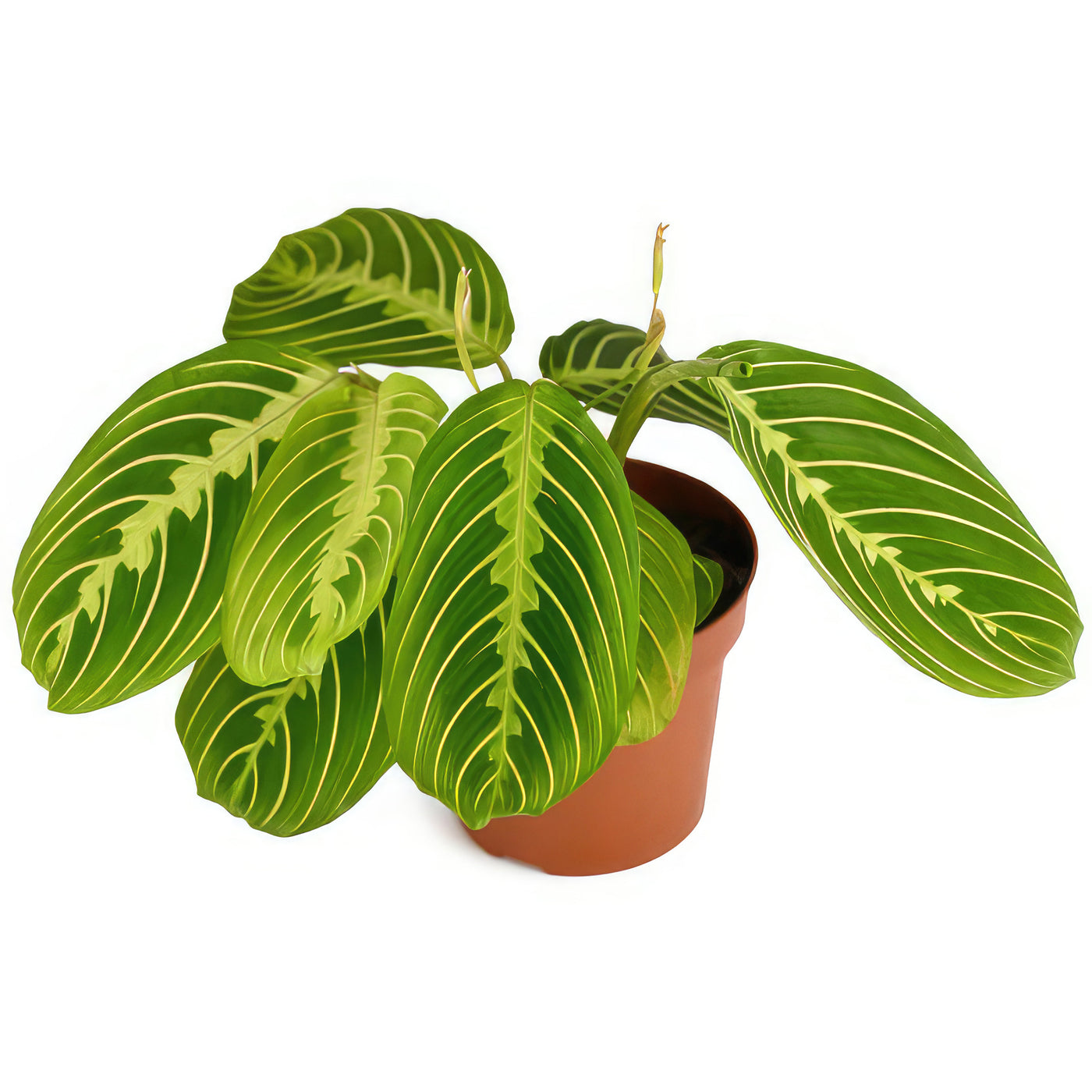
lemon prayer plant

lemon prayer plant Lemon Lime Maranta ‘Lemon Lime Prayer Plant’ 8" Pot / Black / With Pot

Sale price$20.03 Regular price$22.25
Save 10%

Pay in installments of $5.56 with ShopPay, AfterPay and Klarna

Shipping Estimate
USA
  • USA
  • CAN

Ships within 48 hours · Estimated delivery Oct 17 - Oct 22

Promo Codes Available:

For Your Every Summer RSVP, with Code: SUMMER15

Description

lemon prayer plant Lemon Lime Maranta ‘Lemon Lime Prayer Plant’ 8" Pot / Black / With PotThe Lemon Lime Maranta, known as the Lemon Lime Prayer Plant, is a unique and vibrant variety of the Maranta leuconeura which is the main Prayer plant, beloved for its striking foliage and low growing, tropical appeal. This plant derives its common name from the vivid lemon and lime hues that streak across its leaves in delicate, vein like patterns. As a member of the prayer plant family, the leaves of Maranta leuconeura lemon lime move with the

The Lemon Lime Maranta, known as the Lemon Lime Prayer Plant, is a unique and vibrant variety of the Maranta leuconeura which is the main Prayer plant, beloved for its striking foliage and low-growing, tropical appeal. This plant derives its common name from the vivid lemon and lime hues that streak across its leaves in delicate, vein-like patterns. 

As a member of the prayer plant family, the leaves of Maranta leuconeura ‘lemon lime’ move with the light, folding up in the evening in a gesture that resembles hands clasped in prayer. With its eye-catching colors and fascinating leaf movement, the Lemon Lime Maranta is a popular houseplant, providing visual interest and a touch of exotic indoor spaces.

Native to the tropical forests of Central and South America, the lemon-lime prayer plant features lively, variegated foliage that displays movement throughout the day.

Its oval-shaped leaves showcase soft, symmetrical patterns of veining, with a mix of pale yellow, lime green, and deeper green tones. It can grow up to 12 inches tall and 12 inches wide. This makes them an ideal size for tabletops, shelves, or smaller plant stands, where they can add a burst of color without overwhelming a space.

The plant’s relatively low-growing nature and full, bushy appearance make it a fantastic option for filling smaller spaces with lush, tropical greenery.

The undersides of the leaves have a reddish-purple tint, adding an extra layer of visual appeal. The plant’s leaves respond to light by adjusting their position: they lower and spread outward in daylight and lift to an upright, closed position at night, a movement known as “nyctinasty.”

The Lemon lime Maranta flowers are typically white or light lavender and grow on slender stalks, emerging in clusters above the leaves during the spring. Though the flowers are subtle compared to the vibrant foliage, they add a charming touch when they appear. However, flowering is more common outdoors or under ideal humidity and light conditions indoors. 

In its native habitat, it grows as a ground cover, spreading low along the forest floor under the shade of taller trees. This preference for humidity and indirect light makes it ideal for indoor environments that can mimic these conditions. As an indoor plant, it’s accustomed to low light and doesn’t require direct sun, making it a versatile choice for many home settings. 

When and How to Water Your Lemon Lime Prayer Plant 

The Lemon Lime Maranta is a drought-resistant plant, preferring consistently moist soil to thrive. Unlike hardy plants that can withstand dry spells, the Lemon Lime Maranta requires careful attention to its watering needs. 

In the spring and early fall, during the growing season, the Lemon Lime Maranta requires more frequent watering to support its vibrant foliage and new growth. At this time, water it about once every 5–7 days or whenever the top inch of soil begins to feel dry to the touch. It's essential to water thoroughly, ensuring that moisture reaches the roots. However, avoid letting the plant sit in water, as it dislikes soggy conditions and can suffer from root issues if left overly wet.

In late fall and winter, as the plant enters its dormant period in the cooler months, its water needs decrease. Watering can be spaced out every 10–14 days, depending on the humidity and indoor temperature. Keep an eye on the soil’s top layer, and only water once it feels dry to the touch. This reduced frequency allows the plant to rest without becoming dehydrated, as the Lemon Lime Maranta conserves its energy during this time. 

Using distilled or filtered water is recommended, as Marantas are sensitive to minerals and chemicals commonly found in tap water. Chemicals like fluoride can cause leaf tip browning or yellowing. Distilled water helps you maintain the vibrant leaf color without risking potential buildup issues, ensuring that your Maranta continues to look healthy and stunning year-round. 

Light Requirements – Where to Place Your Lemon Lime Maranta 

When grown indoors as a houseplant, the Lemon Lime Maranta thrives in low to medium indirect light for at least 4 to 6 hours, making it an excellent houseplant for rooms without direct sunlight exposure. Place them near a window where they can receive filtered sunlight or in a location with artificial light sources, such as fluorescent or grow lights.

Direct sunlight can scorch the delicate leaves of the plant, so it's essential to protect them from harsh rays. Rotating the plant occasionally can ensure even light exposure on all sides, promoting uniform growth and preventing leggy growth due to reaching for light. 

For outdoor growth, select a shaded or partially shaded spot. These plants prefer dappled sunlight or areas with indirect light to prevent leaf burning and maintain their vibrant colors.

Avoid placing them in the full sun, as excessive sunlight can cause leaf damage and stress the plant. When transitioning your plant outdoors, acclimate it gradually to the increased light levels to prevent shock.

Providing a sheltered outdoor location with gentle morning sunlight or filtered light throughout the day can create vibrant foliage.

Optimal Soil & Fertilizer Needs

When selecting soil for your Maranta lemon lime plant, it's best to choose a well-draining potting mix rich in organic matter. A mix designed for tropical plants, or a combination of peat moss, perlite, and compost can provide the right balance of moisture retention and drainage. Avoid heavy soils that can lead to waterlogged conditions, which may harm the plant's roots. Planet Desert has specialized potting soil, opens in a new tab that includes an organic substrate with mycorrhizae to help with the growth of a healthy root system to help your lemon lime prayer plant to thrive. Repotting the plant every couple of years can also refresh the soil and provide necessary nutrients for continued growth. 

The Lemon Lime prayer plant benefits from water-soluble NPK fertilizer with an equal ratio of about 5-10-5, once a year from spring through early fall. Avoid over-fertilizing, as this can cause salt buildup in the soil and lead to nutrient imbalances. During the plant's dormant period in winter, reduce or stop fertilization to allow the plant to rest. Observing the plant's growth and adjusting the fertilizer regimen accordingly can help maintain its health and vibrancy. 

Following the instructions on the fertilizer package regarding dilution and frequency of application is essential to prevent fertilizer burn and support balanced growth.  

Hardiness Zones & More 

When growing the Lemon Lime prayer plant indoors as a houseplant, it thrives in average room temperatures ranging from 65°F to 80°F. Maintaining a consistent temperature within this range is essential for the plant's overall health and growth. Avoid placing the plant near drafts, air conditioning vents, or heating sources that can cause temperature fluctuations and stress the plant. Providing a stable temperature environment can help the plant flourish and prevent issues such as leaf curling or browning. When grown indoors, especially in environments with dry air, increasing humidity around the plant can promote healthy growth and prevent issues like leaf browning or crispy edges. You can boost humidity by placing a humidifier near the plant, grouping plants together to create a microclimate, or using a pebble tray filled with water. 

For outdoor growth, the Lemon Lime prayer plant is typically suited for USDA zones 11 and 12, where temperatures remain consistently warm throughout the year. These zones generally experience mild winters with minimal risk of frost, which is crucial for tropical plants like the Lemon Lime prayer plant.

In tropical or subtropical regions with naturally high humidity, the plant can benefit from the ambient moisture in the air to maintain its lush appearance and vibrant foliage. If you live in a region outside these zones, consider growing the plant in containers that can be brought indoors during colder months to protect it from low temperatures and frost damage.  

Wildlife – Lemon Lime Maranta Attracts the Following Friendly Pollinators 

The flowers of the Lemon Lime Maranta plant are known to attract pollinators and insects through their unique characteristics. These flowers often have bright colors or intricate patterns that act as visual cues to attract pollinators like bees, butterflies, and hummingbirds. 

Butterflies
Bees
Hummingbirds
Lady Bugs
Multi Pollinators
Other Birds

Toxicity: According to the ASPCA, the Lemon Lime prayer plant is considered non-toxic to cats, dogs, horses, and humans. It is a safe choice for households with pets, providing a touch of greenery without posing a significant risk to animal companions. 

How to Propagate Your Lemon Lime Prayer Plant

To propagate your Lemon Lime prayer plant, you can use stem cuttings. Here's how to do it: Select a healthy stem with several leaves and cut it just below a leaf node. Remove the lower leaves to expose the node where roots will develop. Place the cutting in water or a well-draining soil mix, ensuring the node is submerged or in contact with the soil. Keep the cutting in a warm, humid environment with indirect sunlight and regularly mist the plant to maintain moisture levels. Over time, roots will develop, and you'll notice new growth indicating successful propagation. Once the roots are established, you can transplant the cutting into a separate pot for further growth. 

Key Takeaways

  1. The Lemon Lime Maranta thrives in low to medium indirect light, making it an excellent houseplant for rooms without direct sunlight exposure.
  2. It is known for its vibrant lemon and lime green vein patterns on deep green leaves, that add striking color and visual interest to any indoor space.
  3. Like other prayer plants, its leaves move throughout the day, opening in the morning and folding up at night, creating a unique and dynamic display.
  4. It grows to about 12 inches in height, making it an ideal tabletop plant that fits easily in smaller spaces without overwhelming the area.
  5. This plant thrives in higher humidity levels, which makes it an excellent choice for bathrooms or rooms where humidity can be easily maintained.

The Bottom Line 

Overall, the Lemon Lime Maranta is a popular houseplant, celebrated for its intricate leaf patterns and the unique way its leaves shift with the light, bringing dynamic movement and vibrant color to indoor spaces. Its lush foliage displays a tapestry of greens and yellows, and with occasional care, it thrives in moderate to low light. This plant prefers consistently moist, well-draining soil and high humidity, mimicking its native tropical habitat. While relatively low-maintenance, it benefits from regular misting and distilled water to keep its colors vivid and prevent mineral buildup, making the Lemon Lime Maranta an ideal choice for those seeking an exotic, eye-catching addition to their indoor plant collection. Order your very own lemon-lime prayer plant for sale today! 

Shipping Notes
  • Free Standard Shipping on $100+ Orders to the USA.
  • Except Preorder products are shipped in 48 hours.
  • Delivery to the USA:
  1. Standard Shipping : 3-10 business days
  • If time is of the essence, please consider selecting expedited delivery for faster service.
Exchange/Return Notes
  • We offer a 30-day return/exchange service after receiving.
  • Final sale items are not eligible for returns or exchanges.
  • To process your return/exchange, please contact us at [email protected]
  • Please click here for more details>>> Return & Exchange Policy
SKU: 79441491331

Discover Niche Categories That Outsell lemon prayer plant

Top-Converting Item to Boost Your Average Order

4.4 ★★★★★
Based on 5 reviews
Sort
Highest Rating
Newest First
Oldest First
Product Reviews
R
Verified Purchase
R. E. Morris
Massapequa, US
★★★★★ 5
One Of The Most Important Books Ever Written
Format: Paperback
The Alchemist by Paulo Coelho is in my opinion, one of the most important books ever written. It's no wonder that it's one of the best-selling books of all time with more than 150 million copies sold. Those numbers are in spite of and defiance to the author's encouragement to file share his now legendary novel. But sales statistics are not the criterion on which I stake this claim. It is the impact on the lives of those that have read it, and the impact on the lives that have not yet been born, that I boldly state the above. The simplicity of its unfoldment may at first belie the depth of its wisdom. But the simplicity is part of the profundity that allows the reader to assimilate the messages without resistance. The first time I read The Alchemist;, I read it cover to cover in one sitting. No bathroom break, no cup of water pause, no telephone distractions. I read it from the first word to the last in what seemed like a single breath. I simply couldn't put it down. I was swept, swung, and swallowed up by this extraordinary narrative. The result was transformation. I was not the same man that began reading the novel by the time I finished it. I would thereafter read it again and again. The messages are so layered that with every new pass comes new understanding and enlightenment. At the core of the novel is the fulfillment of one’s destiny. There is a force in the Soul of the World that wants us all to live out our personal legend. When we truly desire something, the entire Universe conspires to help us achieve it. With love, all things are possible. With love, we can perform miracles. These themes are artfully integrated and clothed within a modern day fable. They come in varying iterations from a string of colorful characters that propel the protagonist towards a profound and satisfying ending. The Alchemist is the story of Santiago, a shepherd boy from Spain that crosses the desert of Africa in search of a hidden treasure. It was revealed to him in a reoccurring dream that the treasure is buried by the Ancient Pyramids in Egypt. What he naively believes will take three weeks to complete becomes a journey that expands nearly three years. After miles of traveling through the desert, the boy arrives at an oasis where he falls in love with a beautiful desert woman named Fatima. The boy is willing to abandon his dream of finding his treasure for the procurement of her love. But one night, beneath the light of a full moon, he meets a man straddled upon a mighty horse. This elusive man is known in legend and folklore as The Alchemist. The Alchemist is a man imbued with profound wisdom and mystical powers. He is reportedly over 300-years-old and can turn lead into gold. He reminds the boy that his destiny is to find the treasure. That he must continue. If it is true love, Fatima will be waiting for him after his destiny is fulfilled. Reluctantly, the boy continues his journey deeper into the desert accompanied by The Alchemist. But the desert is at war, and they are soon captured by Bedouin sentinels and accused of spying for the enemy. For this crime, they are sentenced to death. The Alchemist saves them temporarily by proclaiming that the boy is an Alchemist. He tells the general that if he wanted to, the boy could turn himself into the wind and destroy their entire camp. The general is intrigued! He wants to see this happen. He promises to spare their lives if it is done. He grants them three days. But how does a shepherd boy from Spain turn himself into the wind? Paulo Coelho says that he wrote “The Alchemist” in two weeks. It is almost hard to imagine that something so far-reaching could have been conjured up in two weeks time. He said it was his own journey that he was writing down, parabolically speaking. The impact of “The Alchemist” comes from the realization that Santiago’s journey is Everyman’s journey. His story is our story. If we tap into the Soul of the World and dare to live out our destiny, we will discover that within us all is The Alchemist.
WAS THIS REVIEW HELPFUL?YesReportShare
Reviewed in the United States on April 21, 2017
N
Verified Purchase
nbanguiano
Fort Morgan, US
★★★★★ 5
A must read
Format: Kindle
A must read for everyone even remotely interested in self fulfilment and awakening. Can be read in an afternoon and echo for a life time.
WAS THIS REVIEW HELPFUL?YesReportShare
Reviewed in the United States on May 25, 2026
R
Verified Purchase
RainbowReader
Chelsea, US
★★★★★ 5
A Beautiful Edition of a Timeless Journey
This deluxe edition transforms Coelho's beloved fable into a truly special keepsake. The larger format, quality paper, and thoughtful design details make it feel like the gift it's meant to be—whether you're giving it to someone at a crossroads in their life or treating yourself to an upgrade from a worn paperback copy. The story itself remains as powerful as ever. Santiago's journey across the desert in search of treasure is deceptively simple on the surface, but Coelho's allegory works on multiple levels. Yes, it's about following your dreams, but it's also about learning to read the signs the universe offers, understanding that the journey itself transforms us, and recognizing that what we seek is often closer than we think. I know some readers find the philosophy too simplistic or New Age-y, but I think that misses the point. Coelho isn't trying to be subtle—he's distilling universal truths into their essence. Sometimes we need straightforward wisdom delivered clearly, especially when we're overthinking our own paths. This edition makes a perfect graduation gift, retirement present, or milestone marker for anyone embarking on something new. The story has earned its place as a modern classic, and this deluxe version does it justice. "When you want something, all the universe conspires in helping you to achieve it." Still resonates.
WAS THIS REVIEW HELPFUL?YesReportShare
Reviewed in the United States on January 20, 2026
M
Verified Purchase
Mary E. Trimble
Carnegie, US
★★★★★ 5
Reading this book was an enlightening experience for me.
Format: Kindle
The Alchemist by Paulo Coelho provided hours of magical reading. It isn’t a plot-driven book, but rather a novel that provides a quiet sense of purpose and a deeper understanding of the universe. The period the story takes place isn’t clear, but it begins in Spain. Santiago, a young man, perhaps in his teens, studied to be a priest, but realized what he really wanted to do was to be a shepherd, to move around, see new places. With the blessings of his family, he sets out with his flock of sheep and discovers not only the world, but himself. It soon becomes clear that what he searches for is an alchemist, a person who transforms things for the better. Santiago meets people along the way who teach him many truths, some good, some evil, but each experience leads him closer to life’s true meaning. This novel has an interesting history. “The Foreword” written by the author in 2014 speaks about the interesting path the novel has taken. The book was first published in 1989 in his native Brazil. Only one person bought a copy the first week of its release, then six months later another copy sold to the same person! His publisher cancelled the contract. Another publisher agreed to take the book and gradually had great success. An American read the book and wanted to translate the book from Spanish to English and find a publisher in the United States. It didn’t happen overnight, but the book became a phenomenon, has been translated into more than eighty different languages, and has sold thousands of copies. Paulo Coelho never wavered in his faith in the book because it speaks of his own beliefs: A man sets out on a journey seeking a beautiful or magical place and then realizes the treasure lies within himself. Reading The Alchemist was an enlightening experience for me. I highly recommend it for those who appreciate life’s purpose and who seek wisdom of the universe.
WAS THIS REVIEW HELPFUL?YesReportShare
Reviewed in the United States on October 7, 2025
B
Verified Purchase
Brian Driver
Waukegan, US
★★★★★ 3
Good book, but I think the ending is a betrayal
Format: Kindle
As I write this I realize that I am talking about a modern classic, one that I must admit I did enjoy reading overall. But that said, I simply didn’t find this book to be as moving a book as I thought I would. The novel tells a simple though interesting tale about a boy’s attempts to search for a treasure revealed to him in multiple dreams. Along the way he encounters many people and situations that enable him to learn and grow spiritually, aided by either his clever and inquisitive mind or the guidance of others who effectively serve as mentors. For the most part, I did like THE ALCHEMIST. I enjoyed the simple style of writing and the stripped-down nature of the tale. We don’t get into the “five senses” kind of environmental description – Coelho’s tale is more of a parable at its heart, and in fact is a story OF the heart and of the mind. I also admired the central character as well: Santiago is not only aptly named, but he is a likable boy full of pleasant good will and a gentle disposition, ready to work and clever when it comes to the things one must do to succeed. He is also brave, and remains positive whether things are going well or they are not, choosing to do the best he can at whatever hand he is dealt by life. Here, however, comes the problem. While I felt that the book worked for a good deal of the story, it weakened a bit toward the end. Part of it was the story’s mumbo-jumbo manner of religiosity; while I understood the author’s decision to tackle his subject in this simple, unadorned manner, it didn’t hold up at times. Certainly, the notion that there is a hidden one-ness at the heart of all matter is a notion that works well through a simplistic style, a la the clean, stripped-down beliefs at the heart of innocents or the way we conceptualize the purity of, say, the Native Americans culture when it came to nature. But when the boy began addressing the wind and other elements (a point I’ll get to further in a moment), it really broke down for me. It stretched credulity, reducing Nature to a kind of repertory theater. I will speak further on this scene in a second. HERE I ONE ASPECT THAT WOULD BE CONSIDERED A SPOILER – SKIP THIS PARAGRAPH. What I particularly disliked about THE ALCHEMIST is that I felt it broke its own rules. Again, I’m discussing the ending here, so beware. It bothered me that the ending should have been a point when the boy’s budding spirituality took its hold upon the lad. I ask: why would a person who is in essence learning so much about what really matters about life still keep seeking money? His interest in gold is not the same as the alchemist’s interest in it: the elder character is a man who can manipulate the elements in a near-magical manner, a process he leaves the boy to discover for himself (like when he fact almost comically abandons him to magically “make like the wind” for men who will otherwise kill him – comical because once the alchemist places the boy IN the situation, he simply goes off to play with his birds. And one more thing: while the twist at the end was clever, it disappointed me for two reasons: the first, for point I made above, but the second is trickier. The boy learns that the truth the material treasure HE sought is NOT there; it is, he learns, where the OTHER character says it is. Clever, sure… but is the author telling us the other character’s “information” is more true? Why is that? Was it that the other boy was favored? OR, which is probably more true, is it because whatever force it is that imparts such “wisdom” does so knowing that one boy WILL follow his heart and the other won’t. Think: if the other boy does follow his quest then Santiago’s info is going to be wrong. But IF things are meant to work out the way they actually do, then is Coelho indeed telling us that these actions were predetermined? This sends, I think, the opposite message the author wants to send. THE ALCHEMIST is a book that people will enjoy for its simple values, and the tale of this young boy’s spiritual quest has satisfied many. While I too enjoyed it and liked the boy, I ultimately felt a bit disappointed in what I felt to be a contrived ending. Though I initially liked the twist at the end, the story could have ended on that exact moment and left me happier. As it is, I felt the final portion of the boy’s quest betrayed his AND the author’s intentions, which hurt the novel for me.
WAS THIS REVIEW HELPFUL?YesReportShare
Reviewed in the United States on October 4, 2016

recommand products