Pay in installments of $6.08 with
 ,
,
 and
and

Shipping Estimate
USA
- USA
- CAN
- USA
- CAN
Ships within 48 hours · Estimated delivery Sep 30 - Oct 5
 Promo Codes Available:
For Your Every Summer RSVP, with Code: SUMMER15
Description
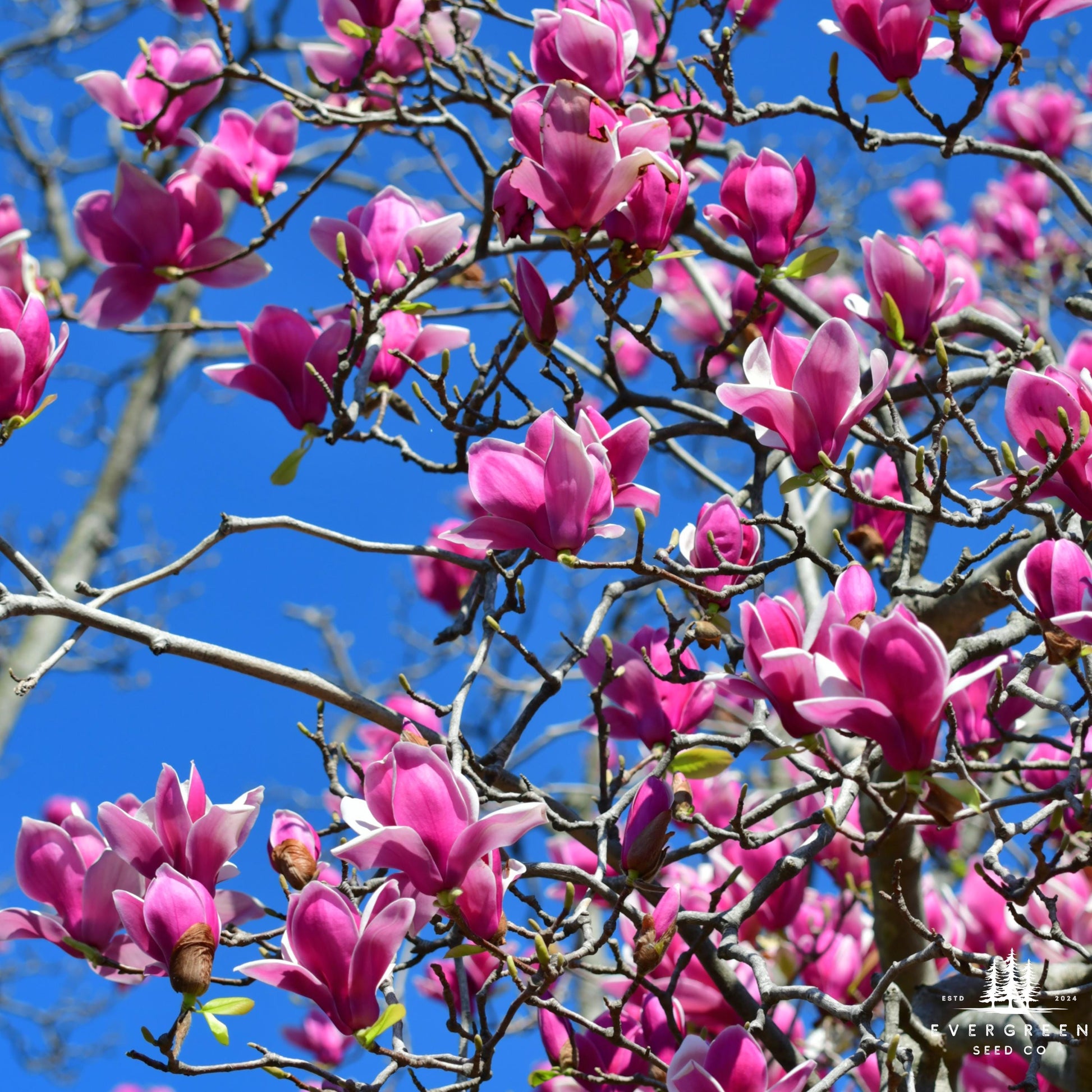
lily magnolia flower tree Lily Magnolia Tree Seeds | (Magnolia liliiflora)Dark purple buds. Soft pink flowers. The magnolia that blooms longest. Magnolia liliiflora, the Lily Magnolia, is the most intensely colored of the deciduous magnolias, producing buds in deep purple red that open to goblet shaped flowers with rich purple pink outer petals and creamy white inner petals in a combination that is more dramatic and less pastel than the Saucer Magnolia or Star Magnolia. It blooms in spring after the leaves have begun to
Dark purple buds. Soft pink flowers. The magnolia that blooms longest.
Magnolia liliiflora, the Lily Magnolia, is the most intensely colored of the deciduous magnolias, producing buds in deep purple-red that open to goblet-shaped flowers with rich purple-pink outer petals and creamy white inner petals in a combination that is more dramatic and less pastel than the Saucer Magnolia or Star Magnolia. It blooms in spring after the leaves have begun to emerge, which protects its flowers from late frosts that damage early-blooming magnolias, and then continues to produce scattered flowers through much of the summer, giving it a longer effective flowering season than most ornamental magnolias. Native to Yunnan Province in China, it is the parent species of the famous Little Girl hybrid magnolias and a prized garden shrub in its own right. If you are looking to buy Lily Magnolia seeds or grow this flowering magnolia from seed, each seed-grown specimen develops its own flower color and form.
- Deep purple-red buds opening to goblet-shaped flowers with rich purple-pink outer and white inner petals
- Blooms after leaf emergence, protecting flowers from late spring frosts that damage earlier-blooming magnolias
- Continues producing scattered flowers through summer, longer effective season than most ornamental magnolias
- Parent species of the famous Little Girl hybrid magnolias, one of the most influential magnolias in ornamental horticulture
- Compact shrub-like form suitable for smaller gardens where larger magnolias are impractical
Things you probably did not know about the Lily Magnolia
It is the direct parent of more named magnolia hybrids than any other species. When plant breeders at the US National Arboretum crossed Magnolia liliiflora with Magnolia stellata in the 1950s and 1960s, they produced the Little Girl series of hybrid magnolias, including Betty, Ann, Jane, Judy, Susan, Randy, Ricki, and Pinkie, that are now among the most widely planted ornamental magnolias in North American gardens. Every one of these hybrids carries the late-blooming and cold-hardiness traits inherited directly from the Lily Magnolia parent.
The flower color varies significantly between seed-grown specimens. Lily Magnolia flowers range from light pink with only faint purple tones to deep purple-red with almost no pink visible, depending on the individual plant's genetics. The outer and inner petal contrast, which creates the bicolor effect characteristic of the species, also varies in intensity between individuals. Growing from seed produces a range of color expressions that no single nursery selection can provide.
The flower buds are so dark they are used as ornaments in Chinese floral arrangement. The elongated, dark purple flower buds of Lily Magnolia, which develop through winter on bare branches, are harvested in the bud stage and used in traditional Chinese flower arrangement for their color, form, and texture. The buds, called xin yi in Chinese medicine, are also used in preparations for nasal and sinus conditions.
The species has been cultivated in Chinese gardens for over 1,000 years. Magnolia liliiflora appears in Chinese garden literature and plant records dating back to the Tang Dynasty and earlier. It was one of the first Chinese ornamental plants introduced to European botanical gardens, arriving in France and England in the late 1700s. It has been in continuous western cultivation for over 200 years as a result.
Growing Details
- Botanical Name: Magnolia liliiflora
- Stratification: Required, 90 days cold moist stratification
- USDA Zones: 5 to 8
- Soil: Well-drained, moist, slightly acidic to neutral, rich in organic matter
- Light: Full sun to partial shade
- Height: 8 to 12 feet
- Spread: 8 to 12 feet
- Growth Rate: Slow to moderate, 6 to 12 inches per year
Plant it where the spring flowers will be at eye level from a path or seating area. The purple buds opening to pink-white goblets on a warm May morning is a view worth designing a garden around.
Shipping Notes
- Free Standard Shipping on $100+ Orders to the USA.
- Except Preorder products are shipped in 48 hours.
- Delivery to the USA:
- Standard Shipping : 3-10 business days
- If time is of the essence, please consider selecting expedited delivery for faster service.
Exchange/Return Notes
- We offer a 30-day return/exchange service after receiving.
- Final sale items are not eligible for returns or exchanges.
- To process your return/exchange, please contact us at [email protected]
- Please click here for more details>>> Return & Exchange Policy