Pay in installments of $5.38 with
 ,
,
 and
and

Shipping Estimate
USA
- USA
- CAN
- USA
- CAN
Ships within 48 hours · Estimated delivery Sep 28 - Oct 3
 Promo Codes Available:
For Your Every Summer RSVP, with Code: SUMMER15
Description
lavender french plant French Lavender (Lavandula Dentata) – YardworkMediterranean Beauty That Blooms from Spring Through Fall French lavender gives your garden months of fragrant purple blooms, often flowering from May through September and continuing into late fall or even year round in warmer climates. Known scientifically as Lavandula dentata, this evergreen perennial shrub is native to the Mediterranean and prized for long lasting blooms, scalloped gray green leaves, and a robust herbal scent. Where many lavender
Mediterranean Beauty That Blooms from Spring Through Fall
French lavender gives your garden months of fragrant purple blooms, often flowering from May through September and continuing into late fall or even year round in warmer climates.
Known scientifically as Lavandula dentata, this evergreen perennial shrub is native to the Mediterranean and prized for long-lasting blooms, scalloped gray green leaves, and a robust herbal scent. Where many lavender plants flower briefly in early summer, French lavender blooms through much of the growing season, helping fill borders, containers, and dry garden spaces with color, texture, and pollinator activity.
Why You’ll Love It
-
Extended Blooming Season – French lavender commonly blooms from May through September, with French lavender blooms continuing from early spring through autumn in warm climates and sometimes year round in frost-free areas.
-
Drought Tolerant – This drought tolerant french lavender plant thrives in dry California conditions and established plants typically need water only every few weeks unless extreme heat and drought persist.
-
Pest Resistant – Aromatic oils in the foliage help repel mosquitoes and other common garden pests, while the lavender flowers still attract bees, butterflies, and other pollinators.
-
Larger Size – French lavender reaches a height of 2 to 3 feet and a width of up to 4 feet, with a typical landscape size around 30 inches tall and 40 inches wide for strong garden presence.
-
Easy Care – French lavender thrives in dry, well-draining, alkaline soil and actually prefers poor soil conditions, since nutrient-rich, fertile soils can reduce blooming success.
French lavender is excellent for ornamental landscaping because of its dense growth, long bloom period, and airy short spikes of lighter pink-purple flowers. The flower petals and purple flowers bring a softer look than many darker english lavender varieties, while the scalloped foliage keeps the plant attractive even between new blooms.
What Makes It Different
Most lavender varieties have a shorter bloom window, especially English lavender. French lavender provides gardeners with purple blooms, fragrance, and structure for months instead of weeks.
-
Longer Blooming Period – French lavender blooms from May through late fall in warmer climates, while English lavender typically blooms for about four weeks starting in mid-June. That makes French lavender a more prolific bloomer during the growing season.
-
Heat Tolerance – French lavender prefers warm climates and full sun, making it a strong choice for California yards, Mediterranean gardens, xeriscaping, and dry outdoor borders where other plants may wilt, especially when paired with other drought-tolerant flowering plants like purple bougainvillea.
-
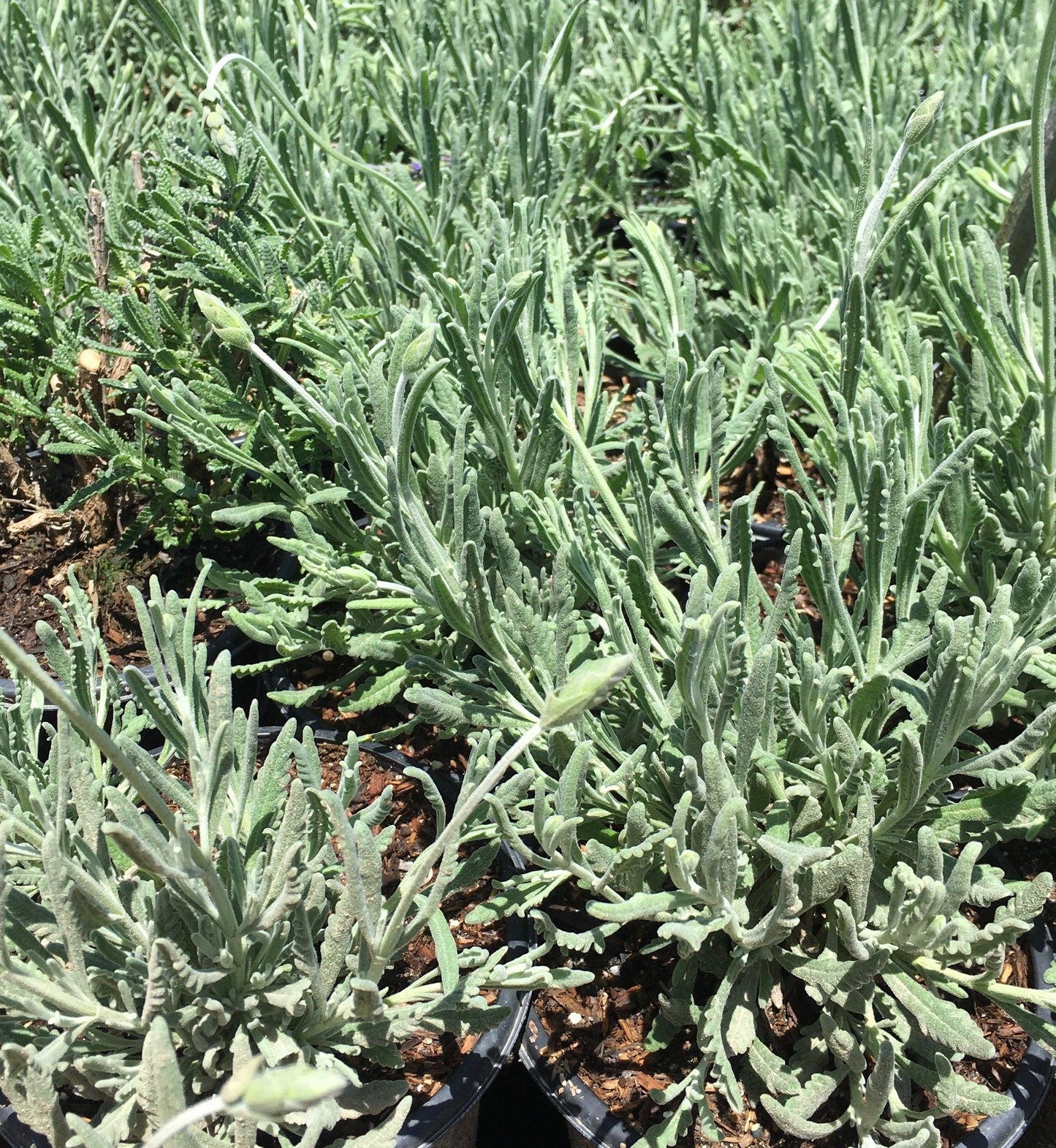
Unique Scalloped Leaves – Lavandula dentata is prized for uniquely toothed, gray-green foliage. French lavender flowers are usually lighter pink-purple, while English lavender (Lavandula angustifolia) typically has darker purple flowers and a stronger, sweeter fragrance.
French lavender is often compared to English lavender (Lavandula angustifolia), which is more cold-hardy and primarily used in culinary dishes. English lavender is more cold-hardy, thriving in USDA zones 5-8, while French lavender prefers warmer climates, typically found in USDA zones 7-9, and has a shorter lifespan of about five years compared to English lavender’s potential 15 years.
Its scent is also different. French lavender has a robust, herbal, and slightly camphoraceous aroma. The scent of French lavender is intense and camphoraceous, making it popular for soaps and cleaning products, while essential oils derived from French lavender are valued for their stress-reducing properties and promoting restful sleep. It can also be used in culinary applications such as herbal teas, savory rubs, and infused sugars.
How To Grow French Lavender Successfully
-
Plant in Full Sun Choose a full sun location with 6+ hours of direct sun daily. Plant in well drained soil with sand or sandy loam if possible, and avoid low ground where water collects.
-
Water Sparingly Once established, French lavender is extremely drought-tolerant. Water sparingly, allow soil to dry between waterings, and avoid keeping the soil moist for long periods, since poor drainage can cause root rot.
-
Prune for Shape and New Blooms Pruning French lavender is essential for maintaining its shape. Prune in the fall in mild winter regions, or at the end of winter into early spring after the last frost in colder areas. To encourage more blooms, deadhead spent flowers and occasionally prune French lavender throughout the blooming season.
Good drainage, light watering, and regular deadheading are the key habits that help this lovely plant thrive outdoors in a pot, containers, borders, or a dry Mediterranean yard.
Product Details
-
Botanical Name: Lavandula dentata
-
Common Name: French lavender
-
Plant Type: Evergreen perennial shrub
-
Native Range: Mediterranean
-
Mature Size: 30 inches tall and 40 inches wide on average; reaches 2 to 3 feet tall and up to 4 feet wide
-
Hardiness Zones: USDA Zones 7-9
-
Bloom Time: May through September; May through late fall in warmer climates; potential for year-round blooming in frost-free warm climates
-
Flower Color: Lighter pink-purple flowers with fragrant lavender flowers on short spikes
-
Foliage: Toothed, scalloped, gray green leaves on woody stems
-
Soil Requirements: Dry, well-draining, alkaline soil; prefers poor soil and does not grow well in nutrient-rich, fertile soils
-
Sun Requirements: Full sun, 6+ hours daily
-
Water Needs: Low once established; water only every few weeks in normal dry conditions, with extra water during extreme heat and drought
-
Fragrance: Robust, herbal, intense, and slightly camphoraceous rather than sweet
-
Pollinator Value: Attracts bees, butterflies, and other pollinators
-
Related Species: English lavender (Lavandula angustifolia), Spanish lavender (Lavandula stoechas), and other lavenders
-
Notable Comparison: Hidcote lavender is an English lavender variety known for deep purple blooms and sweet scent, while French lavender offers longer bloom time and better heat preference
-
Recognition Note: Select Lavandula dentata cultivars have received attention from the Royal Horticultural Society for ornamental garden value
Who It’s For
Ideal for:
-
California homeowners seeking low-maintenance, drought-tolerant landscaping with complementary flowering trees for added curb appeal
-
Gardeners in warm climates wanting extended seasonal color from spring through fall
-
Landscape designers creating Mediterranean-style gardens, dry borders, privacy hedges with English laurel, and pollinator-friendly outdoor spaces
-
Anyone wanting natural pest control with beautiful, fragrant purple blooms
-
Gardeners who prefer lavender plants that thrive in poor soil, full sun, and containers, and who may also want complementary flowering perennials like Lavender Mexican heather
If you want a fragrant french lavender plant that can fill a yard with flowers for months, handle summer heat, support pollinators, and reduce water use, French lavender fits your garden.
Frequently Asked Questions
Is French lavender easy to grow?
Yes. French lavender thrives in poor soil with minimal care as long as it has full sun, well drained soil, and good drainage. Avoid overwatering, because constantly wet soil can lead to root rot.
How long does it bloom?
French lavender blooms continuously from early spring through autumn in warm climates. It commonly blooms from May through September, and in warmer climates French lavender blooms may continue into late fall or even year round.
Can it survive California’s dry summers?
Absolutely. French lavender is extremely drought-tolerant once established. In most dry summer conditions, established plants need water only every few weeks, though extreme heat and drought may require occasional deep watering.
Will it survive winter in Northern California?
French lavender is hardy in USDA zone 7-9 conditions, but frost protection may be needed in colder inland or higher-elevation areas. In colder regions, grow it in a sheltered spot or containers that can be protected during winter.
How is it different from English lavender?
French lavender (Lavandula dentata) has scalloped leaves, lighter pink-purple flowers, and a camphoraceous scent. English lavender (Lavandula angustifolia) is more cold-hardy, usually grows in USDA zones 5-8, often has darker purple flowers, and is known for a stronger, sweeter fragrance.
Ready to Transform Your Garden?
Choose French Lavender and enjoy months of fragrant purple blooms, drought tolerant performance, natural pest resistance, and Mediterranean beauty in your garden.
Yardwork can help you select the right plants for your California yard, plan larger lavender orders, and coordinate delivery for landscaping projects, whether you’re shopping through a local plant nursery near you or building out structure with evergreen shrubs like English laurel.
Shipping Notes
- Free Standard Shipping on $100+ Orders to the USA.
- Except Preorder products are shipped in 48 hours.
- Delivery to the USA:
- Standard Shipping : 3-10 business days
- If time is of the essence, please consider selecting expedited delivery for faster service.
Exchange/Return Notes
- We offer a 30-day return/exchange service after receiving.
- Final sale items are not eligible for returns or exchanges.
- To process your return/exchange, please contact us at [email protected]
- Please click here for more details>>> Return & Exchange Policy