Pay in installments of $5.54 with
 ,
,
 and
and

Shipping Estimate
USA
- USA
- CAN
- USA
- CAN
Ships within 48 hours · Estimated delivery Sep 3 - Sep 8
 Promo Codes Available:
For Your Every Summer RSVP, with Code: SUMMER15
Description
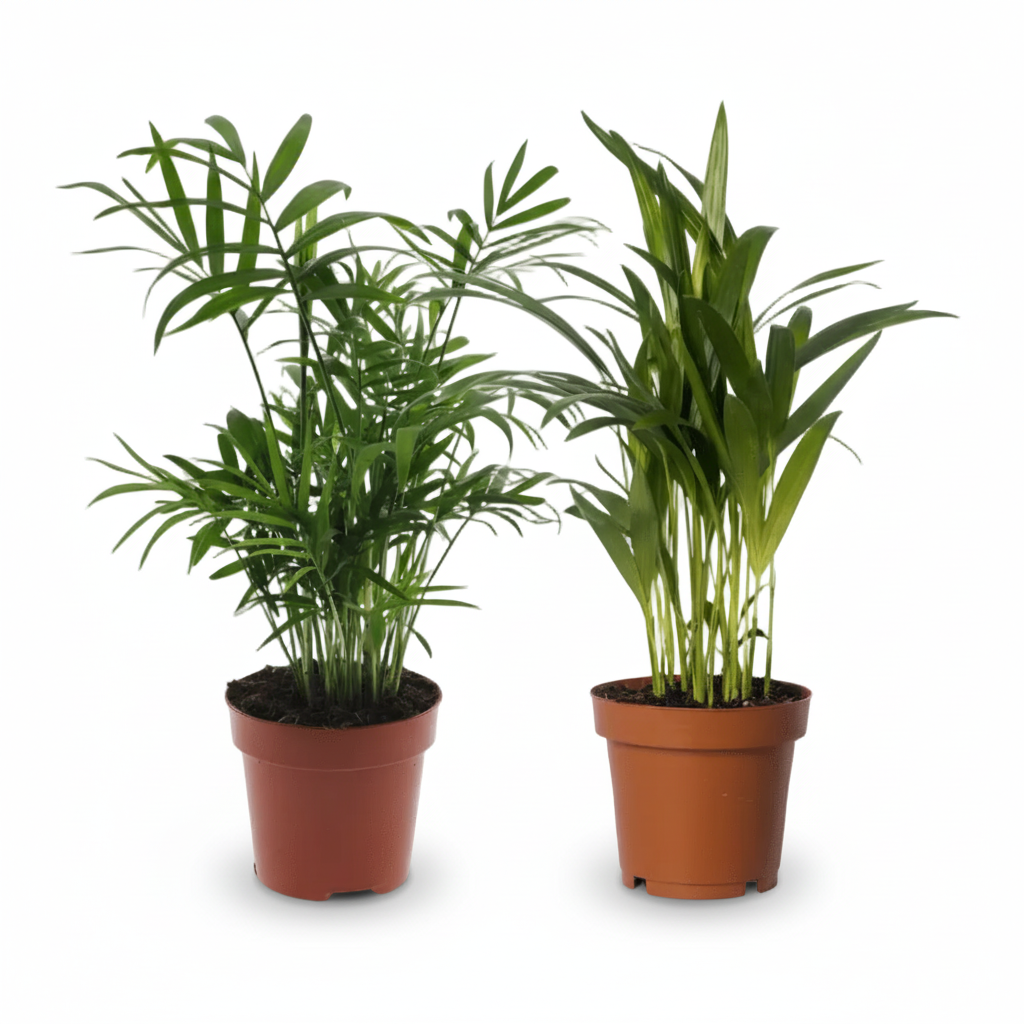
areca palm vs chamaedorea Duo Areca & Chamaedorea Palms — Non-toxicAreca Palm + Chamaedorea elegans Contrasting tropical foliage Indirect light Moderate watering Non toxic H40 cm Pot 12 cm The Dypsis lutescens & Chamaedorea elegans Duo combines two iconic tropical palms with complementary characters. The Dypsis lutescens, or Areca palm, displays dense and graceful foliage with golden stems. The Chamaedorea elegans charms with its fine texture and lighter, airy form. Together, they bring an elegant tropical breath to
🌴 Areca Palm + Chamaedorea elegans • 🌿 Contrasting tropical foliage • ☀️ Indirect light • 💧 Moderate watering • 🐾 Non-toxic • 📏 H40 cm | Pot Ø12 cm
The Dypsis lutescens & Chamaedorea elegans Duo combines two iconic tropical palms with complementary characters. The Dypsis lutescens, or Areca palm, displays dense and graceful foliage with golden stems. The Chamaedorea elegans charms with its fine texture and lighter, airy form. Together, they bring an elegant tropical breath to any interior — easy to care for and non-toxic.
Discover it in our collection of large non-toxic plants. Our guide to creating a tropical atmosphere will give you composition ideas.
Which palm variety to choose?
The Palm genus offers several species in our catalog:
- Dypsis lutescens (this duo) — Areca palm with golden stems, dense foliage in graceful clusters. The lush and generous version.
- Chamaedorea elegans (this duo) — dwarf palm from Mexico with a fine and airy form. The compact and elegant version.
- Howea forsteriana — Kentia, the quintessential indoor palm, large arched leaves. The aristocratic XXL version.
- Chamaedorea elegans alone — dwarf palm from Mexico in a generous size. The compact solo version.
- Dypsis lutescens alone — Areca palm solo. The individual Areca version.
Light & location
These two palms appreciate soft, indirect light — they tolerate partial shade, making them excellent choices for living rooms and offices. Check our light and humidity guide to optimize their placement.
- Light: indirect to partial shade — avoid direct sun that burns the fronds.
- Ideal: living room, office, bright hallway, protected from cold drafts.
- Temperature: 18 to 26 °C, without sudden changes.
- Humidity: prefer slightly humid air — mist regularly.
Place them together in a large decorative pot to create volume and a harmonious foliage contrast — the lightness of the Chamaedorea perfectly complements the density of the Areca.
Watering & care
Both palms have similar needs — moderate watering and good ambient humidity are enough to keep them vigorous. Check our watering guide to adopt the right rhythm.
- Watering: moderate — let the substrate surface dry between waterings.
- Substrate: airy — universal potting soil with perlite to avoid excess moisture.
- Misting: spray the leaves 1 to 2 times a week to maintain their shine.
- Fertilizer: every 15 days in spring-summer with a mild liquid fertilizer.
Reduce watering in winter while maintaining good light — this is the essential combination to preserve foliage vitality in the cold season.
Decor ideas & plant combinations
Their exotic look and graceful form naturally fit into contemporary interiors — they visually structure a space and create a soft, soothing tropical atmosphere.
- In combination: pair them with a Zamioculcas or a Calathea Makoyana to enrich the composition with foliage of contrasting textures — same indirect light needs.
- Ideal decorative pot: the Capi Nature Groove taupe in lightweight composite fits perfectly the Ø12 cm size and adds a natural, contemporary touch.
- Location: grouped in a large planter or placed side by side, they create a mini urban palm grove effect very effective even in a small apartment.
Verdeia tips
- Clean the fronds regularly — the long leaves of palms accumulate dust that reduces their ability to capture light. Wipe each frond with a soft damp cloth every 2 to 3 weeks to maintain their green shine and promote photosynthesis.
- Rotate the plants every 15 days — palms naturally grow toward the light. Regular half-turns keep a symmetrical and balanced form, preventing fronds from developing all on the same side.
- Never cut green stems — unlike broad-leaf plants, palms do not produce new shoots from existing stems. Remove only fully dry and brown fronds — cutting a still green stem permanently slows the plant’s growth.
Technical specifications
- Botanical names: Dypsis lutescens & Chamaedorea elegans
- Common names: Areca Palm & Mexican Dwarf Palm
- Family: Arecaceae
- Origin: Madagascar & Central America
- Pot diameter: 12 cm
- Approximate height: 40 cm
- Adult size: up to 1.5 m indoors
- Light: indirect light / partial shade
- Watering: moderate
- Care: easy
- Toxicity to animals: non-toxic
- Decorative style: Urban jungle / Soft tropical / Natural elegance
- Special feature: duo of palms with contrasting foliage, non-toxic, elegant tropical form
Each plant is unique: foliage density, shape, and shades naturally vary depending on light and throughout the seasons.
Shipping Notes
- Free Standard Shipping on $100+ Orders to the USA.
- Except Preorder products are shipped in 48 hours.
- Delivery to the USA:
- Standard Shipping : 3-10 business days
- If time is of the essence, please consider selecting expedited delivery for faster service.
Exchange/Return Notes
- We offer a 30-day return/exchange service after receiving.
- Final sale items are not eligible for returns or exchanges.
- To process your return/exchange, please contact us at [email protected]
- Please click here for more details>>> Return & Exchange Policy