SKU: 82399425315
scale fiddle leaf fig

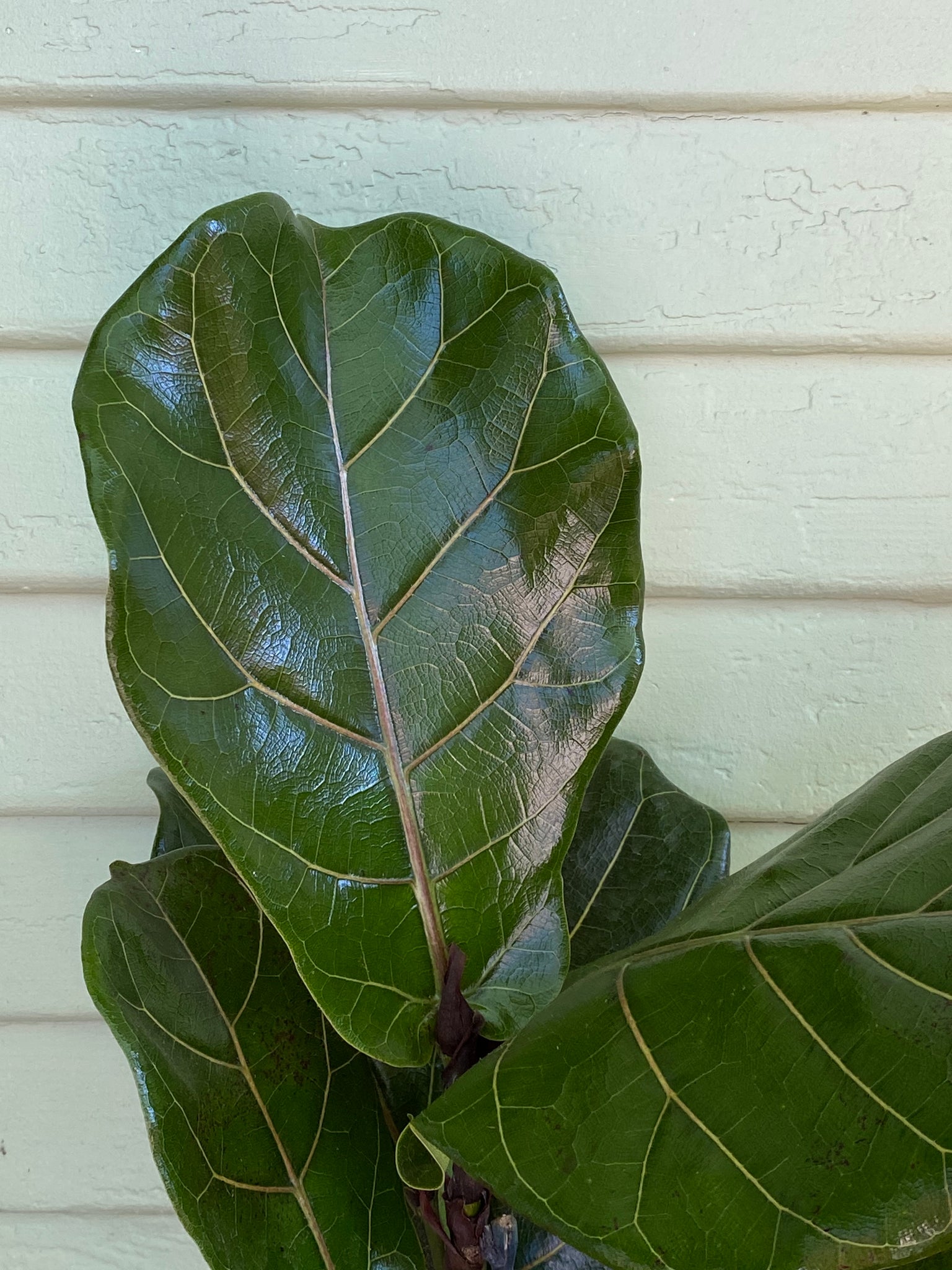
scale fiddle leaf fig Fiddle Leaf Fig | Ficus Lyrata

Sale price$21.53 Regular price$23.92
Save 10%

Pay in installments of $5.98 with ShopPay, AfterPay and Klarna

Shipping Estimate
USA
  • USA
  • CAN

Ships within 48 hours · Estimated delivery Sep 25 - Sep 30

Promo Codes Available:

For Your Every Summer RSVP, with Code: SUMMER15

Description

scale fiddle leaf fig Fiddle Leaf Fig | Ficus LyrataFicus Lyrata Fiddle Leaf Fig (Column Form) "Column" means it has foliage starting from the bottom all the way to the top of the plant. NOTE: We do not ship plants. You can only purchase for a "pick up" order. Sizes: 4" Pot 6" Pot at 10" Tall 8" Pot at 1. 5ft Tall 10" Pot at 3ft Tall 12" Pot at 4ft Tall 14" Pot at 6ft Tall 15 Gallon Pot at 7ft Tall *measurements are approximate and are taken from the ground up (including the planter) Growing Tips

Ficus Lyrata - Fiddle Leaf Fig (Column Form)

"Column" means it has foliage starting from the bottom all the way to the top of the plant.

NOTE: We do not ship plants.  You can only purchase for a "pick-up" order. 

Sizes:

4" Pot

6" Pot at 10" Tall

8" Pot at 1.5ft Tall

10" Pot at 3ft Tall

12" Pot at 4ft Tall 

14" Pot at 6ft Tall

15 Gallon Pot at 7ft Tall

*measurements are approximate and are taken from the ground up (including the planter)

Growing Tips 

🌤️ Fiddle Leaf Figs need lots of bright light.  They can even withstand and thrive with direct sun.  In tropical regions you can often see them being used as street trees, backyard trees, and even out in their natural environment. 

🏠 With that being said, if you have a Fiddle indoors they will usually do best directly in front of a window or within 4 feet from a south or west facing window.  If you have a north or east window you will want to keep it close to that window and be sure to keep the curtains/blinds open. 

💦Fiddles like to slightly dry between waterings.  If you let it get bone dry and leave it that way for too long you might start to see yellowing to crispy brown leaves.  Water to evenly moisten the soil but not to leave it overly soggy - aim for your plant to need water once per week.

TIP #1  When watering always keep in mind the season and temperature of your home.  You will need to adjust with regards to these environmental factors.   

TIP #2  Use some sort of way to measure the amount of water you are giving your plant so that you know how much to increase or decrease next time if needed.

TIP #3  Water your plants in place with a saucer under them.  This allows your plant a chance to soak up the water.  After a couple hours if there is still water in the saucer you can dump this out and this will also tell you how much water you can cut back next time. 

TIP #4  Try to water on a weekly basis, this will help to keep you consistent and to at least check on your plants once a week. 

Shipping Notes
  • Free Standard Shipping on $100+ Orders to the USA.
  • Except Preorder products are shipped in 48 hours.
  • Delivery to the USA:
  1. Standard Shipping : 3-10 business days
  • If time is of the essence, please consider selecting expedited delivery for faster service.
Exchange/Return Notes
  • We offer a 30-day return/exchange service after receiving.
  • Final sale items are not eligible for returns or exchanges.
  • To process your return/exchange, please contact us at [email protected]
  • Please click here for more details>>> Return & Exchange Policy
SKU: 82399425315

Discover Niche Categories That Outsell scale fiddle leaf fig

Top-Converting Item to Boost Your Average Order

4.2 ★★★★★
Based on 13 reviews
Sort
Highest Rating
Newest First
Oldest First
Product Reviews
A
Verified Purchase
Amazon customer Colleen T
Los Angeles, US
★★★★★ 4
Very short and very good
Format: eTextbook
I read this book or one similar to it my senior year in high school 1970. It absolutely caught my attention as a way to explain why the continents had separated from Gondwanaland. I really liked revisiting the theory in light of the advances made since then
WAS THIS REVIEW HELPFUL?YesReportShare
Reviewed in the United States on May 8, 2018
D
Verified Purchase
Dr L
Lake Worth, US
★★★★★ 5
I love VSI on Kindle
Format: eTextbook
The thing is they take a long time to read because of the look up feature. It's like reading a book in the Library of Congress.
WAS THIS REVIEW HELPFUL?YesReportShare
Reviewed in the United States on June 15, 2020
A
Verified Purchase
Amazon Customer
Belleville, US
★★★★★ 5
There are few who are capable of telling the story ...
Format: Paperback
There are few who are capable of telling the story of plate techtonics including critical details. Peter Molnar is one of those chosen few who can deliver such a story succinctly and precisely.
WAS THIS REVIEW HELPFUL?YesReportShare
Reviewed in the United States on February 12, 2017
J
Verified Purchase
JustLiberty
Lowell, US
★★★★★ 5
Very nice, but very short, book on the subject.
Format: Paperback
This is a very nice, but very short, book on the subject. I learned quite a bit and enough to delve into structural geology and related subjects.
WAS THIS REVIEW HELPFUL?YesReportShare
Reviewed in the United States on August 22, 2015
B
Bayard B.
Bozeman, US
★★★★★ 4
Excellent 120 pages book on a complex subject.
Format: Paperback
I thought this was an excellent 120 pages book on a complex subject. It discusses a variety of subjects besides the title of plate tectonics and which are related to it: continental drift, oceanic seafloor spreading, fracture zones, subduction of tectonic plate edges, faulting, the creation of mountains and plateaus, earthquakes, volcanism, oceanic magnetic anomalies, and the locations of concentrated metallic ores. The text is accompanied by almost 40 sketches and diagrams elaborating on the discussions provided in the text. The book also introduces the grand concepts of Earth geology such as the mantle, lithosphere, and asthenosphere. It also provides a short history of the development of the concept of plate tectonics. Finally, the book provides specific detailed descriptions of the formation of major mountain ranges and plateaus such as the Himalayas, the Tibetan Plateau, Tien Shan, the Tarim Basin, the movement of Eastern Asia, the Andes, and the western US mountain ranges. It also gives a short description of the movement of India from the eastern edge of the African Plate to the Eurasian Plate over the past 90+ million years.
WAS THIS REVIEW HELPFUL?YesReportShare
Reviewed in the United States on February 14, 2023

recommand products