Pay in installments of $6.22 with
 ,
,
 and
and

Shipping Estimate
USA
- USA
- CAN
- USA
- CAN
Ships within 48 hours · Estimated delivery Sep 27 - Oct 2
 Promo Codes Available:
For Your Every Summer RSVP, with Code: SUMMER15
Description
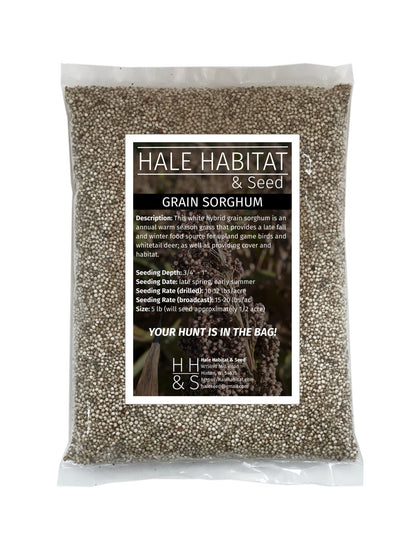
grain sorghum herbicides Grain SorghumGrain sorghum (Sorghum bicolor) is a drought tolerant, warm season cereal grain grown primarily for grain production, but it also serves as an important wildlife food source. Its seeds are highly nutritious and attractive to various wildlife species such as deer, turkeys, and small mammals. Grain sorghum is often planted in wildlife food plots because it provides high energy grain and cover during winter months. Benefits for Wildlife Habitat
Grain sorghum (Sorghum bicolor) is a drought-tolerant, warm-season cereal grain grown primarily for grain production, but it also serves as an important wildlife food source. Its seeds are highly nutritious and attractive to various wildlife species such as deer, turkeys, and small mammals. Grain sorghum is often planted in wildlife food plots because it provides high-energy grain and cover during winter months.
Benefits for Wildlife Habitat
✔ Nutritious grain that attracts deer, wild turkeys, pheasants, and small mammals.
✔ Drought-tolerant – ideal for areas with unpredictable rainfall or arid conditions.
✔ Provides winter forage when the seeds ripen and remain standing.
✔ Cover crop – helps with erosion control and provides habitat for small game.
✔ Can be left standing as a food source throughout the winter.
Planting Guidelines
-
Planting Times:
- Late Spring to Early Summer (May–June): Grain sorghum is best planted when soil temperatures reach 60–70°F for optimal germination.
- Avoid planting in cold, wet soils as it may result in poor germination.
-
Seeding Depth:
- ½ to 1 inch deep for consistent germination and establishment.
-
Seeding Rates:
- Drilled: 8–10 lbs per acre for a more uniform stand and reduced seed waste.
- Broadcast: 10–12 lbs per acre, followed by light harrowing or cultipacking to ensure seed-to-soil contact.
-
Days to Maturity:
- 90–120 days from planting to full maturity, with the grain becoming available in 100–120 days.
-
Drought Tolerance:
- High – Grain sorghum is known for its excellent drought resistance due to its deep root system and ability to thrive in hot, dry conditions.
-
Saturated Soil Tolerance:
- Low to Moderate – Sorghum prefers well-drained soils and may be affected by excessive moisture or waterlogging, especially during germination and early growth stages.
-
Shade Tolerance:
- Low – Grain sorghum requires full sun for optimal growth and grain production, and performs poorly in shaded conditions.
Fertilization Guidelines for Grain Sorghum
- Soil pH: Sorghum prefers slightly acidic to neutral soils with a pH range of 5.5–7.0.
- Nitrogen (N): Sorghum has moderate nitrogen requirements. Apply 40–60 lbs of nitrogen per acre pre-plant, and additional 30–40 lbs per acre at planting or in a side-dress application after the plant has started growing.
- Phosphorus (P): Apply 30–50 lbs P₂O₅ per acre before planting if soil tests show phosphorus deficiency.
- Potassium (K): Apply 50–80 lbs K₂O per acre to support healthy growth and grain production.
Fertilization Timing:
- Apply phosphorus and potassium before planting.
- Apply nitrogen at planting or in split applications during the growing season, with the second application typically occurring when the plant reaches 4–6 inches tall.
Herbicide Use for Grain Sorghum
-
Weed Management:
- Weed control is vital in the early stages of sorghum growth to prevent competition for nutrients and water. Sorghum is not particularly aggressive against weeds, especially in the seedling stage.
-
Herbicide Options:
- Pre-emergence: Herbicides such as Atrazine or Prowl H2O (Pendimethalin) can be used for controlling broadleaf weeds and grasses before the sorghum emerges.
- Post-emergence: Herbicides like 2,4-D or Clethodim can be used to manage broadleaf weeds and grass weeds once the sorghum is established.
Key Considerations:
- Always follow herbicide labels and use appropriate rates to prevent crop injury.
- Consider pre-plant incorporation of herbicides to reduce weed competition and ensure sorghum establishment.
Shipping Notes
- Free Standard Shipping on $100+ Orders to the USA.
- Except Preorder products are shipped in 48 hours.
- Delivery to the USA:
- Standard Shipping : 3-10 business days
- If time is of the essence, please consider selecting expedited delivery for faster service.
Exchange/Return Notes
- We offer a 30-day return/exchange service after receiving.
- Final sale items are not eligible for returns or exchanges.
- To process your return/exchange, please contact us at [email protected]
- Please click here for more details>>> Return & Exchange Policy