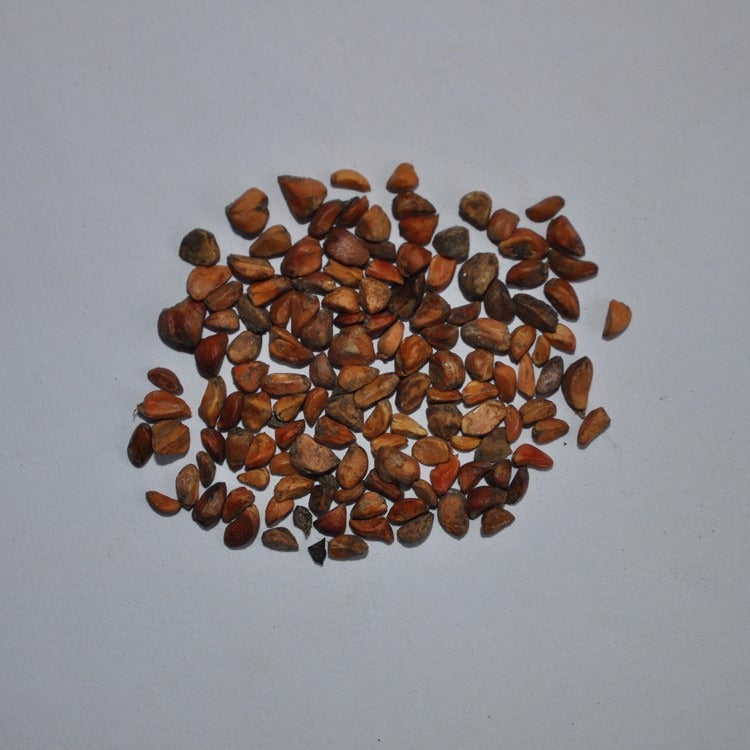
SKU: 83684239012
best way to start rose seeds

best way to start rose seeds Ruby Red Rose Seedlings Flower Seeds Perennial Growing Bonsai Corms Tubers Potted Planting Reblooming Fragrant Garden Roots Rhizomes Species Blooms Plant Bulbs Gardening Tree

Sale price$19.49 Regular price$21.66
Save 10%

Pay in installments of $5.42 with ShopPay, AfterPay and Klarna

Shipping Estimate
USA
  • USA
  • CAN

Ships within 48 hours · Estimated delivery Sep 27 - Oct 2

Promo Codes Available:

For Your Every Summer RSVP, with Code: SUMMER15

Description

best way to start rose seeds Ruby Red Rose Seedlings Flower Seeds Perennial Growing Bonsai Corms Tubers Potted Planting Reblooming Fragrant Garden Roots Rhizomes Species Blooms Plant Bulbs Gardening TreeAbout this item How to Grow Roses from Seeds Step 1: Treat Rose SeedsRose seeds need a much longer germination period than many flowers. If you arent careful, this extended moist storage can lead to the growth of molds that can threaten young rose seedlings. To prevent fungus spores from growing, you can destroy them with hydrogen peroxide. Add one half tablespoon of 3% hydrogen peroxide to one cup of water and soak the seeds in this solution for an

About this item

  • How to Grow Roses from Seeds

    Step 1: Treat Rose Seeds
    Rose seeds need a much longer germination period than many flowers. If you aren’t careful, this extended moist storage can lead to the growth of molds that can threaten young rose seedlings.
    To prevent fungus spores from growing, you can destroy them with hydrogen peroxide. Add one-half tablespoon of 3% hydrogen peroxide to one cup of water and soak the seeds in this solution for an hour.                                                                                                                                                                                      Step 2: Cold Germinate Seeds (Stratification)                                                        The natural rose germination process takes a few years. First, the rose hip needs to break down and decompose. After the seeds are fully exposed, they must undergo a period of stratification.Rose seed germination relies on a climate that experiences cold, moist winter months. You can simulate this winter environment using your home refrigerator.Place the rose seeds evenly spaced on a damp paper towel. Be sure to avoid overcrowding. Cover them with another layer of moist paper towels and seal the seeds in a plastic bag.Place the bag of seeds in a clean, empty crisper drawer. It would be wise to first sanitize the drawer with bleach and hot water to prevent mold contamination.Ensure the seeds remain moist throughout the entire stratification process. Add more clean water whenever they start to feel dry.Leave the seeds in the refrigerator for at least two months or until you are ready to sprout them.                                                                                                                                                                                                                     Step 3: Warm Germinate Rose Seeds
    Once the stratification process is complete, you can germinate rose seeds as you would other flowers. It is crucial to bring the seeds out of refrigeration into conditions warmer than 70 degrees.
    Ensure the seeds remain damp and leave them in a warm environment until they sprout. This can take up to a month, and it is likely that not all seeds will germinate.                                                                                                                                                                                                                                                  Step 4: Plant Rose Sprouts
    Add moistened seed-starter soil mix to seedling trays. Make a slight indentation for the rose seeds in each cell.
    The tiny tendrils that emerge are roots and must be handled very carefully. Gently remove the rose sprouts from the paper towel and place them root down in the seed trays.
    Cover the seeds with moist soil and leave the seed trays on a sunny windowsill. Use a clean spray bottle to mist the rose seedlings when they start to feel dry.
    For the best results, consider using Hoss Tools Deluxe Seed Starting Kit. This kit includes a 24-cell seed starting tray with a dome lid, seed-starter soil mix, fertilizer, and more.                                                                                                                                                                                                                                  Step 5: Transplant Rose Seedlings
    As the rose seedlings grow, pay close attention to the seed leaves so you know when to transplant. Wait until the true leaves develop, which take on the typical rose leaf appearance.
    Gently loosen the dirt from the tray cells and slide the seedlings free. Move them to individual containers and let them continue to grow for about a year before you transplant them outdoors.

  • Caring for Young Rose Plants

    Give your rose seedlings the support they need to grow strong stems and lush foliage. Add half-strength fertilizer to each planting location.
    Not all fertilizers are equal. Use a high-quality blend like Dry Fertilizer for guaranteed results.

    • How long does it take to grow a rose from seed

      Growing roses from seeds is a lengthy process. Without proper stratification, it can take multiple years for seedlings to emerge.
      Even the fastest-growing roses will likely take two full growing seasons to produce beautiful blooms.

    • Do roses grow true to seed

      Heirloom rose varieties grow true to the parent plants, while hybrid varieties are less predictable.
      The task of growing roses from seeds is very involved. For this reason, most gardeners prefer to grow roses from cuttings.
      If you want to experiment with cross-breeding unique roses, then you need to grow them from seed.
      To get predictable results, you must control pollination. This will ensure that your homegrown roses will grow true to color.

    • How to grow roses

      All you need to know about growing roses, in our detailed Grow Guide.Roses are some of the most beautiful and versatile garden plants. They come in a variety of forms, from patio roses to shrub roses, ramblers and climbers. Nearly all of them make an excellent cut flower. Single-flowered roses are great pollinator plants, while some species are used by leafcutter bees to make their nests. Most roses need sun and heavy soils to thrive, but some will grow well in partial shade and poorer soils. There really is a rose, or three, for every garden.Key points about growing roses
      Most roses thrive in full sun.Roses need rich, moist but well-drained soil.Water roses regularly so the soil stays moist but not waterloggedRoses are hungry plants. Mulch annually with organic matter such as well-rotted animal manure, and consider using a rose feed to promote flowering in summer.Prune roses annually to promote healthy growth, control the shape and encourage flowering
      Plant bare-root roses from November to March. Container-grown roses can be planted at any time of year.

    • How to grow shrub roses

      Shrub roses and English roses come in a huge range of sizes and colours ââ‚?some can grow to 2m in height. Shrub roses are typically robust, healthy, repeat-flowering plants offering colour when other shrubs have finished flowering. Some shrub roses have a good fragrance, but if you want a scented shrub rose then English roses are for you. Shrub roses and English roses are perfect for growing in a mixed border, large container or as part of a rose garden. Some can also be trained as climbers or used to grow into a hedge.

    • How to grow climbing roses

      Climbing roses are the perfect plants to add height to a garden, without being too vigorous. There are climbing roses available in all the popular rose categories ââ‚?hybrid tea roses, bourbons and English roses. Choose from double or single flowers, thornless or scented. Climbing roses can be grown up house walls, along garden fences, over pergolas or up large obelisks.

    • How to grow rambling roses

      Rambling roses are often confused with climbing roses. Ramblers are far more vigorous than climbers, and bear one fantastic flush of flowers, usually in June, followed by colourful hips. Climbing roses often repeat flower and have larger flowers.Rambling roses need plenty of space as they grow quickly. They’re ideal for growing up a tree or tumbling over a wall. They're perfect for covering an eyesore in the garden, such as an unsightly shed or out-building.A rambling rose looks great growing up into a tree, especially an apple tree, providing flowers after the apple blossom fades but before the fruits form. In this video guide from Gardeners' World, Monty Don shows you how to plant two different rambling roses ââ‚?'Wedding Day' and 'Sander's White'. He details what conditions a rambling rose needs, how to prepare the soil, and how deep to plant it so it settles in well over autumn and gets off to a good start in spring. You'll also find out how far from the tree to plant the rose and how to encourage it to climb up the tree.

    • How to grow patio roses

      Patio roses are small enough to grow in pots. They are compact in habit and thrive in lighter soils than many other rose types. Patio roses are not as long lived as other types of rose, but they're easy to manage and remain compact if hard-pruned each spring.

    • How to grow ground cover roses

      Ground cover roses have a trailing or spreading habit. They're ideal for growing in a container, at the front of a border or on steep banks. Many are modern introductions have good disease resistance. If given the right conditions, ground cover roses can suppress weeds.

    • Roses to grow by colour

      Roses come in a huge variety of colours. Browse our lists of roses by colour, below, for the best one for your garden:
      Pink roses to grow
      Purple roses to grow
      Yellow roses to grow
      Beautiful red roses to grow
      Orange roses to grow

    • Growing roses in pots

      It's possible to grow roses in pots, meaning you can grow roses in even the smallest gardens. While all but rambling roses can be grown in pots, shorter growing bush varieties, or ‘patio roses', are ideal. They’ll do best in large, deep containers ââ‚?an absolute minimum of 50cm in diameter and the same in depth ââ‚?to keep their roots cool and moist during summer.In hot, dry weather, soak the compost every two to three days, and feed regularly.

    • What to grow with roses

      Many plants can be grown with roses to great effect. Climbing roses work well grown with clematis. Rambling roses can be trained to grow up a tree. Patio roses work well with a variety of other plants suitable for growing in pots, while shrub roses can be grown in a mixed ornamental border, alongside nepeta, lavender and other herbaceous perennials.

    • When to plant roses

      The best time to plant roses is in autumn, when the soil is warm and the water table is at its highest. Roses will establish quickly before becoming dormant, and then burst into life again in spring. Roses come as potted plants or as bare-root plants (sold without soil on the roots). Technically, you can plant a potted rose at any time of year and a bare-root rose from October to March, but autumn remains the best time to plant roses.

    • How to plant roses

      Plant roses in a well-prepared hole with added compost to improve soil structure and aid water retention. Back-fill with soil and firm in well, then water thoroughly.In this Gardeners' World programme clip, Monty Don shows you how to plant shrub roses. Watch as he plants the yellow-flowered, myrrh-scented rose 'The Pilgrim' in the Cottage Garden at Longmeadow. He explains how to prepare the soil and dig the hole, how and why you should add mycorrhizal fungi, and what rose care to provide to ensure the rose settles in well.

    • How to plant bare-root roses

      Planting bare-root roses during the dormant season is cheaper than planting container-grown roses, because the growers don't need to water and feed the plants when they're dormant, and they weigh less and take up less room when shipping. What's more, there's a far greater selection of bare root roses available to buy than container-grown roses, giving you more choice.You can plant bare-root roses at any time between October and the end of March, but planting them in autumn helps them establish more quickly because the soil is still warm from summer, and is typically moist.

    • Pruning roses

      Pruning is essential for the overall health, vitality and appearance of roses. Winter is the key time to cut back most varieties, except rambling roses, which are pruned in summer immediately after flowering.The basic principles of pruning are the same: cutting back hard will promote the strongest growth, while light pruning will result in less vigour. The other basic rules include cutting to an outward-facing bud to prevent compacted growth, and removing closely positioned stems that might rub or compete for space. Also remove stubby ‘snagsââ‚?(short, dead lengths of stem with no growth on them) and thin, twiggy stems, which are unlikely to produce anything worthwhile in terms of growth and flowering potential.

    • Growing roses: problem-solving

      Roses suffer from many problems, including black spot, aphids, die-back and bloom balling. In this Quick Tips video, Richard Jones explains why you shouldn't worry about leafcutter bees damaging your rose leaves:Find more solutions to rose growing problems, below.
      Rose problems solved
      Trouble-free roses
      How can I stop die-back on roses?
      Rose black spot
      Rose bloom-balling

    Why Seedsplant ?

    • Experts in the field
    • Family owned and operated - 100 years
    • Rigorous quality control
    • We strive for your success by offering the bulb size you need
    • Affordable quality

    Flower Bulb Facts of Life

    Bulbs: Beauty In a Bottle:

    Bulbs are a natural product. And, as such, follow a natural cycle of growth and rebirth. Enjoying their fabulous flowers means planting ahead in one season then results the next. Bulbs are among the easiest flowers to grow, not only are they affordable, but bulbs offer the most stunning colors available. Even the most novice gardener can create a breathtakingly beautiful spring garden with bulbs.

    What's a Bulb?

    A flower bulb is really a self-contained flower factory. Within this marvelous little package is nearly everything the flower needs to come to life! Split a bulb open, for instance, and you'll see its baby flower bud, leaves, roots, stem and food supply. All bulbs need from you is to be placed in the ground at the appropriate season of year, given a liberal drink of water then left to work their magic.

    Variety:

    Flower bulbs come in seemingly limitless varieties which makes them perfectly suitable for any garden design you can dream up.

    Is It a bulb ?

    The Difference Between Bulbs, Corms, Tubers, Roots,Today, people commonly us the term 'bulb' to refer to any plant that stores its own food underground. But, in truth, many popular 'bulbs' are not true bulbs at all. These include corms, tubers and roots and, while they all produce beautiful flowers, technically the plants are different

    When To Plant

    In fall, after soil temperatures are below 50ºF/10ºC. These bulbs bloom the following spring and require the cold winter temperatures for development. But let's say winter arrives and your bulbs are still in their bag. Not to worry! Bulbs are pre-programmed to grow so even if you have to plant through snow, plant your bulbs!

    How To Plant

    Most bulbs thrive in either full or partial sun and in almost any location with good drainage. Avoid planting at the base of hills or under drainage pipes where water collects and will rot the bulbs.

    • Dig a hole
    • Drop in the bulb
    • Water thoroughly

    Tips For success

    • A larger grouping of flower bulbs are far more fab than just a few planted here and there. Think clumps of color.
    • Buy the largest bulbs you can find.
    • Note the flowering times. Not all bulbs will bloom at the same time. A little planning will greatly increase the number of months you will enjoy bulb flowers.

    Passionate About bulbs

    Generally speaking, the best predictor for gardening success is bulb size. Almost always, the larger the initial bulb size planted, the larger and stronger the plants will be, producing more flowers. The first year end result will be noticeable to anyone.The best predictor for gardening success is bulb size.

    Shipping

    All items are shipped usually within 2 working days (usually sooner) except plug plants. Plants only dispatch Monday-Thursday to avoid problems with live plants sitting in a postal depot over the weekend. During busy periods , due to the nature of product and extra care needed when packing and preparing for post, please allow up to 7 days for delivery (depending on day purchased). Plants are only dispatched when crops are ready to travel , therefore some multi orders may be delivered separately and occasionally it may be necessary to hold back dispatch until plants are ready. Shipping is either via Post  or 24/48 Hour courier depending on order size/weight etc. at our discretion. Please be patient when ordering plants as you cannot rush nature. Please be aware delivery dates shown by Seedsplant are estimates only and do not apply to live plant orders. Any orders returned to us by Post or Courier will incur a further postage charge to resend.

    Returs

    You may return all unopened items within 14 days of delivery for a full refund less P&P charges. Any items received damaged in transit must be notified in writing/email within 24 hours of receipt. Live plants should arrive in perfect condition , If however for some reason they do not please contact us immediately upon receipt. A full refund including original P&P will be made for any items not as described or wrong part no etc. All returns must include your full details with a copy of original receipt. You may cancel any transaction as long as notice is received before item(s) are / have been dispatched.

    Contact us

    You can message us through Seedsplant messages , otherwise You can write to us by email :[email protected]

    Shipping Notes
    • Free Standard Shipping on $100+ Orders to the USA.
    • Except Preorder products are shipped in 48 hours.
    • Delivery to the USA:
    1. Standard Shipping : 3-10 business days
    • If time is of the essence, please consider selecting expedited delivery for faster service.
    Exchange/Return Notes
    • We offer a 30-day return/exchange service after receiving.
    • Final sale items are not eligible for returns or exchanges.
    • To process your return/exchange, please contact us at [email protected]
    • Please click here for more details>>> Return & Exchange Policy
    SKU: 83684239012

    Discover Niche Categories That Outsell best way to start rose seeds

    Top-Converting Item to Boost Your Average Order

    4.8 ★★★★★
    Based on 22 reviews
    Sort
    Highest Rating
    Newest First
    Oldest First
    Product Reviews
    E
    Verified Purchase
    Englewood Review of Books
    Phoenix, US
    ★★★★★ 4
    "Being Transformed In the Direction of a World Without Death"
    Format: Hardcover
    [ This review originally appeared in THE ENGLEWOOD REVIEW OF BOOKS - Vol 3, #12 - 02 April 2010 ] N.T. Wright's newest book, After You Believe: Why Christian Character Matters, follows in the footsteps of two of his other recent books 2006's Simply Christian -- which makes a case for Christianity in a fashion not unlike that of C.S. Lewis's classic Mere Christianity -- and 2008's Surprised by Hope -- which explores in depth resurrection and the biblical concept of heaven. Wright describes the trajectory of the three book in this new volume's preface: "Christian life in the present, with its responsibilities and particular callings, is to be understood and shaped in relation to the final goal for which we have been made and redeemed. The better we understand that goal, the better we shall understand the path toward it" (ix). All three of these books are excellent, but this newest volume is most relevant to the sort of holistic Christian faith that we regularly advocate for here in the pages of The Englewood Review. Wright's case for the significance of Christian character is based on the philosophical concept of virtue, which he traces back to the Greek philosopher Aristotle, although he emphasizes that for the Church, the Aristotelian concept of virtue must be reinterpreted through the lenses of Scripture and the tradition of the Church. His locating the focus of Christian ethics -- for that in a nutshell is what After You Believe is about -- in virtue is much endebted to the work of Roman Catholic philosopher Alasdair Macintyre and noted theologian Stanley Hauerwas, whose work relies heavily upon that of Macintyre. However, although Wright does believe that the church is essential to the redemptive work of God in the world, After You Believe seems to evade the strongly communitarian themes that drive the work of Hauerwas and Macintyre. For instance, for the first half of the book, Wright addresses virtue in almost completely individualistic terms and only in the second half of the book does he begin to explore the role of the Church in the development of virtue. Finally, in the last chapter he gets around to making the crucial point that "[O]ne of the primary locations where, and means by which, any of us learns the habits of the Christian heart and life is what we loosely call the church" (272), noting that this is not a book on ecclesiology. Although Wright is a bit reticent on the role of the Church in the development of virtue, we should be clear that he is also not a thoroughgoing individualist. For instance, he drives home the point early in the book that: Christian virtue isn't about you -- your happiness, your fulfillment, your self-realization. It's about God and God's kingdom, and your discovery of a genuine human experience by the paradoxical route -- the route God himself took in Jesus Christ! -- of giving yourself away , of generous love which refuses to take center stage (70). Despite his overall minimization of the Church's role in the development of virtue, After You Believe is an excellent book and makes a strong case for virtue as the demonstration of the Holy Spirit's "transformation of character" in us. The road to virtue travels, Wright observes between the all-too-well-known polarities of a black-and-white legalism in which rules are either kept or not kept and in which the transformation of character is incomprehensible and an individualistic obsession with a sort of authenticity in which "any attempt to force yourself to keep particular moral rules and standards which seem alien to you is a denial both of God's free acceptance of you and of your own authentic existence" (30). As alluded to in Wright's summarization of the aim of this book stated at the beginning of this review, having a keen sense of the telos, or end toward which God is guiding creation, is essential to understanding our mission as God's people in the present. The scriptural story teaches us that the end of creation is the reconciliation of all things in creation and that this reconciliation has already been secured in the death and resurrection of Jesus and now is being worked out "through human beings for the whole world." With this story firmed planted in our hearts and minds Wright argues, we begin to get a sense of how our lives should be arranged now in order to set us on a course toward these ends. Wright's work here thus could be understood as an introduction to Christian ethics for the missional people of God. Fundamental to Wright's concept of ethics is the notion that the Church is called to be priests and rulers, "a royal priesthood" as Peter described it in his first epistle. Ultimately, humanity will reign with God over all creation; however, as we seek to discern our calling in this direction it is crucial for us to realize that the way in which we will rule creation is not the authoritarian and oppressive manner in which rulership is typically understood. Wright observes: If you want to see what it looks like for God's renewed people in Christ to be "royal" ... don't look at the fourth and fifth centuries , when Roman emperors first became Christians. ... Look, instead at what the church was doing in the first two or three centuries, while being persecuted and harried by the authorities -- and announcing to the world that Jesus, the crucified and risen Messiah of Israel, was its rightful Lord. That is what it means to be "rulers" in the sense we're discussing here: to be agents of that King's reign, the reign of the Prince of Peace, the one through whom tyranny itself... was overthrown with the destruction of its most vital weapon -- namely, death -- and the one through whom therefore was brought to birth a new world in which order and freedom at last meet (225-226). Central to Wright's account of virtue is the scriptural reality that transformation of our character comes within the context of the renewing of our minds in worship. His case for the significance of worship here is reminiscent of Jamie Smith's recent -- and excellent -- book on worship and transformation, Desiring the Kingdom (see our review here). Wright surveys the New Testament witness, making a case that by actively participating in the worship of the church, our minds are renewed, which over time leads to the transformation of our whole character. The primary virtues that are nurtured in us as we are transformed in this way, Wright argues, are the familiar triad of I Corinthians 13: faith, hope and love. Furthermore, we see signs of the development of these virtues in us by the familiar "Fruits of the Spirit" that Paul names in Galatians 5. Additionally, God's transforming work in the midst of the church community nurtures the corporate virtue of unity. Although Wright is certainly correct to name unity as a virtue that God is cultivating in the church, his distinctions between individual and corporate virtues seems a bit artificial, a result no doubt of his minimalization of the Church in his account of virtue. The book's final chapter holds one of its finest gems, "the virtuous circle," the following cycle which Wright maintains desrcibes the development of Christian virtue (imagine, if you will, these terms laid out in a circle): scripture >> stories >> examples >> community >> practice >> scripture Most of these terms are familiar to us, with the possible exception of "examples." By examples, Wright is referring to a specific sort of story of virtue manifested in people that we deem worthy of imitation. However, he is quick to add that these sort of examples are more than "mere imitation," but rather inspirations that through the leading of the Holy Spirit, "can be a means toward something quite new" (270). It would be exciting to see churches reflecting on this cycle of virtue and maybe even beginning to form their lives together more intentionally in this direction. After You Believe is perfect reading for the season of Easter in the Church. As we remember the resurrection of our Lord and Saviour Jesus Christ, Wright's fine theological reflections here shed much light on what it means for us to be a people being transformed in the direction of a world without death. May we be encouraged by Wright's work and may the virtue of Christ our resurrected Lord be continually nurtured in our midst.
    WAS THIS REVIEW HELPFUL?YesReportShare
    Reviewed in the United States on April 10, 2010
    J
    Verified Purchase
    Jonathan Pedrone
    Los Angeles, US
    ★★★★★ 5
    What is the chief goal of man?
    Format: Hardcover
    What is the chief goal of man? This is the question that prolific scholar N.T. Wright addresses in After You Believe. According to Wright, the goal of human existence is to "become genuine human beings, reflecting the God in whose image we're made, and doing so in worship on the one hand and in mission, in its full and large sense, on the other; and that we do this not least by following Jesus." [Page 26] After You Believe is the conclusion to the trilogy of Simply Christian and Surprised By Hope. In the preceding works Wright expounded on the subjects of why Christianity made sense, and subsequently on proper Christian hope for the future and afterlife. After You Believe represents the culmination of that series, dealing directly with the issue of putting into proper praxis orthodox Christian faith. For Wright, the goal is virtue, which comes through a transformation of character. This transformation must be understood in terms of proper understanding of the eschatological nature of the promise and work of God. Through Jesus God has enacted a worldwide redemption plan, which transcends the simplistic, and dualistic understanding of salvation as merely heaven when you die. Wright persistently draws the readers' attention back to the idea that the work of God is transforming the entire cosmos. This transformation does not lie in the distant future, but rather is has been inaugurated in the life and death of Jesus. Christians long for the day of glorification, when we shall be released from our bondage to sin and decay, however, it is important to recognize that the transformation process from depravity to glorification has already been enacted. This is the eschatological dimension of Wright's work. The Christian life is meant to be lived in anticipation of this future event, and evidence of that event is to be manifested in the here and now. Wright contrasts the Aristotelian goal of virtue, with the Christian goal of virtue. One is accomplished in a Pelagian sort of manner, and leads to active service in ones polis, while the other results in the manifestation of Christian virtues in the life of the Christian results in being formed to more closely reflect the image of God. The transformation of character, which leads to virtue, is not an instantaneous experience. Rather, it is the long drawn out process of making many small, important decisions about reflecting the image of God which leads those engaged with this process to make the right decision when faced with a crisis. We are called to be rulers and priests. Wright surveys the vast, but often times overlooked Biblical passages that speak of the human race one-day ruling with Christ. Our calling is one of great privilege and responsibility, to be rulers and priests is a high calling, and one that we should be working out in the present in anticipation of that future vocation. One of the most brilliant chapters of the book is the section on 1 Corinthians 13. Because of familiarity some passages require a fresh reading with new eyes. We have so often heard the passage read and expounded upon, that we miss the intensity of what love really is. For Wright, love is the chief of all the virtues. Love is not something that can be gained overnight, or that can be exercised without much learning. To obtain the true virtue of love is to partake in the long arduous process of transformation of the mind. In this book Wright characteristically exegetes Biblical passages, his style is both readable and challenging. Fans of his work will enjoy his characteristic interpretation of the Scriptures. However, what sets this work apart from his voluminous other works is the tying of that exegesis to attainment of virtue, and right Christian action. In this book Wright closes out the circle of his trilogy by taking proper orthodox Christian belief and hope and connecting it with proper Christian praxis.
    WAS THIS REVIEW HELPFUL?YesReportShare
    Reviewed in the United States on March 31, 2010
    R
    Verified Purchase
    Randy Olds
    Charlottesville, US
    ★★★★★ 5
    My Favorite N.T. Wright To Date
    Format: Hardcover
    In this third book of N.T. Wright's popular series that began with Simply Christian and was followed up by Surprised by Hope he continues with the theme that he believes was basic in Early Christianity. The theme of the creator God, through a process that was inaugurated by the Incarnation, crucifixion and subsequent resurrection of Jesus Christ, to restore Creation and bring Heaven and Earth together. As followers of Christ, Christians are to play a key part in this renewed Creation. I've read a number of Wright's books, and I must say that I found this latest publication to be the best that I've read to date. After You Believe is not nearly as heavy on theology as it is on practical reasons why living a life of Christian virtue matters. Wright illustrates why virtuous living matters not just for the life to come when Christ's followers will co-reign as Rulers and Priests, but it also matters in the here and now as we ready ourselves for the glorious future that God has in store for us. Wright lays the groundwork with the question "what am I here for?" He looks at two common contrasting views about virtue within Christianity. The first view is that of the person who feels that they must be "authentic" and therefore they disregard attempts at virtue for fear of being hypocritical and phony. On the flip side of the coin are those that are constrained by all of the "rules and regulations" that they find in scripture and are hopelessly chasing their tails trying to be "good enough for God." Wright considers both views to be anachronistic and spurious. Wright holds that our goal is to be "truly human" in the way that God originally intended for us to be. Living out a life as a complete human means living a Spirit led life in which all of the fruits of the Spirit are exhibited and the three main Christian virtues of Faith, Hope and Love begin to flow naturally. But Bishop Wright warns that it is not an automatic thing that happens after one accepts Jesus as Lord and joins in the body of Christ. This is a common fallacy that many in Western Protestantism fall for. Using examples like that of Captain Sullenberger, who made the miraculous landing on the Hudson River on flight 1549, Wright illustrates that building genuine Christian character is a process that takes many years of making thousands of tiny `correct decisions', so that when a serious test of Christian character arises, the response is "automatic." Toward the center of the book, Wright spends a good deal of time doing what he does best, exegeting the Pauline corpus to explain the "how and why" of developing Christian character. He discusses the coming Kingdom and how we should begin preparing for the Kingdom by the "renewing of the mind." He then moves on to 1 Corinthians 13 and provides one of the best expositions of the "love chapter" that I've read to date. He sums it up toward the end of the book by giving fairly clear (for N.T. Wright) instructions on how to carry the whole thing out. He uses a "grace" circle that incorporates scripture, stories, examples, community and practice. Again, he reiterates how Christian character doesn't "just happen" but is rather a lifelong process that one must work toward every day. Throughout the book I was reminded of the earnestness of John Wesley and the warmth of C.S. Lewis. Of all of Wright's books that I've read to date, I found this one to be the most practical and helpful. I've come away from some of Wright's books feeling a lot more educated, but a little puzzled on how to apply what I had read to my personal Christian walk. With After You Believe however, I found much that I felt that I could take away to help me become a more mature Christian. I would encourage this book to everyone, and especially to those who might be asking the question "what do I do now that I've become a Christian?"
    WAS THIS REVIEW HELPFUL?YesReportShare
    Reviewed in the United States on May 17, 2010
    J
    Verified Purchase
    Jeff Martin
    Cuba, US
    ★★★★★ 5
    17 – “For the kingdom of God is not food and drink but righteousness and peace and joy in the Holy Spirit
    Format: Paperback
    Everyone should read this book! A very important redirection for Christians today. Though I wanted to address something I disagreed with Wright about, and that is COMMANDMENTS. I want to address the intriguing notion by Wright that the commands given by Paul and others in the NT are more or less guidelines to get them started on the right path of what Wright calls “habits of the heart” (198). Wright also sees the commands in the NT to be concerned with some imminent threat or immoral practice he sees about to happen in the church and puts rules in place (200). He would also say rules are more for the immature or newbies. I am intrigued by it because I have thought that this might be true of what Paul is trying to say as well. Though now I am not so sure. If one reads Psalm 119 one sees that one should seek for God’s salvation and keep his commands. Verse 166 – “I hope for your salvation, O LORD, and I fulfill your commandments” (NRSV). 1 Corinthians 7:19 says that keeping the commandments of God is everything! But key to what is happening with Paul I believe is that 1 Cor. 7:19a says that circumcision is nothing! So obviously Paul is not here referring people back to the OT law. What is true of all believers is that we are “bought with a price”. Psalm 119:166 applies no matter what covenant we are under. It is the apostles who have authority and keys of the kingdom. Wright underplays the authority of the apostles in this instance. The commandments of God are now, apostolic teaching. We can find in many places where obedience is a theme. “Romans begins and ends with the theme of ‘the obedience of faith’…Paul’s message has to do with obedience from the heart (Romans 6:17) to the truth (Rom 2:8, Gal 5:7), the gospel (Rom 10:16, 2 Thess. 1:8), or Christ (2 Cor 10:5,6)” (Rosner 129). Wright does not need to talk about the idea of the commands in the NT being only guidelines, because for Paul if the “obedience under the old covenant was meant to lead to life, obedience under the new is the fruit of new life in Christ” (Ibid 130). All Wright needed to say about the difference between the old and new was what he said earlier on pages 46 and 47. The OT law was “designed to be restrictive”. It is just the opposite for the NT law. It is designed to be freeing. Gal 5:1 – “For freedom Christ has set us free”. Paul says this because some in the church wanted to run back to being slaves under the OT law. In fact Paul uses “obedience” to describe what they were doing right. Gal 5:7 – “You were running well; who prevented you from obeying the truth?” (NRSV). The OT law is summed up by loving God and loving neighbor as well as the new, but the difference comes in the new maturity wrought by Christ. This new teaching has transformed the thinking. The Spirit is on all God’s people. So it is not “guidelines” versus “rules”, it is “liberating rules” vs “restrictive rules”. Romans 14:17 – “For the kingdom of God is not food and drink but righteousness and peace and joy in the Holy Spirit. The one who thus serves Christ is acceptable to God and has human approval. Let us then pursue what makes for peace…”(NRSV). Rosner, Brian S. Paul and the Law, New Studies in Biblical Theology (Downers Grove, IL: Intervarsity Press 2013).
    WAS THIS REVIEW HELPFUL?YesReportShare
    Reviewed in the United States on August 12, 2015
    O
    Verified Purchase
    Oliver Bennett Pierce
    New York, US
    ★★★★★ 5
    Rethinking Christian Character: Virtue as the Future Character of Priests and Rulers of God's New Creation
    Format: Paperback
    N.T. Wright is author I have been meaning to read for a long time. I've heard a lot about him especially his book "Jesus and the Victory of God" (which is probably next on my list) and I'm an anglophile at heart so I'll give any british writer/theologian a chance. When this book came on sale for the Kindle I immediately got it and I am very thankful I did. Admittedly the book was much more theological and philosophical than full of "practical advice" but it gave me a lot of meat to chew on that I believe will lead to much practical action. Passion that lasts comes more often from knowing deep down something is true. What we believe determines how we act. Anyway, the book does start off a little slow with Wright's talk about Aristotle's view of virtue and the idea of virtue out in the world. They were some good anecdotes demonstrating how virtue is something developed beforehand that reveals itself in difficult situations, ex. one of the pilot who landed the plane in the Hudson river recently, but I wasn't completely drawn in to the book yet. However, I was sucked in once I hit Chapter 3: Priests and Rulers. The eschatological idea that Christians are going to be priests and rulers in the new creation is something that I often completely lose sight of. It's rarely taught in churches I've been too and it was incredibly intriguing to see Wright lay the biblical foundations for it. As he showed how the theme appeared through out the whole of scripture it was another "ah-ha!" moment for me as the Bible came together once again as coherent connected book that I really can trust. Also I learned a lot from Wright's elaborations on the idea that virtue is really just the character of the new humanity. So when God is calling us to act a certain way it is in light of the future, how things will be in the new creation. This really revolutionized the way I think about my character and is incredibly practical and encouraging. Act this way because that's how things are meant to be and will be! Its not just some random rules that God coming up with; it's the character of the new humanity which was ushered in by Jesus. Wright ends the book with a little more practical chapter, The Virtuous Circle, detailing five practices that help us develop virtue: scripture, stories, examples, community, and sacraments. My only criticism is sometimes the book is a little repetitive. Wright really wants to drive home the point that virtue is something that is a choice but its not just about following certain rules. He again and again shows how it is not legalism or spontaneity that is the solution. We make the choice to renew our minds with the scriptures and do what the scriptures command and slowly our character is changed and virtue comes more naturally. While I certainly will remember this he could have shorted a few passages and still had the same effect. In conclusion, if you are looking for a book that will give you great biblical, theological, and philosophical foundations for what you are supposed to do as Christian on earth this is the book for you.
    WAS THIS REVIEW HELPFUL?YesReportShare
    Reviewed in the United States on January 8, 2013

    recommand products