Pay in installments of $6.20 with
 ,
,
 and
and

Shipping Estimate
USA
- USA
- CAN
- USA
- CAN
Ships within 48 hours · Estimated delivery Sep 25 - Sep 30
 Promo Codes Available:
For Your Every Summer RSVP, with Code: SUMMER15
Description
green snake plant vs golden snake plant Hahnii Golden EdgeDracaena (Sansevieria) trifasciata 'Hahnii Golden Edge' Dracaena trifasciata 'Hahnii Golden Edge' is a compact birds nest snake plant with short, broad leaves arranged in low rosettes. The foliage is grey green to deep green in the centre, with bright yellow margins that frame each leaf and give the plant a fresh, bright look in a small pot. The plant stays close to the container, building a neat, layered cluster from the base. This snake plant has a
Dracaena (Sansevieria) trifasciata 'Hahnii Golden Edge'
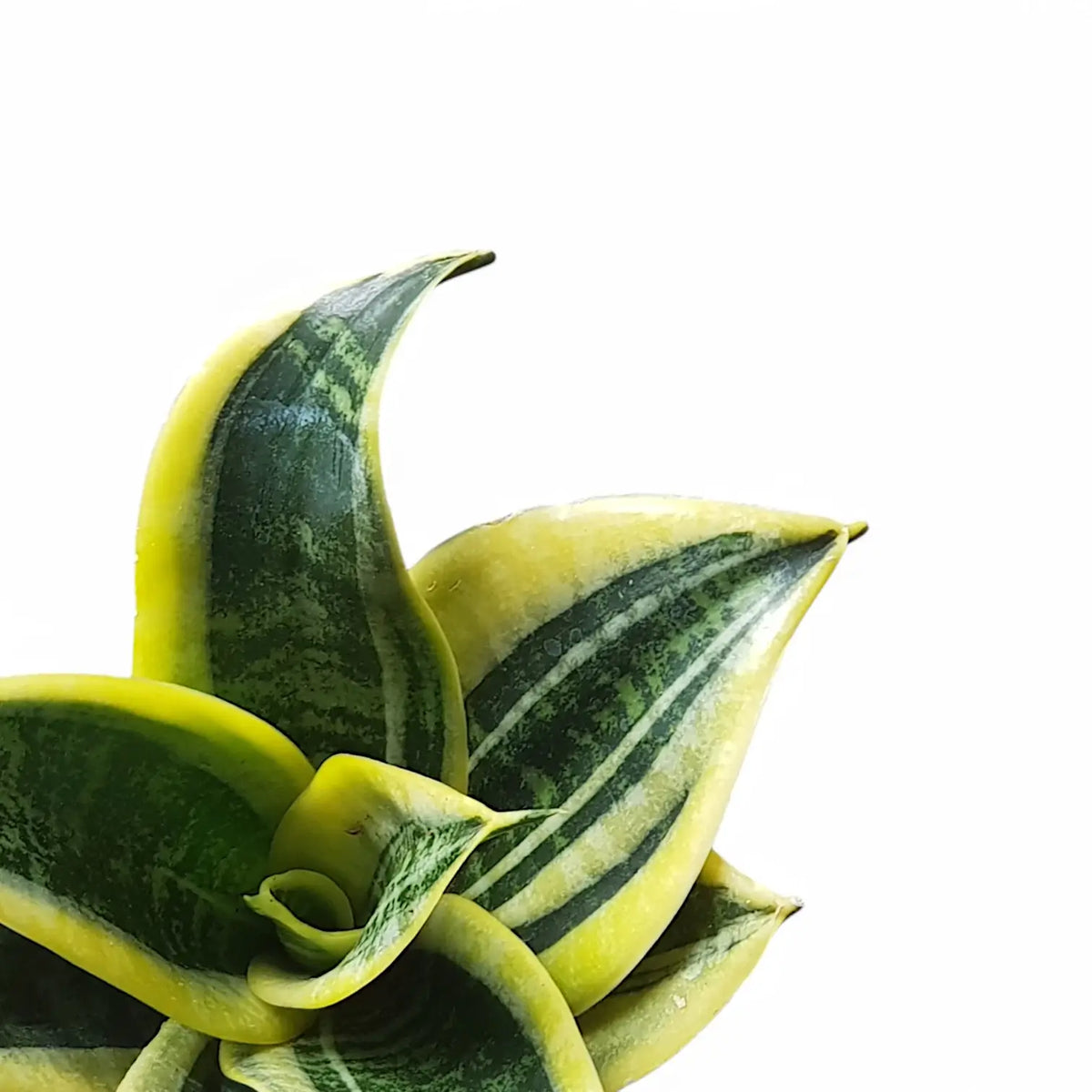
Dracaena trifasciata 'Hahnii Golden Edge' is a compact bird’s-nest snake plant with short, broad leaves arranged in low rosettes. The foliage is grey-green to deep green in the centre, with bright yellow margins that frame each leaf and give the plant a fresh, bright look in a small pot. The plant stays close to the container, building a neat, layered cluster from the base.
This snake plant has a naturally small, low profile with strong colour around each leaf edge. The leaves overlap in a tight rosette, so even a young plant can look full in a small pot. As it matures, the rhizome produces new side shoots that create additional rosettes around the original centre, slowly forming a wider clump.
Yellow-edged rosettes in a small footprint
- Growth shape: Low rosettes create a bird’s-nest form with layered leaves.
- Leaf colour: Yellow margins brighten the compact foliage and frame the green centre.
- Indoor size: The low habit stays compact on shelves, desks and plant stands.
- Offset growth: New rosettes appear from the base, gradually widening the clump.
- Flowering: Mature plants may flower occasionally, while the compact rosettes stay prominent year-round.
How the bird’s-nest habit develops
Dracaena trifasciata grows from a rhizome, and 'Hahnii Golden Edge' shows that structure in a compact way. New growth appears as fresh leaf clusters from the base, slowly turning a single rosette into a group of connected rosettes. This makes the plant naturally dense and slow by nature.
The species behind this cultivar is native from southern Nigeria to western Central Tropical Africa and Tanzania, where it grows in seasonally dry tropical conditions. Its firm leaves store water, while the rhizome needs a drying phase between waterings. The compact rosette shape also means watering should be directed to the substrate, so moisture stays out of the central leaf cup.
The yellow leaf margins give this cultivar its bright rosette look. The plant depends on warm temperatures, open substrate and careful watering. With steady filtered light, the rosettes usually stay compact and the leaf pattern remains clear. In dimmer positions, adjust watering to the slower drying pace of the pot.
Care for a compact Hahnii rosette
- Light: Bright indirect light helps keep the rosette balanced and compact. In dimmer rooms, reduce watering frequency to match the slower drying mix.
- Watering: Water the substrate after it has dried deeply. Aim water at the mix around the rosette, then let the pot drain fully.
- Substrate: A loose, mineral-leaning mix with pumice, lava rock, coarse sand or fine bark gives the rhizome the air it needs after watering.
- Pot choice: A shallow or modestly sized pot with drainage holes holds the low clump and keeps drying time manageable.
- Temperature: Keep it in steady indoor warmth, ideally around 18–27 °C. Warm conditions help the lower pot dry evenly.
- Humidity: Normal household humidity is enough for this compact snake plant.
- Feeding: Use a diluted balanced or cactus fertiliser during active growth. Light feeding is enough for the slow offset habit.
- Repotting: Repot when several rosettes have filled the pot or the substrate has collapsed. Increase pot size modestly so the mix still dries predictably.
- Propagation: Divide established clumps by separating rooted rosettes with a section of rhizome attached. This preserves the compact form.
Rosette issues to catch early
- Soft centre: Check for moisture held between the inner leaves and inspect the base. A damp crown can soften quickly in cool rooms.
- Brown yellow margins: Review old handling damage, irregular watering, mineral buildup and temperature dips. Trim only dry tissue if needed.
- Wrinkled leaves: Check both dryness and root condition. Wrinkling can come from a long dry spell or from roots that stopped taking up water after earlier stress.
- Open rosette shape: Move the plant closer to bright filtered light. Brighter filtered light produces a tighter new leaf arrangement.
- Few offsets: Offset production is naturally slow. Warmth, stable light and a snug pot help new rosettes form more steadily.
Pet and child safety
Place Dracaena trifasciata 'Hahnii Golden Edge' out of reach of pets and small children who may chew the leaves. Snake plants contain saponins, which can cause nausea, vomiting or diarrhoea in cats and dogs if ingested. A raised position keeps the low rosette away from easy access in shared spaces.
Species name and Hahnii context
The accepted botanical name for the species is Dracaena trifasciata, while Sansevieria trifasciata remains common in horticulture. The genus name Dracaena comes from the Greek drakaina, meaning “female dragon”. The species epithet trifasciata means “three-banded” or “marked with three bands”, referring to the banded leaf pattern seen in the species and many cultivars. The Hahnii group is recognised in cultivation for its compact bird’s-nest habit.
Dracaena trifasciata 'Hahnii Golden Edge' has low rosettes, yellow margins and slow offset growth in a compact pot.
Shipping Notes
- Free Standard Shipping on $100+ Orders to the USA.
- Except Preorder products are shipped in 48 hours.
- Delivery to the USA:
- Standard Shipping : 3-10 business days
- If time is of the essence, please consider selecting expedited delivery for faster service.
Exchange/Return Notes
- We offer a 30-day return/exchange service after receiving.
- Final sale items are not eligible for returns or exchanges.
- To process your return/exchange, please contact us at [email protected]
- Please click here for more details>>> Return & Exchange Policy