SKU: 84071831360
croton mammy toxic

croton mammy toxic Croton Mammy - Codiaeum Variegatum | Crotons for Sale

Sale price$21.38 Regular price$23.75
Save 10%

Pay in installments of $5.94 with ShopPay, AfterPay and Klarna

Shipping Estimate
USA
  • USA
  • CAN

Ships within 48 hours · Estimated delivery Oct 2 - Oct 7

Promo Codes Available:

For Your Every Summer RSVP, with Code: SUMMER15

Description

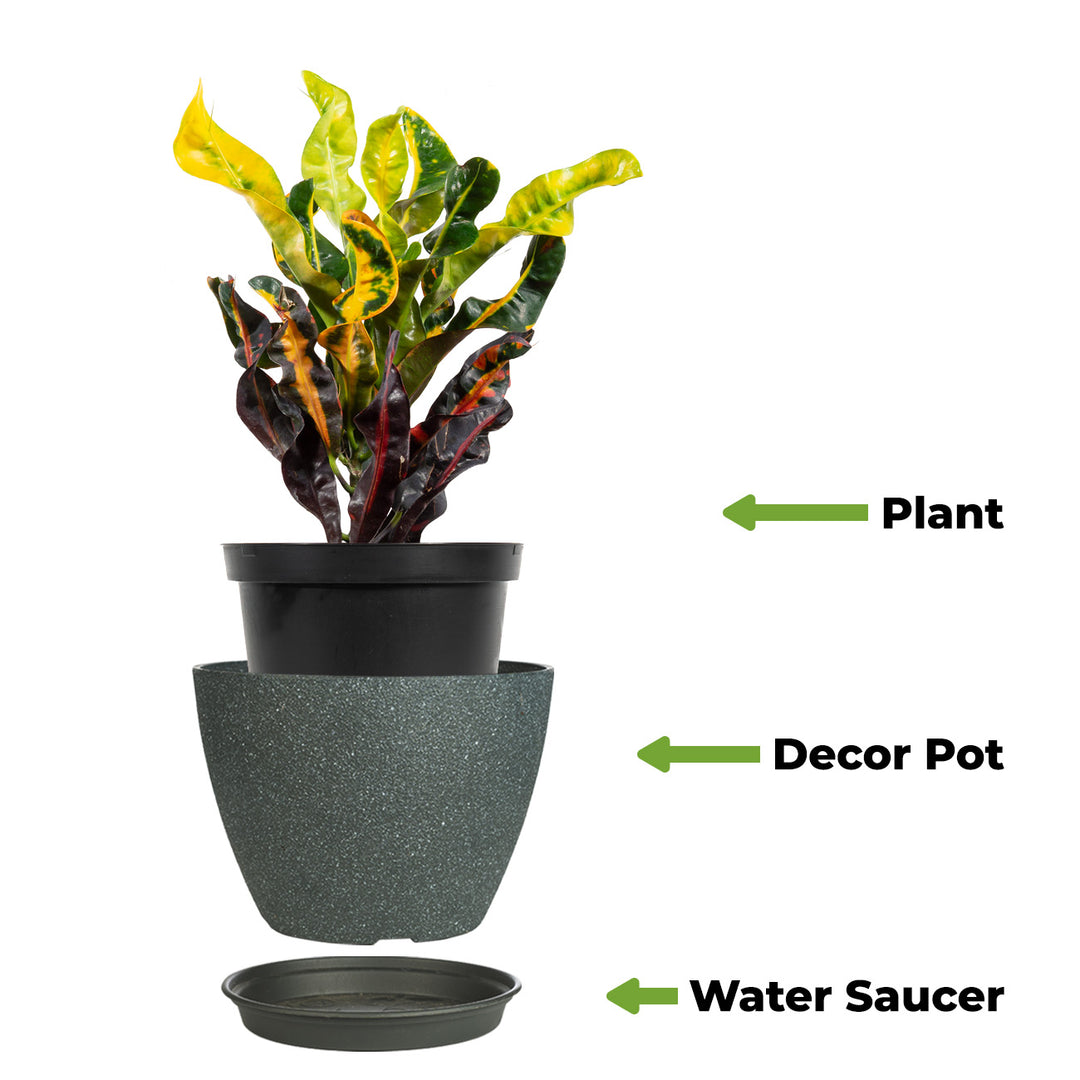
croton mammy toxic Croton Mammy - Codiaeum Variegatum | Crotons for SaleCroton Mammy Brings You Stunning Multi Colored Foliage The Croton 'Mammy' stands out with its spectacular glossy multi colored leaves, perfect for brightening up any indoor or outdoor setting. The Mammy Croton (Codiaeum Varigatum) plant has multicolored leaves with hues of yellow, red, orange, purple, and green. The bright colorful leaves are unusual, sword shaped, with linear growth habits that lean towards the light. The leaves are evergreen and

Croton ‘Mammy’ Brings You Stunning Multi-Colored Foliage

The Croton 'Mammy' stands out with its spectacular glossy multi-colored leaves, perfect for brightening up any indoor or outdoor setting.

The Mammy Croton (Codiaeum Varigatum) plant has multicolored leaves with hues of yellow, red, orange, purple, and green. The bright colorful leaves are unusual, sword-shaped, with linear growth habits that lean towards the light. The leaves are evergreen and will stay colorful all year long as they spiral around the trunk. It is a smaller species of the popular Petra Croton variety.

Croton Red Mammy plant is suitable for growing indoors or outdoors. Growers in colder climates can keep it in containers and move Croton Mammy indoors for winter when temperatures drop below 55 F. You can keep crotons indoors as house plants all year long with the proper care. They fit into almost any room including kitchens, offices, bedrooms, bathrooms, or living rooms & add the pop of color your home decor needs!

When hardy enough to be grown outdoors in USDA growing zones 9-11, they look incredible when planted in garden beds as accent plants, incorporated into hedges, or planted into containers where the vibrant color can be seen.

Discover the Perfect Plants Difference

When you buy online from Perfect Plants Nursery, you get experts in cultivating landscape plants and houseplants. We've been a family-run farm since 1985 and deliver healthy, high-quality plants directly to your door. This ensures they arrive ready to thrive.

CROTON MAMMY CARE

The Crotons houseplants do need fertilizer annually that is applied in early spring and summer to help with growth and boost the beautiful colors that shine through the veiney leaves. It is not recommended to fertilize during fall and winter.

Croton watering is essential to keep the soil moist. Well draining soil is a must for these slow growing plants. If you are growing crotons in a pot, a drainage hole is necessary to avoid root rot. Water roughly once a week or whenever the potting soil feels dry to touch. Your watering schedule will vary depending on soil moisture, humidity, and temperatures.

There are no major Mammy Croton plant pest and disease issues and it is deer resistant.

How Much Sun Does a Croton Plant Need?

Crotons need a lot of bright sunlight. They are tropical plants native to India and require bright, direct light to thrive in warm, humid environments. A south or east facing window is best with plenty of full sun. If you are growing crotons outdoors, it can be in direct sunlight but harsh afternoon sun may scorch the leaves. They are not as sensitive as most and will grow towards the light wherever you plant them. Partial shade is best in hotter climates. The #1 sign your croton plant is not getting even sunlight is leaf drop.

How Big do Crotons Get?

The Mamey Croton height is up to 2-3 feet tall and 1-2 feet wide. It can be contained by regular pruning and shaped to any desired size. It’s perfect for growing in pots or small spaces in the garden. Mammy Croton spacing should be at least 1-2 feet apart to allow the root systems to grow to their fullest potential.

How to a Prune Croton Bush

It is not necessary to practice pruning on crotons unless it has become unruly and needs a trim. You can prune crotons at any time of the year but the very best time is in early spring before the active growing season begins. When pruning, be wary of the sap that leaks out of any pruning cuts. It can cause skin irritation. You may prune back dead leaves at any time to encourage new growth. Small pruning shears or scissors are your best tools for this practice.

*Disclaimer: Croton plants and cats do not mix well. Croton leaves are toxic to cats, dogs, and other pets so be sure to keep away and do not allow them to ingest any part of the potted plant.

Ordering the Croton Mammy online has never been more convenient, buy from Perfect Plants today and transform your home with vibrant colors.

Check our complete collection of tropical houseplants for sale.


    Shipping Notes
    • Free Standard Shipping on $100+ Orders to the USA.
    • Except Preorder products are shipped in 48 hours.
    • Delivery to the USA:
    1. Standard Shipping : 3-10 business days
    • If time is of the essence, please consider selecting expedited delivery for faster service.
    Exchange/Return Notes
    • We offer a 30-day return/exchange service after receiving.
    • Final sale items are not eligible for returns or exchanges.
    • To process your return/exchange, please contact us at [email protected]
    • Please click here for more details>>> Return & Exchange Policy
    SKU: 84071831360

    Discover Niche Categories That Outsell croton mammy toxic

    Top-Converting Item to Boost Your Average Order

    4.0 ★★★★★
    Based on 22 reviews
    Sort
    Highest Rating
    Newest First
    Oldest First
    Product Reviews
    S
    Verified Purchase
    Stephen Collins
    Cuba, US
    ★★★★★ 4
    Great read and research. But what about daily application for regular people?
    The research piece behind this book might be the next thing I read, as I'm intrigued by the academic rigor applied. The reveal and living examples of the five skills - questioning, networking, experimenting, observing and associating - are tangible and approachable given their articulation through well-known and highly visible entrepreneurs running innovative companies. There's much to be gleaned by looking at the way these people behave and, even through simple emulation, enhancing one's own skills. My only real disappointment with the book is its limited approach to practical, daily application for those not yet at the top of the tree. It's rather a different kettle of fish for the innovation-minded, but stuck in bureaucracy, worker who wants to make things better, is still motivated, and hasn't been crushed by the machine. How does that person actively innovate? And, in some cases, get away with it? This book (or an accompanying volume) focussing on daily, in-work, innovation would be useful.
    WAS THIS REVIEW HELPFUL?YesReportShare
    Reviewed in the United States on May 23, 2013
    A
    Verified Purchase
    Annette
    Lexington, US
    ★★★★★ 5
    A Favorite Book on Innovation
    Format: Hardcover
    Very well written and enough stories to help the true content stick. This is a favorite book of mine and has lead to interesting conversations to boot.
    WAS THIS REVIEW HELPFUL?YesReportShare
    Reviewed in the United States on September 29, 2025
    K
    Verified Purchase
    Kurt Manwaring
    Pawtucket, US
    ★★★★★ 5
    An exceptional five stars out of five
    Few qualities separate inordinately successful entrepreneurs from the rest of the pack than the ability to innovate. Many have debated whether individuals are born with this quality or whether it can be nurtured. In The Innovator's DNA, Jeff Dyer, Hal Gregersen and Clayton Christensen explain that while genetics play a role, innovation is most certainly a skill that can be learned. In particular, the authors introduce and expound upon five "discovery skills" found in the leaders of some of the most innovative companies in the world: (1) associating, (2) questioning, (3) observing, (4) networking and (5) experimenting. Each discovery skill is accompanied by real-world examples and pragmatic exercises that make the book unusually valuable in an age where copious books on change, leadership and innovation overwhelm the already-overwhelmed executive. I give The Innovator's DNA an exceptional five stars out of five. The authors present a very readable book and provide concrete exercises for developing innovative skills. Using the principles provided in the book, I created a folder on my computer that I call my "Innovation Room." I use this to track progress as I work through various exercises and as I take time to ponder about how to apply innovative solutions to extant problems in Utah. This book was and will continue to be useful to me, and is recommended as a must-read for those interested in adding rare innovative attributes to their arsenal of problem-solving and decision-making skills. *NOTE: The preceding text is taken verbatim from my short book review printed in the June 2012 edition of Utah Business.
    WAS THIS REVIEW HELPFUL?YesReportShare
    Reviewed in the United States on March 22, 2013
    K
    Verified Purchase
    Kocese
    Bozeman, US
    ★★★★★ 3
    It's Ok
    It's an ok book and it definitely has some interesting things going on it, but it also has those "ask yourself" these questions if you can be an innovator which is where every human being ponders and talks themselves into having the type of characterisitic the question asks if they have and that makes that human being feel the best about themselves. Bottom line the book has some good info, is it better than say reading the biography of each innovator that they cover (if one is available)....I can't say that it is.
    WAS THIS REVIEW HELPFUL?YesReportShare
    Reviewed in the United States on May 2, 2013
    C
    Verified Purchase
    Charlie R
    Battle Creek, US
    ★★★★★ 5
    Great read
    Format: Hardcover
    Loved this book.
    WAS THIS REVIEW HELPFUL?YesReportShare
    Reviewed in the United States on June 11, 2025

    recommand products