SKU: 8447968472
albuca spiralis frizzle sizzle succulent

albuca spiralis frizzle sizzle succulent Buy 'Frizzle Sizzle Plant - Albuca spiralis' Care and Growing Guide

Sale price$20.10 Regular price$22.33
Save 10%

Pay in installments of $5.58 with ShopPay, AfterPay and Klarna

Shipping Estimate
USA
  • USA
  • CAN

Ships within 48 hours · Estimated delivery Oct 1 - Oct 6

Promo Codes Available:

For Your Every Summer RSVP, with Code: SUMMER15

Description

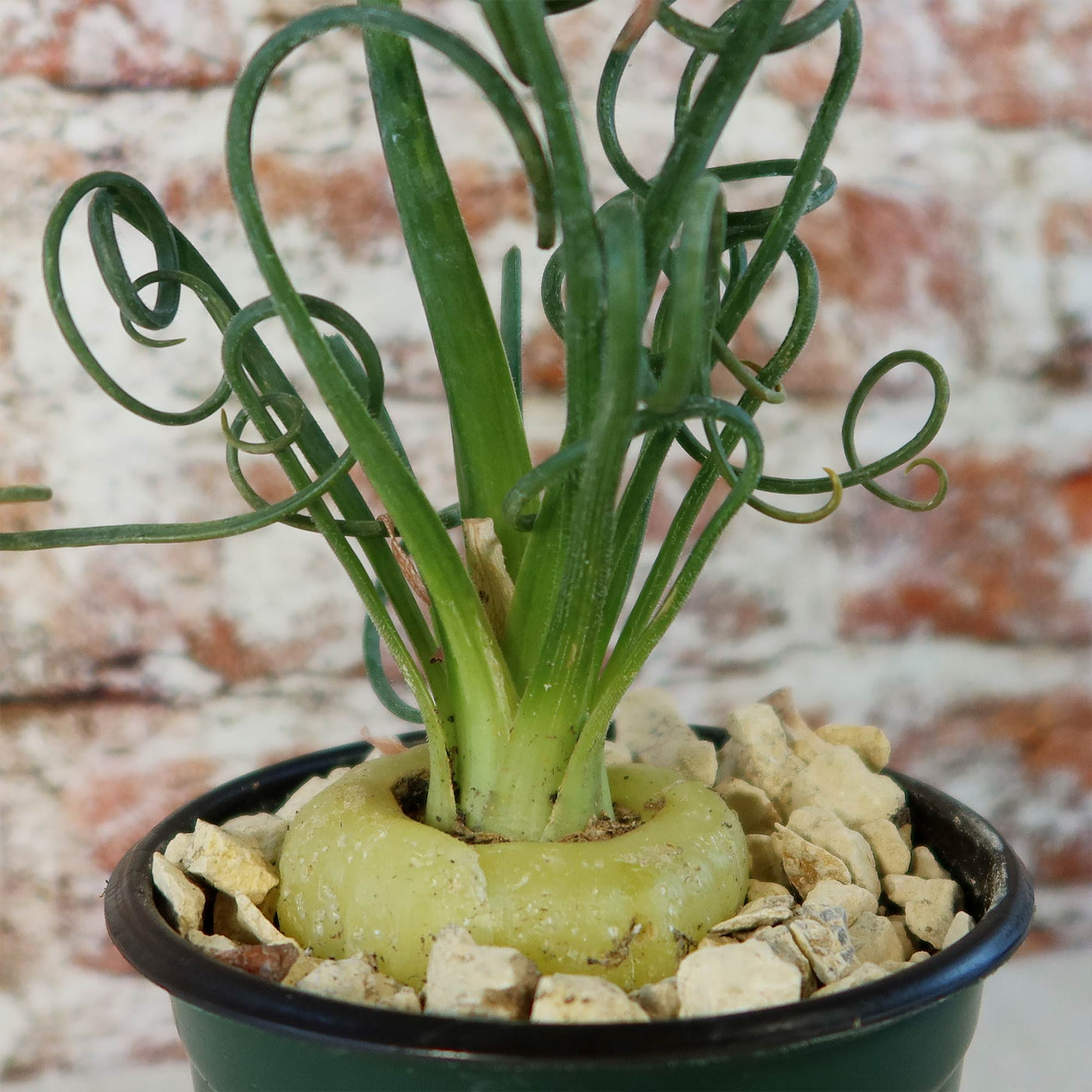
albuca spiralis frizzle sizzle succulent Buy 'Frizzle Sizzle Plant - Albuca spiralis' Care and Growing GuideT he stunning Frizzle Sizzle plant, which is known as Albuca spiralis. Because of its distinctive spiral shaped leaves, the Frizzle Sizzle plant is also known as Corkscrew Albuca, Curly Albuca, Helicopter Plant, or Slime Lily. The image features the slender, cylindrical leaves that curl into tight spirals. Native to South Africa, the bulb succulent Frizzle Sizzle plant has long, narrow corkscrew leaves that are bright green in color. Each leaf has

T he stunning Frizzle Sizzle plant, which is known as Albuca spiralis. Because of its distinctive spiral-shaped leaves, the Frizzle Sizzle plant is also known as Corkscrew Albuca, Curly Albuca, Helicopter Plant, or Slime Lily. 

The image features the slender, cylindrical leaves that curl into tight spirals.

Native to South Africa, the bulb succulent Frizzle Sizzle plant has long, narrow corkscrew leaves that are bright green in color.

Each leaf has glandular hairs that make it feel a little sticky when touched. The leaves grow in a rosette formation, radiating from the center of the frizzle sizzle plant. 

As the Albuca spiralis matures, it can grow up to 12 inches tall.

The spiral shape of the leaves adds an interesting texture and dimension to the frizzle sizzle plant, making it a standout addition to any indoor or outdoor garden. 

The flowers of the frizzle sizzle plants typically bloom from late winter to spring and are yellow or greenish-yellow in color, with a pleasant vanilla fragrance that emerges on each flower stalk. Remember, the tips of flower buds often turn brown during growth, and there can be ten or twenty blooms on each flower stalk. 

When and How to Water Your Frizzle Sizzle Plant 

Frizzle Sizzle is a drought-tolerant succulent bulb that stores water in its base, making it well-adapted to dry conditions and low-frequency watering. However, its watering needs change dramatically between active growth and dormancy. Your Frizzle Sizzle plant prefers watering once a week in the growing season, and once every 2-3 weeks in the dormant season.

In winter and early spring, during its growing season, Albuca spiralis needs more regular moisture to support its curly foliage and flower production. Water once a week, or when the top inch of soil feels dry. Keep the soil lightly moist but never soggy to prevent rot. Always use well-draining soil and a pot with drainage holes.

From late spring through summer, as the plant enters dormancy, reduce watering significantly. The leaves will begin to yellow and die back; this is normal. Water only once every 2–3 weeks, or when the soil is completely dry. Do not overwater during dormancy, as the bulb is resting and prone to rot if kept too wet.

Inspect Frizzle Sizzle leaves for overwatering and underwatering. Overwatering can cause yellow, floppy, soft, wilting, or basal collapse. Underwatering can cause dry tips, droop, or stunted growth. 

Light Requirements - Where to Place Your Frizzle Sizzle Plant

When growing indoors, the Frizzle Sizzle plant thrives in a spot near a window where it can receive plenty of bright sunlight for at least 4-6 hours a day.

However, be cautious of placing it in direct sunlight for extended periods, especially during the hottest parts of the day, as it can scorch the leaves. 

The leaves will not curl if there is insufficient light; instead, they will just grow long and wavy.

If you don't have a bright spot indoors, you can also grow the Frizzle Sizzle plant under fluorescent lights or grow lights. Just make sure to provide your Albuca spiralis with around 12-14 hours of light per day to simulate natural daylight. 

When growing your Frizzle Sizzle plant outdoors, it prefers a location with full sun to partial shade, where it gets 5-7 hours of direct morning or late afternoon sunlight but prefers some protection from intense midday sun. 

If you live in a region with hot, direct sunlight, it's best to provide some shade during the hottest part of the day to prevent leaf burns. You can achieve this by placing your frizzle sizzle plant under a shade cloth or in a location with dappled sunlight. 

Optimal Soil & Fertilizer Needs 

The Frizzle Sizzle plant prefers well-draining soil and should be fertilized once a year in the spring. A mixture of equal parts potting soil, perlite, and coarse sand works well. This combination allows too much moisture to drain away and prevents the roots from sitting in soggy soil, which can lead to bulb rot.  Ideally, you want to use our Go to soil cactus mix blend 1 gal 4 qt cacti succulent dirt compost growing media that contains 5 natural substrates and organic mycorrhizae to promote the development of a strong root system that helps your Albuca frizzle sizzles to thrive. 

The Frizzle Sizzle plant doesn't require heavy feeding, but it can benefit from a balanced NPK (5-10-5), water-soluble liquid fertilizer during the growing season. You can use a general-purpose houseplant fertilizer diluted to half the recommended strength and apply it once a year.

During the summer dormancy, it's best to reduce or stop fertilizing altogether. This allows your frizzle sizzle plant to rest and prepare for its next growth phase. 

Remember, a bulb succulent with distinctive corkscrew foliage that can be planted high in the soil with some of the bulb exposed. 

Hardiness Zones & More 

In the United States, this is mostly an indoor plant, but if you live in southern Florida or Hawaii, then you can cultivate it outdoors in USDA zones 9-11.

It can tolerate higher temperatures, but it's important to provide some shade during scorching summer days to prevent leaf burn. 

If you live in a region with colder winters, you can still enjoy the plant outdoors during the warmer months and bring it indoors when temperatures drop.

Remember, these are general guidelines, and the Frizzle Sizzle plant's specific requirements may vary depending on your location and climate. It's always a good idea to monitor the plant's response and make adjustments accordingly. 

How to Grow the Best Frizzle Sizzle Plant Indoors

When it comes to indoor growing, the Frizzle Sizzle plant generally thrives in temperatures between 65°F to 80°F. It's important to avoid exposing your Albuca spiralis to cold drafts or extreme temperature fluctuations, as it can negatively impact its health. Frizzle Sizzle plant appreciates moderate to high humidity levels. Aim for a humidity range of 50% to 70% to create a comfortable environment for your succulent. You can increase humidity by using a humidifier, placing the Frizzle sizzle on a tray with water and pebbles, or misting its leaves with water. 

Wildlife - Frizzle Sizzle Plant Attracts the Following Friendly Pollinators

The Frizzle Sizzle plant is known to attract a variety of friendly pollinators such as bees, butterflies, and hummingbirds. These pollinators play a crucial role in the ecosystem by helping to fertilize plants and promote biodiversity.

Butterflies
Bees
Hummingbirds
Lady Bugs
Multi Pollinators
Other Birds

According to ASPCA, the Albuca spiralis succulent is considered to be mildly toxic to humans and pets, particularly cats and dogs, if consumed in large amounts. However, it is safe to touch and handle, as the toxic compounds are only released when ingested.

How to Propagate Your Frizzle Sizzle Plant

The Frizzle Sizzle plants can be propagated through bulb division or by planting Albuca spiralis seeds. It produces small bulbs that can be separated and replanted to create new plants. Additionally, you can collect the seeds from the mature flowers and sow them in well-draining soil to grow new Frizzle Sizzle plants.   

Key Takeaways

  1. The iconic "frizzle" comes from its slender green leaves that twist into tight, whimsical curls, especially in bright light.
  2. Unlike most succulents, Albuca spiralis enters active growth in cool seasons and goes dormant in warm months, often surprising new growers.
  3. In late winter to early spring, it sends up a tall flower stalk with nodding, vanilla-scented yellow blooms that contrast beautifully with its spiral foliage.
  4. This Frizzle Sizzle plant stores moisture in its underground bulb, helping it withstand dry spells and infrequent watering.

The Bottom Line 

Overall, the Frizzle Sizzle plant (Albuca spiralis) is a fascinating and visually captivating succulent plant. Its spiral-shaped leaves give it another unique common name, such as Corkscrew Albuca. The plant features long, narrow, succulent leaves that grow in a rosette formation, creating a beautiful corkscrew pattern. While the flowers of the Frizzle Sizzle plant are small and not the main attraction, they add a lovely touch with their yellow or greenish-yellow color and pleasant fragrance. Propagation can be done through bulb division or planting seeds. However, it's important to note that the Frizzle Sizzle plant is mildly toxic to pets, so it's best to keep it out of their reach. Overall, the Frizzle Sizzle plant is a captivating addition to any garden, thanks to its unique appearance and interesting growth pattern.  

Shipping Notes
  • Free Standard Shipping on $100+ Orders to the USA.
  • Except Preorder products are shipped in 48 hours.
  • Delivery to the USA:
  1. Standard Shipping : 3-10 business days
  • If time is of the essence, please consider selecting expedited delivery for faster service.
Exchange/Return Notes
  • We offer a 30-day return/exchange service after receiving.
  • Final sale items are not eligible for returns or exchanges.
  • To process your return/exchange, please contact us at [email protected]
  • Please click here for more details>>> Return & Exchange Policy
SKU: 8447968472

Discover Niche Categories That Outsell albuca spiralis frizzle sizzle succulent

Top-Converting Item to Boost Your Average Order

4.2 ★★★★★
Based on 17 reviews
Sort
Highest Rating
Newest First
Oldest First
Product Reviews
W
Verified Purchase
William
Fort Morgan, US
★★★★★ 5
Good information
Format: Paperback
Outstanding
WAS THIS REVIEW HELPFUL?YesReportShare
Reviewed in the United States on April 2, 2026
M
Verified Purchase
Mary T
Bozeman, US
★★★★★ 5
Great read!
Format: Kindle
In addition to being an engaging lecturer, Stoermer writes beautifully! “Again and again, people confronted the distance between the compact as advertised and authority as exercised.” Gorgeous prose and achingly painful history.
WAS THIS REVIEW HELPFUL?YesReportShare
Reviewed in the United States on June 3, 2026
F
Verified Purchase
Francis J. Casper
Massapequa, US
★★★★★ 3
No Index or footnotes
Format: Paperback
I have been following Prof Stoermer’s videos preceding this book and pre-ordered it on that basis. I to read it but am a bit disappointed and disturbed that there is nothing by way of an index or footnotes, and no reference I can find that they are available elsewhere. My 3 therefore, has nothing to do with the substance and will update this review after I read it. But I don’t understand the absence of such material.
WAS THIS REVIEW HELPFUL?YesReportShare
Reviewed in the United States on June 4, 2026
K
Verified Purchase
Kindle Customer
Charlottesville, US
★★★★★ 5
Every american should be encouraged to read this text
Format: Kindle
This book had a profound impact on me. It has changed how I view all political discussions, history discussions, policy discussions, and race discussions. As a Hispanic Caucasian, I was acutely unaware of much of America's racist history. I knew the obvious examples, but this book really shows how extensive the racism is and its profound effects that are still heavily in effect today. Kendi's thesis is short and simple: racist ideas were created to justify racist policies. This is counter to the common argument that ignorance and racism spurs racist policies. Kendi lays out his main thesis at the beginning of the book and follows it up with example after example to back it up. Keeping the thesis and definition of racism simple really helps emphasize Kendi's point throughout the book. This book is also thorough; so much history is covered by this book. I spent a lot of time looking up some historical events or figures in more detail on Wikipedia to get a fuller picture. If you are unfamiliar with American history, then expect to move very slowly through the text as you look everything up for proper context. I absolutely love this book and strongly encourage everyone to read it. However, I do have a few gripes with it: - Kendi often misled me with his wording or juxtaposition of statements. I understand he is trying to make a statement, but I wish he wouldn't do this. One example that comes to mind is Roosevelt's naming of the White House. Kendi makes it seem like Roosevelt named it the White House after the public uproar over his invitation of Booker T. Washington over for dinner. However, there doesn't appear to be any evidence to support this, and there is some indication the White House was already referred to by that name well before the dinner. To Kendi's credit, he doesn't explicitly say the naming was done to appease the public, he just points out that it happened and people were still upset. Another example is his mention of black unemployment rates rising sharply in the early 1980s. This is true, but all unemployment rates rose during that time due to the recession. Yes, the black unemployment rate was worse, but he doesn't make that point: he only mentions the black unemployment rates. So as a reader you have to be careful of the facts you internalize from the book. - The organization of the book didn't really do anything for me. He tries to break down the text into 4 main sections, each focusing on a different historical figure. However, the focus on the figures didn't really contribute much, in my opinion, to his thesis. It brought some organization to his book, but not much. I would have preferred he spent more of the book going into details of some of the more significant policies or events than to keep looping the historical figure back in. - Text can read a bit haphazardly at times. There are certain sections of the book where I feel Kendi is jumping around history pretty quickly to different events and it becomes difficult for me to follow. Eventually he gets around to making a point, but it usually takes too long for me to fully grasp it at the moment. I have to often re-read these sections a second time to really get it. Again, please buy this book and read it. We would all be better off to know this history and the racist policies behind it.
WAS THIS REVIEW HELPFUL?YesReportShare
Reviewed in the United States on April 4, 2018
A
Verified Purchase
A. H. Wagner
Massapequa, US
★★★★★ 5
A very painful but highly illuminating must-read on how racism took root and persists in the US
Format: Kindle
About halfway through reading this book, I realized I was highlighting almost every single page and had to start color-coding my highlights so as to make a little more sense of why certain passages struck me—a visual testimony of how illuminating Stamped from the Beginning is. With a primary focus on racism toward African-Americans and people identified as Black, this book is a thoroughly researched, sweepingly comprehensive survey of racism from its first traceable roots in ancient Greece when Aristotle said Africans had “burnt faces” to the start of the African slave trade in 15th century Europe, to the first recorded slave ship arriving in colonial America in 1619, all the way through the Civil War, the Jim Crow laws, the 1960s Civil Rights movement, and up to the present day. In order to help readers navigate this extensive timeline, author Ibram X. Kendi divides the book into five parts, featuring one historical figure as a sort of tour guide or anchor for each part. Very few individuals or institutions mentioned in this book come off as completely free of racist thinking; even many abolitionists and civil rights activists are revealed to have held racist ideas that contradicted their cause. This made me realize the extent to which racism has ensnared the United States in its pernicious roots. In Stamped from the Beginning, Kendi presents two main ideas about racism that helped me understand its influence and progress over the centuries. First, he explains that “Hate and ignorance have not driven the history of racist ideas in America. Racist policies have driven the history of racist ideas in America.” The author admits, “I was taught the popular folktale of racism: that ignorant and hateful people had produced racist ideas, and that these racist people had instituted racist policies. But when I learned the motives behind the production of many of America’s most influentially racist ideas, it became quite obvious that this folktale, though sensible, was not based on a firm footing of historical evidence.” As Kendi explains further, “Racially discriminatory policies have usually sprung from economic, political, and cultural self-interests, self-interests that are constantly changing.” Now that I understand self-interest—not hate or ignorance—has been the driving factor behind racist policies, I can better understand why racism hasn’t died out with the Emancipation Proclamation or desegregation or any of the Civil Rights Acts passed in this country. Tragically, racism persists and continues to evolve according to the current self-interests of people and institutions in power. It’s why, after slavery was abolished, segregation and the Jim Crow laws rushed in to replace it, and long after segregation has been outlawed, African-Americans continue to be oppressed by disproportionate mass incarceration as well as disadvantaged by fewer, inferior housing and employment opportunities. Second, Kendi points out that racism is not simply a debate between those who support racist ideas and those who oppose racist ideas. Throughout history, three–not two–viewpoints on racism have persisted: “A group we can call segregationists has blamed Black people themselves for the racial disparities. A group we can call antiracists has pointed to racial discrimination. A group we can call assimilationists has tried to argue for both, saying that Black people and racial discrimination were to blame for racial disparities.” As much as I would like to believe I am firmly in the antiracist camp, reading this book made me realize I have held a lot of racist ideas from an assimilationist viewpoint that I need to correct. Kendi gives many examples of well-meaning civil rights activists, including some African-Americans, who upheld assimilationist ideas. Some persisted with these ideas their entire lives, others realized their error and later self-corrected to an antiracist viewpoint, and still others upheld both antiracist and assimilationist ideas, often not realizing the contradiction. Thus, a tragic pattern that has repeated itself throughout American history is the persistence of many assimilationists in seeking to abolish racist policies and ideas with the same flawed strategies that never work. Indeed, the African-American author admits, “Even though I am an African studies historian and have been tutored all my life in egalitarian spaces, I held racist notions of Black inferiority before researching and writing this book.” I think it’s crucially important that Kendi tells readers about his mistaken notions of race—not to make readers feel better about their own ignorance, but to demonstrate how deeply racist ideas have taken root in American culture. Hopefully this admission on the author’s part will ease readers out of their defensive mode and open their minds to the disturbing truth that racism is a lot more pervasive among us Americans than we would like to believe. If you want to understand exactly how racism took root in the United States and why it has persisted through the present day, if you are prepared for a very sobering, very painful, and often highly disturbing look at the many flaws, hypocrisies, and atrocities in the American notions of democracy, exceptionalism, and “liberty and justice for all,” then Stamped from the Beginning is a must-read. Ultimately, what the author conveys with copious examples is that “Black Americans’ history of oppression has made Black opportunities—not Black people—inferior.” An absolutely necessary emendation to the traditionally accepted canon of American history.
WAS THIS REVIEW HELPFUL?YesReportShare
Reviewed in the United States on April 26, 2017

recommand products