Pay in installments of $6.20 with
 ,
,
 and
and

Shipping Estimate
USA
- USA
- CAN
- USA
- CAN
Ships within 48 hours · Estimated delivery Oct 13 - Oct 18
 Promo Codes Available:
For Your Every Summer RSVP, with Code: SUMMER15
Description
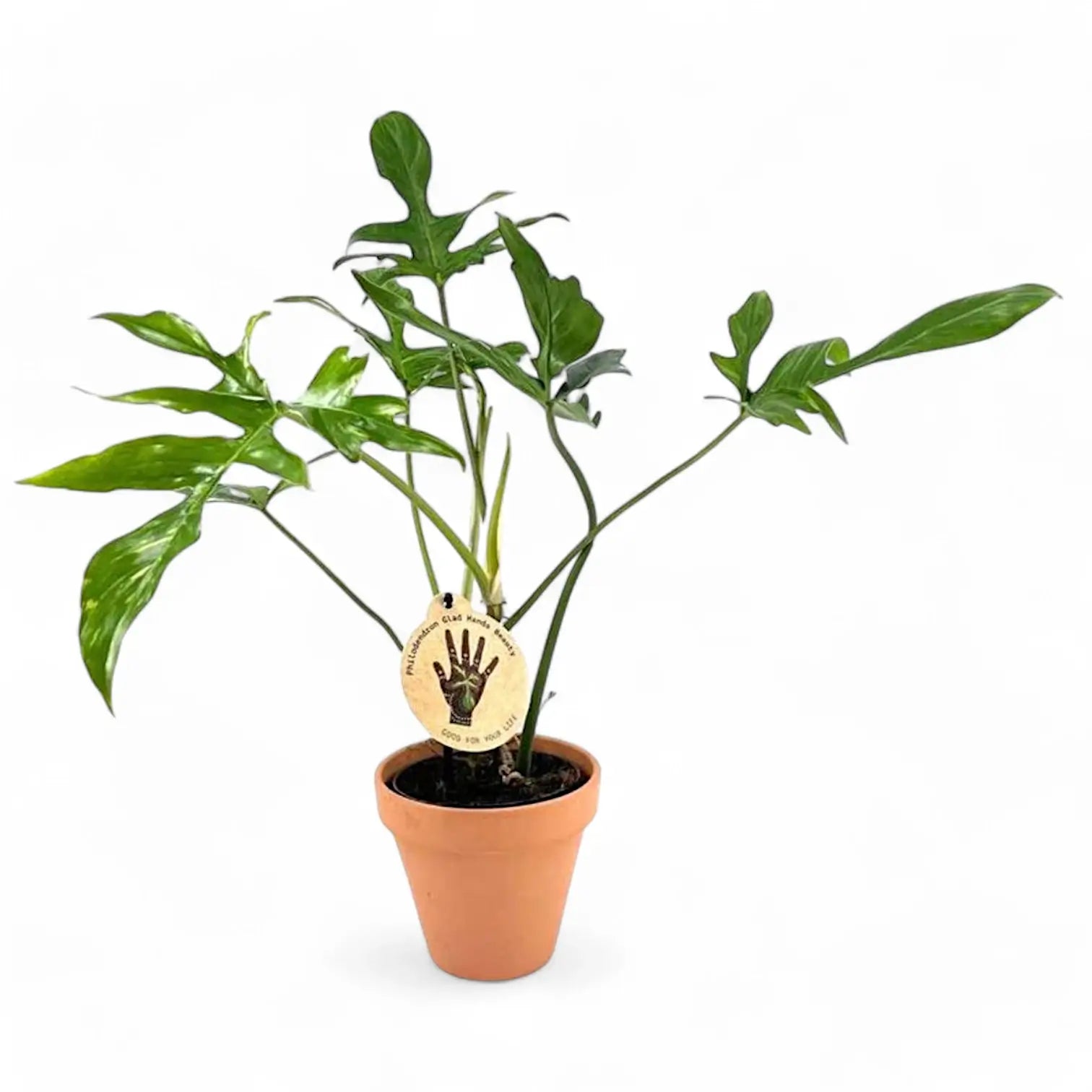
philodendron glad hand Philodendron Glad HandsPhilodendron 'Glad Hands' (quercifolium) Philodendron 'Glad Hands' is a narrow form of Philodendron pedatum, grown for deeply divided leaves with long, slim lobes that spread from the blade like fingers. The full leaf shape develops over time, so young plants can look slimmer and less divided before the stem gains size and support. This plant grows from a climbing stem with clear nodes and aerial roots. As the stem extends, each node can produce
Philodendron 'Glad Hands' (quercifolium)
Philodendron 'Glad Hands' is a narrow form of Philodendron pedatum, grown for deeply divided leaves with long, slim lobes that spread from the blade like fingers. The full leaf shape develops over time, so young plants can look slimmer and less divided before the stem gains size and support.
This plant grows from a climbing stem with clear nodes and aerial roots. As the stem extends, each node can produce another leaf and attach to support through new root points. A pole, plank, or trellis helps the plant anchor, keeps the stem upright, and gives divided leaves space to spread.
Narrow lobes and node-by-node growth
- Growth habit: Climbing Philodendron with nodes, aerial roots, and a stem that responds well to vertical support.
- Leaf shape: Long, narrow lobes give older leaves a hand-like outline.
- Development: Leaf divisions become clearer as the plant gains size, support, and stronger root growth.
- Petiole spread: Leaves are held away from the stem, so established plants need space around the support.
- Root behaviour: Aerial roots help the climbing stem attach and support larger foliage over time.
Pedatum background and quercifolium name
Philodendron pedatum (Hook.) Kunth was published in Enumeratio Plantarum 3:49 in 1841. It is an accepted South American species that grows as a climber in wet tropical habitats. Philodendron quercifolium Engl., published in Botanische Jahrbücher für Systematik 26:546 in 1899, is now placed under Philodendron pedatum.
The quercifolium name refers to oak-like divided leaves and still appears around this plant in cultivation. This narrow form shows a slimmer, more finger-like expression of pedatum-style leaf division once the stem is rooted and climbing. Older leaves gain a more defined outline, not just a larger size.
Care for divided leaves
- Light: Provide bright filtered light. Strong indirect light supports shorter internodes and more developed leaves, while harsh direct sun can scorch exposed lobes.
- Watering: Water thoroughly once the upper substrate has dried slightly. Keep moisture steady during active growth, but do not leave the pot standing in water.
- Substrate: Use a chunky aroid mix with bark or coco chips, perlite or pumice, and a moisture-holding base. The roots need both moisture and air around them.
- Pot choice: Choose a pot with drainage holes and enough depth to hold the support firmly. Avoid oversized pots that keep the lower stem wet for too long.
- Repotting: Repot when roots fill the pot or the support becomes unstable. Move up gradually so the root zone stays aerated.
- Support: Add a pole, plank, or trellis early. Attach the stem loosely so aerial roots can reach the support without being crushed.
- Humidity: Aim for moderate to high humidity. Around 50–70% helps the narrow lobes open without dry tips or tears.
- Temperature: Keep at about 18–28°C. Cool, wet conditions slow root activity and can damage the lower stem.
- Feeding: Feed lightly during active growth with a balanced fertiliser. Reduce feeding when light and leaf production slow down.
- Growth rate: Expect moderate climbing growth once rooted and supported. Leaf shape improves gradually as the stem strengthens.
- Pruning: Remove yellowing leaves and trim stretched stems above a node if the plant needs reshaping. Healthy cut sections can be used for propagation.
- Placement: Give the plant room around its support so the lobed leaves can spread without rubbing against walls, shelves, or neighbouring plants.
- Semi-hydroponics: This Philodendron can adapt to mineral or semi-hydro substrates if roots are transitioned gradually and the reservoir is kept clean.
- Propagation: Take stem cuttings with at least one node and preferably an aerial-root nub. Keep cuttings warm and humid while roots form.
Juvenile leaves, torn lobes and stem stretch
- Leaves staying juvenile: Check support, light, and root health. A divided leaf shape develops more reliably on a climbing, well-rooted stem.
- Yellow lower leaves: Inspect the substrate and roots. Persistent wetness around the lower stem can cause older leaves to decline quickly.
- Brown lobe tips: Look for dry roots, low humidity, fertiliser buildup, or hot sun through glass.
- Long gaps between leaves: The stem may be reaching for light or growing away from its support. Move it into brighter filtered light and secure new growth.
- Torn new leaves: New lobes can catch while unfurling. Keep watering stable and humidity moderate rather than forcing the leaf open.
- Loose stem attachment: If the stem pulls away from the support, retie it gently at the nodes and guide new aerial roots toward the surface.
- Pests: Check leaf undersides, petiole bases, and cataphylls for thrips, mites, scale, and mealybugs.
Pet safety and skin irritation
Philodendron 'Glad Hands' should be kept away from pets and children that may chew leaves or stems. Philodendron contains calcium oxalate crystals, which can irritate the mouth, throat, and digestive tract if ingested. Sap may irritate sensitive skin after pruning or propagation.
Name meaning and botanical background
Philodendron means “tree-loving”, a reference to the climbing habit common in the genus. The epithet pedatum means foot-like, matching the divided leaf outline of Philodendron pedatum. Quercifolium combines Latin roots for oak and leaf, referring to an oak-like leaf shape. The name 'Glad Hands' suits the hand-like spread of the leaf lobes.
Choose Philodendron 'Glad Hands' for a climbing Philodendron with slim, fingered leaves and a distinctive narrow-lobed outline.
Shipping Notes
- Free Standard Shipping on $100+ Orders to the USA.
- Except Preorder products are shipped in 48 hours.
- Delivery to the USA:
- Standard Shipping : 3-10 business days
- If time is of the essence, please consider selecting expedited delivery for faster service.
Exchange/Return Notes
- We offer a 30-day return/exchange service after receiving.
- Final sale items are not eligible for returns or exchanges.
- To process your return/exchange, please contact us at [email protected]
- Please click here for more details>>> Return & Exchange Policy