Pay in installments of $7.08 with
 ,
,
 and
and

Shipping Estimate
USA
- USA
- CAN
- USA
- CAN
Ships within 48 hours · Estimated delivery Sep 23 - Sep 28
 Promo Codes Available:
For Your Every Summer RSVP, with Code: SUMMER15
Description
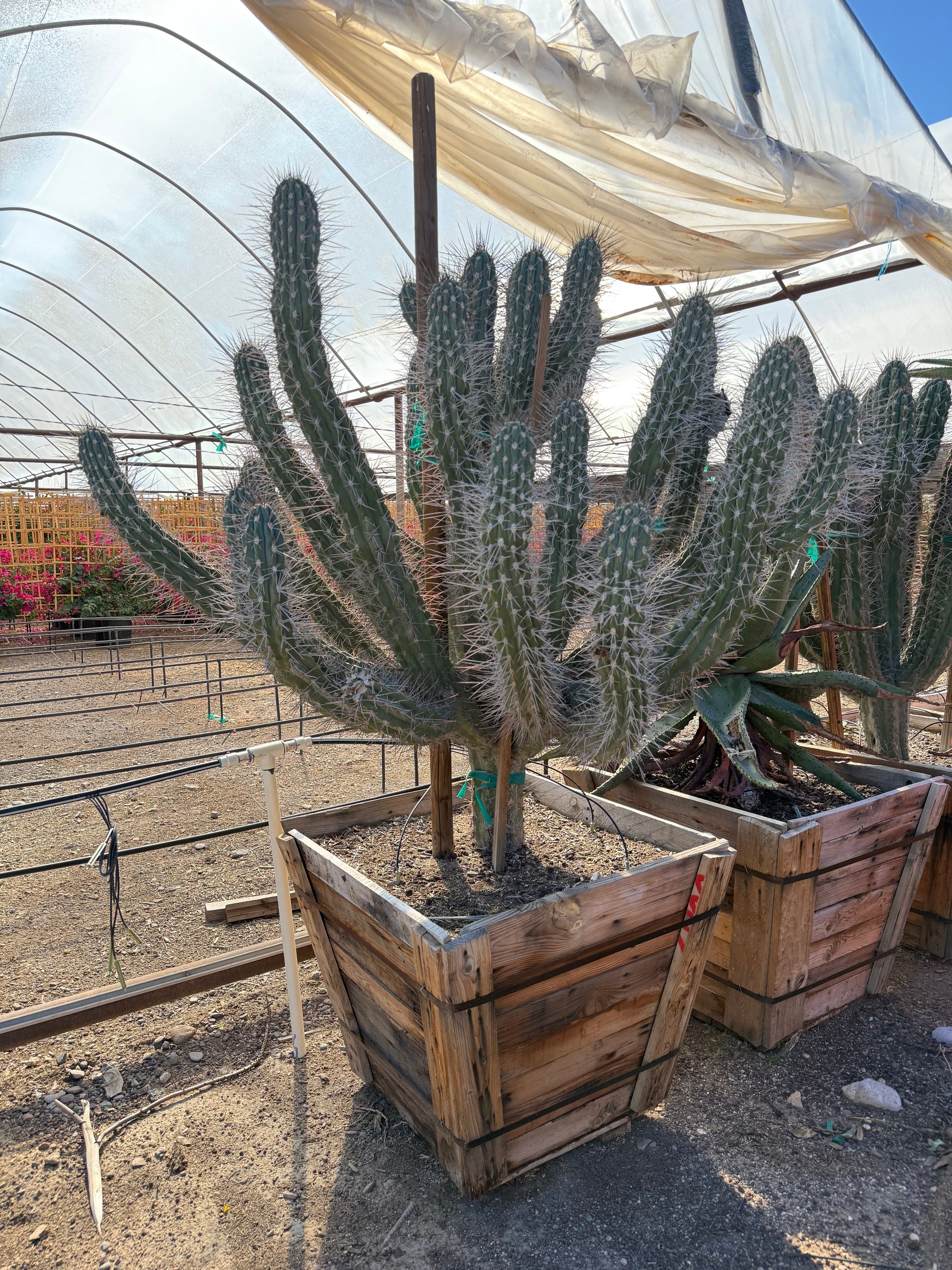
skinny cactus succulent Buy Toothpick Cactus Phoenix, AZ | Stetsonia coryneDramatic Golden Spined Columnar Cactus for Phoenix Landscapes The Toothpick Cactus (Stetsonia coryne) is one of the most visually striking columnar cacti you can grow in the Phoenix Valley. Named for its long, golden needle like spines that bristle from every areole, this South American native creates an unforgettable silhouette in any desert landscape. Growing 1025 feet tall with a tree like branching habit, the Toothpick Cactus delivers massive
Dramatic Golden-Spined Columnar Cactus for Phoenix Landscapes
The Toothpick Cactus (Stetsonia coryne) is one of the most visually striking columnar cacti you can grow in the Phoenix Valley. Named for its long, golden needle-like spines that bristle from every areole, this South American native creates an unforgettable silhouette in any desert landscape. Growing 10–25 feet tall with a tree-like branching habit, the Toothpick Cactus delivers massive architectural impact while thriving on neglect. Whether you're creating a statement piece in a Scottsdale estate garden, lining a driveway in Chandler, or anchoring a xeriscape design in Mesa — the Toothpick Cactus commands attention year-round.
Toothpick Cactus Plant Details
| Attribute | Detail |
|---|---|
| Scientific Name | Stetsonia coryne |
| Common Names | Toothpick Cactus, Argentine Toothpick Cactus |
| Mature Height | 10–25 feet |
| Mature Width | 6–10 feet |
| Growth Rate | Moderate to fast — 1–2 feet per year in Phoenix |
| Sun | Full sun (6+ hrs). Handles reflected heat from walls and pavement. |
| Water | Low once established. Highly drought-tolerant. |
| USDA Zones | 9b–11 (Phoenix is Zone 9b–10a) |
| Soil | Well-draining. Adapts to Arizona caliche soils with adequate drainage. |
| Foliage | Evergreen — blue-green stems with prominent golden spines year-round |
| Bloom | Large white nocturnal flowers on mature specimens |
Toothpick Cactus Uses in Phoenix Landscapes
Architectural Focal Point & Specimen Tree
Nothing commands a landscape like a mature Toothpick Cactus. Its tree-like form with multiple branching arms creates a dramatic sculptural silhouette, especially when lit from below at night. Plant one as a standalone specimen in a front yard or courtyard and it becomes the centerpiece of the entire property. The golden spines glow in afternoon light, adding warmth and texture that no other plant can match.
Desert Driveway & Entry Plantings
Line a driveway or front entry with Toothpick Cactus spaced 8–10 feet apart for a dramatic desert procession that makes a strong first impression. As the plants mature and develop branching arms, they create a stunning gateway effect. This works especially well in Scottsdale, Paradise Valley, and Fountain Hills where desert-modern architecture calls for bold plant forms.
Privacy Screening & Property Borders
Mature Toothpick Cactus forms a dense, impenetrable barrier. Plant 6–8 feet apart along a property line for a living fence that provides both visual screening and security — the long golden spines are a powerful deterrent. Combine with lower-growing Mexican Fence Post or Texas Sage for a layered privacy solution.
Commercial & HOA Landscapes
The Toothpick Cactus is a favorite for commercial properties, resort landscaping, and HOA common areas throughout Tempe, Gilbert, Peoria, and Glendale. Its dramatic presence makes a statement at building entries, parking lot islands, and pool areas. The extremely low water and maintenance requirements keep ongoing costs minimal while the visual impact stays high.
Best Time to Plant Toothpick Cactus in Phoenix
Fall (October–November) is the ideal planting window. Warm soil drives root establishment while cooler air reduces transplant stress. Your Toothpick Cactus gets 6–8 months to anchor its roots before the first Phoenix summer. Spring (February–April) is the second-best window. For large box specimens (30" and 36"), fall planting is especially important to give the large root system time to establish.
How to Plant Toothpick Cactus
- Dig wide, not deep — 2–3x the root ball width, same depth as the container.
- Check for caliche — break through any hardpan layer to ensure drainage. This is critical for large specimens.
- Backfill with native soil — add 20% coarse sand or pumice if drainage is a concern.
- Spacing — 8–10 feet apart for rows; 10+ feet from structures for mature specimens.
- Staking — large box specimens may need temporary staking for the first 6–12 months until roots anchor firmly.
- Gravel mulch — 2–3 inches of decorative rock around the base. Avoid organic bark mulch touching the stem.
Watering Toothpick Cactus in Phoenix
First Year Watering Schedule
Weeks 1–2: Every 3–5 days, deep and slow (30+ min for large box specimens). Month 1–3: Every 7–10 days. Month 3–6: Every 10–14 days (every 7 days in peak summer). After Year 1: Every 2–3 weeks in summer; monthly in winter. Established Toothpick Cactus is extremely drought-tolerant.
Drip Irrigation Tips
For gallon-size plants, one 2 GPH emitter 18 inches from the trunk. For box specimens, use two 2 GPH emitters on opposite sides, 24–36 inches from the trunk. Reduce irrigation significantly after the first year.
How fast does Toothpick Cactus grow in Phoenix?
Moderate to fast — expect 1–2 feet of vertical growth per year. Branching begins once the main trunk reaches 4–6 feet. A 5-gallon plant can reach 8–10 feet within 3–4 years in Phoenix's heat with proper watering.
How tall does Toothpick Cactus get?
In Phoenix landscapes, expect 15–25 feet at maturity with a spread of 6–10 feet. The trunk develops multiple branching arms over time, creating a tree-like canopy effect.
Does it bloom?
Yes. Mature specimens produce large white nocturnal flowers, typically appearing on plants that are at least 6–8 feet tall. The fragrant flowers attract moths and other nighttime pollinators.
Is it frost-hardy in Phoenix?
Hardy to about 25°F, which covers typical Phoenix Valley winters. Young plants are more cold-sensitive — protect with frost cloth during the first 1–2 winters. Once established, they handle Phoenix cold snaps without issue.
Are the spines dangerous?
The long golden spines are sharp, so plant with adequate setback from walkways and play areas — at least 4–5 feet. The spines are actually a landscape feature, not a drawback, creating golden highlights that glow in sunlight.
You May Also Like
Golden Torch — a shorter golden-spined columnar cactus that pairs beautifully with Toothpick Cactus in mixed cactus gardens.
San Pedro — a fast-growing smooth columnar cactus for dramatic height without heavy spines.
Saguaro — Arizona's iconic columnar cactus, a natural companion for Toothpick Cactus in native desert designs.
Argentine Giant — a shorter clustering Echinopsis that fills the understory beneath tall Toothpick Cactus specimens.
How Many Toothpick Cactus Do I Need?
Toothpick Cactus works two ways: as a single architectural specimen, or planted in a row as a tall living screen and security barrier. Use its mature 6 to 10 ft spread to set spacing.
| Run Length | Living screen (8 ft centers) | Open procession (10 ft centers) |
|---|---|---|
| 16 ft | 3 plants | 2 plants |
| 24 ft | 4 plants | 3 plants |
| 40 ft | 6 plants | 4 to 5 plants |
As a focal specimen, give one plant 10+ ft of clearance from structures so the branching arms can develop. Set any planting at least 4 to 5 feet back from walkways, patios, and play areas because the long golden spines are sharp.
Toothpick Cactus Season-by-Season in Phoenix
- Spring (Feb–Apr): Growth resumes as nights warm. Strong second planting window and a good time to check drip and remove any first-winter frost cloth.
- Summer (May–Sep): Peak growth of 1 to 2 ft a year. Blue-green stems and golden spines handle full sun and reflected heat. Mature specimens open large white nocturnal flowers that draw moths and night pollinators.
- Fall (Oct–Nov): The prime planting window, especially for large box specimens that need time to anchor their root systems.
- Winter (Dec–Jan): Evergreen and dormant. Hardy to about 25°F, which covers typical Valley winters, but protect young plants with frost cloth for the first 1 to 2 winters and on hard-freeze nights.
At a Glance
✔ Heat-Loving (Reflected-Heat Tolerant) ✔ Drought-Tolerant ✔ Pollinator-Friendly ✔ Evergreen ✔ Low-Maintenance ✔ Deer & Rabbit-Resistant ✔ Cold-Hardy to 25°F
Plant It With
- Saguaro: Arizona's iconic column, a natural partner in a native desert composition.
- San Pedro: fast smooth columns that add height without heavy spines.
- Mexican Fence Post: lower clean columns for a layered privacy screen.
- Silver Torch: a shorter spined torch cactus that echoes the golden-spine glow at ground level.
Is Toothpick Cactus Right for Your Yard?
Toothpick Cactus thrives in full sun and reflected heat, in well-draining or amended caliche soil, where it has vertical room to grow into a 15 to 25 ft branching specimen or a tall spined security screen. It is not the right pick for tight courtyards under low eaves, or for spots right against walkways and play areas, since the long sharp spines need a generous setback.
Shipping Notes
- Free Standard Shipping on $100+ Orders to the USA.
- Except Preorder products are shipped in 48 hours.
- Delivery to the USA:
- Standard Shipping : 3-10 business days
- If time is of the essence, please consider selecting expedited delivery for faster service.
Exchange/Return Notes
- We offer a 30-day return/exchange service after receiving.
- Final sale items are not eligible for returns or exchanges.
- To process your return/exchange, please contact us at [email protected]
- Please click here for more details>>> Return & Exchange Policy