SKU: 87370931607
black coral snake plant leaves coming out rotting

black coral snake plant leaves coming out rotting 6'' Snake Plant Black Coral

Sale price$18.23 Regular price$20.26
Save 10%

Pay in installments of $5.07 with ShopPay, AfterPay and Klarna

Shipping Estimate
USA
  • USA
  • CAN

Ships within 48 hours · Estimated delivery Aug 9 - Aug 14

Promo Codes Available:

For Your Every Summer RSVP, with Code: SUMMER15

Description

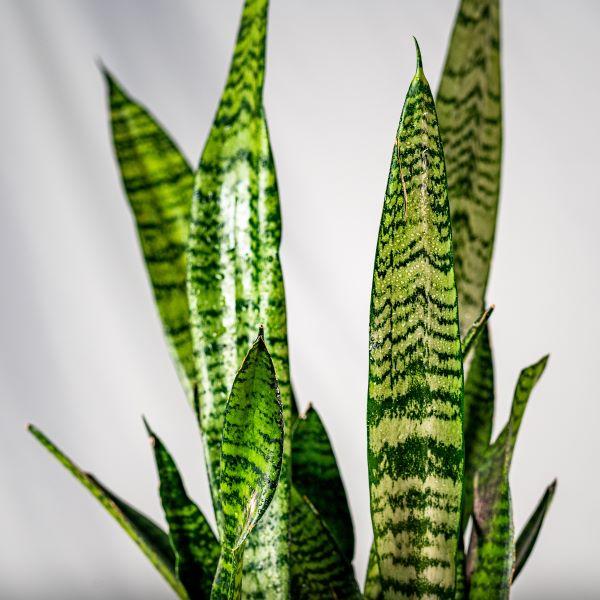
black coral snake plant leaves coming out rotting 6'' Snake Plant Black CoralDark, Sword Shaped Leaves with Silver Waves The Black Coral Snake Plant is a striking selection of Dracaena trifasciata (formerly Sansevieria), known for its tall, sword like leaves in deep, almost charcoal green, etched with wavy, silver green horizontal bands. The foliage grows upright in dense clumps, creating a bold, architectural silhouette that looks just as sharp in a modern loft as it does in a cozy home office. This is a plant that feels

Dark, Sword-Shaped Leaves with Silver Waves

The Black Coral Snake Plant is a striking selection of Dracaena trifasciata (formerly Sansevieria), known for its tall, sword-like leaves in deep, almost charcoal green, etched with wavy, silver-green horizontal bands. The foliage grows upright in dense clumps, creating a bold, architectural silhouette that looks just as sharp in a modern loft as it does in a cozy home office. This is a plant that feels sculptural and intentional even when you’ve barely lifted a finger.

Upright, Clumping, and Space-Efficient

Indoors, Black Coral Snake Plant typically matures around 3–4 feet tall with a spread of about 18–24 inches, forming a tight clump of vertical leaves. New shoots emerge from underground rhizomes, gradually thickening the plant rather than sprawling outward, so it occupies a relatively small footprint for the height and drama it delivers. Growth is slow to moderate, which means it retains its shape for years without constant repotting or pruning—perfect for hallways, corners, and areas where you want a tall presence that stays in place.

Flexible Light and Infrequent Watering

One of the biggest perks of Black Coral is its forgiving nature with light. It handles anything from low indoor light to bright, indirect sun, and even some direct sun if it’s acclimated gradually, though intense afternoon rays can scorch the leaves. It generally grows faster and colors more intensely in brighter light, but it remains presentable in dimmer corners where many plants fail to thrive. Plant it in a gritty, well-draining mix—think high-quality potting soil combined with sand, perlite, or cactus mix—so excess water never lingers around the roots.

Watering is where this plant really spoils you. As a succulent-type houseplant, Black Coral prefers its soil to dry almost completely between waterings and will tolerate a bit of benign neglect. In most indoor settings, that means watering roughly every 2–6 weeks, depending on pot size, light, and temperature—less in low light or winter, a bit more in bright, warm rooms. Overwatering is the main way to get in trouble; consistently soggy soil can lead to root rot and fungal issues near the base, so err on the dry side and always use a pot with drainage holes.

Nearly No-Fail Focal Plant for Home or Office

Think of Black Coral Snake Plant as your go-to vertical accent in the “indoor landscape.” Its tall, narrow form slides neatly between furniture, along hallway walls, beside entry tables, or in corners that need height without clutter. Designers love it for offices, lobbies, and bedrooms because it reads clean and modern while tolerating low light and inconsistent care. Like other snake plants, it’s often noted for its air-purifying qualities and long lifespan, making it a brilliant, low-effort investment piece for your space. Do keep in mind that, like other Dracaena trifasciata varieties, it is considered mildly toxic to pets if chewed, so place it where curious cats and dogs aren’t likely to snack on the leaves.

Also known as a Mother-in-Law's Tongue, this plant is on our list for Top 5 Houseplants for Beginners. Botanically referred to as 'Sansevieria Trifasciata Black Coral,' these low-maintenance houseplants boast waxy, sword-like foliage that makes for a perfect vertical element to a space.

Shipping Notes
  • Free Standard Shipping on $100+ Orders to the USA.
  • Except Preorder products are shipped in 48 hours.
  • Delivery to the USA:
  1. Standard Shipping : 3-10 business days
  • If time is of the essence, please consider selecting expedited delivery for faster service.
Exchange/Return Notes
  • We offer a 30-day return/exchange service after receiving.
  • Final sale items are not eligible for returns or exchanges.
  • To process your return/exchange, please contact us at [email protected]
  • Please click here for more details>>> Return & Exchange Policy
SKU: 87370931607

Discover Niche Categories That Outsell black coral snake plant leaves coming out rotting

Top-Converting Item to Boost Your Average Order

4.4 ★★★★★
Based on 7 reviews
Sort
Highest Rating
Newest First
Oldest First
Product Reviews
A
Verified Purchase
Alex
Cuba, US
★★★★★ 3
Information is great, quality not so much
Format: Paperback, Format: Paperback
Think the information is good and to the point. My book was misprinted and had the top portion of the page cut off so that I can see about only half of the book page number.
WAS THIS REVIEW HELPFUL?YesReportShare
Reviewed in the United States on July 18, 2025
N
Verified Purchase
nfmgirl
Carnegie, US
★★★★★ 5
History doesn't repeat, but it rhymes
Format: Hardcover
They say that history doesn't repeat itself, but it rhymes. Reading Rachel Maddow's Prequel, that old adage lands with uncomfortable, clarifying force. The America of the 1930s had Senator Huey Long — loud, brash, barnstorming, and brimming with populist promises — and the resonance with our own era of bombastic political theater is impossible to dismiss. Maddow doesn't make that parallel clumsily. She doesn't need to. The evidence, laid out with the precision of a seasoned researcher and historian, speaks for itself. Prequel tells the story of a far-right authoritarian impulse that has run through the veins of American political life for nearly a hundred years. In the 1930s, coinciding with Hitler's rise in Europe, a coordinated movement pushed hard for fascism here at home. Groups stockpiled weapons and explosives in preparation for an insurrection. Government officials worked in coordination with foreign actors. A fascist-sympathetic narrative was amplified through official and unofficial channels alike. This was not fringe paranoia — it was organized, resourced, and frighteningly close to succeeding. What is remarkable — and what gives this book its most urgent energy — is the story of who stopped it. Not always the institutions we might hope to rely on. Where the American legal system faltered, journalists and activists filled the breach. Investigators, reporters, and citizens took up the banner of democracy through dogged, unglamorous work. This is where Maddow's particular genius comes into its own. She is a master of the long connective thread — drawing bright lines between the events of the past and the present without letting the comparison become reductive or cheap. Prequel teaches us what was learned the last time democracy faced this kind of pressure: where the weaknesses are, what held, and — critically — what it will take to hold again. She identifies the strongholds. She maps the vulnerabilities. She makes a history lesson feel like a field guide. The book is also, simply, a pleasure to read. Maddow brings to the page the same qualities that made her a formidable broadcaster: the ability to take deeply complex, document-heavy material and render it not just comprehensible but genuinely gripping. Her research is formidable. Her journalistic integrity is evident on every page. And her storytelling instincts transform what might otherwise be a dry historical account into something that reads with the momentum of a thriller. The result is a text that is at once a celebration — democracy was fought for and, in that moment, successfully defended — and a warning. This book is well researched, well documented, and well written. Maddow is a master storyteller handing us a guide for the fight ahead of us. The impulse toward authoritarianism did not dissolve with the defeat of fascism abroad; it went quiet, regrouped, and waited. Democracy is once again under attack from the inside, and Prequel makes the case — calmly, rigorously, without hysteria — that this is not unprecedented, that it has been faced before, and that it can be faced again. Don't give up the fight. Don't let the bastards grind you down. (Upgraded from 4.5 stars)
WAS THIS REVIEW HELPFUL?YesReportShare
Reviewed in the United States on April 13, 2026
W
Verified Purchase
WordsRmagic
Los Angeles, US
★★★★★ 5
American history without the gold-plated bias
Format: Hardcover
Ms. Maddow is an amazing historian and journalist! She describes events in history in a rational, no-nonsense manner, with clarity and insight. We have been taught a white-washed version of history from 1st through 12th grade, and I literally mean white-washed. Humanity has always made mistakes and should be recorded in history. Ms. Maddow does an exceptional job of removing the "sugar-coating" from documented events and revealing the greed, corruption, and manipulation hiding beneath. I dearly hope that she will write a biography on this present president, which I believe would be as close to the truth as humanly possible. I will certainly buy a copy!
WAS THIS REVIEW HELPFUL?YesReportShare
Reviewed in the United States on May 24, 2026
D
Verified Purchase
David C. Bright
Cuba, US
★★★★★ 5
A must-read - hair-raising, deeply alarming, and shudder-producing
Format: Kindle
What I liked: - Deeply researched - amazing depth, particularly of a wide range of characters (a few of whom are true heroes) and many more miscreants - Rachel must have had a spectacular research team to work with! She mentions that "there were millions of words written about the rise of (and fight against) fascism as it was happening in pre-World War II America" - but I bet that most Americans haven't been exposed to them. - Starts off mildly with George Sylvester Viereck (a ridiculous author, but just wait!) but then shifts gears progressively as the story builds and adds in a raft of odious characters - Not afraid to name names - some of the politicians ultimately come in for some serious whacking (see Sens. Wheeler and Langer especially). Also surprising were the back stories of names I recognize (architect Philip Johnson, for example) without knowing of their nazi sympathies and antisemitism. - Mr. and Mrs. Lindbergh are waaay more complicated than our stereotypes of the heroic but opaque pilot and his saintly wife (she is one scary piece of work!) - stuff I simply didn't know, and what was presented was alarming to the extent of making skin crawl - I had never heard of the sedition trials of 1943 and 1944 and prosecutor John Rogge at all before - just one example of new (and stunning) information from our history - absolute bedlam! - As the history advances and the book nears its end, there are several BIG events that may push you back in your reading chair several times - again, no spoilers, but hoo-eee! - The epilogue was a treat to read - again, I won't reveal any spoilers A minor criticism - the book is derived (I believe) from Rachel's podcasts, and thus the writing has her inimitable voice (pointed asides, etc.), but as a result may lack some polish and smoothness in the prose. Some may love it, some may carp, some may not even notice it. Whatever. If material about this period is of interest to the reader, be certain to seek out "Hitler in Los Angeles" by Steven J. Ross - its focus is a little narrower, dealing with Jewish undercover work to foil Nazi plotting in Los Angeles, but Leon Lewis, a true mensch and hero, is in Maddow's book as well.
WAS THIS REVIEW HELPFUL?YesReportShare
Reviewed in the United States on October 18, 2024
D
Verified Purchase
David Simpson
New York, US
★★★★★ 4
Fascinating details from the past but not really a “prequel”
Format: Hardcover
Rachel Maddow’s “Prequel: An American Fight Against Fascism” recounts the efforts of pro-fascists in the United States, aided and manipulated by Nazi Germany, to keep America from actively opposing Hitler as well as to plot ways to turn America into a fascist country. The struggle to defeat those forces began in the early 1930s led by private citizens who, on their own, went undercover to join fascist groups and try to alert various government agencies about what was happening. A relatively small number of fascists gathered weapons to prepare for an insurrection. In the last chapters of the book, Maddow describes a 1944 trial in which the Justice Department brought sedition charges against some 30 defendants, most of whose activities she covered in previous chapters. The trial was chaotic, interrupted by frequent outbursts from the defendants and their lawyers. When the judge suddenly died one night of heart attack and a mistrial was declared, the Justice Department did not seek a new trial. The war against Hitler was nearing an end, so there was no push to revisit the past to pronounce judgment on those whose activities on the home front ultimately did not affect our victory over the Nazis. Since the ending is rather anticlimactic, Maddow, at times, may try a little too hard to make things sound more dire than they really were. Although elsewhere she has described Westbrook Pegler as an “extreme” right wing columnist and “pseudo-fascist,” she quotes him at the end of her chapter on Huey Long as averring that, in Louisiana, Long was “gradually copying the Hitler state.” Long was certainly a corrupt, authoritarian politician, but his populist politics had their origins in his upbringing in Winn Parish, where the Socialist Party carried the day in the 1912 election. Had he lived and had he run for president in 1936, he might have drawn enough votes from FDR to give the election to a Republican candidate, but he had no use for Nazism. (I live in Louisiana where, until 1973, we observed Huey’s birthday as a state holiday.) Maddow seems to imply that there was something nefarious about the death in 1940 of Senator Ernest Lundeen in a passenger airplane crash that occurred during a thunderstorm. Lundeen, who had close ties to a top Nazi spy, may have been under investigation, but nothing indicates that his presence on the flight had anything to do with the crash. The cause was never determined, but, based on the way the plane headed forcibly into the ground, a likely explanation is that it was caught in the kind of thunderstorm microbursts that we now know has caused similar crashes. Though, for me, the book seems to promise a bit more than it actually delivers, I did learn a lot about the ties of right wing politics to Nazism during that era. I was aware that Henry Ford was a fanatical antisemite, but, until I read Maddow’s book, I did not know that his efforts extended to publishing a ninety-two part series based on the Protocols of the Elders of Zion that appeared in the Dearborn Independent, a newspaper that he owned, with copies distributed to every Ford dealership. It was published in book form as “The International Jew” and widely circulated in Germany. Hitler praised Ford in “Mein Kampf” and, according to one account, had a portrait of Ford displayed on the wall in his office when he was visited by an American reporter. I was aware that the Nazis studied segregation in the American South for guidance in drafting their own race laws, but I didn’t know that Nazi Germany dispatched an attorney to the University of Arkansas School of Law to acquire first-hand knowledge. I was aware that Father Coughlin was a demagogic opponent of FDR, but I was not aware of the ferocity of his antisemitism or his ties to various pro-Nazi fascists. However, I was really totally unaware of the way actual Nazi agents in league with pro-Nazi Americans were able to get congressmen and senators to distribute Nazi propaganda, typically inserted into the Congressional Record and then sent to millions of Americans for free using the congressional franking privilege. On the other hand, I doubt that propaganda delivered in that manner was very effective. Pages from the Congressional Record could not compete with the message delivered by the 1939 Warner Brothers film “Confessions of a Nazi Spy,” the first anti-Nazi movie produced by Hollywood, based on actual events that Maddow describes. Nothing pro-fascists did in the United States affected our entry into the war against Germany. We went to war when Hitler himself declared war on us four days after Japan bombed Pearl Harbor. Nazi Germany certainly posed a military threat, but there wasn’t much danger that fascist politics would actually prevail in the United States. The political situation is very different today and, though I, like Maddow, admire the “smart, brave, determined, resourceful, self-sacrificing [anti-fascist] Americans who went before us,” I think the political challenges we face today are much more dire.
WAS THIS REVIEW HELPFUL?YesReportShare
Reviewed in the United States on December 11, 2023

recommand products