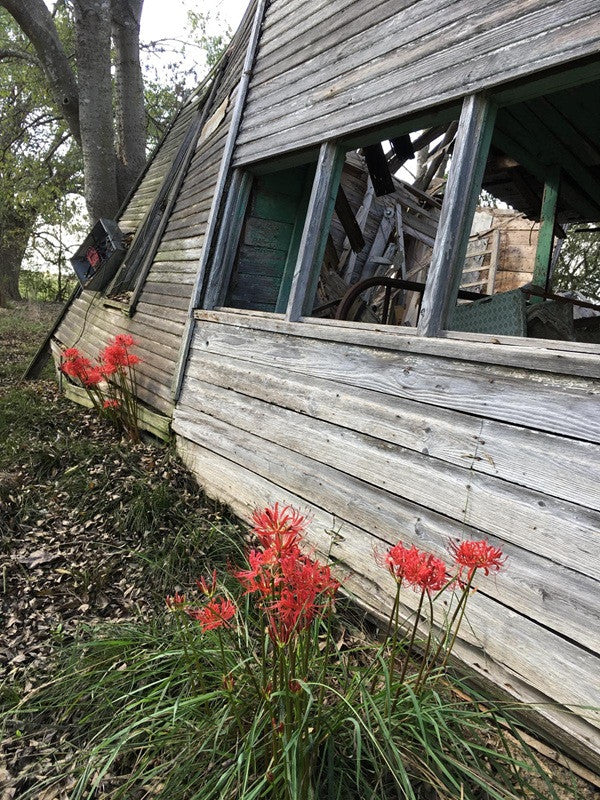
SKU: 87584777181
red spider lily seeds for sale

red spider lily seeds for sale Red Spider Lily, Lycoris radiata, heirloom bulbs – The Southern Bulb Co

Sale price$20.65 Regular price$22.94
Save 10%

Pay in installments of $5.74 with ShopPay, AfterPay and Klarna

Shipping Estimate
USA
  • USA
  • CAN

Ships within 48 hours · Estimated delivery Sep 22 - Sep 27

Promo Codes Available:

For Your Every Summer RSVP, with Code: SUMMER15

Description

red spider lily seeds for sale Red Spider Lily, Lycoris radiata, heirloom bulbs – The Southern Bulb CoRed Spider Lily (Lycoris radiata): A Gardener's Guide to the Enchanting Resurrection Flower Red spider lilies are beloved perennials that thrive in zones 7 10, bringing a burst of vibrant beauty to gardens when fall rains arrive. A Lily of Many Names: The Red Spider Lily's Regional Nickname: One of our favorite things about the red spider is its many names as you travel across the country. This also makes for interesting conversations with our

Red Spider Lily (Lycoris radiata): A Gardener's Guide to the Enchanting Resurrection Flower

Red spider lilies are beloved perennials that thrive in zones 7-10, bringing a burst of vibrant beauty to gardens when fall rains arrive.

A Lily of Many Names: The Red Spider Lily's Regional Nickname:

One of our favorite things about the red spider is its many names as you travel across the country. This also makes for interesting conversations with our customers to make sure that we are talking about the same flowering bulb. The names don't change the striking beauty of this fall-blooming flower. Here in East Texas, we call it the "red spider lily". It is red, and the stamens look like spider legs. Along the coast, it is often referred to as a "hurricane lily" because it often blooms after the first fall hurricane. Many people call this a "naked lady" because it blooms on a naked stalk. Others simply call it a "surprise" lily because it shows up out of nowhere and surprises you one day with a flower. No matter what it is called, its beauty will make you glad that you have it in your garden.

The Red Spider Lily's Unique Bloom Cycle: A Timeline

Understanding the Red Spider Lily's bloom cycle is key to successful cultivation. Most people still expect to see something growing during the summer months. You won't see anything. These lilies are dormant in the summer. The flowers suddenly appear with the first later summer or early fall rains. One day there is nothing growing and then suddenly you have a surprise, a fully blooming flower! That is why they are called "Surprise lilies". Yellow spider lilies act very similarly to yellow spider lilies, schoolhouse lilies, and naked ladies. Simply put, they bloom in the fall and then have foliage for the winter. I have spider lilies planted almost 2 years ago that have not yet produced blooms but have produced increasing foliage each year.

1. Planting (Anytime): Avoid hard freezes, but otherwise you can plant the bulbs anytime that you are thinking about them.
2. Dormancy (Summer): Bulbs rest underground, conserving energy.
3. Surprise Blooms (Late Summer/Early Fall): Flowers emerge seemingly overnight.
4. Foliage Growth (Fall/Winter): Leaves appear, gathering nutrients for the following year.

Nurturing the Foliage: The Key to Red Spider Lily Success

The foliage is vital for the bulb's health and reproduction. Don't be discouraged if you don't see blooms the first year – healthy foliage is a positive sign of bulb establishment. The foliage tells you the bulb is growing and multiplying. We know that we all want to see the beautiful unusual blooms in the fall, but the foliage is very important. The foliage is what allows the bulb to grow and multiply. Many people get very concerned if they don't see the spider lily bloom the first year that they plant it and believe that maybe the bulb isn't any good. The foliage is what you watch for if you don't see your spider lily bloom, or even if you do.

Below you will see a picture of the foliage of the red spider lily - it looks like grass. We took the picture on November 1st. The foliage has been popping out of the ground a little over the previous couple of weeks, but now you can really see the stand. All of those different tufts of foliage are bulbs, and someday you will see a beautiful stand of red spider lilies here. In this area because of the super dry summer, not one red spider lily bloomed. However, you can see that the bulbs are growing. The foliage is up and ready to take in nutrients over the next several months while helping the bulbs grow, mature, and multiply. I know you will have to take our word for it, but there wasn't even 1/2 that much foliage there last year which shows you how quickly the bulbs multiply. The foliage will continue to grow. Even if it gets hit by a winter cold snap, it will have taken in nutrients for months! Always allow the foliage to die down naturally and don't cut it off. If you cut it, you are killing the bulb. Once the foliage is completely dead which is usually around the beginning of May, this area can be mowed. Remember, it takes a lot of energy for the bulb to push that bloom up out of the ground and open wide. The more time the bulbs can take in nutrients, the more energy they will have for that fall bloom.

Sunlight Requirements: Ensuring a Spectacular Bloom

The single most important thing about landscaping with spider lilies is the sun. They need at least 6+ hours a day of WINTER sun. That means about 6-8 hours of sunlight during the winter months. If you look at the photo above, you will see that they are in the shade of the trees. You can be sure that most, if not all, of those trees, will lose their leaves in the winter when the greenery needs sunlight. The spider lily puts on its foliage during the winter (November - May) and that is when it takes in the nutrients it needs to produce those golden flowers the following September. The winter foliage soaks up sun energy during winter as it prepares for summer dormancy. The foliage normally completely dies down by around May.

Planting and Care Tips for Red Spider Lilies

Don't plant the bulb too deep. You will plant the bulbs 2-3 times deep the height of the bulb (so if your bulb is 2" tall, then you will plant it 4-5 inches deep). You can plant 2-3 per hole to make the blooms look more natural. Spider lilies really do well in any type of soil. They thrive in soil that has plenty of organic material mixed in, but they do not require fertilizer. Newly planted bulbs would actually be harmed by exposure to fertilizer, so if you are going to apply nutrients, limit the application to established plants when the plants are producing their green leafy foliage during the winter. After planting the bulbs, water the soil thoroughly. Damp soil is ok, as long as the bulbs are in a spot where they will receive plenty of winter sun and the foliage is allowed to die down naturally in the spring. Standing water is not good. Once the summer season starts the spider lily will do best in soil that dries out a bit, as this facilitates its entry into the dormant stage when its leaves die back. This period is followed by its blooming season when it will reward daily watering with long-lasting blooms. Too much moisture in the soil will lead to the bulbs rotting.

Planting Depth: Plant bulbs 2-3 times their height deep.

Soil Type: While adaptable, they thrive in soil rich in organic matter.

Watering: Water thoroughly after planting and during dry periods. The bulbs are dormant during the summer so you don't need to water them.

Fertilizer: Avoid fertilizing newly planted bulbs; established plants benefit from fertilizer during active foliage growth.

The performance of red spider lilies primarily hinges on two factors:

1. Winter Sunlight: To produce lush blooms, the bulbs need to absorb sufficient nutrients from the winter sun. Energy stored over months is used to create these breathtaking blossoms. For this, they require at least six hours of winter sun for several months to ensure they have the energy needed.

2. Fall Rains: The magic trigger for these blooms is the arrival of fall rains. Without adequate rainfall in September, the bulbs won't bloom, as the rains are the signal they've been waiting for.

Dividing and Multiplying Your Red Spider Lily Garden

Early spring is ideal for dividing, but it can be done whenever convenient. Remember, transplanting might cause the lilies to skip a blooming cycle.

Companion Plants for Red Spider Lilies: A Symphony of Color

Enhance your garden's beauty by pairing Red Spider Lilies with other perennials, annuals, or bulbs for continuous blooms:

Perennials: Salvias, Lantanas, Plumbago, Phlox
Annuals: Alyssum, Snapdragons, Pansies, Cyclamen
Bulbs: Narcissus, Iris, Snowflakes, Rain Lilies, Crinums, Hymenocallis

FAQ's

Do animals bother the red spider lilies?

Pollinators adore yellow spider lilies...hummingbirds, bees, and butterfilies.

While deer will eat anything (including plastic flowers if hungry enough), spider lilies are more resistant to their urges than many other ornamental garden products. They definitely leave the foliage alone during the winter, but can be attracted to the bright flowers. So the answer to this question, is that they are mostly resistant, depending on how hungry the deer are. Remember, humans ate tulips during times of hunger/famine, yet tulips definitely aren’t on our menu either.

We understand that online sources sometimes raise concerns about toxicity, so we want to offer some clarification. Much of the alarm you may see online stems from generalized or exaggerated toxicity listings. In reality, cases of actual poisoning are extremely rare, and the plants are not considered a serious risk. While red spider lily bulbs, like many ornamental bulbs, do contain alkaloids that could cause mild irritation if ingested in large quantities, they are not considered dangerous to humans or animals under normal garden conditions. The key is that even for mild irritation they would need to be fully consumed in large quantities. Even if animals chew on the bulbs a little bit, they aren't interested in them (even deer who have been known to eat plastic flowers leave them alone). In fact, they’ve been grown safely in Southern gardens for generations—including in areas with pets and children. You can feel confident they won’t pose a hazard just by being in your garden.

When should I plant red spider lilies? How far in advance should lily bulbs be planted before the first frost in the fall?

For fall planting, aim to have fall lily bulbs in the ground at least four weeks before the first frost. This gives them time to get settled and adjusted before the freeze. You can plant red spider lilies anytime, but avoid a hard freeze.

How do you ship red spider lilies?


During the spring, we ship these vibrant bulbs "in the green," which means they are plump, healthy, and eager to be planted. Expect the foliage to yellow and die back naturally—this is a normal process where the leaves nourish the bulbs for future blooms. Once the foliage is dead, you can cut it off. The rest of the year we ship dormant bulbs. Plant them, water them, and then just wait. Remember - you won't see anything during the summer as the bulbs are dormant. You may not see blooms the first fall depending on when you planted the bulbs. Many perennial bulbs need 6-12 months in the ground before they bloom.

Your Red Spider Lily Journey Starts Today!

Order your Red Spider Lily bulbs now and witness the magic of these captivating flowers in your own garden. With their unique charm and resilience, they are guaranteed to become a treasured part of your landscape.

Shipping Notes
  • Free Standard Shipping on $100+ Orders to the USA.
  • Except Preorder products are shipped in 48 hours.
  • Delivery to the USA:
  1. Standard Shipping : 3-10 business days
  • If time is of the essence, please consider selecting expedited delivery for faster service.
Exchange/Return Notes
  • We offer a 30-day return/exchange service after receiving.
  • Final sale items are not eligible for returns or exchanges.
  • To process your return/exchange, please contact us at [email protected]
  • Please click here for more details>>> Return & Exchange Policy
SKU: 87584777181

Discover Niche Categories That Outsell red spider lily seeds for sale

Top-Converting Item to Boost Your Average Order

4.4 ★★★★★
Based on 8 reviews
Sort
Highest Rating
Newest First
Oldest First
Product Reviews
G
Verified Purchase
Glenda Carrara
New York, US
★★★★★ 3
Strong and Bitter flavor.
Size: 28 Ounce (Pack of 1)
This tastes like extremely bitter and strong coffee I can't taste any mushroom and it whatsoever (not sure if there is even mushroom in it) but I definitely recommend using some form of creamer, honey, or cinnamon or maybe even hot chocolate to help out with a very strong and bitter flavor. But the bag is very large and a very good price. It was delivered as promised and very quickly.
WAS THIS REVIEW HELPFUL?YesReportShare
Reviewed in the United States on March 7, 2026
A
Verified Purchase
Amazon Customer
Dallas, US
★★★★★ 5
Excellent LXX
Format: Hardcover
The NETS is the single best translation of the Septuagint on the market (at least at the moment). The translation follows an ultra-literal method of translation they call "interlinear". The reason for this is that the LXX follows the same pattern and is very jarring. So, where the Hebrew and LXX agree, they translate the Hebrew text and translate it as literally as possible following the LXX at the same time. Where it disagrees, they follow the LXX. It has as a "boiler-plate" the NRSV, but it eschews many NRSV translation principles like gender-inclusive language. All gender-inclusive language except when the LXX's language is itself gender-inclusive (and this happens). The method of translation further removes it from its English parent. In the end, the only way you can know that it started as an NRSV would be to read the introduction. It really only has a few drawbacks. First, because the Bible is written for scholarly study, it is not useful for liturgical use or for private devotional use. Its language would also be too hard for the average reader because of its audience. This, however, is its stated goal. It may be a draw-back, but that's a side-effect of what it set out to do. I do not like the way they translated "pnevma theou" as "divine wind" in Genesis. It's justifiable to a point (it means "breath" and "wind" as much as it does "spirit), but everywhere else I checked they translated translated "pnevma" as "spirit". It should be consistent. The reason for this is plainly obvious: it was produced by an inter-religious committee of Christians and Jews. Since Jews are not Trinitarians, and that would be a valid understanding of the Hebrew and to a degree of the Greek, they would naturally not want anything like this. Christians, almost from the beginning, have made the connection between "Spirit of God" in Genesis and "Holy Spirit". The connection is further exasperated in English, because "spirit" for us does not have the same range of meaning as it does in Greek or Hebrew. So, the only fault I can give them is that it is an inconsistent translation, not that it's an invalid one. The prefaces also almost invariably favor the theory that the LXX is a translation with liberties over that it has a different parent text. Both are truly present, but we generally cannot tell when the LXX reading cannot be derived from repointing or re-dividing the Hebrew words (at that time, they had not yet pointed the text or put spaces in it, and so there were more ways to interpret the consonants than in its current form). Again, however, they do not say anything that is invalid regarding the relation of the LXX and its parent text. I simply divide the text differently than they do and so do not always like the introductions' emphasis. Going back to its strengths, its production standards were exceptional. The binding is excellent, the font is excellent, and it has generous margins. It even does this by being as cheap as the "cheap" Bibles. Short of going back to rag paper, this is about as good as I would normally expect. Overall, if you have good reading skills, I would reccomend this translation hands-down over any other English translation.
WAS THIS REVIEW HELPFUL?YesReportShare
Reviewed in the United States on December 22, 2008
K
Verified Purchase
Kindle Customer
Whiting, US
★★★★★ 5
Second best.
Format: Hardcover
It's not for daily reading or devotion, or like memorisation. For that, I switched to the Lexham Septuagint ( more smoother). Still beautiful, accurate to represent the Greek text. And no, it's not merely a NRSV modified as some claim. You feel it's a Greek based translation. I keep it for reference, intro on the books, and maybe for some reading. It's based on Ralhf Septuagint, but nothing too different to the Lexham (Sweete edition). Font too small, but great cover. Not my go to Septuagint in English. The Lexham has taken that place.
WAS THIS REVIEW HELPFUL?YesReportShare
Reviewed in the United States on May 9, 2026
E
Verified Purchase
Eduardo
Belleville, US
★★★★★ 5
Importance of the Septuagint
Format: Hardcover
I write as a Christian layperson. The Septuagint translation of the Hebrew scriptures (the Old Testament) into Greek was produced by Jewish scholars in Alexandria in the late third and second centuries before the Common Era. It had incalculable influence on the development of Christianity. Before the important Christian writings were gathered together in the second century of the Common Era to form the New Testament, the Septuagint was THE Bible of the new Church. It has been said that quotations from the Septuagint appear in every book of the New Testanent except the letters of John. As Christianity spread through the Roman Empire, few of its adherents could read Hebrew or Aramaic. Many could read Greek, if they could read at all. Pietersma and Wright have put together the first good English translation of the Septuagint since the nineteenth century. It is a literal translation, very close to the original Greek, and therefore often somewhat awkward in English, and this is good. Readers with even a modicom of biblical Greek, say a New Testament Greek course from college days, can use this hand-in-hand with the Greek Septuagint text (available from the American Bible Society), and do quite well. One experiences a very ancient text of the Old Testament even if one has little or no Hebrew. In the past few weeks I have thus worked through the Greek text of the first chapter of Genesis, several psalms, and selections from Second Isaiah, and this has been revivifying and enlightening. I am in debt to Pietersma and Wright. Even with no command of ancient languages, one can taste the flavor of the Septuagint text with this book. Oxford University Press, with its five hundred-plus years of experience in printing bibles, has laid out the text in 1,027 double-column pages with one minor fault--the margins are too narrow to write notes. This inexpensive and well produced translation should be on the bookshelf of every serious bible reader no matter what the level of scholarship.
WAS THIS REVIEW HELPFUL?YesReportShare
Reviewed in the United States on October 7, 2011
P
Verified Purchase
Patrick Ramsdell
Natrona Heights, US
★★★★★ 4
Septuagint LXX Codex Alexandrinus finally in English!
Format: Hardcover
This is the overall accurate and most complete collection of books of the original covenant scriptures, (the Old Testament.) For the average English reader who doesnt know or care much to learn the spiritual gems of the bible through the languages of modern Hebrew and Ancient pictoral Hebrew, this will be your best version of the O. T. to have by far! Its all in English, translated out of the LXX, Codex Alexandrinus, which is the most ancient and most accurate septuagint text available so far, despite what modern scholars and pastors are wrongly telling you. Why the hell does every church have colies of the NIV Nearly Inspired version, for everyone to use, when they could buy this along with the Greek- English Interlinear N.T with NKJV along the side as well!?? Many scholars will say that the LXX V or Codex Vaticanus is dated earlier and is therfore more accurate but that is not completely true. It is still another great version to use also, as found in Brentons English version and the amazing Apostolic Bible Polyglot but it is still a translation made later in time from out of the Masoretic Hebrew Text. But this NETS version of the septuagint is from the original source Greek O.T. which was made originally around 250 B.C and was made out of Ezras authentic and most accurate Hebrew copy of the Tanakh or O.T., given to him directly by God again, when he was in Babylon. (See 4 Esdras 14 in the Good News Bible with deuterocanonicals/Apochrypha! $8 FROM AMAZON, of which I also did a brief review of a while ago!)You will get the most out of this version of the O.T set of scriptures. But don't forget to also get the other missing scriptures and restore many other lost and forgotten books, and verses of scripture like 4th Esdras, 1st and 2nd Adam and Eve, Jasher and 1st and 2nd Enoch, and the testament of the twelve patriarchs! Plus you will need a separate Set of the Renewed Covent scriptures or (the N.T.) because this bound package of scriptures does still not contain the whole counsel of God. There is no New testament in here in case you were wondering. But this version is still the closest to having the most of Gods words, than any other English O.T version in one bound package, that I have found and this is more accurate in more places than not. But there are a few errors still from the Greek, which get carried over into English, like Genesis 4:26 of which the Aramaic versions, and Hebrew Masoretic text and Jasher have, when the letters are respaced correctly. This verse should tell us that Enosh profaned the name of God, not worshiped or called upon or hoped to call upon God. Some of the Greek text's flaws in which the Hebrew M.T. is superior are: Zechariah 5:1- 2, 12:10 and Genesis 1:1 (of which the Aleph and Tav is present and is unjustly left out and equals The Messiah/God, as in Revelation 1:8!) And psalm 138:2 to name a few. But over all without other deeper study, the Greek O.T. text has more to offer as a whole than the Hebrew version left preserved for us. And there is no finished English translation and bound book yet, of the Aramaic Targumim O.T. TIthat will be the next masterpiece, when someone gets it done. It is still being worked on. See Andrew Gabriel Roth's Aramaic Eastern Peshitta N.T. as well as David Bausher's western peshitta N. T. Interlinear pr plain English. Hopefully one of these guys or both will do the correct smd more co ete Aramaic Targumim for the O. T. and not he later made syriac translation but we will ha e ro wait and see.? Also, some verses in which the LXX is superior over the late made Hebrew M.T. are found in verses like Genesis 11:13- 14, which are missing completely from the Hebrew!!! See Luke 3:36 to verify Kainan or Caianan's existence in the genealogical bible lineage of the Patriarchs! Cainan's existence also makrs creation 565 years earlier then 4004 bc that bishop Ussher wrongly dated from the Hebrew Masoretic Text. And see Ezekiel 21:3- which shows God only killing the unrighteous in the two LXX versions and never the righteous with the wicked, like Abraham pleaded with God in Genesis 18:23. Sadly the late Masoretic Hebrew Text erroneously has God killing both the righteous with the unrighteous! Also see DANIEL 12:4 in this LXX, which has a superior English translation, even though the same better meaning is hidden in the Hebrew. This verse should say the knowledge of evil and cunning to harm us, will increase, not the knowledge of the gospel or technology increasing, like many commentators have said.. Also DANIEL 12:4 should be translated as saying that many people will run away in apostasy and violent madness, not just running to and fro!?? Any serious students can contact me at AnswersInGenesis at live dot com. Every disciplined learned who wishes to mature, needs a copy of this and should read this as their main version of the Tanakh or O.T. I will also be happy to further translate and teach this along with the Hebrew Masoretic Text and both Aramaic Targumim to serious literal minded people, as I am already doing chronologically, through the whole bible, in my own bible study in Tucson on Shabbat (friday) evenings. Enjoy!😊
WAS THIS REVIEW HELPFUL?YesReportShare
Reviewed in the United States on September 7, 2016

recommand products