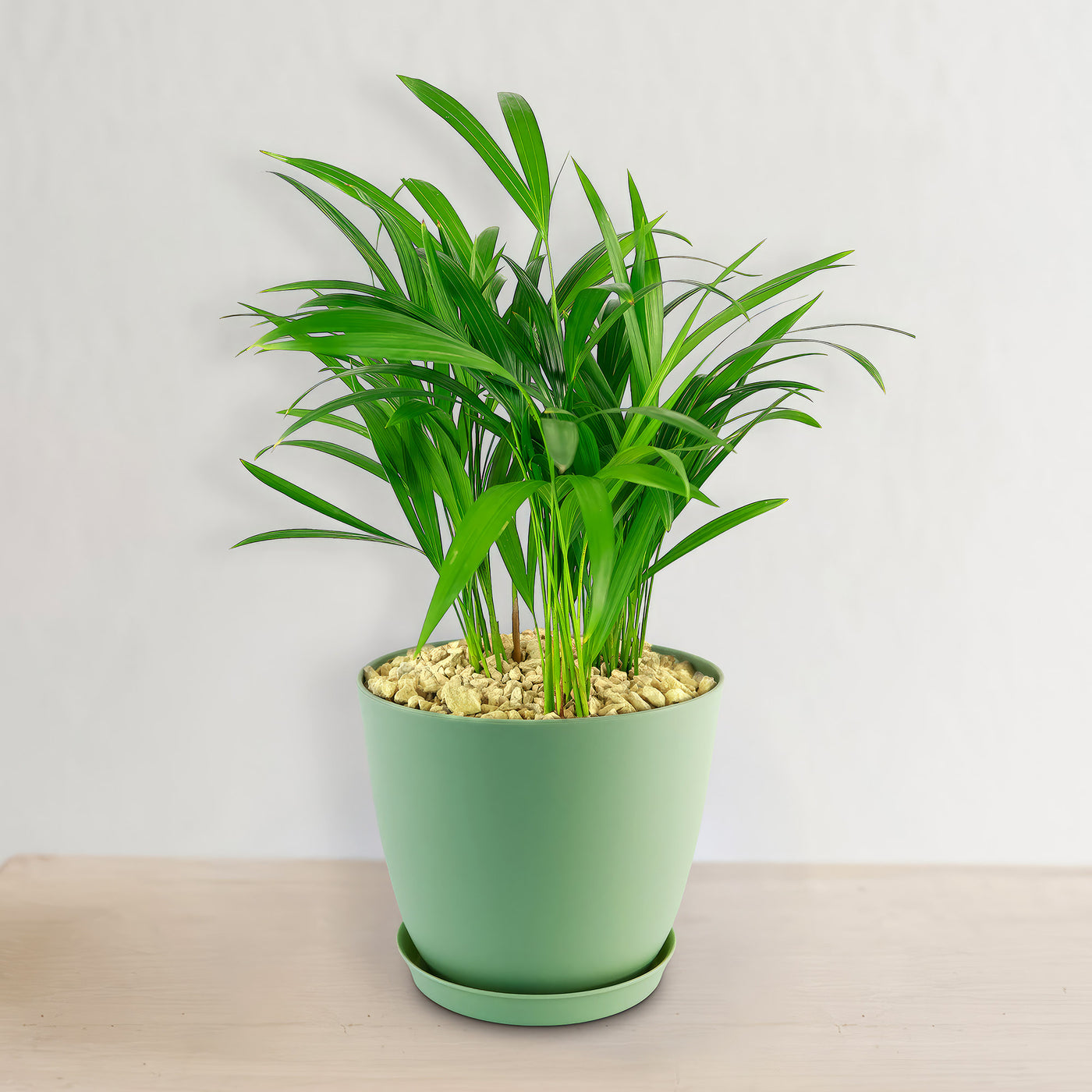
SKU: 90013529890
areca palm oxygen night

areca palm oxygen night Areca Palm ‘Dypsis lutescens’ 2 Gal. / Black / No Pot

Sale price$25.38 Regular price$28.20
Save 10%

Pay in installments of $7.05 with ShopPay, AfterPay and Klarna

Shipping Estimate
USA
  • USA
  • CAN

Ships within 48 hours · Estimated delivery Oct 10 - Oct 15

Promo Codes Available:

For Your Every Summer RSVP, with Code: SUMMER15

Description

areca palm oxygen night Areca Palm ‘Dypsis lutescens’ 2 Gal. / Black / No PotKey Highlights Areca Palm Tree Areca Palm grows in dense clumps, with multiple smooth, golden yellow stems emerging from the base and narrow fronds like bamboo leaves, creating a full and bushy appearance. Recognized by NASA, this palm removes toxins like formaldehyde and benzene, improving indoor air quality. One of the most widely grown indoor palms, it thrives in homes and offices, adding a tropical touch with its graceful, feathery fronds. Areca

Key Highlights – Areca Palm Tree

  1. Areca Palm grows in dense clumps, with multiple smooth, golden-yellow stems emerging from the base and narrow fronds like bamboo leaves, creating a full and bushy appearance.
  2. Recognized by NASA, this palm removes toxins like formaldehyde and benzene, improving indoor air quality.
  3. One of the most widely grown indoor palms, it thrives in homes and offices, adding a tropical touch with its graceful, feathery fronds.
  4. Areca Palm can withstand short dry periods, making it relatively low-maintenance.
  5. This palm adapts well to bright, indirect light, requires minimal pruning, and is non-toxic to pets, making it an excellent choice for beginners.

The Areca Palm, known as Dypsis lutescens, is one of the most beloved indoor clumping  palms, known for its graceful, feathery fronds and ability to enhance indoor spaces with a tropical feel. The plant is also known for its ability to improve air quality by filtering out toxins such as formaldehyde and benzene.  Unlike some palms that require extensive care, Areca Palm is relatively simple to grow and responds well to consistent watering and humidity, making it an excellent choice for beginners. 

Native to Madagascar, this palm has gained worldwide popularity as both a houseplant and an outdoor landscape feature in warm climates. Its attractive appearance, air-purifying properties, and low-maintenance nature make it a favorite choice for homes, offices, and commercial spaces. It is also known as a butterfly palm, golden cane palm, and yellow palm. 

Areca Palm is a clustering palm, meaning multiple stems emerge from the base, creating a full and bushy appearance.

The leaves are long, arching, and pinnate, with a lush green color that adds vibrancy to any setting. 

When grown indoors, the plant remains relatively compact, while outdoor specimens can develop into tall, striking features in tropical gardens.

When growing indoors, your Areca Palm typically grows up to 7 feet tall in height, making it an excellent floor plant for homes and offices.

When grown outdoors, this Areca palm tree can reach an impressive height of 30 feet, with a spread of about 12 feet wide. 

Indoor Areca Palms rarely bloom, but outdoor plants may produce small, yellowish-white flowers from late spring to summer. These flowers grow in clusters along the base of the fronds and are followed by small, oval-shaped fruits that transition from green to yellow and eventually turn black when fully mature. The fruits contain seeds but are not typically used for propagation, as division or offsets are preferred methods for growing new plants.

Recognized by NASA’s Clean Air Study, Areca Palm helps remove toxins like xylene, toluene, and carbon dioxide, improving indoor air quality. This palm releases moisture into the air, making it ideal for homes with dry air, especially during winter. 

When and How to Water Your Areca Palm

The Areca palm is drought-tolerant once established, making it an excellent choice for those looking for a low-maintenance tropical plant. While it prefers consistent moisture, it can survive short dry spells without severe damage. Overwatering is a more significant risk than underwatering, as excessive moisture can lead to root rot. Ensure the soil dries slightly between waterings to maintain the right balance. 

In the spring and summer, during its active growing season, the Areca palm tree requires more frequent watering. In warm temperatures, watering once every 5–7 days is ideal, depending on humidity levels. If it is grown outdoors, rainfall can supplement its needs, but manual watering should be adjusted accordingly. Always check the top 1–2 inches of soil before watering to prevent oversaturation. 

In fall and winter, when growth slows down, the watering frequency should be reduced. Watering once every 10–14 days is sufficient to prevent dehydration while avoiding waterlogging. Indoor plants may require slightly more frequent watering if exposed to dry air from heating systems, so monitoring humidity levels is essential. 

Light Requirements – Where to Place Your Areca Palm Tree 

For indoor growth as a houseplant, your Areca palms thrive in bright, indirect light for at least 4-6 hours a day.

A location near an east- or south-facing window with filtered sunlight is ideal. It can tolerate lower light conditions, but growth may slow down, and the leaves may become less vibrant.

To promote healthy foliage, rotating the plant occasionally ensures even exposure to light.

Artificial grow lights can also supplement light if natural brightness is insufficient.

For outdoor cultivation, the Areca palm tree prefers partial to full sun, requiring 4–6 hours of bright, indirect light daily.

Morning sunlight is ideal, while intense afternoon rays may scorch the fronds, especially in hotter climates. If grown in a container, moving it to a shaded area during peak summer months can prevent leaf damage. 

Optimal Soil & Fertilizer Needs 

Areca palms grow best in well-draining, slightly acidic to neutral soil with good aeration. A high-quality potting mix with peat, sand, and perlite ensures proper drainage. Planet Desert has specialized potting soil that includes an organic substrate with mycorrhizae to help with the growth of a healthy root system to help your succulents thrive.

A balanced liquid NPK fertilizer at a 5-10-5 ratio applied once a year in the spring during the growing season promotes lush foliage and robust growth. Slow-release palm fertilizers with essential micronutrients like magnesium and iron also help prevent yellowing leaves. During the dormant season, fertilization should be stopped to avoid unnecessary growth that may weaken the plant in cooler months. 

Hardiness Zones & More 

When growing indoors as a houseplant, the Areca palm plant thrives in temperatures between 65–75°F with humidity levels above 40%. Dry air can cause leaf browning, so misting or using a humidity tray can maintain optimal moisture levels. Avoid placing the plant near cold drafts or heating vents, as sudden temperature fluctuations can cause stress. 

For outdoor cultivation, Areca palm is hardy in USDA zones 10–11, thriving in warm, humid conditions.

It can tolerate brief temperature drops but should be protected from frost.

The ideal outdoor humidity level is 50% or higher, making it best suited for tropical or subtropical environments.

For those in cooler climates, container-growing allows for seasonal relocation indoors. 

Wildlife – Areca Palm Flowers Attract the Following Friendly Pollinators  

The Areca palm produces small, yellowish-white flowers that attract a variety of pollinators such as bees, hummingbirds, butterflies, and other beneficial pollinators. While not a primary pollinator plant, its presence in a tropical garden can support local insect populations.

Butterflies
Bees
Hummingbirds
Lady Bugs
Multi Pollinators
Other Birds

According to the ASPCA, the Areca palm is non-toxic to humans, cats, dogs, and birds, making it a safe choice for pet owners. Unlike some palms that pose toxicity risks, Areca palm does not contain harmful compounds that could endanger household animals. 

How to Propagate Areca Palm 

Areca palms can be easily propagated through division or by planting seeds. To propagate through division, carefully separate the offshoots from the main plant and replant them in well-draining soil. Root division is best done in spring or early summer when growth is most active. If propagating from seeds, soak them in warm water for 24 hours before planting them in a mixture of peat moss and perlite. Keep the soil consistently moist and provide bright, indirect light for optimal growth.

The Bottom Line 

Overall, the Areca Palm (Dypsis lutescens) is a stunning, easy-to-care-for plant that thrives both indoors and outdoors. It is a clustering palm tree with multiple stems, produces a full, bushy appearance with long, arching, pinnate leaves in lush green, adding vibrancy to any setting. Its elegant fronds, air-purifying benefits, and adaptability make it a favorite among plant enthusiasts. Whether placed in a bright living room corner, an office, or a tropical garden, this palm adds beauty and a refreshing touch of greenery. With its elegant feathery fronds, ability to purify air, and pet-friendly nature, it’s a popular choice among plant enthusiasts. Proper care, including adequate watering, indirect sunlight, and occasional fertilization, ensures vibrant growth and longevity. Order your very own Areca Palm for sale today! 

Shipping Notes
  • Free Standard Shipping on $100+ Orders to the USA.
  • Except Preorder products are shipped in 48 hours.
  • Delivery to the USA:
  1. Standard Shipping : 3-10 business days
  • If time is of the essence, please consider selecting expedited delivery for faster service.
Exchange/Return Notes
  • We offer a 30-day return/exchange service after receiving.
  • Final sale items are not eligible for returns or exchanges.
  • To process your return/exchange, please contact us at [email protected]
  • Please click here for more details>>> Return & Exchange Policy
SKU: 90013529890

Discover Niche Categories That Outsell areca palm oxygen night

Top-Converting Item to Boost Your Average Order

4.1 ★★★★★
Based on 14 reviews
Sort
Highest Rating
Newest First
Oldest First
Product Reviews
P
Verified Purchase
p.j. lazos
Battle Creek, US
★★★★★ 5
Bird by Bird is a delight for readers and writers alike
Format: Paperback
I’m on this rereading kick and also on a reading-books-about-writing kick and Bird by Bird, Some Instructions on Writing and Life, by Anne Lamott, heads the list. Part writing guide, part life coaching session, and part true confessions, Bird by Bird is a delight for readers and writers alike. One summer, Lamott’s ten year-old brother had waited three months to begin a project on birds that was due the next day. Close to tears and unable to even move, he sat among his books and papers at the kitchen table. Lamott’s father, a writer and maybe Lamott’s favorite person ever, put an arm around his son and said, “Bird by bird, buddy. Just take it bird by bird.” The book is peppered with such sage advice while Lamott remains the quintessential social commenter and odd man out, full of more than a few stories of her life gone wrong. What makes her writing so enjoyable is the rough terrain she’s crossed to bring it to us through glimpses of her childhood and the rest of her life. Lamott shares some of her writing techniques such as sitting at her desk and staring at a small one-inch empty picture frame when she’s out of ideas. She watches that picture frame until something comes to her. Sometimes she gets up to make a phone call or eat a snack while the picture frame sits there as a reminder, but she always goes back to her chair and that picture frame. To be a writer, she tells her students, you have to sit your butt in a chair and not get up until you’ve written something no matter how long it takes or how terrible it is, and then you have to do that again the next day and the one after that. You may write four or five pages before you get one or two good paragraphs, she says, but keep at it. She encourages her students to reveal their most desperate fears and phobias and bring them to the surface for dissection and reassembly as literary gold. Unfortunately for Lamott, her worst moments have become her best prose. Take the most horrible school lunch ever and turn it into a brilliant comedic twist of events. Never miss and opportunity to go for your own jugular, but just flash the knife, don’t really cut your throat. In Lamott’s world, writing is therapy and since she’s taken some of the heaviest stuff of her life and exposed it, often with hilarity, to the sun and wind and elements where it can be alchemized, she’s become her own therapist. Or maybe she still needs therapy, but at least there’s a great story to be told. I question whether the pain and suffering is necessary for the craft or whether it just makes the writer more observant -- nothing like fear to sharpen the senses -- and hence, more readily able to translate those observations to the rest of the world. Once you’ve mined your childhood for all the despondency and suffering you can recall along with all the nasty characters that have wreaked havoc upon you, stick them between fictional pages for everyone to see, while being careful to obscure them so ingeniously through changes of place or time or hair color that no one will recognize themselves. Also, always give the male character a small penis. It cuts down on potential libel suits. These are your the tools of the trade, says Lamott. Your heartbreak, your inability to fit in, your desire to be part of another family, relationship, community, etc., one that obviously had it better than yours, and your unlimited ability to manipulate facts. Also, never miss an opportunity to capitalize on all your accumulated crap. If you are a writer, Bird by Bird will provide you with a step-by-step guide that will boost your writing by degrees, from s***ty first drafts to publication, but my guess is that Bird by Bird will help you with your life maybe just the teeniest bit more.
WAS THIS REVIEW HELPFUL?YesReportShare
Reviewed in the United States on November 14, 2015
K
Verified Purchase
Kendall Giles
Bozeman, US
★★★★★ 5
Getting words onto the page!
Format: Kindle
There seem to be as many books about how to write as there are actual writers, yet Anne Lamott makes a solid if not altogether inspiring contribution to the collection. Also known for her non-fiction books dealing with depression, Christianity, and alcoholism, in Bird by Bird author Lamott turns her humor and autobiographical lens toward offering sage advice and inspiration for writers of all levels. While far from Strunk and White's The Elements of Style, and mute on the meter of poetry and the tropes of science fiction, Lamott instead focuses more on psychological issues that confront and haunt writers from all genres, such as defeating the blank page, avoiding perfectionism obsessions, cranking out that first draft, and writing for the right reasons. A breadth of writing advice, Bird by Bird gets its title from wisdom Lamott's father once gave to her brother, incapacitated by the task of writing a school essay on birds. The senior Lamott advised the younger to break the assignment down into manageable chunks: "Bird by bird, buddy. Just take it bird by bird." Divided into five parts, in part one Lamott first addresses writing itself -- getting words onto the page. Lamott starts by giving the aspiring author permission to write and then by encouraging the author to just get the words onto the page. Go ahead, just create that first, messy draft: "Almost all good writing begins with terrible first efforts. You need to start somewhere." She then suggests focusing more on creating compelling characters than worrying about plot: "If you focus on who the people in your story are, if you sit and write about two people you know and are getting to know better day by day, something is bound to happen." She even discusses a short story template -- action, background, development, climax, ending -- that can be used as an initial story structure. Dialog is important too, and compelling dialog can be influenced by real-life encounters, but the main goal is to get that first draft written, in short steps, a little each day. In part Two Lamott talks about the writing frame of mind -- about how authors can psyche themselves into writing using rituals at the beginning of each writing session and by believing in the stories they are telling. Part Three presents specific tools authors can use to help recall memorable quotes and scenes, how to collect new material, and how to gain feedback on drafts, such as using index cards on which to jot down ideas, joining or forming writing groups and sending drafts to a short-list of people an author trusts to give honest and useful feedback, and overcoming writer's block by refilling the author's emptiness through short exercises just to get the fingers moving. In part Four Lamott talks about the publication process and why an author simply giving herself to the writing act in and of itself is often the best reward: "There is no cosmic importance to your getting something published, but there is in learning to be a giver." Part Five contains final words of wisdom and encouragement for the budding author. For example, an author should not hesitate to use experiences from their childhood (and tips are given on how to avoid libel when using autobiographical material). Overall, rather than being the strict writing schoolmarm, Lamott is more like a writing companion. She chats over your shoulder with you at the end of the day, sipping a glass of wine, reflecting on her own experiences in the writing trenches, and sharing what worked for her in achieving success. Her advice is true and her voice is encouraging -- she uses self-deprecating humor to convince any reader that their writing anguish is neither new nor unique since Lamott herself has likely already confronted and conquered those same demons. She persevered and achieved success, and the reader of her book too shall overcome and get their story onto the page. She mentions God throughout, but she does not come across as preachy. Again, she's relating what worked for her, using anecdotes from memorable episodes in her life. There's no magic and no divine inspiration to solve writing problems--she uses real techniques and encouragement to help confront and conquer the blank page. Indeed, we can all use encouragement and insights from someone who's already been there. Like the oft-repeated "Practice, practice, practice" response by legendary pianist Arthur Rubinstein when he was stopped on a street in New York and was asked, "Pardon me sir, how do you get to Carnegie Hall?", Lamott's response to writers in Bird by Bird is just as wise and true, but perhaps even more motivational due to her humor and honest expression from the trenches.
WAS THIS REVIEW HELPFUL?YesReportShare
Reviewed in the United States on April 20, 2011
N
Verified Purchase
Nick
Battle Creek, US
★★★★★ 3
Worthwhile, though average, experience
Format: Kindle
I'll start this review by stating that I'm not an aspiring novelist, at least at the moment. A hearty recommendation prompted me to read this book, though I had only a cursory idea of the subject matter. At a time when it seems that only raving praise or apoplectic hate receive meaningful attention, stating that something is only okay or average feels especially hostile. Unfortunately I must admit that was my finding of this book, that it was a middle of the road, if not totally unexceptional, experience that elicited little in the way of strong responses. Let me be clear: there is value in this book especially for the would-be writer looking for advice, try a sample to feel this book out and don't let my ambivalence scare you off. The positives should probably come first, right? The author is clearly passionate about the subject and it doesn't matter what the topic happens to be, when the writer cares about the topic it immediately makes the book more enjoyable to read. Ms. Lamott's writing is straightforward and honest and I appreciate that immensely. Another book I was reading concurrently too often felt pedantic and by comparison this one did not reek of this stench one bit. The author is perhaps overly generous in her use of quotes, but they're not cloying as if to convince you that she should be taken seriously. Instead these quotations are offered as useful pearls of wisdom. I come from a world of academia where too many quotations tend to be frowned upon, but you may like them so chalk this up to my own biases. While Ms. Lamott doesn't suffocate you with her qualifications, she is entirely within her rights to do so. I say this to illustrate the following point: if you are willing, this book can help you with something. As I said, I'm not looking to publish a novel, article or really anything but there are suggestions and advice that apply beyond the page. I count this as the book's main strength and what keeps it from being entirely forgettable. A challenge I often face, like any writers reading this review, is just getting started and the exhortation offered by the author was so true that I cannot help but to think of the help it will give me. The book is also humble, it doesn't get convoluted and I think avoiding that pitfall deserves praise. The negatives, specific to me perhaps, start with the sense that I found the description of writing and the writing process too mystical. Maybe this too irritates nerves made too sensitive by years of academic rather than creative writing, but if I were looking for advice on a finishing a short story the encouragement to "listen to my characters" would seem silly to me. I understand that the author can only relay what has been helpful to her but it at times seems overly caught up with the love affair of writing as opposed to more substantive things a person can try. Secondly, the tendency just mentioned all too often takes up more space than what seems to be needed and the book is consequently longer than it felt like it needed to be. Overall, I found this book to be a solid middle-of-the-road experience. I wouldn't dismiss it totally but I found myself having to look the other way on several occasions. That maybe speaks more to my background than anything else and if you are a fan of the author please don't take it that I'm trying to tarnish her work in any way. Really, I guess this review is more geared to the person like me who is perhaps not a writer in the sense envisaged by this book. Maybe you are being recommended at this very instant to pick up a copy and maybe, like me, you're somewhat skeptical. To this hypothetical person I say this: it is worth reading even if the starry-eyed expressions get a little trite after a while. I would argue that this is a bit of high praise by itself, it isn't too often that somebody would say that a generally average book is worth the time it takes to read it. I think that's worth something, maybe about as much as this book.
WAS THIS REVIEW HELPFUL?YesReportShare
Reviewed in the United States on July 25, 2014
K
Verified Purchase
Katie B
Carnegie, US
★★★★★ 5
The ultimate "wake-up" scent (and no dry skin!)
Scent: Citrus + Eucalyptus, Size: 12.2 Fl Oz (Pack of 1)
I’ve tried plenty of "invigorating" body washes, but most of them just smell like artificial lime or leave my skin feeling tight. This Huron Body Wash is in a completely different league. Why it’s my new daily go-to: Complex, Fresh Scent: The mix of citrus, eucalyptus, and mint is incredible. It’s crisp and bold enough to wake you up in the morning, but the aromatic greens give it a sophisticated, high-end finish that doesn't smell like a cheap drugstore brand. Actually Moisturizing: Usually, "cleansing" washes strip your skin, but the coconut oil and Vitamin E in this actually leave my skin feeling smooth. I’ve noticed way less dryness on my elbows and shoulders since switching. Great Lather: A little goes a long way. It creates a rich, creamy lather that feels premium and rinses off clean without any slimy residue. The "Peace of Mind" Factor: It’s hard to find a performance-focused body wash that is also vegan and cruelty-free. Knowing I'm getting a professional-grade product without the harsh chemicals (and with Witch Hazel to keep my skin clear) makes the price totally worth it. Bottom Line: If you want to start your day smelling like a high-end spa rather than a locker room, get this. It’s worth every penny!
WAS THIS REVIEW HELPFUL?YesReportShare
Reviewed in the United States on January 12, 2026
G
Verified Purchase
Greg
West Palm Beach, US
★★★★★ 5
Great product that seems to last a good long time
Scent: Citrus + Eucalyptus, Size: 12.2 Fl Oz (Pack of 2)
This has a subtly pleasant smell. I like it. I like the consistency too. I will order again. It's soft on my skin and super easy to use. I like the bottle size. It's not too big and it's not too small.
WAS THIS REVIEW HELPFUL?YesReportShare
Reviewed in the United States on March 24, 2026

recommand products