SKU: 90310051220
indoor hanging plants for sale near me

indoor hanging plants for sale near me Peperomia Hope 'Peperomia tetraphylla' 4" Pot / Black / With Pot

Sale price$18.96 Regular price$21.07
Save 10%

Pay in installments of $5.27 with ShopPay, AfterPay and Klarna

Shipping Estimate
USA
  • USA
  • CAN

Ships within 48 hours · Estimated delivery Oct 15 - Oct 20

Promo Codes Available:

For Your Every Summer RSVP, with Code: SUMMER15

Description

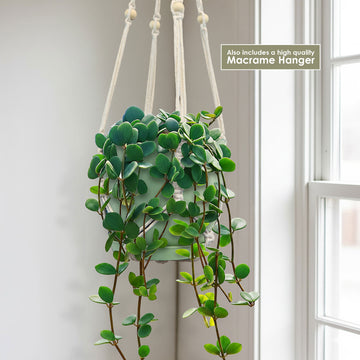
indoor hanging plants for sale near me Peperomia Hope 'Peperomia tetraphylla' 4" Pot / Black / With PotT he Peperomia Hope, known as Peperomia tetraphylla, is a delightful houseplant known for its small, round succulent leaves that are soft to the touch. Native to Central America and South America, it is also known as the acorn peperomia or four leaved peperomia. It is a delightful cultivar resulting from a cross between Peperomia deppeana and Peperomia quadrifolia, an interesting species of the Peperomia genus. This image features the Peperomia Hope,

T he Peperomia Hope, known as Peperomia tetraphylla, is a delightful houseplant known for its small, round succulent leaves that are soft to the touch. Native to Central America and South America, it is also known as the acorn peperomia or four-leaved peperomia. 

It is a delightful cultivar resulting from a cross between Peperomia deppeana and Peperomia quadrifolia, an interesting species of the Peperomia genus.

This image features the Peperomia Hope, which makes a colorful choice for containers and hanging baskets.

These trailing stems of the slow-growing cultivar can reach a length of about 12 inches, making them perfect for hanging baskets or as a trailing plant on shelves.

They grow on trailing stems, creating a cascading effect that adds a touch of elegance to any space.

The Peperomia hope flowers are usually greenish-white or yellowish in color and are not the main attraction of this plant.

While Peperomia hope is primarily grown for its foliage, it does produce small, insignificant flowers during the spring and summer.

Like other succulents, Peperomia plants are low-maintenance plants and are neglect-tolerant, making them ideal for travelers or busy owners.

Whether you're an experienced plant parent or just starting out, this versatile Peperomia tetraphylla beauty is sure to impress. Not only are these tropical plants safe for humans and pets, but they also thrive in partial shade and require moderate watering.  

When and How to Water Your Peperomia Hope 

These hope plants need deep irrigation to keep the soil moist, but not too wet. Make sure you check the soil before watering, as these plants do not like to be waterlogged or soggy. Go to https://planetdesert.com/collections/soil-top-dressing-and-amendments/products/soil-cactus-mix-blend-1-gal-4-qt-cacti-succulent-dirt-compost-growing-media Your Peperomia hope plant prefers watering once every 2-3 weeks in the growing season, and once a month in the dormant.

In the spring and summer, during the growing season, watering once every two or three weeks is ample for your Peperomia tetraphylla.

In the winter, during the dormant season, if it doesn't rain, you still should only water the Peperomia hope plant less than once a month.

If the plant doesn't receive enough moisture for an extended period of time, discoloration, pale stems, and browning can occur, leading to stunted growth. In contrast, overwatering can cause root rot and fungal infections.

Light Requirements - Where to Place Your Peperomia Hope 

When grown indoors, it should be placed in the sunniest spot in your home in order to receive the 4-6 hours of bright light that it needs each day. 

This usually means placing the plant in a south- or west-facing window or using artificial light to provide supplemental light.

It can tolerate low light, but it may experience stunted growth, curled leaves, and faded colors.

When grown outdoors, Peperomia tetraphylla prefers full sun to partial shade for at least 6-8 hours a day. They can tolerate some morning sun, but direct afternoon sunlight should be avoided to prevent leaf burn. If the plant is not receiving enough light, its growth may become leggy and sparse.

Optimal Soil & Fertilizer Needs 

The Pepromia hope prefers a well-drained soil and should be fertilized once a year in the spring. You can make or buy a well-draining potting mix, or ideally, use our that contains 5 natural substrates and mycorrhizae, which promote the development of a strong root system that helps your Peperomia tetraphylla thrive. 

When it comes to fertilizing your Peperomia tetraphylla, a small amount of natural fertilizer once a year in the spring will do wonders for your plant's health and growth. Additionally, by using NPK fertilizers in a balanced ratio (5-10-5), you can add beneficial compounds and microbes to the soil without using harsh chemicals. Show your hope, plant some love with awesome organic fertilizer, and watch it thrive. 

Hardiness Zones & More  

In the United States, this trailing Peperomia is mostly an indoor plant, but if you live in southern Florida or Hawaii, then you can cultivate it outdoors in USDA zones 10-12. 

This tropical plant thrives at typical household humidity levels and can withstand a wide range of humidity. It will grow more quickly if you place a humidifier or pebble tray nearby.

A well-draining potting mix with drainage holes in the potting container will help you maintain temperatures and prevent too much moisture. 

How to Grow Best Peperomia Hope Indoors

When growing indoors, the ideal temperature range for your trailing hope plant is 65–75°F.  The Peperomia tetraphylla hope plants are sensitive to both extreme heat and cold, moderate temperatures. Most gardeners in the U.S. will want to keep their plant as an indoor houseplant or grow it in a greenhouse.

Wildlife - Peperomia Hope Attracts the Following Friendly Pollinators

The Peperomia Hope is known to attract friendly pollinators such as bees, butterflies, and hummingbirds with its vibrant flowers and sweet nectar. These pollinators play a crucial role in the ecosystem by aiding in the reproduction of plants and ensuring biodiversity in the environment.

Butterflies
Bees
Hummingbirds
Lady Bugs
Multi Pollinators
Other Birds

According to ASPCA, the Peperomia tetraphylla is non-toxic to pets and humans. It is safe to touch and handle, making it a great option for households with curious pets or small children.

How to Propagate Your Peperomia Hope

Propagating Peperomia hope is relatively easy and can be done through stem cuttings or leaf cuttings. Simply take a healthy stem cutting, remove a few leaves from the lower part of the stem, and place it in a well-draining potting mix. Keep the soil lightly moist until roots start to develop, which usually takes a few weeks.

Key Takeaways

  1. Peperomia 'Hope' features a trailing growth habit, with soft, round, succulent-like leaves that cascade beautifully over pot edges.
  2. This plant is an excellent choice for hanging baskets, wall planters, or shelf displays, adding lush greenery to vertical spaces.
  3. It is mildly drought-tolerant, thanks to its thick, water-storing leaves, and prefers to dry out between waterings.
  4. Peperomia tetraphylla is non-toxic to pets and humans.
  5. Peperomia 'Hope' thrives in bright, indirect light but can also tolerate medium light, making it versatile for various indoor spots.

Final Thoughts

Overall, the Peperomia hope (Peperomia tetraphylla) is a fantastic plant choice for both plant enthusiasts and beginners alike. Its trailing stems and compact size make it perfect for hanging baskets or adding a touch of greenery to shelves. With its vibrant green, succulent-like leaves, it adds a refreshing and elegant look to any space. In terms of care, Peperomia hope is relatively low-maintenance, preferring bright, indirect light and well-draining soil. It's important to let the soil dry out between waterings to avoid overwatering. With its attractive trailing feature and easy care requirements, Peperomia hope is a delightful plant that will surely bring joy to any plant lover or buyer.

Shipping Notes
  • Free Standard Shipping on $100+ Orders to the USA.
  • Except Preorder products are shipped in 48 hours.
  • Delivery to the USA:
  1. Standard Shipping : 3-10 business days
  • If time is of the essence, please consider selecting expedited delivery for faster service.
Exchange/Return Notes
  • We offer a 30-day return/exchange service after receiving.
  • Final sale items are not eligible for returns or exchanges.
  • To process your return/exchange, please contact us at [email protected]
  • Please click here for more details>>> Return & Exchange Policy
SKU: 90310051220

Discover Niche Categories That Outsell indoor hanging plants for sale near me

Top-Converting Item to Boost Your Average Order

4.8 ★★★★★
Based on 14 reviews
Sort
Highest Rating
Newest First
Oldest First
Product Reviews
S
Verified Purchase
Sue
Alexandria, US
★★★★★ 5
Pricey but great for people who need something gently on the tongue or mouth
Size: 4.3 Ounce (Pack of 1)
Great alternative to traditional Toothpaste. Its a bit pricey but if you are like me you dont have to share it with anyone else because they can use regular toothpaste. The minty flavor is subtle but does not cause irritation. Easy to just just like regular toothpaste. it doesnt have any whitening in it but is a comfort for those that need a toothpaste gently on the tongue or mouth. Still does the job
WAS THIS REVIEW HELPFUL?YesReportShare
Reviewed in the United States on April 24, 2026
B
Verified Purchase
Barbmom
Lowell, US
★★★★★ 5
Wonderful book
Format: Hardcover
Alan Schore is a gifted reseacher and this book is a great addition to the field espeically for those of us that work with non verbal treatment.
WAS THIS REVIEW HELPFUL?YesReportShare
Reviewed in the United States on July 11, 2019
F
Verified Purchase
Fr. Charles Erlandson
Belleville, US
★★★★★ 5
Possibly the Most Important Theological Work of the 20th Century
Format: Paperback
Pope John Paul II's "Man and Woman He Created Them," popularly known as "A Theology of the Body" may be the most important theological work of the 20th century. I say this because John Paul II is not only a first-rate theologian but also because "Theology of the Body" strikes at the heart of a series of related issues that desperately need addressing today. "Theology of the Body" begins with the Pope's Trinitarianism, a fundamental doctrine that Christians often don't know what to do with. At the heart of his thinking, and all true Christian thinking, is God's self-giving love that is rooted in the Trinity. "Theology of the Body" also explores the nature of what it means to be human and made in the image of God. The book is titled "Man and Woman He Created Them" because it is especially in the relationship between a man and his wife that the relational and loving identity of God is revealed in humanity. Throughout, the Pope reaffirms the essential goodness of the human body. "Theology of the Body" is thus a profound theological work that I highly recommend to pastors, teachers, and educated laymen. Be aware: it's not an easy read! But a patient and thoughtful reading of "Theology of the Body" will, in time, become a blessing to the reader. One of the reasons it remains such a timely work is that it confronts some of the Gnostic tendencies in the Church today that spiritualize things and tend to downplay the significance and basic goodness of the body. At a time when humanistic and distorted views of human sexuality and identity abound, "Theology of the Body" provides an intelligent and profound rationale for the biblical, Christian meaning of sex, the body, and being made in the image of God. While Protestants may think that a work written by a Pope would be too Roman Catholic for them, in reality "Theology of the Body" is a work for the whole Church and all Christians. The book is filled with profound and rare insight into who God is and who man is. It will help to complete the theology of most Christian readers and also has important practical implications. Because the book was originally an extended series of lectures at times it can be unwieldy and difficult to comprehend. Sometimes it's difficult to understand what the Pope means in certain sections, since his writing is often dense. In spite of the difficulty in reading, it's well worth the effort. Because of the depth and difficulty of the work, some have found it beneficial to also read "Theology of the Body for Beginners" by Christopher West.
WAS THIS REVIEW HELPFUL?YesReportShare
Reviewed in the United States on August 22, 2011
D
Verified Purchase
Daniel Francis Good
Bozeman, US
★★★★★ 5
Excellent
Format: Paperback
While some readers may find John Paul II's writing style a bit circular or highly philosophical, the message presented in this text will change your life. Still, it is not easy reading. It is a collection of 129 audiences given by John Paul II commonly called the Theology of the Body. The audiences are based on Sacred Scripture. In this new translation audiences that were not delivered are now included. The Theology of the Body treats sexuality, marriage, celibacy, anthropology, family life, responsible parenthood, the wound of sin, redemption, and the resurrection of the body. This book is in my top five of best books. I have read both translations and Michael Waldstein's is much easier to read than the first edition. The new headers at the beginning of each section that directly indicate what is being dealt with in the text. The introduction that Waldstein provides gives a theological and philosophical vision for understanding the text. This book is worth your time. It stands against the culture of death and promotes the Gospel of Jesus Christ. It holds the answers the hunger that society is so desperately grasping at. If you don't know much about the Theology of Body it would prove useful to read an introductory text by West, Hogan, or Percy & Schmitz. Christopher West, who is properly described as a catechist, has excellent presentations on the Theology of the Body in DVD and CD format that could prove helpful to a first time reader. On a personal note: The Theology of the Body has helped me so much. I am in Holy Orders and I don't think I would be where I am except for this message (and God's grace and His will). This isn't some message that you can simply read and understand - it is something that you have to approach with an open heart and mind with prayer. I really hope you read this book and promote it's message.
WAS THIS REVIEW HELPFUL?YesReportShare
Reviewed in the United States on September 28, 2009
S
Verified Purchase
saj
Natrona Heights, US
★★★★★ 5
Stupendous and Life-Changing
Format: Paperback
I'll never forget the way I first heard the Theology of the Body. I was a brand-new sister, having made my first vows the year Pope John Paul II was elected. My community used to read a snippet or two from the Papal Audience talks right after breakfast, before we scattered to the four winds in carrying out the day's mission. Bit by bit, as we made our way through an unusual series of meditations on the book of Genesis, I found that the whole theme of "gift" was beginning to resound within me. It was like a new wine being poured into the wineskin of the Church. Whatever our vocation, we are each called to be a "person-gift," as the Persons of the Trinity are "gift," given over unreservedly, and unreservedly received. In a vague way, even though I was still very young (!), I realized that something extraordinary was going to come from these talks, and that it would mean great things above all for women. It took twenty years for that message to begin to seep into the language of our Church culture, but now small groups of young adults and couples are beginning to meet in homes and conferences to ponder John Paul's vast, fully Christian vision of humanity. I've used the Theology of the Body to present the essence of the vow of chastity to our novices and junior sisters, and I keep looking for ways to introduce it to others, especially to people who find themselves struggling to understand the Church's teaching in all those areas that touch on our vocation to love. The beauty of its truth is hard to resist. This new and carefully researched translation offers more than just a consistent translation of key terms: previously unpublished units came to light; the Pope's original title and subtitles have been added; the whole content appears in the order in which the Pope meant for it to be covered. Yes, Dr. Waldstein's careful and scholarly introduction can be a bit overwhelming, but this book is worth taking the time simply to sit with. That's what you do with beauty anyway.
WAS THIS REVIEW HELPFUL?YesReportShare
Reviewed in the United States on October 31, 2008

recommand products