Pay in installments of $6.09 with
 ,
,
 and
and

Shipping Estimate
USA
- USA
- CAN
- USA
- CAN
Ships within 48 hours · Estimated delivery Oct 19 - Oct 24
 Promo Codes Available:
For Your Every Summer RSVP, with Code: SUMMER15
Description
philodendron congo when to up pot 90Philodendron Rojo Congo is a bold, self heading hybrid admired for its broad, glossy leaves and rich red burgundy tones. A cross between Philodendron imperial red and Philodendron tatei, this striking cultivar combines strong growth with dramatic colouration, making it one of the most sculptural and easy care Philodendrons available today. The large, paddle shaped leaves emerge in shades of deep red and bronze, gradually maturing to dark green with a
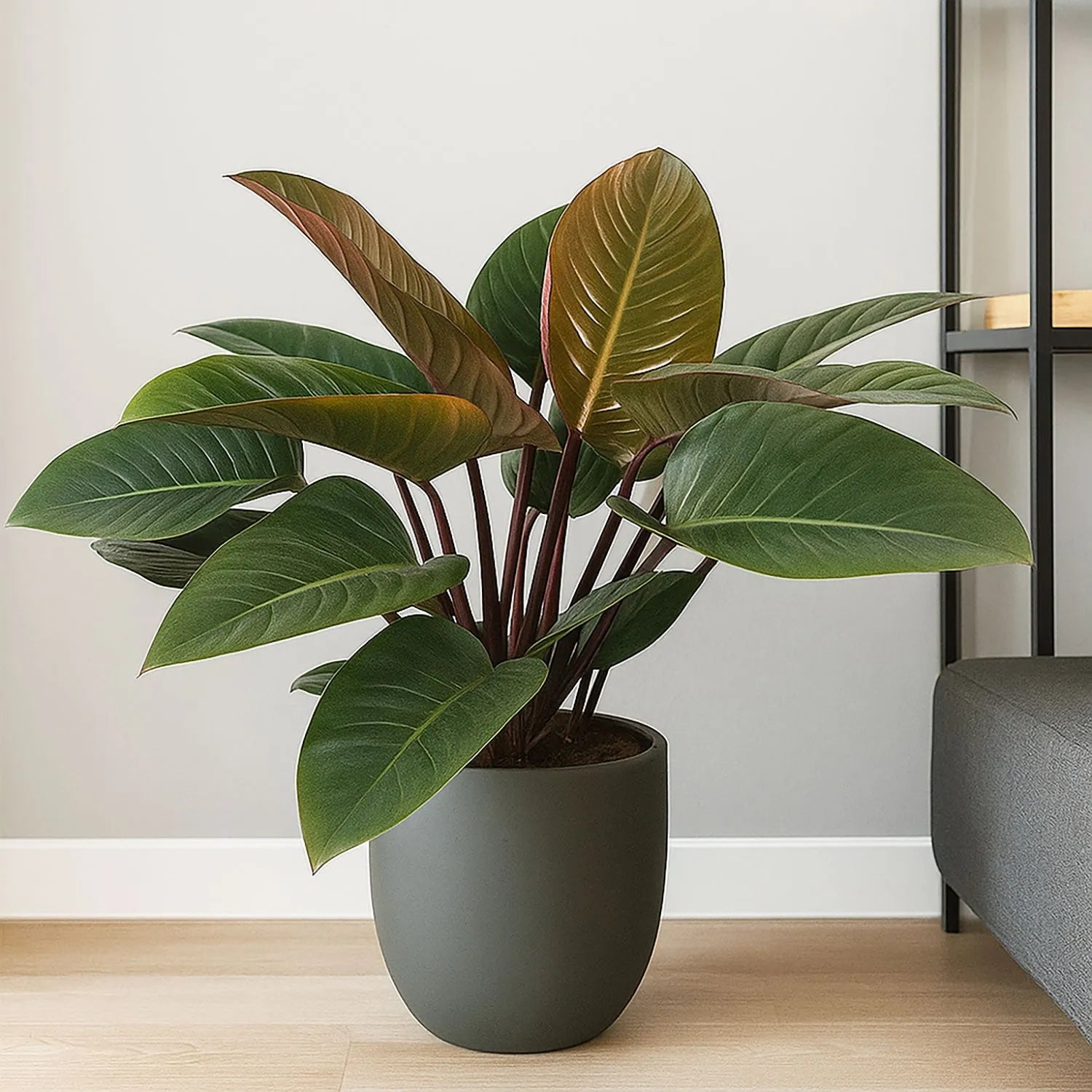
Philodendron ‘Rojo Congo’ is a bold, self-heading hybrid admired for its broad, glossy leaves and rich red-burgundy tones. A cross between Philodendron imperial red and Philodendron tatei, this striking cultivar combines strong growth with dramatic colouration, making it one of the most sculptural and easy-care Philodendrons available today.
The large, paddle-shaped leaves emerge in shades of deep red and bronze, gradually maturing to dark green with a burgundy sheen. Each leaf is thick and leathery, arranged in a rosette-like formation around a strong central stem. Its robust structure, combined with the subtle red hues that glow under bright light, give Philodendron ‘Rojo Congo’ a powerful, tropical presence.
Modern, commanding, and effortlessly tropical, Philodendron ‘Rojo Congo’ is the perfect plant for collectors and interior designers seeking a dramatic yet low-maintenance feature plant.
Philodendron ‘Rojo Congo’ – Care Guide
Light
Thrives in bright, indirect light but adapts well to moderate light levels. Ample filtered brightness enhances its red undertones, while low light may cause slower growth and greener foliage. Avoid direct sunlight, which can scorch the glossy leaves.
Watering
Keep the soil lightly moist but not soggy. Water when the top 3–4 cm of soil feels dry. Rojo Congo prefers consistency — allow partial drying between waterings but never let the soil stay dry for extended periods. Reduce watering in winter when growth slows.
Temperature and Humidity
-
Temperature: Prefers warmth between 20–30 °C; avoid temperatures below 16 °C.
-
Humidity: Enjoys moderate to high humidity (50–70%). Use a humidifier, mist occasionally, or group with other tropicals to prevent dry edges and promote lush growth.
Soil and Potting
Use a well-draining, nutrient-rich tropical mix — a blend of compost, perlite, orchid bark, and coco coir provides the perfect balance of aeration and moisture retention. Repot every 1–2 years in spring to refresh the mix and give the roots space to expand.
Feeding
Feed every 4–6 weeks during spring and summer with a diluted, balanced liquid fertiliser or a foliage-specific formula high in nitrogen and magnesium. Suspend feeding in autumn and winter when growth slows.
Pruning and Maintenance
Remove older or yellowing leaves from the base to maintain a tidy, symmetrical form. Wipe leaves gently with a damp cloth to enhance their shine and prevent dust build-up. Rotate the pot regularly to ensure even light exposure and balanced growth.
Growth and Maturity
A moderate to fast-growing hybrid, Philodendron ‘Rojo Congo’ can reach 90–120 cm in height and spread indoors. It forms a self-supporting rosette rather than trailing, with each new leaf emerging from the centre in brilliant shades of red before maturing into a glossy deep green. Its strong vertical presence and colourful foliage make it a standout feature in any tropical plant collection.
Common Issues
-
Yellowing leaves: Overwatering or poor drainage.
-
Brown tips: Low humidity or inconsistent watering.
-
Dull colour: Insufficient light.
-
Pests: Occasionally mealybugs or thrips; treat with neem oil or insecticidal soap.
Background and Benefits
Philodendron ‘Rojo Congo’ is a cultivated hybrid developed for indoor and tropical landscaping, combining resilience, colour, and structure. The name “Rojo” means red in Spanish, referencing its distinctive red petioles and young foliage.
Native Philodendron species originate from the rainforests of South America, where they grow in the shaded understory. This hybrid retains those qualities, thriving in low- to medium-light environments and requiring minimal care. Beyond its visual appeal, ‘Rojo Congo’ is an excellent air-purifying plant, filtering indoor pollutants while creating a vibrant, calming atmosphere.
Quick Care Summary
Light: Bright, indirect light; tolerates moderate light
Water: Keep soil evenly moist; allow top 3–4 cm to dry between watering
Temperature: 20–30 °C; avoid below 16 °C
Humidity: Moderate to high (50–70%)
Soil: Rich, free-draining mix – compost, bark, perlite, coco coir
Feed: Every 4–6 weeks in spring/summer
Growth: Upright, self-heading habit, 90–120 cm; red-bronze new leaves maturing to deep green
⚠️ Toxicity note: Contains calcium oxalate crystals and is toxic if ingested. Keep away from pets and children.
Styling Tip
Display Philodendron ‘Rojo Congo’ in a matte black or terracotta planter to complement its deep red and green tones. Its structured form makes it ideal for corners, bright hallways, or modern office spaces. Pair it with contrasting foliage such as Philodendron ‘Birkin’, Anthurium luxurians, or Alocasia ‘Platinum’ for a layered, textural tropical display. With its glossy, sculptural presence, it brings warmth, luxury, and a sense of balance to any contemporary space.
Shipping Notes
- Free Standard Shipping on $100+ Orders to the USA.
- Except Preorder products are shipped in 48 hours.
- Delivery to the USA:
- Standard Shipping : 3-10 business days
- If time is of the essence, please consider selecting expedited delivery for faster service.
Exchange/Return Notes
- We offer a 30-day return/exchange service after receiving.
- Final sale items are not eligible for returns or exchanges.
- To process your return/exchange, please contact us at [email protected]
- Please click here for more details>>> Return & Exchange Policy