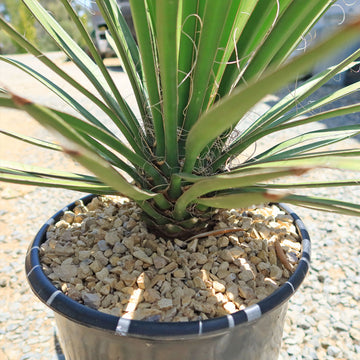
SKU: 90947917350
yucca plant care fertilizer

yucca plant care fertilizer Palma China ‘Yucca filifera’

Sale price$26.11 Regular price$29.01
Save 10%

Pay in installments of $7.25 with ShopPay, AfterPay and Klarna

Shipping Estimate
USA
  • USA
  • CAN

Ships within 48 hours · Estimated delivery Aug 6 - Aug 11

Promo Codes Available:

For Your Every Summer RSVP, with Code: SUMMER15

Description

yucca plant care fertilizer Palma China ‘Yucca filifera’Introducing the Yucca filifera, known as Palma china, which is a striking and unique plant that belongs to the Yucca, opens in a new tab genus. Native to Mexico, this Yucca plant has several other common names, such as Mexican tree yucca, Chinese palm, Yucca australis, or Yucca palm. These names reflect the plant's origin and its palm like growth habit. The plant's common names often highlight its graceful and elegant appearance, resembling a palm

Introducing the Yucca filifera, known as Palma china, which is a striking and unique plant that belongs to the Yucca, opens in a new tab genus.  

Native to Mexico, this Yucca plant has several other common names, such as Mexican tree yucca, Chinese palm, Yucca australis, or Yucca palm.  These names reflect the plant's origin and its palm-like growth habit. The plant's common names often highlight its graceful and elegant appearance, resembling a palm tree with its tall, slender trunk and crown of foliage. 


This Yucca tree can grow to an impressive size, reaching heights of up to 20 feet tall and 11 feet wide when mature.

Its trunk is typically tall and slender, topped with a cluster of long, arching leaves that add to its tropical and exotic appeal.

The Yucca palm tree plant is known for its distinctive appearance, featuring long, sword-shaped leaves with thread-like fibers along the margins, giving it a delicate and intricate look.

When it comes to flowering, the Yucca filifera produces tall spikes of creamy white flowers that bloom in summer. These flowers are bell-shaped and fragrant, attracting pollinators such as bees and butterflies. The flowering of Palma china adds to its ornamental value, creating a stunning display of white blooms against the backdrop of its green foliage. 

Propagation of the Yucca filifera can be done through seeds or offsets. Seeds can be collected from the plant's dried flower stalks and sown in well-draining soil. Offsets, or pups, can also be separated from the base of the plant and replanted to propagate new Palma china plants. With proper care and suitable growing conditions, Yucca filifera can be propagated successfully to expand your plant collection or share with others who appreciate its beauty. 

Watering Needs 

Yucca filifera is a robust and striking plant that requires minimal watering once established. This Yucca plant is well-adapted to arid conditions and can tolerate drought well. It's essential to allow the soil to dry out between waterings to prevent overwatering, which can lead to root rot. 

In the spring and summer, during the growing season, water the Yucca filifera thoroughly, ensuring that excess water can drain away. It's crucial to water deeply but infrequently to encourage the plant's roots to grow deeply and become more resilient to drought.  

In winter, when the plant is dormant, it reduces watering significantly to mimic its natural environment. When watering, ensure that excess water can freely flow out of the pot or the planting area.  

Observing the plant's leaves can also provide clues about its watering needs; if the leaves start to yellow or droop, it may be a sign of underwatering. By understanding the watering requirements of the Yucca filifera, you can help it thrive and maintain its beauty in your garden or landscape.

Light Requirements 

When growing indoors, Yucca filifera thrives in bright, indirect light. Placing the plant near a window where it can receive plenty of sunlight without being in direct sunlight all day is ideal. Palma china can adapt to lower light conditions but may grow more slowly or become leggy if not provided with enough light. 

For outdoor cultivation, they prefer full sun to partial shade. This plant loves basking in the sun and will flourish when exposed to ample sunlight. When planting Palma china outdoors, choose a spot that receives at least 6 hours of sunlight per day for optimal growth. However, it's essential to acclimate the plant gradually to direct sunlight if it has been indoors or in low-light conditions to prevent sunburn on the leaves. 

Whether indoors or outdoors, it's essential to monitor the plant's response to light conditions. If the leaves start to turn yellow or brown, it may indicate that the Yucca filifera is receiving too much direct sunlight. On the other hand, if the plant becomes leggy or pale, it might be a sign that it needs more light. By providing the right amount of light for your Palma china, you can help it thrive and maintain its vibrant appearance. 

Optimal Soil & Fertilizer Needs 

Yucca filifera prefers sandy, well-drained soil, as excess moisture can promote root and stem rot. Planet Desert specializes in succulents and has specialized succulent potting soil, opens in a new tab that includes an organic substrate with mycorrhizae to help with the growth of a healthy root system to help your succulents thrive. As an okay alternative, you can create your own potting mix, opens in a new tab by combining equal portions of perlite, coarse sand, and good natural potting soil. 

When it comes to fertilizing the Yucca plant, it's best to use a balanced NPK fertilizer formulated for succulents. During the growing season in the spring, you can fertilize the plant once a year to support its growth. However, it's crucial not to over-fertilize, as this can lead to nutrient build-up in the soil, causing harm to the plant. In winter, when the plant is dormant, reduce or stop fertilizing to allow it to rest. 

Hardiness Zone & More 

When growing indoors, your Yucca filifera Palma china prefers average room temperatures ranging from 45 to 75 °F. It can tolerate slightly cooler temperatures but should be protected from drafts and sudden temperature fluctuations. As for humidity, this plant is adaptable to normal household humidity levels, so additional humidity is usually not necessary. 

For outdoor cultivation, the Yucca filifera is suited for hardiness zones 6-9. While they are cold hardy it's important to protect your Yucca plant from prolonged frost and freezing temperatures. Additionally, this cold hardy Yucca prefers low to moderate humidity levels, making it well-suited for arid or semi-arid climates. 

Whether grown indoors or outdoors, monitoring temperature and humidity levels is crucial for the health of the Yucca filifera. By providing the appropriate conditions for this plant, such as the right hardiness zones, temperature range, and humidity levels, you can help ensure its growth and well-being. 

Final Thoughts 

Overall, the Yucca filifera (Palma china) is a stunning plant native to Mexico, featuring long, sword-shaped leaves with thread-like fibers along the margins. It can grow up to 20 feet tall, producing fragrant, creamy white flowers in summer. Palma china thrives in full sun and well-draining soil, making it ideal for arid climates. To care for this plant, provide plenty of sunlight and water sparingly and ensure good drainage to prevent root rot. With its unique beauty and easy-care requirements, the Yucca filifera is a captivating addition to any garden or indoor space. Order your very own Yucca filifera for sale today! 

Shipping Notes
  • Free Standard Shipping on $100+ Orders to the USA.
  • Except Preorder products are shipped in 48 hours.
  • Delivery to the USA:
  1. Standard Shipping : 3-10 business days
  • If time is of the essence, please consider selecting expedited delivery for faster service.
Exchange/Return Notes
  • We offer a 30-day return/exchange service after receiving.
  • Final sale items are not eligible for returns or exchanges.
  • To process your return/exchange, please contact us at [email protected]
  • Please click here for more details>>> Return & Exchange Policy
SKU: 90947917350

Discover Niche Categories That Outsell yucca plant care fertilizer

Top-Converting Item to Boost Your Average Order

4.7 ★★★★★
Based on 11 reviews
Sort
Highest Rating
Newest First
Oldest First
Product Reviews
S
Verified Purchase
Sue
West Palm Beach, US
★★★★★ 5
Pricey but great for people who need something gently on the tongue or mouth
Size: 4.3 Ounce (Pack of 1)
Great alternative to traditional Toothpaste. Its a bit pricey but if you are like me you dont have to share it with anyone else because they can use regular toothpaste. The minty flavor is subtle but does not cause irritation. Easy to just just like regular toothpaste. it doesnt have any whitening in it but is a comfort for those that need a toothpaste gently on the tongue or mouth. Still does the job
WAS THIS REVIEW HELPFUL?YesReportShare
Reviewed in the United States on April 24, 2026
B
Verified Purchase
Barbmom
Belleville, US
★★★★★ 5
Wonderful book
Format: Hardcover
Alan Schore is a gifted reseacher and this book is a great addition to the field espeically for those of us that work with non verbal treatment.
WAS THIS REVIEW HELPFUL?YesReportShare
Reviewed in the United States on July 11, 2019
F
Verified Purchase
Fr. Charles Erlandson
Charlottesville, US
★★★★★ 5
Possibly the Most Important Theological Work of the 20th Century
Format: Paperback
Pope John Paul II's "Man and Woman He Created Them," popularly known as "A Theology of the Body" may be the most important theological work of the 20th century. I say this because John Paul II is not only a first-rate theologian but also because "Theology of the Body" strikes at the heart of a series of related issues that desperately need addressing today. "Theology of the Body" begins with the Pope's Trinitarianism, a fundamental doctrine that Christians often don't know what to do with. At the heart of his thinking, and all true Christian thinking, is God's self-giving love that is rooted in the Trinity. "Theology of the Body" also explores the nature of what it means to be human and made in the image of God. The book is titled "Man and Woman He Created Them" because it is especially in the relationship between a man and his wife that the relational and loving identity of God is revealed in humanity. Throughout, the Pope reaffirms the essential goodness of the human body. "Theology of the Body" is thus a profound theological work that I highly recommend to pastors, teachers, and educated laymen. Be aware: it's not an easy read! But a patient and thoughtful reading of "Theology of the Body" will, in time, become a blessing to the reader. One of the reasons it remains such a timely work is that it confronts some of the Gnostic tendencies in the Church today that spiritualize things and tend to downplay the significance and basic goodness of the body. At a time when humanistic and distorted views of human sexuality and identity abound, "Theology of the Body" provides an intelligent and profound rationale for the biblical, Christian meaning of sex, the body, and being made in the image of God. While Protestants may think that a work written by a Pope would be too Roman Catholic for them, in reality "Theology of the Body" is a work for the whole Church and all Christians. The book is filled with profound and rare insight into who God is and who man is. It will help to complete the theology of most Christian readers and also has important practical implications. Because the book was originally an extended series of lectures at times it can be unwieldy and difficult to comprehend. Sometimes it's difficult to understand what the Pope means in certain sections, since his writing is often dense. In spite of the difficulty in reading, it's well worth the effort. Because of the depth and difficulty of the work, some have found it beneficial to also read "Theology of the Body for Beginners" by Christopher West.
WAS THIS REVIEW HELPFUL?YesReportShare
Reviewed in the United States on August 22, 2011
D
Verified Purchase
Daniel Francis Good
Massapequa, US
★★★★★ 5
Excellent
Format: Paperback
While some readers may find John Paul II's writing style a bit circular or highly philosophical, the message presented in this text will change your life. Still, it is not easy reading. It is a collection of 129 audiences given by John Paul II commonly called the Theology of the Body. The audiences are based on Sacred Scripture. In this new translation audiences that were not delivered are now included. The Theology of the Body treats sexuality, marriage, celibacy, anthropology, family life, responsible parenthood, the wound of sin, redemption, and the resurrection of the body. This book is in my top five of best books. I have read both translations and Michael Waldstein's is much easier to read than the first edition. The new headers at the beginning of each section that directly indicate what is being dealt with in the text. The introduction that Waldstein provides gives a theological and philosophical vision for understanding the text. This book is worth your time. It stands against the culture of death and promotes the Gospel of Jesus Christ. It holds the answers the hunger that society is so desperately grasping at. If you don't know much about the Theology of Body it would prove useful to read an introductory text by West, Hogan, or Percy & Schmitz. Christopher West, who is properly described as a catechist, has excellent presentations on the Theology of the Body in DVD and CD format that could prove helpful to a first time reader. On a personal note: The Theology of the Body has helped me so much. I am in Holy Orders and I don't think I would be where I am except for this message (and God's grace and His will). This isn't some message that you can simply read and understand - it is something that you have to approach with an open heart and mind with prayer. I really hope you read this book and promote it's message.
WAS THIS REVIEW HELPFUL?YesReportShare
Reviewed in the United States on September 28, 2009
S
Verified Purchase
saj
New York, US
★★★★★ 5
Stupendous and Life-Changing
Format: Paperback
I'll never forget the way I first heard the Theology of the Body. I was a brand-new sister, having made my first vows the year Pope John Paul II was elected. My community used to read a snippet or two from the Papal Audience talks right after breakfast, before we scattered to the four winds in carrying out the day's mission. Bit by bit, as we made our way through an unusual series of meditations on the book of Genesis, I found that the whole theme of "gift" was beginning to resound within me. It was like a new wine being poured into the wineskin of the Church. Whatever our vocation, we are each called to be a "person-gift," as the Persons of the Trinity are "gift," given over unreservedly, and unreservedly received. In a vague way, even though I was still very young (!), I realized that something extraordinary was going to come from these talks, and that it would mean great things above all for women. It took twenty years for that message to begin to seep into the language of our Church culture, but now small groups of young adults and couples are beginning to meet in homes and conferences to ponder John Paul's vast, fully Christian vision of humanity. I've used the Theology of the Body to present the essence of the vow of chastity to our novices and junior sisters, and I keep looking for ways to introduce it to others, especially to people who find themselves struggling to understand the Church's teaching in all those areas that touch on our vocation to love. The beauty of its truth is hard to resist. This new and carefully researched translation offers more than just a consistent translation of key terms: previously unpublished units came to light; the Pope's original title and subtitles have been added; the whole content appears in the order in which the Pope meant for it to be covered. Yes, Dr. Waldstein's careful and scholarly introduction can be a bit overwhelming, but this book is worth taking the time simply to sit with. That's what you do with beauty anyway.
WAS THIS REVIEW HELPFUL?YesReportShare
Reviewed in the United States on October 31, 2008

recommand products