Pay in installments of $7.16 with
 ,
,
 and
and

Shipping Estimate
USA
- USA
- CAN
- USA
- CAN
Ships within 48 hours · Estimated delivery Oct 15 - Oct 20
 Promo Codes Available:
For Your Every Summer RSVP, with Code: SUMMER15
Description
adenium obesum succulent Buy Desert Rose Phoenix, AZ | Adenium obesumPhoenix's Most Eye Catching Flowering Succulent Adenium obesum, commonly known as the Desert Rose, is one of the most striking ornamental succulents you can grow in the Phoenix Valley. Its swollen, sculptural trunk (caudex) stores water for extreme drought tolerance, while vibrant pink, red, and white trumpet shaped blooms put on a show from spring through fall. Whether you're adding a conversation piece container plant in Scottsdale, a patio focal
Phoenix's Most Eye-Catching Flowering Succulent
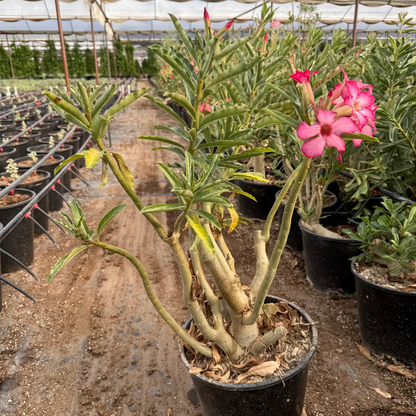
Adenium obesum, commonly known as the Desert Rose, is one of the most striking ornamental succulents you can grow in the Phoenix Valley. Its swollen, sculptural trunk (caudex) stores water for extreme drought tolerance, while vibrant pink, red, and white trumpet-shaped blooms put on a show from spring through fall. Whether you're adding a conversation-piece container plant in Scottsdale, a patio focal point in Chandler, or a heat-loving specimen in Mesa — Desert Rose delivers bold tropical color with minimal water.
Desert Rose Plant Details
| Attribute | Detail |
|---|---|
| Scientific Name | Adenium obesum |
| Common Names | Desert Rose, Adenium, Impala Lily, Mock Azalea |
| Mature Height | 2–5 feet |
| Mature Width | 2–3 feet |
| Growth Rate | Moderate — 6–12 inches per year in Phoenix |
| Sun | Full sun (6+ hrs). Thrives in reflected heat from walls and patios. |
| Water | Low once established. Highly drought-tolerant — store water in swollen trunk. |
| USDA Zones | 10–12 (Phoenix is Zone 9b–10a; protect from frost below 40°F) |
| Soil | Very well-draining. Adapts to Arizona caliche soils with added perlite or pumice. |
| Foliage | Semi-deciduous — may drop leaves in winter dormancy |
| Bloom Color | Pink, red, white, and bicolor — spring through fall |
Desert Rose Uses in Phoenix Landscapes
Container Showpiece
Desert Rose is one of the best container plants for Phoenix patios and pool decks. The sculptural caudex and vivid blooms create instant visual interest in a pot. Use a well-draining succulent mix and place in full sun — the reflected heat off concrete and pavers actually benefits this tropical succulent.
Entryway & Courtyard Focal Point
A mature Desert Rose with its thick, bonsai-like trunk makes an unforgettable statement at a front entry or courtyard. Pair with low-growing succulents like trailing Rosemary or Angelita Daisy for a layered, modern desert look. In Scottsdale and Paradise Valley, Desert Rose is a popular choice for upscale xeriscaping.
Rock Garden Specimen
Plant Desert Rose among boulders and gravel for a sculptural rock garden display. Its unique trunk shape and colorful blooms contrast beautifully with agaves, euphorbias, and barrel cacti. Group several sizes together for a dramatic desert vignette.
Best Time to Plant Desert Rose in Phoenix
Spring (March–May) is the ideal planting window for Desert Rose in Phoenix — warm soil and rising temperatures encourage rapid root establishment and growth. Late summer planting (August–September) also works. Avoid planting in winter when the plant goes dormant and cold snaps can damage tender roots.
How to Plant Desert Rose
- Dig wide, not deep — 2–3x the root ball width, same depth
- Check for caliche — break through any hardpan layer for drainage (critical for Desert Rose)
- Amend with perlite or pumice — mix 30–40% into backfill for superior drainage
- Plant slightly elevated — set the caudex base just above soil line to prevent rot
- Water basin — build a 3–4 inch ring to direct water to roots
- Mulch with gravel — avoid organic mulch touching the trunk to prevent moisture rot
Watering Desert Rose in Phoenix
First Year Watering Schedule
Weeks 1–2: Every 2–3 days, deep and slow (15–20 min). Month 1–2: Every 4–5 days. Month 3–6: Every 7–10 days (every 5–7 days in peak summer). After Year 1: Every 10–14 days summer; stop watering almost entirely in winter dormancy.
Drip Irrigation
Place one 2 GPH emitter 12–18 inches from the trunk. Desert Rose is extremely sensitive to overwatering — err on the dry side. In winter, reduce watering dramatically or stop entirely while the plant is dormant and leafless.
How fast does Desert Rose grow in Phoenix?
Desert Rose grows about 6–12 inches per year in Phoenix with full sun and proper care. Mature specimens can reach 3–5 feet tall with an impressive swollen trunk over several years.
Is Desert Rose frost-tolerant?
No — Desert Rose is tropical and sensitive to temperatures below 40°F. In Phoenix (Zone 9b–10a), bring container plants indoors or cover in-ground plants during rare frost events in December–February.
Can Desert Rose handle full Arizona summer sun?
Absolutely. Desert Rose thrives in full sun and extreme heat, including reflected heat off walls and pavement. The hotter the summer, the more blooms you'll see — just ensure adequate drainage.
Is Desert Rose toxic?
Yes — all parts of the plant contain toxic sap. Keep away from children and pets. Wear gloves when pruning or handling cut stems.
Why is my Desert Rose not blooming?
The most common causes in Phoenix are insufficient sunlight (needs 6+ hours of direct sun), overwatering, or the plant being too young. Established plants in full sun typically bloom prolifically from spring through fall.
You May Also Like
Yellow Bells — Fast-growing flowering shrub with bright yellow trumpet blooms, perfect for adding color alongside Desert Rose.
Angelita Daisy — Low-growing golden groundcover that pairs beautifully beneath Desert Rose specimens.
Red Bird of Paradise — Another heat-loving showstopper with fiery red-orange blooms for full-sun landscapes.
Coral Aloe — Sculptural succulent with coral-orange winter blooms that complement Desert Rose's summer flowers.
How Many Desert Rose Do I Need?
Desert Rose is a container and specimen plant, not a hedge or mass planting. Its sculptural caudex reads best when each plant has room to be seen.
| Planting Use | Spacing | Guidance |
|---|---|---|
| Patio or pool-deck pot | One per pot | A single specimen in a wide, well-draining container is the classic use; the reflected heat off pavers boosts bloom. |
| Entry or courtyard focal point | Standalone | One mature, thick-trunked plant makes the statement; no companions needed at its base. |
| Rock-garden vignette | 2–3 ft apart | Group 3 plants of staggered sizes, spaced 2 to 3 ft apart, for a layered sculptural display. |
Because it is frost-tender, keep it in pots you can move, or in a warm spot you can cover on cold nights.
Desert Rose Season-by-Season in Phoenix
- Spring (Mar–May): Best planting window. Leaves return and the first trumpet blooms open as nights warm past 40°F.
- Summer (May–Sep): Peak bloom. Loves extreme and reflected heat, flowering hardest in the hottest stretch. Water sparingly and never let the caudex sit wet. Monsoon humidity is fine as long as drainage is sharp.
- Fall (Oct–Nov): Blooming tapers as nights cool. Begin reducing water heading into dormancy.
- Winter (Dec–Jan): Goes dormant and may drop all leaves. This is the danger season: it is damaged below about 40°F. Move pots into a garage or under cover, or cover in-ground plants on frost nights, and nearly stop watering.
At a Glance
✔ Heat-Loving (Reflected-Heat Tolerant) ✔ Drought-Tolerant ✔ Pool-Friendly (Low-Litter) ✔ Low-Maintenance ✔ Pollinator-Friendly ✔ Deer & Rabbit-Resistant
Plant It With
- Madagascar Palm: another sculptural caudex succulent for a matching patio collection.
- Pink Jade Plant: compact pink-blushed succulent that softens the base of a Desert Rose pot.
- Ponytail Palm: a swollen-based companion that echoes the Desert Rose's bonsai trunk.
- Elephant's Ear: bold velvet leaves for a dramatic mixed-succulent grouping.
Is Desert Rose Right for Your Yard?
Desert Rose thrives in full sun and reflected heat, in very fast-draining soil or a container, with sparing water and a frost-free winter spot. It is a perfect patio and courtyard showpiece for Valley homeowners who want bold tropical color. It is not a fit planted permanently in cold, low-lying, or poorly drained ground, and the toxic sap means it should be kept away from children and pets and handled with gloves.
Shipping Notes
- Free Standard Shipping on $100+ Orders to the USA.
- Except Preorder products are shipped in 48 hours.
- Delivery to the USA:
- Standard Shipping : 3-10 business days
- If time is of the essence, please consider selecting expedited delivery for faster service.
Exchange/Return Notes
- We offer a 30-day return/exchange service after receiving.
- Final sale items are not eligible for returns or exchanges.
- To process your return/exchange, please contact us at [email protected]
- Please click here for more details>>> Return & Exchange Policy