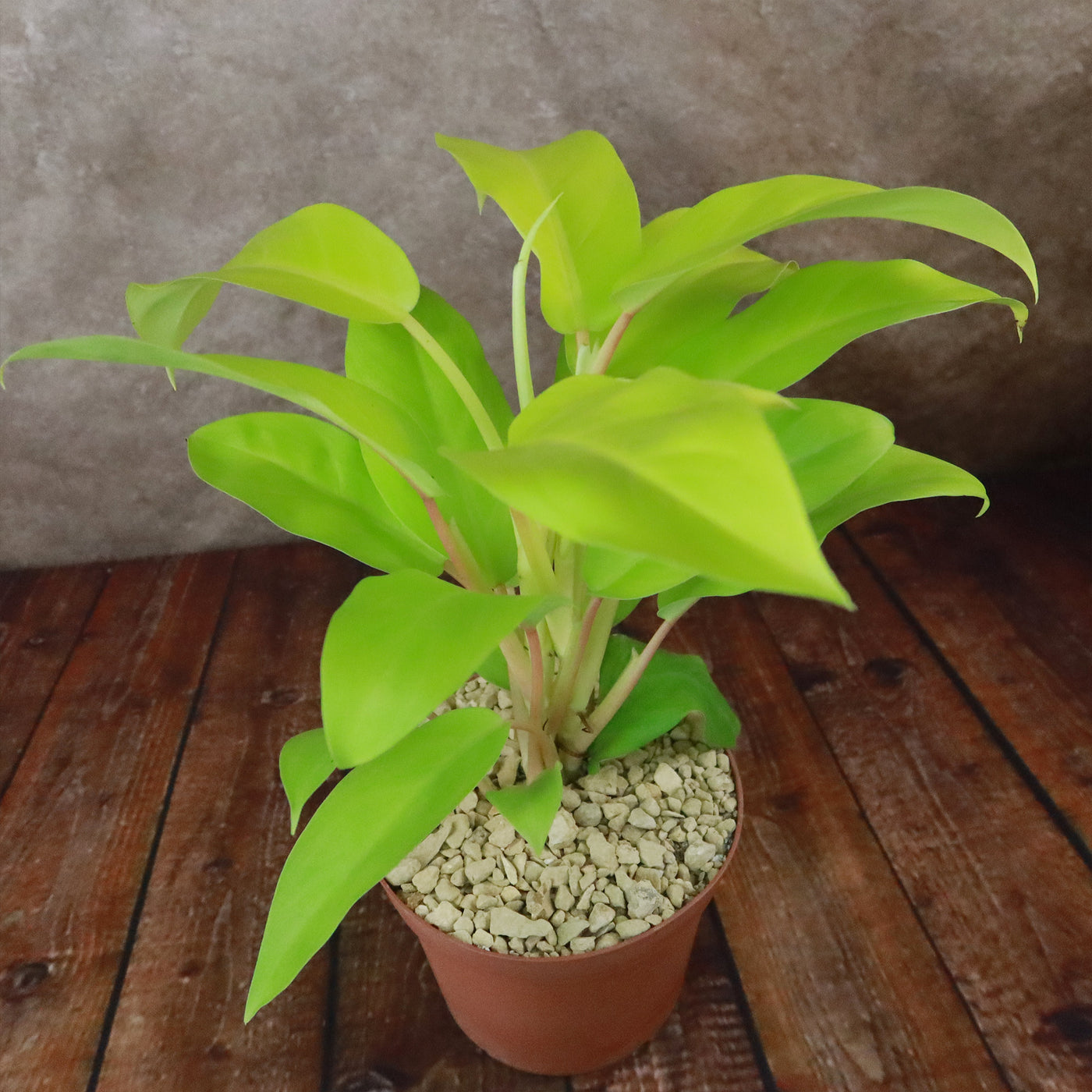
SKU: 92664600755
golden goddess pothos

golden goddess pothos ‘Golden Goddess’ Philodendron 6" Pot / Teal / Without Pot

Sale price$24.02 Regular price$26.69
Save 10%

Pay in installments of $6.67 with ShopPay, AfterPay and Klarna

Shipping Estimate
USA
  • USA
  • CAN

Ships within 48 hours · Estimated delivery Aug 2 - Aug 7

Promo Codes Available:

For Your Every Summer RSVP, with Code: SUMMER15

Description

golden goddess pothos ‘Golden Goddess’ Philodendron 6" Pot / Teal / Without PotThe Golden Goddess Philodendron is a striking tropical houseplant known for its vibrant golden yellow foliage and easy to care nature. This fast growing climbing philodendron has gained immense popularity among houseplant enthusiasts due to its adaptability, bright color, and ability to thrive indoors with minimal maintenance. Unlike traditional green philodendrons, its chartreuse leaves add a lively pop of color to any indoor space, making it a

The ‘Golden Goddess’ Philodendron is a striking tropical houseplant known for its vibrant golden-yellow foliage and easy-to-care nature. This fast-growing climbing philodendron has gained immense popularity among houseplant enthusiasts due to its adaptability, bright color, and ability to thrive indoors with minimal maintenance. Unlike traditional green philodendrons, its chartreuse leaves add a lively pop of color to any indoor space, making it a favorite for plant collectors and interior decorators alike.

Native to the tropical rainforests of South America, the philodendrons are often found climbing trees, using aerial roots to anchor themselves.

The Philodendron ‘Golden Goddess’ has striking, bright golden-yellow leaves. 

One of its most unique features is its changing leaf color; new leaves start as bright yellow and slowly turn lime-green as they mature.

The amount of light also affects this color shift, with brighter light keeping the leaves golden and lower light making them greener.

This golden goddess plant has a climbing or trailing growth habit, making it an excellent choice for trellises, moss poles, or hanging baskets.

This fast-growing philodendron can quickly reach impressive heights when given the right support. 

When grown indoors as a houseplant, Philodendron ‘Golden Goddess’ typically grows up to 6 feet tall, depending on care and support. If allowed to climb, it can grow even taller, creating a lush vertical display. The leaves can reach up to 8 inches in length, developing a full and dense appearance over time. 

Philodendron ‘Golden Goddess’ is a climbing philodendron, and providing a moss pole, trellis, or other vertical support will help it develop larger leaves and a more upright growth habit. 

If placed next to a wall, it may lean toward it, but without a textured surface or additional support, it won't attach and climb effectively on its own. Aerial roots will try to grip onto a rough surface, but a moss pole or trellis will encourage stronger, healthier vertical growth.

The flowers of Philodendron ‘Golden Goddess’ are small, inconspicuous, consisting of a spathe and spadix. The spathe is a leaf-like part that wraps around the flower, while the spadix is a thick, upright spike where tiny flowers grow. These blooms are small and not very noticeable, and the plant rarely flowers indoors. If it does bloom, it usually happens in the warmer months, like late spring or summer.

When and How to Water Your Golden Goddess Philodendron 

It is a drought-tolerant tropical plant, making it an excellent choice for those who occasionally forget to water. This variety thrives in slightly dry conditions and does not tolerate overwatering. The best approach is to allow the top two inches of soil to dry out before watering again. Overwatering can lead to root rot, so it's crucial to ensure proper drainage in the pot or planting area.

In the spring and summer, during the active growing season, the Golden Goddess requires more frequent watering. Warmer temperatures and increased light exposure speed up soil evaporation, so checking moisture levels at least once a week is advisable. Deep watering is best, ensuring moisture reaches the roots. However, excess water should always drain out, preventing waterlogged conditions. Misting is not necessary but can be beneficial in dry indoor environments to maintain humidity. 

As fall and winter arrive, the plant enters a semi-dormant state, requiring significantly less water. Watering should be reduced to every 2 to 3 weeks, depending on indoor humidity levels. Since the plant is not actively growing during this time, it consumes less water. Always check the soil before watering to prevent overwatering, as the roots remain vulnerable to rot during dormancy. 

Light Requirements – Where to Place Your ‘Golden Goddess’ Plant

When grown indoors as a houseplant, your ‘Golden Goddess’ Philodendron thrives in bright, indirect light, making it an ideal houseplant for well-lit spaces.

It should be placed near an east- or west-facing window where it can receive gentle morning or late afternoon sunlight.

Avoid direct midday sun exposure, as its leaves can scorch. If natural light is insufficient, a grow light can supplement the plant’s needs, ensuring its vibrant golden foliage stays bright.

For outdoor cultivation, the plant does best in partial shade to filtered sunlight, as full sun exposure can cause leaf burn.

Ideally, it should receive around 4 to 6 hours of bright, indirect sunlight per day. A shaded patio, under a tree canopy, or on a covered porch are excellent locations for growing this philodendron outdoors. If grown in a particularly hot climate, ensure it is shielded from intense afternoon sun to prevent leaf damage. 

Optimal Soil & Fertilizer Needs 

The Philodendron plant thrives in well-drained, nutrient-rich soil.  Aroid potting mixes work exceptionally well for this variety, as they provide the right balance of drainage and nutrition. Avoid heavy, compact soils that retain too much moisture, as this can lead to root rot. Instead, make or buy a well-draining potting mix, or ideally, use our specialized potting mix, which contains 5 natural substrates and mycorrhizae to promote the development of a strong root system that helps your plant to thrive. 

To fertilize your Golden Goddess plant, use a liquid NPK fertilizer (5-10-5) once a year in the spring, during the growing season, to promote healthy foliage. Organic fertilizers like worm castings or compost can also be incorporated into the soil to enhance nutrient levels over time. 

During fall and winter, fertilization should be stopped entirely, as the plant's growth slows. Over-fertilizing during dormancy can lead to nutrient buildup and potential root damage. Instead, focus on maintaining proper watering habits and light conditions. 

This Philodendron works well with other climbing varieties such as Philodendron Brasil, Philodendron Mcdowell, making it a versatile and colorful addition to your home or office.

Hardiness Zones & More

For indoor growth as a houseplant, ‘Golden Goddess’ prefers temperatures between 65°F and 80°F with moderate to high humidity. It thrives in well-lit environments with indirect light. While it can tolerate lower humidity levels, maintaining at least 50% humidity ensures optimal growth. Placing it near a humidifier or pebble tray can help increase moisture levels in dry indoor climates. 

In the United States, this is mostly an indoor plant, but if you live in southern Florida or Hawaii, then you can cultivate it outdoors in USDA zones 9-11.

It should be planted in a shaded to partially shaded location, with humidity levels ideally above 50%.

If temperatures drop below 50°F, bringing the plant indoors is necessary to prevent cold stress.

In frost-prone areas, container planting allows easy relocation during winter months. 

Wildlife – Golden Goddess Flowers Attract the Following Friendly Pollinators

The small, inconspicuous flowers of the Golden Goddess plant attract a variety of pollinators, such as bees, butterflies, hummingbirds, beetles, and other pollinators in tropical and subtropical regions. 

Butterflies
Bees
Hummingbirds
Lady Bugs
Multi Pollinators
Other Birds

According to the ASPCA, Philodendron plants are mildly toxic to humans, cats, dogs, and other pets due to the presence of insoluble calcium oxalates. Ingestion can cause mouth irritation, excessive drooling, and gastrointestinal distress. However, it is safe to touch and handle, making it a popular choice for indoor houseplants.  

How to Propagate Your Philodendron Golden Goddess 

The Golden goddess philodendron propagation is best achieved through stem cuttings. Choose a healthy stem with at least two to three nodes and use clean, sharp shears to cut just below a node. Remove any lower leaves and place the cutting in water or moist soil. In water, roots should begin to form within two to three weeks. If propagating in soil, keep it consistently moist and in a warm, bright environment. Once roots are well-established, transplant the cutting into its permanent container. 

Key Takeaways

  1. The Philodendron Golden Goddess is a fast-growing climber, that has a vining growth habit and can be trained to climb using a moss pole or trellis.
  2. It can tolerate short periods of dryness but thrives with regular watering when the soil is dry.
  3. When small, it fits perfectly on desks or shelves, but as it matures, it can be grown in hanging baskets or as a climbing plant.
  4. It thrives in bright, indirect light and adapts well to typical home conditions.
  5. The new leaves start as bright yellow and gradually turn lime-green, depending on light exposure.

The Bottom Line 

Overall, the Philodendron ‘Golden Goddess’ is a must-have plant for anyone looking to add a vibrant, low-maintenance plant to their collection. Its striking yellow foliage, adaptability, and fast growth make it an excellent choice for homes, offices, and indoor gardens. Whether climbing up a trellis or trailing from a hanging pot, this plant adds a tropical touch and an instant burst of color to any space. With proper care—bright indirect light, occasional watering, and well-draining soil—it will thrive for years to come. This philodendron variety is perfect for plant lovers who want an easy-care, visually striking houseplant. 

Shipping Notes
  • Free Standard Shipping on $100+ Orders to the USA.
  • Except Preorder products are shipped in 48 hours.
  • Delivery to the USA:
  1. Standard Shipping : 3-10 business days
  • If time is of the essence, please consider selecting expedited delivery for faster service.
Exchange/Return Notes
  • We offer a 30-day return/exchange service after receiving.
  • Final sale items are not eligible for returns or exchanges.
  • To process your return/exchange, please contact us at [email protected]
  • Please click here for more details>>> Return & Exchange Policy
SKU: 92664600755

Discover Niche Categories That Outsell golden goddess pothos

Top-Converting Item to Boost Your Average Order

4.3 ★★★★★
Based on 20 reviews
Sort
Highest Rating
Newest First
Oldest First
Product Reviews
G
Verified Purchase
GiveHerAGoodMunchin
Port Orchard, US
★★★★★ 5
Excellent trilogy. This is book 2
Format: Paperback
Bob Monroe is an OG OBE G. Love this trilogy. If you can read, read this
WAS THIS REVIEW HELPFUL?YesReportShare
Reviewed in the United States on August 25, 2025
J
Verified Purchase
Joe Neal
Charlottesville, US
★★★★★ 5
Great (excellent) details for the date written
Format: Paperback
NOTE: I toned this version down in 2021 – I was in a bad place when I wrote the original and there were some hostile and entirely inaccurate personal remarks in it. A few tables/charts with a wealth of information have tiny text but most of this was easy enough to read. The photos are poorly produced (at least in the paperback version I reviewed), which is sad given they would be so handy otherwise. This is a classic post-war treatise on the weapons used for ground warfare during World War II by the U.S. Army and as such the Marines. It was first published around 1947 when the war was fresh and doubtlessly numerous technical details were still classified. It was written by a man intimately involved in many design projects. The coverage pretty much explains the breadth. Examples of use are included for some weapons and detailed tables of data for many. He explains references to the "long primer" for the 76-mm gun and the 81-mm mortar T1 extension tube. I am happy to have bought it for that and numerous other details. One thing I missed when I first wrote the original rambling, a bit over the top review back in September 2015 was that the 57mm M1 antitank gun is not mentioned even though it was a key component of Infantry weaponry in 1944-45, sometimes maligned but often quite effective when carefully used as noted in many, many detailed accounts. Perhaps it was skipped because it was a revision of the British 6 pounder and not designed by Barnes men? Yet, it is an example of the issues caused by the pre war budget minders forcing the Army into desperate choices as explained later – and the using arms who decided to adopt it almost at the last minute, late in 1943. Until a weapon is adopted by the Army ammunition cannot be developed – it costs too much money and time to do so. Most of the book is positive and ignores failures, posed from the viewpoint of a proud designer not an actual user. Yet those failures illustrate the issues Ordnance had to deal with during the war. The U.S. invented the bazooka as the 2.36-inch model in 1942 yet the Germans fielded the more powerful 8.8-cm (88mm) model in 1944; and the U.S. did not get the 3.5-inch (90mm) into production-ready state until the war was ended. This was caused by offloading development onto people who went out for a “super rocket launcher” that had no place in the war. All too often, some excited designers did indeed get ahead of themselves when it came to what worked but was a bit too much (and ultimately impractical for the Army at the time). The inability to develop hollow-charge (HEAT) ammo for cannon and howitzers to reach its minimum potential (twice the caliber in penetration or better) was common for all countries including the U.S. The 105mm howitzer round was pretty good and while disparaged by all and sundry even the 75mm howitzer’s shell could (and did) take out medium armor. Barnes refers to the M3 and M5 light tank as "excellent" when the tanker's epithet would have been "tin plated coffin with a pea-shooter". Here we have an issue with comparing numbers such as armor thickness and penetration power of guns to facts; it is common to think they were butchered such as in Africa when in fact they fought well enough, flaws and all. But they were not the weapons the tankers wanted (nor deserved), and thus tanker’s complaints were valid. And, yes, they were not seen as a prime resource for fighting German tanks and hence reverted to recon and infantry support roles. Where they continued to meet and destroy German armor (but also be destroyed). Any German field commander would have loved to have a battalion of M5s on hand chasing down and chewing up U.S. troops; the contribution of the men in the light tanks in Europe in 1944 and 1945 is all too often belittled by the “number nerds” who toss the light tanks off as useless. They were anything but useless. Why were the M10, M18, and M36 designed as “Gun Motor Carriages” and not tanks? Because they were developed for the tank destroyer forces and the very bigoted officers who held the most sway on development wanted them to be nothing but “motorized antitank guns”. If they had been designed as tanks that would have invalidated Tank Destroyer Doctrine immediately. And yet, in the end, the men doing the fighting needed and wanted tanks, so they used them as tanks as much as they could, despite the open roof and lack of internal machine guns. It is claimed the gun motor carriages were cheaper than tanks (a specious argument given price varied by manufacturer and ultimately depended more on quantities produced not some arbitrary raw number) but to produce the gun motor carriages for a specialist role that was neither tank nor artillery (albeit they were used for both) was a costly thing to do. The failure to develop a better light tank in time is not mentioned even though the T7 light tank with a 57-mm gun was ready in mid-1942 and could have been in the field around 1943 (the Armored Forces botched that one). The M24 was a nice tank but too late simply because development came too late because development had been stunted badly by congress and it’s miserly pre-1941 budget. There are errors: The design of the M24 began in 1943, not 1945. The 76-mm gun could hardly penetrate the "...heaviest German tank armor." But it could penetrate a lot of armor and the myth that all German tanks were Tigers and Panthers is one of those fantasies of the war pursued by people who are glorifying the war not understanding it (most German armor was medium or lighter), let alone the myth that they were always met head-on is ridiculous. The 90-mm gun was not optimized for anti-tank use and hence had the same issues with dealing with the frontal armor of the Panther (though it could handle the Tiger) and yet was better at that than many other guns. The tendency to adapt anti-aircraft guns for anti-tank guns was common and is where Germany got its 88s and the 128mm. The U.S. found it did not need a lot of 90mms (the homeland was not threatened and what it produced was enough for its needs); there was never the demand for a higher altitude version and hence nothing like the 8.8cm FLAK 41 was developed which led to the 8.8cm Kwk43 and Pak43s; yet Ordnance built their own versions of hot 90mm for tank use. I missed the boat in my original review failing to detail how the Army’s main issue was the budget provided by Congress and politicians from 1920 through 1940. They starved the Army; the U.S. was peaceful and they had no interest in making it a military country and as such kept the Army small (and starved the air forces and Navy as well but not as badly). This crippled development; while the Soviets started building a modern Army in 1930 complete with investment in tank forces and tank arsenals; the Germans in 1934 or so; and British in 1934 or so; the U.S. politicians did not begin serious spending on the Army until 1941. Before then, the budget was all about “beans, bullets, and bayonets” and of course bodes to wield them. The Army had to struggle with what it had and put to field what was practical not what was best. Thus, for example, the recoilless rifles (used by the Germans in 1940) did not arrive in U.S. use until 1945. And yet a U.S. officer bult the first recoilless rifle to be used way back around 1916. Indeed, a brief little discussion on how the U.S. produced what it did based on budget would have opened many eyes. The Soviets produced so many thousand T34s for example, more than the U.S. – and in the U.S. the budget people were always saying, “You don’t need any more, stop building them!” As mentioned, the number of 90mm AA guns the U.S. produced was not based on manufacturing capacity but because they didn’t need more. Thus - there is a lot of information and many details many people will never have heard before. There are also many missing details concerning the Ordnance Department struggles to get things done in a very brief time frame thanks to how Congress had refused to let them do anything earlier. Dig into that deeper and you might find it nauseating the way people played games that hindered the U.S. Army in its job of helping beat the Germans. And sometimes couldn't put 2 and 2 together to get the right answer. But, they were human after all, and people do make mistakes. In my original review I argued that “If you want a politics free book you will not get it in this once, not unless you shut your eyes and remain ignorant . . .” but that is wrong. If this was a political book, Barnes might have ripped the budget mongers of the 1920s and 1930s a new sphincter for leaving the Army (and U.S. military as a whole) in such a bad situation as they did when war broke out. But, Barnes had more class than I do.
WAS THIS REVIEW HELPFUL?YesReportShare
Reviewed in the United States on September 19, 2015
P
Verified Purchase
Petey K
Houston, US
★★★★★ 5
Good content, very small print and photos
Format: Paperback
Get a magnifying glass… the print is tiny. They must have made this book to be a large hard cover because both the print and the photos are so small in paperback. Content looks decent. It’s a gift for my grandson who will probably spend more time with the photos than the reading anyway and his eyesight is better than mine. :D
WAS THIS REVIEW HELPFUL?YesReportShare
Reviewed in the United States on December 16, 2025
M
Verified Purchase
Museum Man
Draper, US
★★★★★ 4
Printing not up to standards.
Format: Paperback
Printing and pics not up to par.I gifted this book to a coworker and he was not as picky as I.
WAS THIS REVIEW HELPFUL?YesReportShare
Reviewed in the United States on March 8, 2020
T
Verified Purchase
TDD
Omaha, US
★★★★★ 5
Excellent resource
Format: Paperback
Purchased for my teenage son's history research project. Nice compilation, good information and well illustrated.
WAS THIS REVIEW HELPFUL?YesReportShare
Reviewed in the United States on May 29, 2025

recommand products