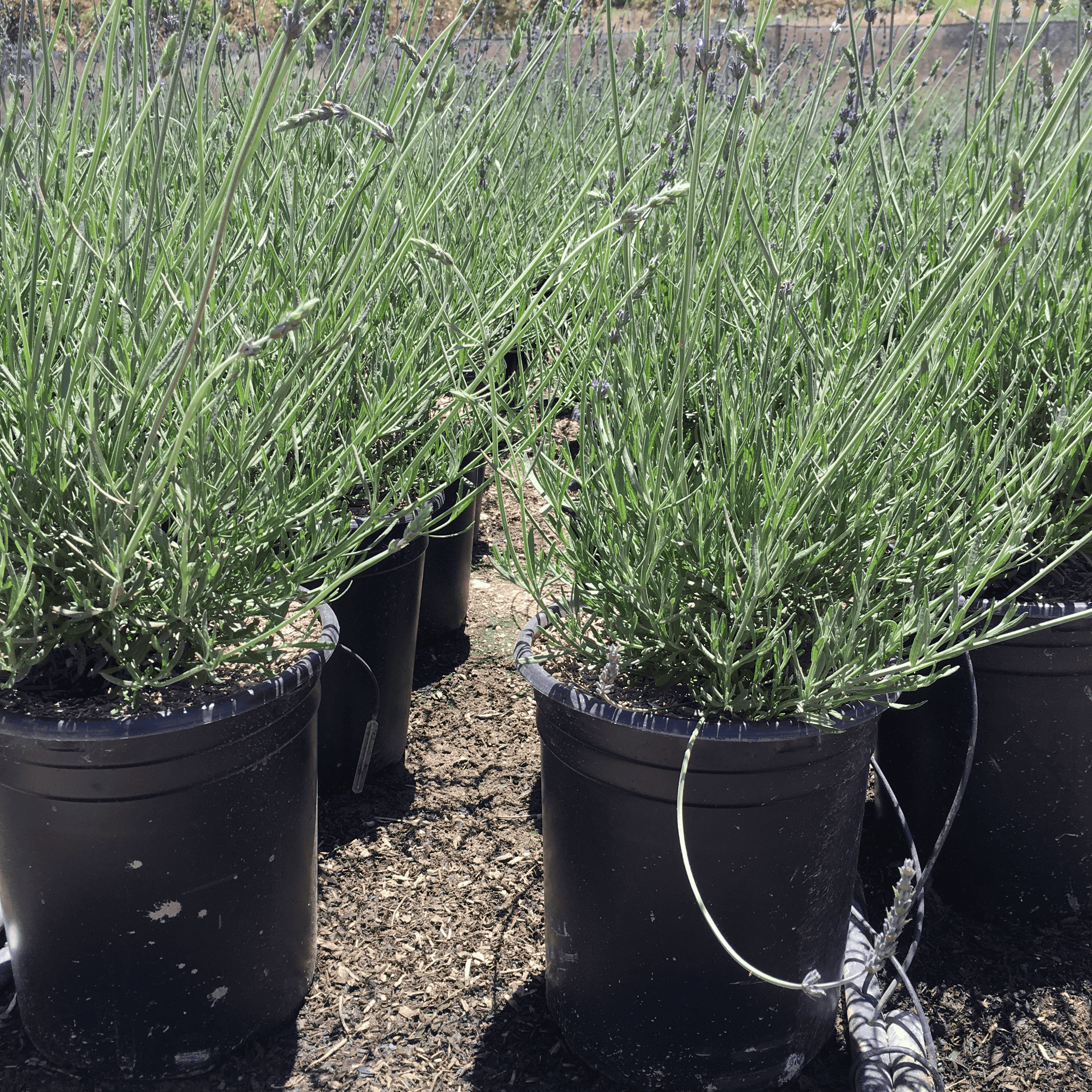
SKU: 930943639
buy english lavender plants

buy english lavender plants Lavandula Angustifolia (English Lavender) – Yardwork

Sale price$18.07 Regular price$20.08
Save 10%

Pay in installments of $5.02 with ShopPay, AfterPay and Klarna

Shipping Estimate
USA
  • USA
  • CAN

Ships within 48 hours · Estimated delivery Oct 1 - Oct 6

Promo Codes Available:

For Your Every Summer RSVP, with Code: SUMMER15

Description

buy english lavender plants Lavandula Angustifolia (English Lavender) – YardworkTransform Your Garden with Californias Most Beloved Fragrant Perennial Lavandula angustifolia, commonly known as English lavender or true lavender, is a drought tolerant, highly fragrant perennial that brings silver gray texture, purple flowers, and Mediterranean charm to California gardens with minimal water once established. Native to the Mediterranean region, this cold hardy lavender thrives in full sun, dry summers, and well drained soil, making

Transform Your Garden with California’s Most Beloved Fragrant Perennial

Lavandula angustifolia, commonly known as English lavender or true lavender, is a drought tolerant, highly fragrant perennial that brings silver-gray texture, purple flowers, and Mediterranean charm to California gardens with minimal water once established.

Native to the Mediterranean region, this cold hardy lavender thrives in full sun, dry summers, and well drained soil, making it ideal for drought-conscious landscapes, herb gardens, rock gardens, containers, and low hedge planting. English lavender grows in tidy rounded mounds, offering year-round gray green foliage and dense flower spikes that add vibrant color from late spring into summer.

Why You’ll Love English Lavender

  • Drought-tolerant once established – This plant is drought-tolerant once established, making it an excellent choice for low-maintenance gardens in dry climates. Once established, English lavender should only be watered during dry periods, approximately once a week.

  • Beautiful seasonal bloom with the potential for a second flush – English lavender produces fragrant flower spikes in late spring to summer, and deadheading spent flowers can help promote continued bloom. With proper pruning, some lavender varieties may produce more blooms or a lighter second flush later in the season.

  • Naturally deer and rabbit resistant – English lavender is deer and rabbit resistant due to its aromatic oils, which deter browsing by wildlife and help protect nearby plants.

  • Pollinator-friendly and pest-discouraging – English lavender (Lavandula angustifolia) is highly fragrant and attracts pollinators like bees and butterflies, enhancing garden biodiversity while its essential oil scent helps discourage many nuisance pests.

  • Useful beyond the garden – Lavandula angustifolia is widely used in culinary applications, aromatherapy, and high-end perfumery. Inhaling lavender vapor reduces anxiety and promotes relaxation, while harvested flowers are popular for sachets, dried arrangements, teas, desserts, and herb blends.

What Makes English Lavender Different

Many gardeners assume all lavender varieties are the same. They are not. L. angustifolia stands apart for its refined fragrance, compact form, cold tolerance, and premium essential oil quality.

Lavandula Angustifolia (English Lavender) provides:

  • More cold hardy than many other lavenders – Lavandula angustifolia is cold-hardy and can survive freezing winters, thriving in USDA Zones 5–9. Where temperatures dip, established plants may benefit from excellent drainage and, in colder areas, protective snow cover.

  • Sweeter, cleaner fragrance – True lavender is prized for essential oil with a softer, more floral character than many French, Spanish, or lavandin types. This makes English lavender especially valuable for aromatherapy, culinary use, and high-end perfumery.

  • Compact growth for real landscapes – The plant reaches a compact height of roughly 2 to 3 feet and features thin, silver-green leaves with dense flower spikes. Its rounded mounds work beautifully in a perennial border, low hedge, rock gardens, and containers.

  • Excellent flower color options – Classic cultivars offer purple and medium purple flowers, while selections such as Hidcote Blue, Angustifolia Hidcote, Royal Velvet, Buena Vista, and Sharon Roberts are loved for deep color and strong fragrance. Jean Davis offers soft pink to light pink flowers, and some cultivars produce white flowers.

  • Long garden performance with pruning – Regular pruning is essential to maintain the mounded shape of Lavandula angustifolia and prolong its lifespan. Deadheading spent flowers and pruning correctly can help promote blooming and encourage new growth without cutting into old wood.

How to Grow English Lavender Successfully

  1. Site Selection – Choose full sun and airflow
    English lavender thrives in full sun, requiring at least 6 to 8 hours of direct sunlight each day to prevent leggy growth and promote blooming. Choose an open spot with good air circulation, especially in areas where humid climates or coastal moisture can increase the risk of leaf spot.

  2. Soil Preparation – Prioritize drainage over richness
    It requires full sun and well-drained, low-fertility soil to grow optimally. The ideal soil for English lavender is sandy or gritty, well-draining, with a pH between 6.5 and 7.5; overly rich or damp soils can lead to root rot. The ideal pH level for growing Lavandula angustifolia is between 6.7 and 7.3, preferring alkaline to neutral soil.

  3. Planting and Care – Water deeply, then let soil dry
    English lavender is drought-tolerant once established, needing watering about once a week during dry periods, and should not be overwatered as this inhibits blooming. Avoid wet feet, excess moisture, and heavy organic mulch over the crown. If you use organic mulch, keep it light and pulled away from the stems.

  4. Seasonal Maintenance – Prune for more blooms and longevity
    To promote blooming, deadhead spent flowers regularly and prune the plants in spring after new growth appears, cutting about one-third of the green stalks. Avoid cutting into old wood or woody stems, which may not regrow well. Regular pruning keeps plants dense, rounded, and productive.

English lavender is much easier to propagate through stem cuttings than by growing plants from seed. To propagate English lavender, take cuttings from healthy plants in the spring or early summer, ensuring each cutting has at least two sets of leaves. After taking cuttings, place them in a well-draining potting mix and keep them moist but not soggy until roots develop, which usually takes a few weeks.

Plant Specifications

  • Genus name: Lavandula

  • Plant type: Semi-woody perennial shrub / aromatic herb

  • Botanical name: Lavandula angustifolia

  • Common names: English lavender, true lavender, common lavender

  • Mature size: The plant reaches a compact height of roughly 2 to 3 feet and features thin, silver-green leaves with dense flower spikes. Mature spread is typically about 2 to 4 feet depending on cultivar and pruning, making it easy to use the English lavender plants available from Yardwork in borders and low hedges.

  • Growth habit: Rounded mounds with narrow leaves, gray green foliage, woody stems at the base, and upright flowering stems that contrast nicely with taller ornamental grasses like Purple Fountain Grass.

  • Flowers: Purple flowers are most common, including medium purple flowers and deep purple selections. Cultivars may also produce pink, light pink flowers, or white flowers.

  • Bloom time: Late spring through summer, with possible continued bloom or a second flush when spent flowers are removed and plants are pruned correctly.

  • Sun / Water: Full sun water needs are low once established. Provide full sun and water only during dry periods, about once a week after establishment.

  • Soil: English lavender must be planted in well-draining soil with a pH between 6.5 and 7.5, as damp soils can cause root rot. Sandy soil, gritty soil, and drained soil with excellent drainage are best.

  • Ideal pH: The ideal pH level for growing Lavandula angustifolia is between 6.7 and 7.3, preferring alkaline to neutral soil.

  • Growing zone: USDA Zones 5–9. Lavender thrives in dry summers and warm conditions but does not thrive in high humidity.

  • Spacing: Space plants 24 to 36 inches apart for a low hedge, mass planting, or perennial border with good air circulation, or combine them with structural evergreens like English Laurel (Prunus laurocerasus) for layered screening.

  • Containers: Use containers with drainage holes and a gritty, well drained potting mix. Avoid saucers that hold water, and consider pairing lavender with compact companions such as Lavender Mexican Heather in mixed containers.

  • Disease notes: English lavender is susceptible to leaf spot and root rot, which can affect its health and growth. To prevent root rot in English lavender, it is essential to avoid overwatering and ensure the soil is well-draining. Leaf spot can be managed by removing affected leaves and improving air circulation around the plants.

Perfect for California Gardeners Who Want

Ideal for:

  • Drought-tolerant landscaping that still feels lush – English lavender delivers fragrance, texture, and vibrant color while reducing long-term irrigation needs and pairs beautifully with flowering trees like the Jacaranda mimosifolia.

  • Low-maintenance borders and hedging – Use English lavender in a perennial border, along pathways, as a low hedge, or pair it with other evergreen hedge plants like English laurel around patios where the aromatic foliage can be enjoyed up close.

  • Pollinator-friendly gardens – Bees and butterflies are drawn to lavender flowers, making this plant a strong choice for biodiversity-focused California landscapes and pairing beautifully with Silver Sheen Pittosporum privacy hedges.

  • Herb gardens with culinary and aromatherapy value – Harvest flower spikes for culinary use, sachets, dried flowers, essential oil projects, and relaxation rituals, and anchor nearby views with compact ornamental trees like Little Gem Dwarf Southern Magnolia.

  • Mediterranean-style and rock gardens – Lavender thrives in dry soil, sandy soil, raised beds, slopes, and rock gardens where excellent drainage prevents root rot, and it complements other Mediterranean-style shrubs like purple bougainvillea.

If you want a fragrant, water-wise garden plant that looks refined without demanding constant care, English lavenderfits beautifully.

Frequently Asked Questions

How much water does English lavender need in California?
English lavender is drought-tolerant once established, needing watering about once a week during dry periods. Avoid overwatering, because excess moisture inhibits blooming and can cause root rot. In coastal areas, plants may need less supplemental water than in hot inland gardens.

When is the best time to plant and prune English lavender?
Plant in early spring after major frost risk has passed, or in fall where winter drainage is reliable. To promote blooming, deadhead spent flowers regularly and prune the plants in spring after new growth appears, cutting about one-third of the green stalks. Avoid pruning hard into old wood.

Can English lavender survive California’s hot summers?
Yes. This plant prefers warm conditions but does not thrive in high humidity; it is best suited for drier climates similar to its native Mediterranean environment. In very hot inland regions, lavender performs best with full sun, excellent drainage, and occasional deep watering during dry periods.

How long does it take to establish and reach full size?
English lavender grows moderately and often reaches strong garden performance within 2 to 3 years. Mature size is generally 2 to 3 feet tall with a similar or wider spread, depending on cultivar, soil, sun, water, and pruning.

What are the best companion plants for English lavender?
Choose plants with similar needs: rosemary, thyme, sage, yarrow, echinacea, ornamental grasses, and other drought tolerant shrubs or herbs. Avoid pairing lavender with plants that need rich, wet soil.

How do I prevent root rot in heavy clay soils?
To prevent root rot, plant in raised beds, amend for drainage, use gritty or sandy soil, and avoid wet feet. English lavender must be planted in well-draining soil with a pH between 6.5 and 7.5, as damp soils can cause root rot. Keep organic mulch away from the crown and avoid frequent shallow watering.

How do I manage leaf spot?
Leaf spot can be managed by removing affected leaves and improving air circulation around the plants. Proper spacing, full sun, and dry foliage are the best defenses.

Ready to Add Timeless Beauty to Your Garden?

Choose Lavandula Angustifolia (English Lavender) for fragrant flower spikes, gray green foliage, pollinator activity, and low-water Mediterranean style.

Yardwork can help you select the right lavender varieties, plan spacing for a low hedge or perennial border, and prepare your soil for long-term success with their Los Angeles plant nursery and landscaping services. Ask about expert consultation services for landscape planning and soil testing services to confirm drainage and pH before planting.

Shipping Notes
  • Free Standard Shipping on $100+ Orders to the USA.
  • Except Preorder products are shipped in 48 hours.
  • Delivery to the USA:
  1. Standard Shipping : 3-10 business days
  • If time is of the essence, please consider selecting expedited delivery for faster service.
Exchange/Return Notes
  • We offer a 30-day return/exchange service after receiving.
  • Final sale items are not eligible for returns or exchanges.
  • To process your return/exchange, please contact us at [email protected]
  • Please click here for more details>>> Return & Exchange Policy
SKU: 930943639

Discover Niche Categories That Outsell buy english lavender plants

Top-Converting Item to Boost Your Average Order

4.2 ★★★★★
Based on 25 reviews
Sort
Highest Rating
Newest First
Oldest First
Product Reviews
E
Elle
Dallas, US
★★★★★ 5
Naturally sourced, quality magnesium softgels, with bioavailability and absorption support.
Size: 90 Count (Pack of 1), Size: 90 Count (Pack of 1)
As someone who’s been using magnesium for years and likes to rotate between different forms like glycinate, bisglycinate, citrate, and L-threonate. I’m always on the lookout for magnesium supplements with smart formulas, especially those that prioritize bioavailability and absorption, since I’ve had issues with nutrient absorption in the past. This marine derived magnesium in softgel form really stood out to me, as I prefer softgels for bioavailability and absorption support. I’ve never been able to find a quality, natural, non-synthetic magnesium supplement in softgel form but I feel like I finally have.This aquamin magnesium was completely new to me and I found it genuinely refreshing, as it’s a break from the usual synthetic forms. You can tell right away this isn’t just another basic magnesium supplement. I’m impressed by this being a natural form of magnesium that contains 72 trace minerals that are naturally sourced from clean Irish seawater and sustainably harvested. I really appreciate the addition of avocado oil, as it helps support better absorption of magnesium. It's also a great source of healthy fats and antioxidants. Additionally this contains an ingredient completely new to me called AstraGin, which is naturally derived from astragalus and panax notoginseng. It was clinically shown to help support enhanced absorption. I really like seeing this in this supplement facts, it’s a big bonus for me, having nutrient absorption challenges. Although, anyone would benefit from high bioavailability and support for enhanced absorption. The focus on bioavailability and absorption was a big stand out, it’s exactly what I want to see in choosing a supplement. I usually use magnesium bisglycinate because of its high absorption, but this one actually claims even higher solubility compared to both glycinate and bisglycinate. A serving size of three oblong softgels provide 600 mg of magnesium sourced from sea water, 990 mg of avocado oil and 33 mg AstraGin. I love that my body is getting the support of a new form of magnesium that is natural and pure with the benefits of avocado oil and additional absorption support. healthy fats, I found three softgels easy to swallow, but I can see how these might be more challenging to have to take three of this size for a serving. I had no aftertaste or stomach upset, these seem very gentle overall. This is a high-quality magnesium supplement that's naturally sourced, with a focus on bioavailability and absorption support, that’s been clinically tested, and made with purity and transparency in mind. This is a true standout in my magnesium rotation. If you're looking for a magnesium supplement, I highly recommend trying it.
WAS THIS REVIEW HELPFUL?YesReportShare
Reviewed in the United States on August 20, 2025
S
Verified Purchase
Susan Shain
Charlottesville, US
★★★★★ 1
Not worth it.
Size: 90 Count (Pack of 1)
NO.
WAS THIS REVIEW HELPFUL?YesReportShare
Reviewed in the United States on January 2, 2026
S
Verified Purchase
Sophia Bezirganian
Belleville, US
★★★★★ 5
Most Illuminating Psych Book I've Read
Format: Hardcover
As a psychiatrist, I have yet to read a more illuminating book on how mental illnesses can develop, and how to help patients' to become free of them. Existential Psychotherapy presents a theory of the existential forces that drive all human beings--knowledge of death, of our aloneness in the world, and of "meaninglessness" (the utter inconsequence of our one life in the entirety of the universe). It shows how these forces are powerful influences in shaping human mental health and illness. Other reviewers here point out that the basic existential issues Yalom presents are well-known to academics and to many literate people who are exposed to them in that good, broad, liberal arts education we (still?) get in college. But what Yalom achieves in this book, has not to my knowledge been accomplished before (nor since): a presentation of these ideas to an audience of clinicians in a lucid, beautifully written, way that is salient to the daily practice of psychotherapy. Yalom is a rare psychiatrist who is not only a master of the art of teaching and practicing psychiatry, but for this book, ventured into philosophy, literature, history, and sociology, and then integrated the wisdom each brings to the study of human nature, into a clear and cohesive whole, a beautifully written theory of the existential dimension of men's fears, drives, and actions, and how this dimension creates mental illness or health, depending on how each person handles it. What is amazing is how such a book is now buried in the archives of (relative) obscurity, while others, recycling the same old tired ideas, reign on. So what do these lofty insights in Yalom's book contribute that is unique and powerful to us lowly practitioners toiling daily in our offices in the (seemingly more banal) task of helping patients with daily crises, complaints, resistance to change, and painful repetitions of self-destructive life choices? One very important tool: a true understanding of the power of existential concerns, not only in creating mental illness and self-destructive life paths, but, by shining a light on them-- capturing that elusive force of change: MOTIVATION. This force, and how to harness it to help patients overcome their suffering, has for me been one of my greatest challenges as a doctor. And one for which most books on psychotherapy have fallen short in helping me tackle. In the sections "death" and "will", (two of the four main sections in the book), Yalom forges a path that I could follow, to help my patients free themselves of the fears that block motivation for change. In short, Yalom shows how the anxiety about, (and thus avoidance of) awareness of our death and aloneness, can cripple us into denial, and resistance to changing those of our behaviors that shield us from these truths. But, these very fears, when faced and reframed--as the awareness of one's finite limits, and of the freedom that comes along with one's aloneness, become extremely potent engines for change. Other peoples' judgements, and fear of failure, lead us to believe that the human "judges" are the most important threat in our lives. But in Yalom's world, these feared judgements pale in comparison to the the consequences of inaction. When we live with acute awareness that we waste our only life when we are beholden to judges who are after all, mortal and alone just like us, this can shake us up to MOVE and LIVE, in this finite life, in a way other insights cannot. This example of how avoidance of existential fears leads to anxiety, low self-worth, and depression, is but one vignette in this book. Yalom applies his theory to the gamut of mental illness, and includes discussion of how narcissism, perversions, obssessions, masochism, sadism, ...the list goes on, are fueled by existential concerns. Yalom argues that they all boil down to one of two main strategies we humans employ to "forget" Death, Aloneness, and Meaninglessness: Either we escape too much into the protective cover of the GROUP, and become mindless group robots who drone through life until illness, or loss forces us to suddenly face our mortality, at which point many of us panic, or become depressed, OR, we get sucked into this defiant delusion : "I am SPECIAL"...smarter, more rebellious, unfettered by the social conventions of meek men, thus free of death's jaws". This reaction then can lead to reckless, impulsive, pseudo "powerful" behaviors that are often the fuel of many "acting out" mental problems: addiction, sociopathy, sadism, and narcissism. Enough of my words-read and feel the power of Yalom's words in this great book.
WAS THIS REVIEW HELPFUL?YesReportShare
Reviewed in the United States on April 4, 2006
S
Verified Purchase
Searching the Stars
Dallas, US
★★★★★ 5
A Great Work on the Dynamics of the Human Condition
Format: Hardcover
Irvin Yalom, Professor Emeritus at Standford in psychiatry, has written a masterful book on the human condition (published in 1980). "Existential Psychotherapy" is singularly one of the best books I have ever read. Why? Yalom has combined 1) his intellectual insights in psychology with 2) his practical observations in therapy with 3) existential thought. He seeks to show that much of the anxiety we face as human beings, and seek comfort for in psychotherapy (or religion), originates from the existential facts of being a mortal, free being. He focuses on four main areas: death (our inner structure will go to nothing), freedom (we are forced to make momentous decisions without full information), isolation (we are alone in many fundamental ways) and meaninglessness (we don't have a clear picture of what it really means). From literature, psychology, philosophy and some theology (Tillich), Yalom has created a definitive text on what it means to open our eyes fully to our existential situation. It is not a depressive text, as the goal is to come to terms with our condition. And ironically, facing the truth of death, for example, makes life richer. This is much more than a self-help book, it is a philosophical-psychological masterpiece. I have a Ph.D. in the philosophy of religion and have published several articles in leading journals and don't give out the kind of praise I am giving here easily. It is one of the best books I have ever read, and I think a wide range of people would profit from it. Yet it's a difficult book, not an easy self-help read. But Yalom is such a clear writer that most readers could follow it. When he uses technical psychological or philosophical terms, he usually explains them. Otherwise, the dictionary must be used. This text would be helpful for people in the helping professions in giving an existential aspect to their work. Religious thinkers and those interested in philosophy should pick it up at any cost. Any educated person could profit from it greatly. It's a long text, and I had to break it up by carefully reading some from each of the main four parts simultaneously to get a view of the whole. It's a bit dry at times, but thoughtful, perceptive, educational in many fields, --it's ....wisdom literature....I can't think of a higher compliment.
WAS THIS REVIEW HELPFUL?YesReportShare
Reviewed in the United States on March 19, 2013
D
Verified Purchase
David L. Pogge, Ph.D.
Alexandria, US
★★★★★ 5
The best of its kind.
As a clinical psychologist who has been practicing, doing research on, and teaching assessment and therapy for more than 25 years I have encountered many books and many more articles and research papers on psychotherapy. While some have real value, most do little more than take up space and help the people who wrote them advance their careers. All too rarely one comes across a book that changes one's way of looking at things and helps one to approach this field in a new and qualitatively better fashion. Yalom's book on Existential Psychotherapy is one such book. I first read this when I was in graduate school in the early 1980's and just learning about psychotherapy, and about life. This book opened my eyes and gave me an over-arching way of thinking about myself, my patients, and the things that I was doing. Unlike most texts on therapy, it was not limited to the parochial "theoretical orientations" and mechanistic models of therapy technique that I was learning then and have seen proliferate ever since. Since this time I have re-read this book many times, and each time I have gotten more from it. Yalom tries to go through the collected wisdom of mankind, not just in the narrow world of scientific psychology, but in philosophy, art, and religion, to explain how everyone must face certain existential realities such a mortality, temporality, resonsibility and isolation, and how the struggle to face these basic issues underlies many of the symptoms and complaints that lead people to seek the help of mental health professionals. Unfortunately, as Yalom points out, all too often we fail to see these as such, and offer help in the form of superficial, pseudoscientific psychologizing, technical trivialities and medications that often do more harm than good. While, used humbly and wisely, these things are not without value, their value is often fatally limited by their failure to see the larger context of life and its challenges. Once having read and really thought about Yalom's book, that becomes much harder to do; and thereby inevitably enriches one's practice and one's life. Regardless what kinds of therapies and what kinds of patients one works with - or even if one's practice is limited primarily to assessment or research - this book provides a philosophical and conceptual bedrock that can inform and enrich what one does. I am so happy to see that this book is still in print, and I would encourage anyone who plans to make a living trying to be seriously involved in other people's lives to avail themselves of this book. It is a treasure and a masterpiece. I intend to us it in my classes this year and for as long as it remains in print.
WAS THIS REVIEW HELPFUL?YesReportShare
Reviewed in the United States on October 5, 2013

recommand products