SKU: 93553910707
money maker tomato yield per plant

money maker tomato yield per plant Moneymaker - Tomato Seeds

Sale price$26.20 Regular price$29.11
Save 10%

Pay in installments of $7.28 with ShopPay, AfterPay and Klarna

Shipping Estimate
USA
  • USA
  • CAN

Ships within 48 hours · Estimated delivery Sep 24 - Sep 29

Promo Codes Available:

For Your Every Summer RSVP, with Code: SUMMER15

Description

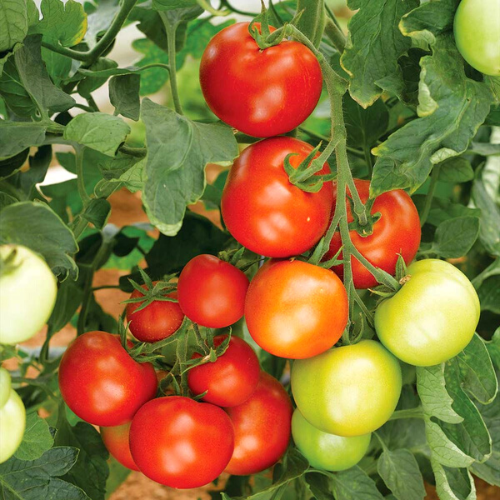
money maker tomato yield per plant Moneymaker - Tomato SeedsMoneymaker is an old English heirloom that was developed in Bristol, England, at the end of the 19th century and was introduced to the USA via seed catalogues in the early 1900s. It was one of the first tomatoes to be grown commercially, popular for its impressive yields and sweet flavour. Bred to perform in hot and humid environments, Moneymaker is a good candidate for greenhouse settings, but it can also do well in the garden. Most gardeners can

Moneymaker is an old English heirloom that was developed in Bristol, England, at the end of the 19th century and was introduced to the USA via seed catalogues in the early 1900s. It was one of the first tomatoes to be grown commercially, popular for its impressive yields and sweet flavour. Bred to perform in hot and humid environments, Moneymaker is a good candidate for greenhouse settings, but it can also do well in the garden. Most gardeners can obtain outstanding results in any climate, but the most substantial yields are attained during especially hot summers. 

The indeterminate plants will grow to 5-6 feet tall and will need support. They will reward you with loads of bright, round, medium-sized red fruits over an extended period of time. Although the flavour can vary depending on the growing conditions, it is widely considered to be one of the best tasting tomatoes, with a sweet, well-balanced, ‘’true tomato’’ flavour. Moneymaker tomatoes are excellent in salads and sandwiches and the juicy fruits can also be cooked into pasta sauces and tomato soups. Overall, a very productive variety that performs well, especially in hot and humid conditions.


- Latin Name: Solanum lycopersicum
- Life Cycle: Annual
- Days to Maturity: 80
- Planting Depth: 5 mm - 1 cm
- Plant Spacing: 45-60 cm
- Row Spacing: 120 cm
- Growth Habit: Indeterminate
- Approx. Seeds per oz: 10,000

GROWING INSTRUCTIONS

For most folks, tomatoes are an indispensable summer fruit. There are scores of heirloom varieties showcasing different shapes, sizes, colours, flavours and textures. Tap into this large selection when starting from seed. You have the ability to grow and eat your perfect tomato!

Start seeds indoors 6-8 weeks before the last spring frost date. In flats or individual pots, plant seeds at 1 cm. Make sure soil stays warm and moist. The ideal temperature for germination is 21°C. Keep seedlings under lights, a few centimeters away from the top of the plants and adjust as needed. An oscillating fan will provide the young plants some resistance. This will result in stockier stems and more structurally sound tomato plants. Seedlings should be hardened off a week prior to transplanting.

When the soil is 16°c and all danger of frost has passed it is time to transplant. Pinch off any sets of lower leaves that are yellow or faded so more of the stem can be buried. Place roots deeply into the hole to the point that the bottom leaves are just above the surface of the soil. Roots will sprout from the stalk and provide a stronger base for the plant.

Provide a site with full sun and well-drained soil. Water well, about 5cm/week, mulch and feed every two weeks. Leave fruits on the vine to ripen as long as possible.

There are two main categories of tomato plants: determinate and indeterminate.

A determinate tomato is a bush-type plant, usually reaching about three to four feet tall, making them ideal for the small-space gardener. The fruits of a determinate tomato plant ripen all at once, which is useful for those who want to grow tomatoes for canning.

Indeterminate tomatoes grow continuously until the first frost and can reach six to twenty feet in height. Indeterminate plants produce tomatoes all season long for a continuous harvest.

If indeterminate varieties are being grown, be sure to set up tall trellises or cages to support the wandering vines. One sturdy stake and some twine should suffice for determinate varieties.

Tomatoes can easily be frozen whole, but never refrigerate a tomato. This will deteriorate its fresh garden taste and texture. Enjoy fresh throughout the season and make multiple batches of sauce and salsa to savour through the winter.

QUICK FACTS

- The ancestor of the tomato is native to South America, where the wild versions are the size of peas. The Spanish first introduced tomatoes to Europe during the 1500s. Unique varieties were developed over the next several hundred years to improve production, size, shape, colour, and flavour.

- Tomato seeds will remain viable for 5 years if stored in a cool, dark place, ideally between 4 and 10⁰C. After that, the germination rate may start to go down.

Shipping Notes
  • Free Standard Shipping on $100+ Orders to the USA.
  • Except Preorder products are shipped in 48 hours.
  • Delivery to the USA:
  1. Standard Shipping : 3-10 business days
  • If time is of the essence, please consider selecting expedited delivery for faster service.
Exchange/Return Notes
  • We offer a 30-day return/exchange service after receiving.
  • Final sale items are not eligible for returns or exchanges.
  • To process your return/exchange, please contact us at [email protected]
  • Please click here for more details>>> Return & Exchange Policy
SKU: 93553910707

Discover Niche Categories That Outsell money maker tomato yield per plant

Top-Converting Item to Boost Your Average Order

4.7 ★★★★★
Based on 15 reviews
Sort
Highest Rating
Newest First
Oldest First
Product Reviews
M
mohammed
Omaha, US
★★★★★ 5
We need more people like Ross!
Format: eTextbook
Ross work is must-read for people who are enthusiasts about security or professionals in the field.
WAS THIS REVIEW HELPFUL?YesReportShare
Reviewed in the United States on December 28, 2021
Z
Verified Purchase
Znapp
Belleville, US
★★★★★ 5
An absolute must for everyone dabbling with Unity 6 Game Development
Format: Paperback
Half of this book is about C# (until Chapter 6), and the other half is about actually making games. The book is very well written, and it is everything I needed to get a few problems solved with Unity 6 projects. I love how clearly things are explained, and the only thing I wish for is that I was able to spend more time delving into this while maintaining my financial status...
WAS THIS REVIEW HELPFUL?YesReportShare
Reviewed in the United States on January 3, 2026
C
Christopher West
Carnegie, US
★★★★★ 5
A Seasoned Developer's Fresh Perspective on Game Development
Format: Paperback
Finally, a game dev book that respects your existing programming knowledge As someone who's spent two decades architecting enterprise web applications in C# and ASP.NET, I approached game development with what I thought was a solid foundation. I was wrong—not about C#, but about how differently it's applied in game engines. After five frustrating years of trying to bridge that gap through scattered tutorials and documentation, Harrison Ferrone's eighth edition finally gave me the structured path I needed. What This Book Gets Right for Experienced Developers: The pacing is deceptive. Yes, it starts with programming fundamentals, but don't skip ahead. Ferrone's approach to OOP in the context of Unity's component architecture was revelatory. In web dev, I'd been writing services, repositories, and dependency injection for years. Here, the MonoBehaviour lifecycle and component-based thinking required a genuine mental shift that the book handles exceptionally well in chapters 5-6. Chapter 10's revisit of types and methods isn't redundant—it's strategic. By this point, you've written enough Unity scripts to appreciate why game code patterns differ from traditional enterprise patterns. The discussion of value types vs reference types hits differently when you're optimizing frame rates instead of HTTP response times. The Unity 6 Update Matters: Having struggled with outdated Unity tutorials for years, the Unity 6-specific content is invaluable. The screenshots are comprehensive (full-screen mode can make text small, but the GitHub repo and graphics bundle solve this). More importantly, the code samples reflect current Unity APIs and best practices, not deprecated approaches that still litter Stack Overflow. Where It Shines for Career Transitioners: Chapters 11-13 are worth the price alone. LINQ in Unity isn't just about querying collections—it's about performance considerations I never had to think about in web apps. The coverage of generics, delegates, and events finally connected how Unity's event system relates to patterns I already knew, but in a real-time context where every allocation matters. The serialization chapter (12) bridged my understanding of data persistence from databases and JSON APIs to Unity's PlayerPrefs and ScriptableObjects. This practical grounding is what most tutorials skip. Minor Quibbles: The FPS prototype is solid for learning, but I wish there was more discussion of common anti-patterns experienced developers bring from other domains. I still catch myself over-engineering solutions when Unity's component system offers simpler approaches. Also, while the book touches on performance, those coming from async/await-heavy web development will need supplementary resources on Unity's coroutines and the Job System for more complex scenarios. Bottom Line: If you're a professional developer trying to break into game development, stop collecting random Udemy courses. This book provides the structured progression and context-appropriate examples that respects your intelligence while teaching you to think like a game developer. The C# you know is necessary but not sufficient—Ferrone bridges that gap methodically. After years of false starts, I finally have a working game prototype and, more importantly, the mental models to keep building. That's worth significantly more than the cover price. Disclosure: I received an advance review copy from Packt Publishing. This honest review reflects my genuine experience as a career-changing developer.
WAS THIS REVIEW HELPFUL?YesReportShare
Reviewed in the United States on October 21, 2025
B
Blake Lynch
Grantham, US
★★★★★ 5
A Worthy Touchstone for Anyone Who Wants to Master Unity
Format: Paperback
Harrison Ferrone’s Learning C# by Developing Games with Unity 6 is one of the strongest beginner-to-intermediate Unity guides I’ve read: carefully structured, patient in its explanations, and quietly packed with insight about how Unity 6 and C# truly work together. I read the physical edition while sitting in front of a blank Unity project, and the experience felt like having a seasoned sailor point out the currents of a river I’ve been navigating for years. You see the familiar terrain differently. The book’s early decision to spend real time on C# fundamentals is a welcome choice. Most Unity books skip past the language; Harrison slows down, defines concepts, and gives you enough clarity that when you finally enter Unity, you understand why things behave the way they do. Those chapters are dense in the best way: they prep beginners to stand on solid ground and give experienced users a clean, refreshed mental model of the language under the engine. Ferrone’s real strength is his voice. He strikes a balance I rarely see in technical writing: conversational introductions that explain what you’re about to learn and why it matters, followed by crisp, accessible technical walkthroughs. The pacing (explanation → example → implementation) is excellent. And the inclusion of ready-to-use assets removes one of the biggest barriers for new developers who want to understand systems without getting lost creating placeholder art. The book doesn’t talk down to anyone. It makes Unity feel more accessible without flattening its complexity. Beginners will come away with genuine competence; advanced users will appreciate the clear framing of new Unity 6 tools and the subtle recognition of how AI-assisted coding is shaping modern workflows. It’s a guide you can read once for understanding, then keep at your desk as a reference. If you’re a serious hobbyist, a technically inclined beginner, or someone who’s ready to work through your first real project, this is the Unity book I’d hand you first. It bridges concept and execution with clarity and confidence, and it does so with a tone that feels patient, practical, and quietly encouraging. In a space crowded with copy-paste tutorials, Harrison Ferrone has written a Unity 6 guide with real staying power.
WAS THIS REVIEW HELPFUL?YesReportShare
Reviewed in the United States on December 16, 2025
M
Mel
Dallas, US
★★★★★ 4
Pretty good beginner book, very user friendly covers Development and Design
Format: Paperback, Format: Paperback
I enjoy learning Game Dev, but I research books because many authors promise a lot and deliver half or not at all and I have to put the book down. This book was pretty good. I appreciate the author explaining things, and remember he's writing a book for beginners. There's also a good amount of pics in the book, and I dislike a book with no pics. Also, he breaks it down very simply and explains that you're not going to learn the entire Unity ecosystem, but rather a beginner-level understanding to get a person started. I enjoyed this book and will definitely go over particular info again. They have a Discord group and a newsletter with tips and it also goes over Game Design. I was surprised to see this, and maybe it's new to me, and I like the analogy of explaining complex terms. A con of the book is that as it progresses, it starts to come off as advanced in scripting, and I turned to AI for additional explanations. Still, the author did explain in advance that it's about to get more advanced, but that's me going deeper into the meaning and explanations. Other than that, it's a good read that you will go to more than once and has practical info to help you on your Unity journey.
WAS THIS REVIEW HELPFUL?YesReportShare
Reviewed in the United States on December 1, 2025

recommand products