Pay in installments of $6.34 with
 ,
,
 and
and

Shipping Estimate
USA
- USA
- CAN
- USA
- CAN
Ships within 48 hours · Estimated delivery Sep 28 - Oct 3
 Promo Codes Available:
For Your Every Summer RSVP, with Code: SUMMER15
Description
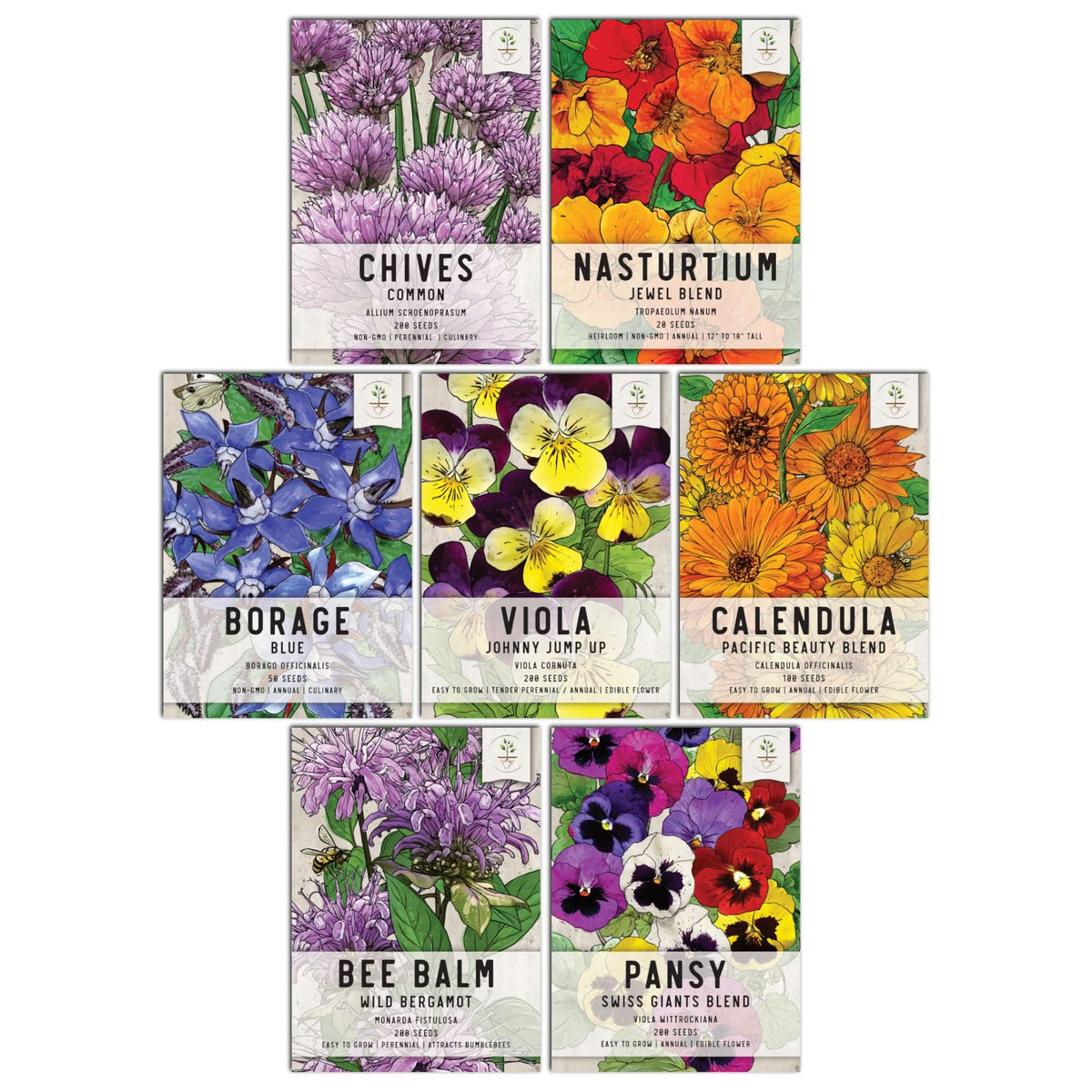
common flower seeds Edible Wildflower Seed Collection – Seed Needs LLCOur Edible Wildflower Collection contains plants that are both interesting and delicious! Believe it or not the flowers in this collection can be added to salads and other dishes as a garnish. Some popular favorites include Blue Borage, Calendula, Chives, Wild Bee Balm, Marigold, Pansies, Johnny Jump Ups and Nasturtium. The packages are 3. 25" wide by 4. 50" tall and come complete with a beautiful illustration on the front side, as well as detailed
Our Edible Wildflower Collection contains plants that are both interesting and delicious! Believe it or not the flowers in this collection can be added to salads and other dishes as a garnish. Some popular favorites include Blue Borage, Calendula, Chives, Wild Bee Balm, Marigold, Pansies, Johnny Jump Ups and Nasturtium.
The packages are 3.25" wide by 4.50" tall and come complete with a beautiful illustration on the front side, as well as detailed sowing information on the reverse. Each packet also includes a QR code that leads to additional information on the corresponding plant variety. Each packet contains a different amount of seeds, with Nasturtium being the lowest seed count of 25, and the majority of the others measuring roughly 200 seeds each.
Nasturtium, Jewel Mixture
(25 Seeds)
Nasturtium Jewel Mixture will produce unique flowers, in an assortment of warm colors, such as red, yellow, gold and orange. The flowers themselves open up to a diameter of roughly 2 or 3 inches wide, forming 3 petals on the bottom and 2 on the top. The plants will reach a mature height of roughly 12 to 18 inches tall, and spread a good 12 inches wide.
Categorized as an annual flowering plant, Nasturtium, Jewel Mixture will grow quickly from freshly harvested seeds. The plants will then bloom profusely through the summer months, later wilting with the first frost. Nasturtium seeds can be harvested at the end of the season, to regrow fresh plants the following year. The plants can often drop their seeds to the bare ground beneath, allowing new plant life to establish naturally, after the harsh temperatures of winter have passed.
Nasturtium, Jewel Mixture is not only a beautiful flower in the garden, but it is also a colorful addition to many garnishes, salads and other culinary dishes. The seeds, stems, leaves and flower heads are all edible, providing you with a sweet, yet spicy flavoring. The leaves and stems have a hot, peppery taste, while the seeds can be a substitute for capers. The flowers have a more mild flavor and are a perfect addition to omelettes & salads.
Nasturtium plants, such as the Jewel Mixture will attract all sorts of butterflies to the garden. Their leaves are often eaten by caterpillars, and other insects. However, be aware that these plants can attract some pesky insects, such as slugs and aphids. You'll be surprised to learn that they will cling to the leaves, like a moth to a flame. But keep in mind that this can be a good thing if you grow cabbage, or other crops. Many gardeners will use Nasturtium plants as a sacrificial magnet for these insects, so that their main crops can flourish.
Wild Bee Balm
(200 Seeds)
Wild Bee Balm, also known as Wild Bergamot, will produce gorgeous, lilac-pink colored blooms through the Spring and Summer months. The plants themselves will reach a mature height of roughly 36 to 48 inches tall and will produce 2 inch flowers. The leaves of this stunning plant are aromatic, and the nectar will attract all sorts of beneficial insects to the garden, such as hummingbirds, honeybees, bumblebees, butterflies and more. Several plants can easily spread out, forming mounds of color in many areas of the garden. These plants are popularly chosen for borders, along fences and paths, or directly in the garden. Wild Bee Balm is also seen in many public parks, zoos, butterfly gardens and insectaries as well.
Grown as a perennial flowering plant, Wild Bee Balm will establish a deep root system, which will allow the plants to remain dormant in the cold temperatures of the winter season. The plants can then reestablish themselves the following year, after all danger of frost has passed. When the blooms of your Wild Bee Balm plants become old and start to wilt, simply pop the heads off to replace them with new flowers. Powdery mildew can be a major issue for not only Wild Bee Balm, but most other Monarda plants as well. To prevent powdery mildew, we suggest cutting back thicker foliage, allowing air to circulate through the plants more efficiently. You can also water the plants directly at the root to avoid mildew as well.
Johnny Jump Up
(200 Seeds)
Johnny Jump Up is a delightful low growing, flowering plant that is sure to bring joy to onlookers and insects alike. It’s colorful little blooms are a mixture of beautiful violet and yellow. They are known to attract an array of beneficial insects from butterflies, bumblebees, lady bugs and even hummingbirds. Viola cornuta will grow to a graceful height of only 6 to 12 inches tall and do not require much attention once established. Each flower is roughly 1 inch in diameter and don’t mind a bit of mild crowding.
The Johnny Jump Up is not only a decorative plant, but can also be seen in salads as the flowers are in fact edible. Grown as a tender perennial in warmer regions, but often as an annual in the northern states. They will grow quickly, bloom profusely and then later die with the first frost. Viola cornuta seeds can be collected at the end of the growing season to resow the following year, or you can allow the Viola flower seeds to drop to the bare ground beneath to regrow naturally.
Johnny Jump Up is best grown in masses and can be seen in a variety of settings. Often used in pots & containers, but can be grown in flower beds or used as a border plant as well. If you are a fan of Johnny Jump Up flowers, you might also want to check out our other varieties of Viola, including “Bowles Black” & “Arkwright Ruby”. We also offer a number of colorful pansies as well.
Common Chives
(200 Seeds)
Common Chives will produce shoots that grow to a mature height of roughly 18 inches tall. Popularly used to flavor potatoes and salads, Chives are not only tasty, but are also attractive as well. Each plant displays fluffy, purple colored flowers atop slender stems / shoots. The shoots, once cut will add a slight onion flavor to any dish that they are added to. The flowers also add a mild onion flavor and can be used as a garnish.
Categorized as a perennial herb plant, common chives will establish a deep root system, later wilting on the surface with the first frost. The plants will then return the following year after all danger of frost passes. The plants can be harvested soon after they reach a few inches tall. Chives not only look great, smell great and taste great, but they also drive away pesky insects as well. Grow Common chives near any vegetables or herbs that are being tormented by unwanted insects to instantly drive them away.
Calendula, Pacific Beauty Mixture
(125 Seeds)
Featuring showy, four-inch single and double blooms in vivid shades of orange and yellow, the Calendula Pacific Beauty will provide gorgeous color all summer in the right conditions. With its four-inch flowers and full, green foliage, the Calendula Pacific Beauty makes an eye-catching addition, as it also reaches up to 24 inches in height and spreads once established in the ground.
Whether you are wanting to add bright color to a flower bed or a container garden, the Calendula Pacific Beauty does well in either setting. Expect to see lots of butterflies and bees surrounding it, as the Calendula Pacific Beauty is attractive to pollinators. Due to its height and hardiness, this makes a good cut flower, adding pleasant fragrance and color to any arrangement. It can even be dried for a long-lasting floral display.
From decoration to medicine, the Calendula Pacific Beauty is a great addition to your garden plan.
Blue Borage
(50 Seeds)
Borage is an attractive herb that is often grown for it’s deep blue, star shaped blooms. It reaches a mature height of about 12 to 24 inches tall. Borage is not only sought after for it’s beauty, but also it’s cucumber flavored leaves and attractive flowers. Both of which are often used in salads, to add flavor and color. Grown as an annual herb, Borage will grow quickly, bloom profusely and then die soon after with the first frost. Plants can return the following year if seeds drop to the earth under it, or if they are collected for resowing.
Borage herb plants will attract an array of bumblebees and are also great to grow near vegetable gardens. It is recommended to harvest the leaves of Borage herb early as they will be much more flavorful. Matured leaves begin to get tough and hairy. The flowers of Borage however can be harvested at any time. Try cutting the plants to use in a decorative vase as well!
Swiss Giants Pansy
(200 Seeds)
Swiss Giants is comprised of gorgeous, 3 inch paper like flowers in shades of red, rose, yellow, blue, purple and white. The plants reach a mature height of about 6 to 8 inches tall, making it a great flower for beds, pots, containers, window boxes and baskets.
Swiss Giants is a pretty hardy plant, grown to bloom in cooler temperatures of fall and winter. It is grown as an annual flowering plant that establishes quickly from flower seeds, blooms profusely, then later dies with very harsh temperatures. Sought after as an edible flower, the colorful blooms are often added to salads and used as a garnish.
Shipping Notes
- Free Standard Shipping on $100+ Orders to the USA.
- Except Preorder products are shipped in 48 hours.
- Delivery to the USA:
- Standard Shipping : 3-10 business days
- If time is of the essence, please consider selecting expedited delivery for faster service.
Exchange/Return Notes
- We offer a 30-day return/exchange service after receiving.
- Final sale items are not eligible for returns or exchanges.
- To process your return/exchange, please contact us at [email protected]
- Please click here for more details>>> Return & Exchange Policy