Pay in installments of $5.21 with
 ,
,
 and
and

Shipping Estimate
USA
- USA
- CAN
- USA
- CAN
Ships within 48 hours · Estimated delivery Sep 20 - Sep 25
 Promo Codes Available:
For Your Every Summer RSVP, with Code: SUMMER15
Description
pickle plant succulent flower Show 'Pickle Plant – Delosperma echinatum' Care and Growing GuideIntroducing the beautiful pickle plant, known as Delosperma echinatum, which is a fascinating succulent that belongs to the Delosperma, opens in a new tabDelosperma ice plants genus. Native to the rocky slopes and arid regions of South Africa, this unique plant has gained popularity among succulent enthusiasts for its distinctive appearance and low maintenance nature. Besides its scientific name, Delosperma echinatum, it is also known by various
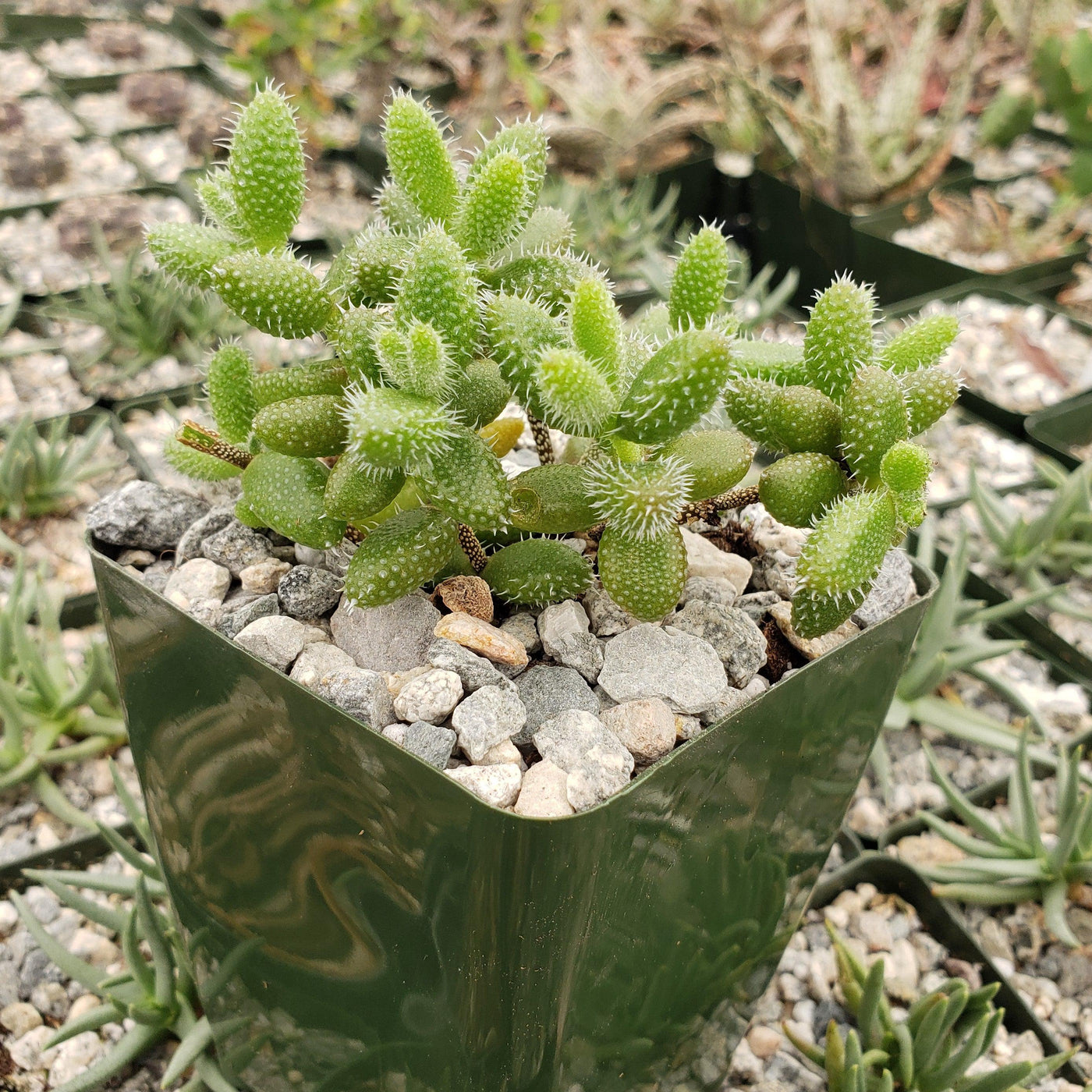
Introducing the beautiful pickle plant, known as Delosperma echinatum, which is a fascinating succulent that belongs to the Delosperma, opens in a new tabDelosperma ice plants genus. Native to the rocky slopes and arid regions of South Africa, this unique plant has gained popularity among succulent enthusiasts for its distinctive appearance and low-maintenance nature.
Besides its scientific name, Delosperma echinatum, it is also known by various common names such as the "Pickle Cactus" or "Pickle Ice Plant." The pickle plant gets its intriguing name from its peculiar resemblance to a pickled cucumber.
The fast-grower pickle plant forms dense mats or clumps.
Its leaves are cylindrical and green, with rows of tiny, white translucent hairs covering their surfaces.
These hairs or spines not only resemble pickle bristles but also serve as a protective adaptation against herbivores and excessive sunlight.
The fleshy leaves of Deosperma echinatum can store water, allowing it to withstand drought periods, similar to its variegated pickle plant counterpart.
The plant typically grows up to 18 inches long with a prostrate growth habit. When the pickle plant blooms, it produces vibrant, daisy-like pale yellow flowers that add a burst of color to its unique form. These beautiful pickle plant flowers typically appear in the spring and fall, attracting pollinators such as bees and butterflies.
Propagating the pickle plant is relatively simple. It can be propagated from seed or stem cuttings. When using stem cuttings, allow the cut ends to dry for a few days before planting them in well-draining soil. The plant is also known for its ability to self-seed, producing new seedlings nearby.
Watering Needs
To keep your pickle plant happy and healthy, you should aim to water deeply but infrequently. Allow the soil to completely dry in between waterings. This means waiting until the top inch or so of the soil feels dry before watering again.
In the spring and summer, during the growing season, you can water your pickle plant once every two weeks. In the winter months, when the plant goes dormant, you can reduce watering to once a month.
When watering your pickle plant succulent, make sure to pour the water directly onto the soil and avoid getting water on the leaves. This helps prevent the risk of rot or fungal diseases. It's also a good idea to use a pot with drainage holes to ensure excess water can escape.
Remember, every plant is unique, so it's important to monitor your pickle plant's watering needs and adjust accordingly. By providing the right amount of water at the right time, you can help your pickle plant thrive and enjoy its quirky charm.
Light Requirements
When growing your pickle plant indoors, it thrives in bright, indirect light. Place your plant near a window where it can receive plenty of bright, filtered sunlight throughout the day. Direct sunlight should be avoided because it can scorch the leaves. If you don't have a window with adequate bright light for indoor succulents, you can also use grow lights to provide enough light intensity for your pickle plant.
For outdoor cultivation, it prefers full sun or partial shade conditions. In a sunny location, the plant will receive at least six hours of direct sunlight each day. However, if you live in a region with intense heat or strong sunlight, providing some afternoon shade can protect the plant from getting sunburned.
Pro Tip
Remember, when transitioning your Delosperma echinatum pickle plant from indoors to outdoors or vice versa, it's important to acclimate it gradually to prevent shock. Start by placing the plant in a shaded area outdoors and gradually increase the amount of sunlight it receives over a few weeks.
Optimal Soil & Fertilizer Needs
For the soil, the pickle plant prefers well-draining succulent or cactus soil with coarse sand that mimics its natural habitat. Planting them in ordinary soil will result in compacted roots, stunted growth, and most likely root rot. Instead, make or buy a well-draining potting mix, or ideally use our that contains 5 natural substrates and mycorrhizae to promote the development of a strong root system that helps your pickle plant succulent to thrive. This type of soil allows excess water to flow through easily, preventing the roots from sitting in soggy wet soil.
When it comes to fertilizing your pickle plant, it doesn't require frequent fertilization, but a little boost can promote healthy growth and vibrant blooms. During the active growing season, which is typically spring, you can fertilize your pickle plant once a year or so. Use a balanced (5-10-5), water-soluble NPK fertilizer formulated for succulents. Follow the instructions on the fertilizer package for the correct dilution ratio and application method.
Remember, it's important not to over-fertilize your pickle plant, as this can lead to salt buildup and damage the roots. Always err on the side of caution and use a diluted fertilizer solution. Additionally, it's a good idea to avoid fertilizing your plant during the winter months when it goes dormant.
Hardiness Zone & More
When growing indoors, it can adapt well to a wide range of temperatures. It prefers average room temperatures between 35°F and 75°F. However, it can tolerate slightly cooler temperatures down to 50°F during the winter months. As for humidity, the pickle plant is quite adaptable and can handle average indoor humidity levels.
For outdoor cultivation, the pickle plant Delosperma echinatum is well-suited in hardiness zones 7 to 10, where the average minimum winter temperatures range from 25°F to 40°F. In these zones, the plant can be grown outdoors year-round. However, if you live in a colder climate, you can still enjoy the pickle plant by growing it in containers and bringing it indoors during the winter months.
In terms of humidity, the pickle plant can tolerate a wide range of humidity levels, from dry to moderately humid. It can handle drier conditions, making it a great choice for arid or desert-like regions.
Remember, it's always a good idea to monitor the temperature and humidity levels in your specific location and adjust accordingly to provide the best-growing conditions for your pickle plant, whether indoors or outdoors.
Final Thoughts
Overall, the pickle plant (Delosperma echinatum) is a beautiful plant that's native to the dry environments of South Africa. With its cylindrical, spiky leaves that resemble pickles, it's a fun and whimsical addition to any plant collection. This low-maintenance plant thrives in well-draining soil and can tolerate arid conditions. It forms dense mats or clumps, reaching a height of around 4 to 6 inches and spreading up to 12 inches in diameter. When it blooms, it produces vibrant, daisy-like flowers in various colors. Taking care of the pickle plant is relatively easy, as it requires minimal watering and prefers bright, indirect sunlight. Just make sure to protect it from frost and provide it with well-draining soil. It's a delightful and resilient succulent that will surely add a touch of charm to your space!
Shipping Notes
- Free Standard Shipping on $100+ Orders to the USA.
- Except Preorder products are shipped in 48 hours.
- Delivery to the USA:
- Standard Shipping : 3-10 business days
- If time is of the essence, please consider selecting expedited delivery for faster service.
Exchange/Return Notes
- We offer a 30-day return/exchange service after receiving.
- Final sale items are not eligible for returns or exchanges.
- To process your return/exchange, please contact us at [email protected]
- Please click here for more details>>> Return & Exchange Policy