Pay in installments of $5.60 with
 ,
,
 and
and

Shipping Estimate
USA
- USA
- CAN
- USA
- CAN
Ships within 48 hours · Estimated delivery Sep 27 - Oct 2
 Promo Codes Available:
For Your Every Summer RSVP, with Code: SUMMER15
Description
build your own succulent phoenix Buy African Ocotillo Phoenix, AZ | Alluaudia proceraMadagascar's Exotic Desert Sculpture for Phoenix Landscapes African Ocotillo African Ocotillo (Alluaudia procera) is one of the most unusual and eye catching plants available for Phoenix area landscapes. Native to the spiny forests of southern Madagascar, this tall, columnar succulent features upright stems lined with small leaves and short thorns, creating a silhouette that resembles the native Arizona Ocotillo but with a distinctly tropical
Madagascar's Exotic Desert Sculpture for Phoenix Landscapes — African Ocotillo
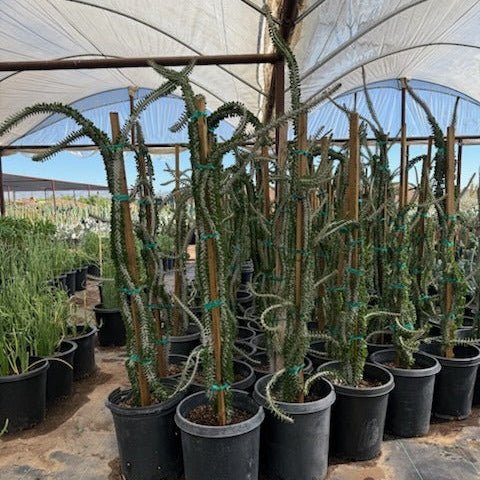
African Ocotillo (Alluaudia procera) is one of the most unusual and eye-catching plants available for Phoenix-area landscapes. Native to the spiny forests of southern Madagascar, this tall, columnar succulent features upright stems lined with small leaves and short thorns, creating a silhouette that resembles the native Arizona Ocotillo but with a distinctly tropical character. Growing 10–20 feet tall in Phoenix, African Ocotillo adds instant architectural drama to Scottsdale courtyards, Gilbert xeriscape gardens, and Chandler modern desert designs. Extremely drought-tolerant and heat-loving, it thrives in the Phoenix Valley's hottest microclimates with almost zero supplemental care.
African Ocotillo Plant Details
| Attribute | Detail |
|---|---|
| Scientific Name | Alluaudia procera |
| Common Names | African Ocotillo, Madagascar Ocotillo, Alluaudia |
| Mature Height | 10–20 feet in Phoenix landscapes |
| Mature Width | 3–6 feet (multi-stemmed clump) |
| Growth Rate | Moderate — 1–2 feet per year in full Phoenix sun |
| Sun | Full sun (6+ hrs). Loves reflected heat from walls and pavement. |
| Water | Very low once established. Stores water in stems. |
| USDA Zones | 9b–12 (Phoenix is Zone 9b–10a — protect from hard frost below 28°F) |
| Soil | Well-draining required. Thrives in sandy, rocky Arizona soils and caliche. |
| Foliage | Semi-deciduous — small round leaves along stems in warm months, may drop in winter drought |
| Native Origin | Southern Madagascar spiny forest — adapted to extreme heat and drought |
African Ocotillo Uses in Phoenix Landscapes
Architectural Specimen & Focal Point
A single African Ocotillo creates a stunning vertical statement in any front yard, courtyard, or entryway. The upright multi-stemmed form casts dramatic shadows against stucco walls, especially when uplighted at night. Plant a 15–25 gallon specimen in a prominent gravel bed in Scottsdale, Paradise Valley, or North Phoenix for instant sculptural impact. The exotic silhouette is unlike anything else in the Arizona landscape palette.
Modern Desert & Collector Gardens
African Ocotillo is a prized specimen for plant collectors and landscape designers seeking rare, conversation-starting plants. Pair with Madagascar Palm, Boojum Tree, and Firestick Euphorbia for a curated "world desert" garden theme. In Mesa, Tempe, and Gilbert, group 2–3 at staggered heights with native Ocotillo for a striking comparison between the Arizona and Madagascar desert forms.
Pool-Friendly & Courtyard Plantings
African Ocotillo drops minimal litter and has a narrow, upright footprint — ideal for tight spaces beside pools, along narrow walkways, and in walled courtyards across Chandler and Peoria. The stems won't encroach on structures, and the shallow root system won't damage pool equipment or foundations. Plant 3–4 feet from high-traffic areas due to the small thorns along the stems.
Living Screen & Vertical Accent
Plant multiple African Ocotillo 3–4 feet apart to create a semi-transparent living screen with a completely unique aesthetic. Unlike a solid hedge, the vertical stems filter views while maintaining light and airflow — perfect for privacy without the heavy feel of a traditional hedge wall.
Best Time to Plant African Ocotillo in Phoenix
Spring (April–May) is the ideal planting window when warm soil and rising temperatures fuel rapid root establishment. Fall (October) works as a second option. Never plant in winter — African Ocotillo is frost-sensitive and needs warm soil to establish. Protect from hard freezes below 28°F with frost cloth during the first 2–3 winters until well established.
How to Plant African Ocotillo
- Dig wide, not deep — 2–3x the root ball width, same depth. Do not bury the stem base deeper than it was in the pot.
- Ensure excellent drainage — break through any caliche layer. Root rot from standing water is the primary killer.
- Backfill with native soil — a 70/30 mix of native soil to pumice or coarse sand is ideal.
- Spacing — 4–5 feet from structures; 3–4 feet between multiple specimens for a screen effect.
- Stake if needed — tall specimens may need temporary support for the first 6 months until roots anchor.
- Gravel mulch — 2–3 inches of decomposed granite. Avoid organic mulch that traps moisture.
Watering African Ocotillo in Phoenix
First Year Watering Schedule
- Weeks 1–2: Water once deeply, then let soil dry completely (7–10 days).
- Months 1–3: Every 10–14 days in warm months.
- Months 4–12: Every 2–3 weeks in summer; stop or dramatically reduce in winter.
- After Year 1: Every 3–4 weeks in summer; little to no water in winter. The stems store moisture.
Drip Irrigation
Place 1–2 emitters (1 GPH) 12–18 inches from the base. African Ocotillo is extremely drought-tolerant and far more likely to die from overwatering than from drought. When in doubt, skip a cycle. If stems look plump and firm, the plant has plenty of water reserves.
How fast does African Ocotillo grow in Phoenix?
Moderate — expect 1–2 feet of height per year in full sun with well-draining soil. A 5-gallon plant can reach 8–10 feet within 4–5 years. Larger specimens (15–25 gallon) provide immediate height and presence.
Is African Ocotillo related to Arizona Ocotillo?
No — despite the similar common name, they're completely unrelated. Arizona Ocotillo (Fouquieria splendens) is native to the Sonoran Desert. African Ocotillo (Alluaudia procera) is from Madagascar. They share a similar upright, multi-stemmed growth habit, which is why they share the common name, but they belong to entirely different plant families.
Is African Ocotillo frost hardy in Phoenix?
It handles most Phoenix winters without issue, but hard freezes below 28°F can damage stem tips. Cover with frost cloth during cold snaps for the first few years. Established specimens in warm microclimates (south-facing walls, central Phoenix) rarely need protection.
Does African Ocotillo have thorns?
Yes, small thorns line the stems — they're much smaller and less aggressive than Arizona Ocotillo thorns, but still worth noting. Plant away from high-traffic walkways and play areas.
You May Also Like
- Ocotillo (Native) — Arizona's own version with a similar dramatic silhouette and red spring blooms.
- Madagascar Palm — another Madagascar native with a thick spiny trunk and tropical leaf crown.
- Boojum Tree — a bizarre, tapered desert tree that pairs dramatically with African Ocotillo.
- Firestick Euphorbia — adds vivid orange-red color contrast at the base of tall African Ocotillo stems.
- Moroccan Mound — a dense, mounding euphorbia that contrasts with African Ocotillo's vertical form.
How Many African Ocotillo Do I Need?
African Ocotillo is an architectural specimen, so think in terms of grouping rather than a hedge. At a mature width of 3 to 6 feet, use this guide:
| Planting Goal | Spacing & Count |
|---|---|
| Single focal point | 1 specimen, 4 to 5 ft from walls and structures |
| Sculptural cluster | Odd-numbered group of 3, spaced 4 ft apart so each column stands clear |
| Semi-transparent screen | Plant 3 to 4 ft on center along the run (about 3 plants per 10 ft) |
Keep the small stem thorns 3 to 4 feet back from walkways, patios, and pool decks.
African Ocotillo Season-by-Season in Phoenix
- Spring (Feb–Apr): The best planting window. Warming soil triggers a flush of small round leaves along every stem. Growth accelerates as nights warm.
- Summer (May–Sep): Peak season. Thrives in extreme and reflected heat that stresses most plants, and welcomes monsoon humidity. Needs only an occasional deep soak.
- Fall (Oct–Nov): Growth continues in the warm soil. A workable second planting window early in the season before nights cool.
- Winter (Dec–Jan): Frost-sensitive. Leaves may drop and stem tips can burn below 28°F. Cover with frost cloth on hard-freeze nights, especially for the first 2 to 3 winters and in cold low spots.
At a Glance
✔ Heat-Loving (Reflected-Heat Tolerant) ✔ Drought-Tolerant ✔ Pool-Friendly (Low-Litter) ✔ Low-Maintenance ✔ Deer & Rabbit-Resistant
Plant It With
- Boojum Tree: another bizarre tapered desert form for a collector's "world desert" grouping.
- Madagascar Palm: a fellow Madagascar native with a thick spiny trunk and tropical crown.
- Madagascar Palm (Pachypodium geayi): slender silver-trunked cousin to layer in varied heights.
- Variegated Lucky Cactus: vivid columnar euphorbia for color contrast at the base.
Is African Ocotillo Right for Your Yard?
African Ocotillo thrives in full sun and reflected heat, needs sharply draining soil (break through caliche and avoid organic mulch), and asks for very little water once established. Its narrow upright footprint suits courtyards and poolside beds. Not a fit if your site sees regular hard frosts below 28°F with no warm microclimate or frost-cloth plan, since cold can burn the stem tips.
Shipping Notes
- Free Standard Shipping on $100+ Orders to the USA.
- Except Preorder products are shipped in 48 hours.
- Delivery to the USA:
- Standard Shipping : 3-10 business days
- If time is of the essence, please consider selecting expedited delivery for faster service.
Exchange/Return Notes
- We offer a 30-day return/exchange service after receiving.
- Final sale items are not eligible for returns or exchanges.
- To process your return/exchange, please contact us at [email protected]
- Please click here for more details>>> Return & Exchange Policy