Pay in installments of $6.18 with
 ,
,
 and
and

Shipping Estimate
USA
- USA
- CAN
- USA
- CAN
Ships within 48 hours · Estimated delivery Oct 14 - Oct 19
 Promo Codes Available:
For Your Every Summer RSVP, with Code: SUMMER15
Description
sedum donkey tail succulent Sedum Burrito – Succulent Factory IndiaSedum morganianum 'Burrito', more commonly known as Burro's Tail, is a captivating and highly sought after succulent. This unique plant is celebrated for its long, trailing stems covered in chubby, teardrop shaped leaves, creating a beautiful and distinctive cascading effect. Its graceful, rope like appearance makes it an ideal choice for hanging baskets, high shelves, or as a trailing element in a succulent arrangement. Detailed Description Sedum
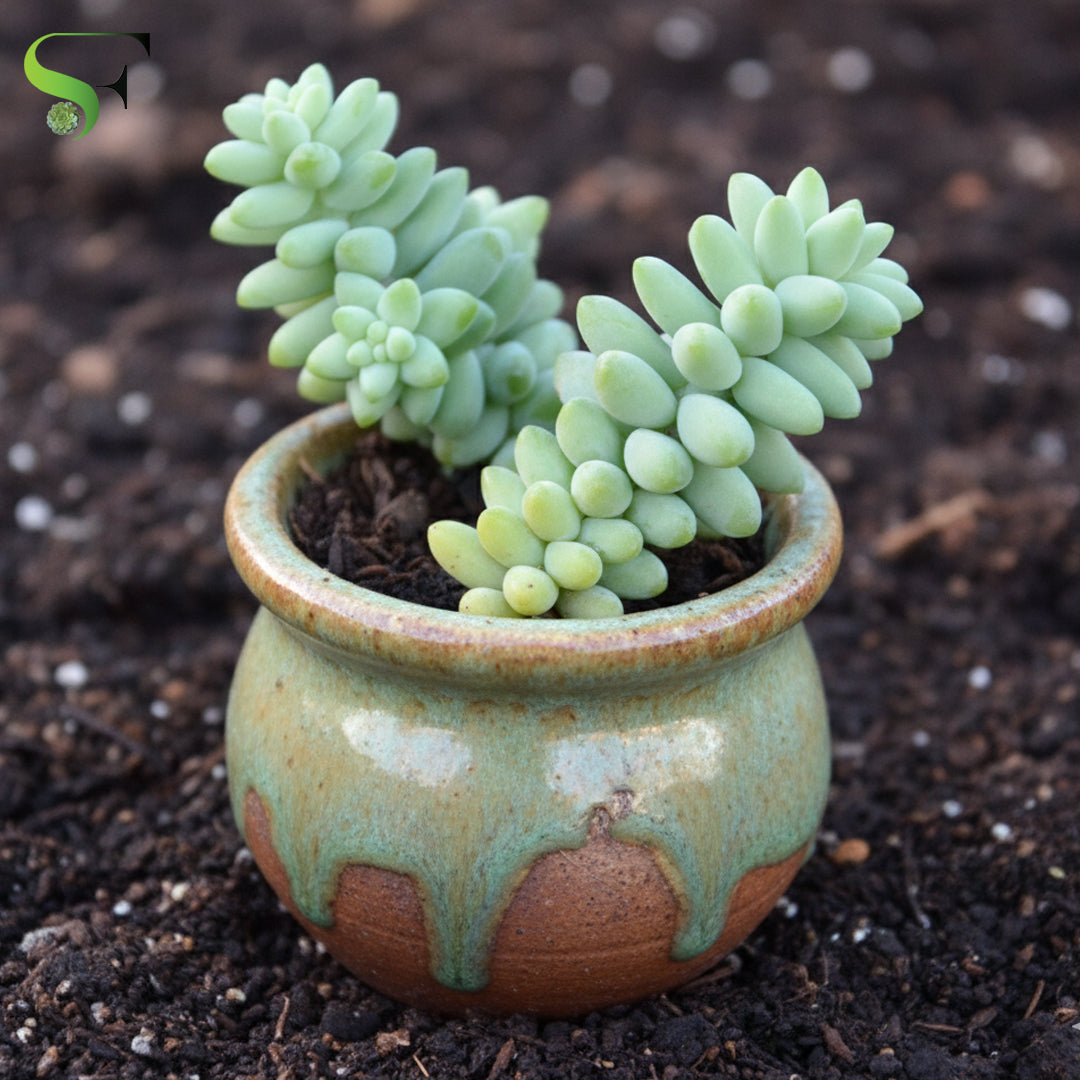
Sedum morganianum 'Burrito', more commonly known as Burro's Tail, is a captivating and highly sought-after succulent. This unique plant is celebrated for its long, trailing stems covered in chubby, teardrop-shaped leaves, creating a beautiful and distinctive cascading effect. Its graceful, rope-like appearance makes it an ideal choice for hanging baskets, high shelves, or as a trailing element in a succulent arrangement.
Detailed Description
Sedum morganianum 'Burrito' is a perennial succulent that forms long, pendulous stems. The stems can grow to several feet in length and are densely covered with plump, blue-green to pale-green leaves. The leaves are typically shorter and rounder than those of the classic Burro's Tail (Sedum morganianum), which gives the 'Burrito' cultivar its name.
The leaves are delicate and can easily fall off with the slightest touch, but this is a natural characteristic of the plant and also makes it very easy to propagate. The plant's overall form creates a stunning visual display as it cascades over the side of its container.
In late spring and summer, mature plants can produce small, pink or red flowers at the tips of the stems, adding a delicate touch of color.
Growing Tips
This succulent is relatively easy to care for, but it has specific needs to thrive, particularly regarding its delicate leaves.
-
Sunlight: Burro's Tail thrives in bright, indirect light to partial sun. To maintain its compact leaf growth and prevent legginess, provide at least 4-6 hours of bright light per day. Too much direct, harsh sun can scorch the leaves, while too little light can cause the stems to stretch out and the leaves to be more spaced out.
-
Fertilizing: Fertilize sparingly. During the active growing season (spring and summer), a diluted, balanced succulent or cactus fertilizer can be applied once every two to three months. Avoid fertilizing in the fall and winter.
-
Handling: The leaves are very fragile. It's best to handle the plant as little as possible to avoid dislodging the leaves.
Temperature and Hardiness
Sedum morganianum 'Burrito' prefers warm, dry conditions.
-
Temperature: It thrives in average room temperatures between 65°F and 80°F (18°C to 27°C).
-
Hardiness Zones: It is not frost-tolerant and should be protected from freezing temperatures. It is hardy in USDA zones 10-11 and should be grown as a houseplant or in a greenhouse in colder climates.
Water Requirements
Overwatering is the biggest threat to this plant. It is highly drought-tolerant and stores a significant amount of water in its leaves.
-
Watering Frequency: Use the "soak and dry" method. Allow the soil to dry out completely before watering again. When you do water, do so deeply, but take care to avoid getting water on the leaves, as this can cause them to rot or fall off.
-
Seasonal Changes: Reduce watering significantly in the cooler, less active months. The plant can go for a month or more without water during the winter.
Soil Preparation
Well-draining soil is crucial for the health of your Burro's Tail.
-
Ideal Mix: A commercial succulent or cactus potting mix is a perfect choice.
-
DIY Mix: You can create your own gritty mix by combining regular potting soil with inorganic materials like perlite, pumice, or coarse sand. A mix with at least 50% inorganic material is highly recommended for optimal drainage.
-
Potting: Always use a pot with a drainage hole. Hanging baskets are a popular choice to showcase the plant's cascading stems.
Propagation
Propagating Burro's Tail is remarkably easy and is one of the plant's most appealing features.
-
Leaf Cuttings: The fallen leaves can be used to grow new plants.
-
Gently place the leaves on top of well-draining soil. Do not bury them.
-
Keep the soil slightly moist by misting it occasionally.
-
Be patient; it may take a few weeks or months, but new roots and a tiny plantlet will eventually emerge from the base of the leaf.
-
-
Stem Cuttings: This is the fastest way to get a new, larger plant.
-
Take a healthy stem cutting that is a few inches long.
-
Allow the cut end to "callous over" for a day or two to prevent rot.
-
Plant the cutting directly into well-draining soil.
-
Water sparingly until the new plant has established roots.
-
#SedumBurrito #BurrosTail #Succulent #HangingBasket #SucculentCare #PlantPropagation #DroughtTolerant #TrailingPlants #GardeningTips #IndoorPlants
Shipping Notes
- Free Standard Shipping on $100+ Orders to the USA.
- Except Preorder products are shipped in 48 hours.
- Delivery to the USA:
- Standard Shipping : 3-10 business days
- If time is of the essence, please consider selecting expedited delivery for faster service.
Exchange/Return Notes
- We offer a 30-day return/exchange service after receiving.
- Final sale items are not eligible for returns or exchanges.
- To process your return/exchange, please contact us at [email protected]
- Please click here for more details>>> Return & Exchange Policy