Pay in installments of $5.76 with
 ,
,
 and
and

Shipping Estimate
USA
- USA
- CAN
- USA
- CAN
Ships within 48 hours · Estimated delivery Oct 20 - Oct 25
 Promo Codes Available:
For Your Every Summer RSVP, with Code: SUMMER15
Description
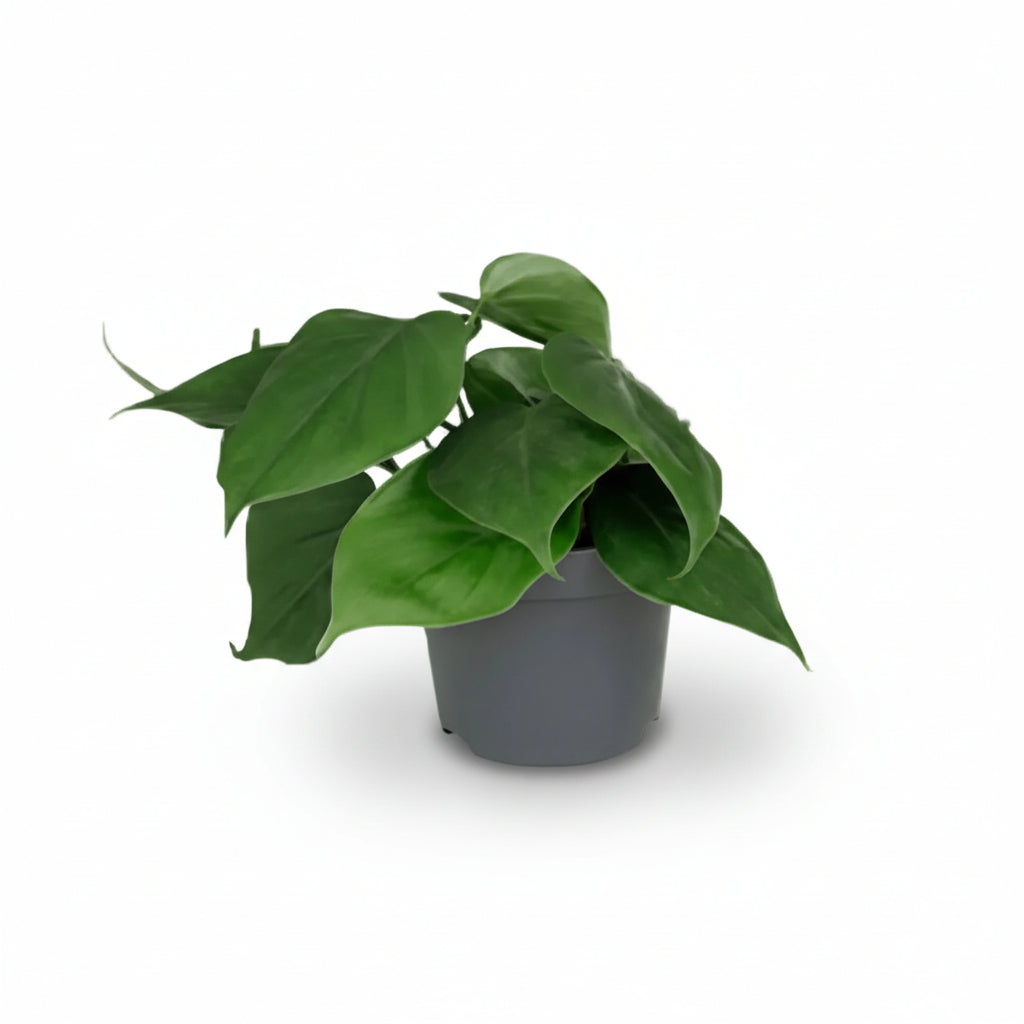
philodendron houseplant vine Philodendron scandens — Climbing Heart VineShiny tender green heart shaped foliage Trailing or climbing habit Tolerates low light Moderate watering Fast growth 3 sizes available The Philodendron scandens, also known as the heart vine, is a climbing or trailing plant native to the tropical forests of Central and South America, prized for its soft, shiny tender green heart shaped leaves. Its flexible stems and cordate leaves create a romantic and natural effect that suits any setting cascading
🌿 Shiny tender green heart-shaped foliage • 🌱 Trailing or climbing habit • 🌑 Tolerates low light • 💧 Moderate watering • 🚀 Fast growth • 🏙️ 3 sizes available
The Philodendron scandens, also known as the heart vine, is a climbing or trailing plant native to the tropical forests of Central and South America, prized for its soft, shiny tender green heart-shaped leaves. Its flexible stems and cordate leaves create a romantic and natural effect that suits any setting — cascading from a shelf, hanging like a curtain from a support, or forming a leafy cloud in a hanging planter.
Its exceptional tolerance to low light and rapid growth make it one of the most versatile trailing plants in the decorative trailing plants collection and the low-light plants selection.
Which Philodendron variety to choose?
The Philodendron genus includes dozens of species with very distinct shapes. Here’s how to place the Philodendron scandens among the references in the Philodendron collection — to choose between a Philodendron and a Monstera, as both genera often share the same locations and uses:
- Philodendron scandens (this plant) — shiny tender green cordate leaves, very flexible trailing or climbing habit. The most versatile and easiest to care for in the range.
- Philodendron Birkin — dark green foliage with fine white stripes, compact upright habit. The choice for precise graphic appeal and a more structured form.
- Philodendron melanochrysum — large velvety dark green leaves with light veins, climbing habit. The choice for spectacular XXL foliage and rare velvety texture.
- Philodendron White Princess — white and green variegated foliage, upright habit. The choice for striking variegation and very graphic leaves.
- Philodendron Diamond Variegata — elegant green and cream marbling. The choice for softer, more natural variegation.
- Philodendron Pedatum — spectacularly cut foliage, climbing habit, large size. The choice for a very architectural tropical effect in a large space.
Light & placement
Philodendron scandens is one of the few tropical plants that truly tolerates low light — a rare asset that makes it the ideal solution for dark rooms and corners without direct windows where most tropicals refuse to thrive.
- Light: indirect to partial shade — tolerates shade, just avoid direct sunlight which burns the leaves.
- Locations: bedroom, bathroom, office, dimly lit hallway — anywhere few plants survive.
- Temperature: 15 to 27 °C, tolerates moderate fluctuations.
When hanging near a window, grow it trailing — on a moss pole in a less bright corner, grow it climbing to enjoy its fast growth and quickly cover a wall or shelf.
Watering & care
Philodendron scandens prefers a slightly moist but never soggy substrate — let the top 3 to 5 centimeters dry out between waterings, a rule valid for most indoor tropical plants.
- Frequency: about once a week in spring-summer, every two weeks in winter.
- Drainage: essential — use a pot with drainage holes and well-draining substrate.
- Humidity: occasionally mist the foliage to replicate the tropical atmosphere.
- Fertilizer: a liquid fertilizer for green plants diluted once a month in spring and summer.
- Pruning: pinch stems regularly to encourage branching and a bushier habit.
Philodendron scandens roots very easily in water — cut a stem with a node, place it in a glass of water, and roots appear in 2 to 3 weeks, just as described for tropical plant cuttings.
Decor ideas & plant pairings
The flexibility and fast growth of Philodendron scandens make it an ideal structural plant for hanging arrangements — it quickly fills empty spaces and adds volume in the darkest corners.
- For a very graphic trio hanging arrangement, pair Philodendron scandens with a Pothos and a Monstera adansonii — the heart-shaped leaves of scandens, the marbled leaves of Pothos, and the perforated leaves of Monstera create three very complementary textures in the same green palette.
- On a moss pole in a dim corner, let Philodendron scandens climb a moss pole — its tolerance to partial shade makes it one of the few plants to quickly cover a wall or shelf in less sunny spaces.
- For a contrast foliage pairing, place it alongside a Calathea Lancifolia — the smooth, shiny cordate leaves of Philodendron contrast with the elongated, spotted leaves of Calathea for a very dynamic tropical composition.
- In a macramé or natural fiber decorative pot, the trailing stems of Philodendron scandens create a natural cascading effect that is very elegant — choose a hanging decorative pot in white ceramic or terracotta to highlight the softness of the tender green foliage.
Verdeia Tips
- Pinch stems regularly for a bushier habit: left unpruned, Philodendron scandens produces long, sparsely branched stems — pinching the tips encourages new lateral shoots and a dense, generous silhouette that is much more decorative.
- Choose your growing style from the start: trailing in a hanging planter for an elegant cascading effect, or climbing on a moss pole for larger leaves and more pronounced fenestrations — both styles give very different results and the decision is made from the beginning.
- Propagate regularly to thicken the plant: cut the longest stems, replant them directly in the mother plant’s pot — within a few weeks, new shoots emerge and the plant becomes much fuller and more voluminous.
Technical specifications
- Botanical name: Philodendron scandens
- Common name: Heart vine
- Family: Araceae
- Origin: Tropical forests of Central and South America
- Dimensions at delivery: 🏙️ 3 sizes available — H15 cm | Pot Ø12 cm, H20 cm | Pot Ø12 cm, H120 cm | Pot Ø24 cm
- Habit: Trailing or climbing depending on support
- Light: Indirect to partial shade, tolerates low light
- Watering: Moderate, let 3-5 cm dry on surface between waterings
- Temperature: 15 – 27 °C
- Care: Very easy
- Toxicity: Toxic to pets and children (calcium oxalate crystals)
- Decor style: Tropical / Trailing / Versatile
Each plant is unique: photos show an example of its appearance. Leaf density and stem length naturally vary depending on light, humidity, and season.
Shipping Notes
- Free Standard Shipping on $100+ Orders to the USA.
- Except Preorder products are shipped in 48 hours.
- Delivery to the USA:
- Standard Shipping : 3-10 business days
- If time is of the essence, please consider selecting expedited delivery for faster service.
Exchange/Return Notes
- We offer a 30-day return/exchange service after receiving.
- Final sale items are not eligible for returns or exchanges.
- To process your return/exchange, please contact us at [email protected]
- Please click here for more details>>> Return & Exchange Policy