SKU: 32125047965
handschuhe mit heizung preisvergleich

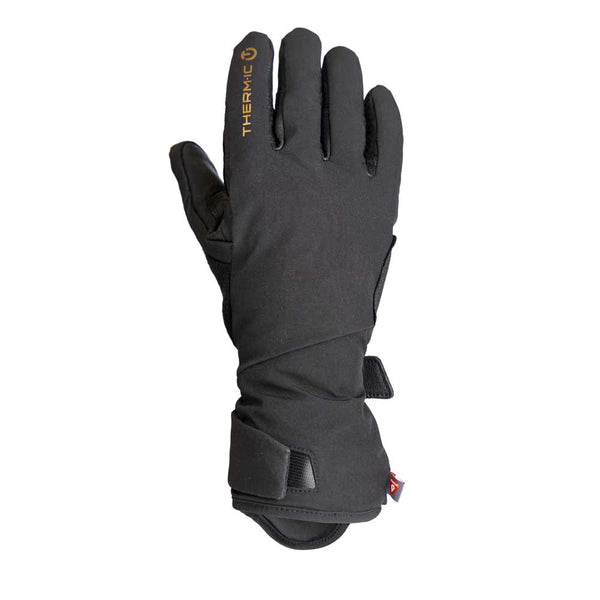
handschuhe mit heizung preisvergleich Grip Ultra Heat leichte beheizbare Handschuhe

Sale price$22.47 Regular price$24.97
Save 10%

Pay in installments of $6.24 with ShopPay, AfterPay and Klarna

Shipping Estimate
USA
  • USA
  • CAN

Ships within 48 hours · Estimated delivery Jul 29 - Aug 3

Promo Codes Available:

For Your Every Summer RSVP, with Code: SUMMER15

Description

handschuhe mit heizung preisvergleich Grip Ultra Heat leichte beheizbare HandschuheMit diesen beheizbaren Lederhandschuhen, die speziell fr Widerstandsfhigkeit, Wrme und Beweglichkeit entwickelt wurden, sind Sie fr die unterschiedlichsten Bedingungen bei Ihren Ausflgen in die Berge bestens gerstet. Ob Sie durch einen Wald wandern, Felsen erklimmen oder ber pulvrige Felder rasen dank ihres robusten Designs und ihrer fortschrittlichen Heiztechnologie passen sich diese Handschuhe jeder Situation an. Die Handschuhe sind aus extrem

Mit diesen beheizbaren Lederhandschuhen, die speziell für Widerstandsfähigkeit, Wärme und Beweglichkeit entwickelt wurden, sind Sie für die unterschiedlichsten Bedingungen bei Ihren Ausflügen in die Berge bestens gerüstet. Ob Sie durch einen Wald wandern, Felsen erklimmen oder über pulvrige Felder rasen – dank ihres robusten Designs und ihrer fortschrittlichen Heiztechnologie passen sich diese Handschuhe jeder Situation an.

Die Handschuhe sind aus extrem strapazierfähigem Ziegenleder gefertigt und mit Pittards® Amor-tan-Lederverstärkungen und Kevlar-Nähten ausgestattet, die für zusätzliche Strapazierfähigkeit gegen Abrieb und maximalen Schutz sorgen. Die 10K10K-Membran sorgt für optimale Wasserdichtigkeit und Atmungsaktivität und hält Ihre Hände trocken, egal wie die Bedingungen draußen sind oder wie intensiv die Anstrengung ist.

Um eine konstante Wärme zu gewährleisten, ist die Primaloft® Gold-Isolierung strategisch verteilt: 80 g Isolierung auf der Handfläche für mehr Beweglichkeit und 266 g auf dem Handrücken für zusätzlichen Schutz vor Kälte. Das integrierte Heizsystem verteilt die Wärme 360° um die Finger und bietet 3 Heizstufen mit einer Autonomie von 6 Std., um sich an Temperaturschwankungen anzupassen.

Der vorgeformte Schnitt und die umgeschlagenen Nähte auf der Höhe der Finger sorgen für optimalen Komfort, während das Ärmelband für einen präzisen Sitz am Handgelenk sorgt und verhindert, dass kalte Luft in den Handschuh eindringt.

Geeignet für: Bergsteigen, Winterwandern, Skitouren, Radfahren, Freeride-Skifahren, Eisklettern und Expeditionen bei kaltem Wetter.

Hauptmerkmale:

  • Außergewöhnliche Strapazierfähigkeit: Ziegenleder, verstärkt mit Pittards® Amor-tan-Einsätzen und Kevlar-Nähten für maximale Abriebfestigkeit und Haltbarkeit.
  • Garantierte Beweglichkeit: Vorgeformte Konstruktion ohne überschüssiges Material an der Handfläche für verbesserte Fingerfertigkeit und kurze Stulpe für optimale Bewegungsfreiheit.
  • Hochwertige Wärmeisolierung: Die Primaloft® Gold-Isolierung speichert die Wärme und bietet einen wirksamen Kälteschutz, während die Feuchtigkeit von der Haut weggeleitet wird.
  • Regulierbare Heizung: 360° Heizsystem mit 3 Heizstufen und 6h Autonomie zur Anpassung an die Außenbedingungen.

Spezifikationen:

  • Materialien: Ziegenleder, Verstärkungen aus Pittards® Amor-Tan-Leder, Kevlar®-Nähte.
  • Membrane: 10K10K für optimale Wasserdichtigkeit und Atmungsaktivität
  • Isolierung: Primaloft® Gold (80 g auf der Handfläche, 266 g auf dem Handrücken)
  • Beheizbar: 360°-System mit 3 Wärmestufen, 6h Autonomie
  • Komfort: vorgeformter Schnitt, umgeschlagene Nähte, Verstellriemen am Handgelenk

Suchen Sie nach Ersatzakkus? Sehen Sie sich die Ersatzakkus an, die mit diesen Handschuhen kompatibel sind.


      Shipping Notes
      • Free Standard Shipping on $100+ Orders to the USA.
      • Except Preorder products are shipped in 48 hours.
      • Delivery to the USA:
      1. Standard Shipping : 3-10 business days
      • If time is of the essence, please consider selecting expedited delivery for faster service.
      Exchange/Return Notes
      • We offer a 30-day return/exchange service after receiving.
      • Final sale items are not eligible for returns or exchanges.
      • To process your return/exchange, please contact us at [email protected]
      • Please click here for more details>>> Return & Exchange Policy
      SKU: 32125047965

      Discover Niche Categories That Outsell handschuhe mit heizung preisvergleich

      Top-Converting Item to Boost Your Average Order

      4.6 ★★★★★
      Based on 22 reviews
      Sort
      Highest Rating
      Newest First
      Oldest First
      Product Reviews
      J
      Verified Purchase
      Jerry Saperstein
      Bozeman, US
      ★★★★★ 5
      A valuable book for non-lawyers and lawyers
      Why would non-lawyers want to read a book on persuading judges? For several reasons actually. First, many of us are involved in work that requires persuading others to adopt our views. While legal argument is substantially more formal and rule-driven than what most of us do, learning how to construct a logical argument as if it were to be delivered to the court, that Is governed by deadlines, restrictions on length, the need to adhere to established fact (or to establish those facts) and to be neither groveling nor inflammatory can be applied to selling your widgets. Perhaps more important is the fact that most people don't understand the impact of the court's decisions on our daily lives, our pocketbooks and our freedoms. Nine people sit on the Supreme Court. They cannot be removed except for the most grievous crimes and then only if Congress were to agree. More than one Justice has demonstrated that you can be senile and sit on the nation's highest court. Going down the food chain, the same applies to the federal appellate and trial courts. It is unlikely that one person in a hundred can even name a local federal district court judge and probably not one in a thousand could name the nine Supreme Court justices. Yet these men and women have tremendous impact on our lives, as do the thousands of state court justices. I am not a lawyer, but I consult to them and am not a stranger to the courtroom, writing drafts for legal briefs, doing legal research and the like. I have seen a lot of judges in action and have learned, in general, to fear them. They can - and do - cause tremendous harm through ill-considered decisions, making decisions with insufficient facts, assuming they know more than they do and myriad other reasons. They are gods in their courtrooms and if your lawyer fails to persuade them of the justness of your cause, you lose. Just how do these people reach their decisions? While justice is supposed to be blind (fat chance!), the justices are human and thus persuadable. Bryan Garner is a noted writer on legal writing. He is actually quite witty as he explains the use of the English language to lawyers who have had their understanding of words driven out of them in law school. Antonin Scalia is a hero to many for the courageousness of his decisions and dissents, his belief that the Constitution is to be strictly interpreted and his generally brilliant writing style. In 115, frequently witty, short chapters the two authors (who occasionally openly disagree) lay down their thoughts on how judges can be persuaded. It is not all about legal writing; e.g, advice to not chew your fingernails and dressing appropriately for court. They advise on giving your oral argument, which a lot of sales and marketing people would do well to read, especially the guidance to "never speak over a judge". In a sales situation, I am surprised at how often the sales person displays his or her contempt for me by not only not listening to me, but presuming they understand the point I was going to make before they spoke over me. I don't know about you, but a lot of salespeople have lost business with me for doing that. Some of the points the authors make are points of contention themselves: i.e., "swear off substantive footnotes - or not". None of the material in this book is truly new. Law students get elements of it in their first year as do some college students. A lot can be found in books on to be a better salesperson: i.e., don't chew your fingernails, etc. And a lot of it is plain commonsense. But that doesn't mean this book is unhelpful. First, it reveals in tiny part how Scalia evaluates the briefs he reads and arguments he hears, which in itself is a fascinating peek. The authors also put things many people may have forgotten through lack of use into perspective. Finally, they remind lawyers and non-lawyers alike that you often have only one shot at winning your argument so you had best put your best foot forward. Scalia and Garner show you how to do it. Overall, this is a fun, informative and helpful read. Jerry
      WAS THIS REVIEW HELPFUL?YesReportShare
      Reviewed in the United States on February 8, 2010
      R
      Verified Purchase
      Rod Sullivan
      Boise, US
      ★★★★★ 5
      Like Having an Expert Looking over Your Shoulder
      I am a law professor who spent 25 years as a Plaintiff's lawyer before deciding to teach. I've been before the U.S. Circuit Courts of Appeal many times and state appellate courts a few times. One caveat to consider: I expect to be arguing before the United States Supreme Court in the future. I hesitate to be too ebullient, lest you think that I'm trying to curry favor. However, I think that this book is great. Why do I recommend it? First, it is short. This book will accomplish much of what other books try to teach about advocacy, but in many fewer pages. Secondly, it is practical. It teaches writing skills, speaking skills, and how to be persuasive with limited time. Finally, it is not just for lawyers. Anyone trying to be persuasive can apply the same skills to other situations. For those of you who are politically opposed to Justice Scalia (which, believe it or not, includes some law professors)this is a joint effort by Garner and Scalia, and they frequently disagree. Hearing both sides of the argument on how to write or speak persuasively will help you decide how you want to present your arguments. How do my political opinions and Justice Scalia's opinions mesh? Can I be fair? I think so. He's a Federalist, I consider myself an Anti-Federalist. He as supporter of administrative delegation, I think delegation of congressional responsibilities to administrative agencies is congressional abdication. In short, I'm not recommending this book because Justice Scalia and I agree on policy, because on many policy matters we don't. I'm recommending it because I think it will help you. You wont be disappointed with the book.
      WAS THIS REVIEW HELPFUL?YesReportShare
      Reviewed in the United States on January 29, 2009
      X
      Verified Purchase
      xiwaeo
      Dallas, US
      ★★★★★ 5
      Great Read
      Great book, I enjoyed reading it. I am non-lawyer so I spent time having to read and re-read sentences and paragraphs but darn good book. Highly recommend it. Sometimes a person can be in discussion with an official, doctor, lawyer, cop ..whatever--it helps to remember arguments made in this book. Most folks just try to explain a situation, heaven forbid standing in front of a court or judge in a legal matter. But, this type of reading builds confidence, a strong vocabulary and so forth. It matters most trying to persuade a person or an institution..just winning, making your point in a clear coherent and cognizant way. This book can teach you these things.
      WAS THIS REVIEW HELPFUL?YesReportShare
      Reviewed in the United States on June 20, 2025
      J
      Verified Purchase
      Jeff Wade
      Dallas, US
      ★★★★★ 4
      You don't have to like Justice Scalia to like his book.
      Perhaps an appellate brief that you wrote would have been perfect if only the judge had read it. The lesson you learned, hopefully, was that there is no guarantee that a judge will read your brief. The lesson you can learn from "Making Your Case" is how to write so that the judges will read what you wrote - preferably before your oral argument. Writing in a quite candid, lucid and entertaining style, Scalia and Garner serve up tips that even the most experienced lawyers can learn from. If you find yourself approaching the court's word limit, for example, you may be minimizing the chances of having your brief read, as judges really do favor brevity. How do you write for a court that is notoriously dismissive of higher court precedents? How do you best respond to a judge who asks whether you would be content with a remand? These and other critical questions are addressed simply yet insightfully. If your legal education stressed the IRAC approach (Issue, Rule, Application, Conclusion), Scalia and Garner take you a step further by stressing a syllogistic approach. Even if you have already been exposed to all the best ideas about persuading appellate judges, you are still likely to gain much rom reading "Making Your Case" because the authors organize all those ideas in a way that makes them much easier to remember and keep them in mind as you prepare your written and oral arguments. Justice Scalia calls his approach to legal reasoning and argument "textualism," which I understand to mean that his decisions are driven by the language of the law and of the case. My impression from reading many of his decisions is that he is often driven by ideology, so I can't quite square his book with his decisions. I also question the book's fundamental statement that the overriding objective of a brief is to make the court's job easier, as I prefer to write primarily for the purpose of winning the case. My criticisms of "Making Your Case" are miniscule compared to those thrown at it by Richard Posner. But although I find Judge Posner's decisions generally more fair than those of Justice Scalia, I prefer the clarity of Justice Scalia's writing - especially when he teams up with Bryan Garmer. Judge Posner notwithstanding, Scalia and Garner have put together a gem that is likely to prove invaluable for law students as well as for trial and appellate lawyers who are still interested in improving their game. If you fall into either category, buy this book, read it two or three times, and then keep it handy as a reference. It should help you make your case.
      WAS THIS REVIEW HELPFUL?YesReportShare
      Reviewed in the United States on December 18, 2012
      F
      Verified Purchase
      Fig&Friday
      Omaha, US
      ★★★★★ 5
      A Great Read... (for those in the legal field)
      A great gift for those in the legal field. We ordered several for gifts throughout the year.. Made a great little gift basket with a bottle of whiskey :)
      WAS THIS REVIEW HELPFUL?YesReportShare
      Reviewed in the United States on January 20, 2026

      recommand products